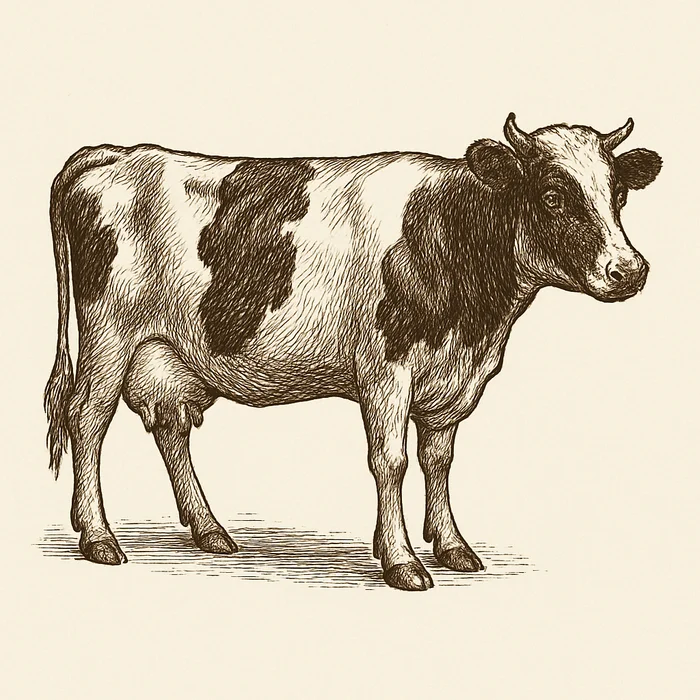
Milk
Cow's milk consumption is inappropriate for populations with lactose intolerance (e.g., Asian and southern European ancestries) and may cause illness. The Longevity Diet recommends goat's and sheep's milk products as exceptions when dairy is desired, rather than cow's milk.
Why It Matters for Longevity
The Longevity Diet discourages cow's milk consumption for multiple reasons: lactase non-persistence affects approximately 65% of the global population; cow's milk proteins may cross-react with pancreatic beta-cell antigens in genetically susceptible individuals; and the saturated fat profile raises LDL cholesterol in observational cohorts.
Clinical data from the Trial to Reduce IDDM in the Genetically at Risk (TRIGR) found that early exposure to cow's milk hydrolyzed formula versus regular cow's milk formula modulated autoimmunity development in children genetically at risk for type 1 diabetes — with cow's milk protein exposure a recognized environmental trigger for T1D autoantibody development in susceptible infants (Knip et al., 2011, Am J Clin Nutr).
A dietary meta-analysis of US diet-mortality associations found that higher intake of saturated fat (of which dairy is a major contributor in Western diets) was among the dietary patterns most strongly associated with increased cardiovascular mortality, while replacement of saturated fat with polyunsaturated fat was consistently protective (Micha et al., 2017, JAMA).
The IGF-1 Mechanism
One of the central longevity concerns about regular cow's milk consumption is its dose-dependent elevation of circulating insulin-like growth factor 1 (IGF-1). A systematic review of 15 cross-sectional studies and 8 RCTs found a weighted mean difference of 13.8 ng/mL (95% CI: 6.1–21.5 ng/mL) in circulating IGF-I comparing milk-consuming groups to controls (Qin et al., 2009, Int J Food Sci Nutr). Elevated IGF-1 is positively associated with prostate and breast cancer risk in the same literature base, and the IIS (insulin-IGF-1 signaling) pathway is one of the most conserved pro-aging pathways across model organisms — reduced IIS activity extends lifespan in yeast, worms, flies, and mice.
The relationship between IGF-1 and mortality in humans is U-shaped rather than strictly linear. A meta-analysis of 12 prospective studies (14,906 participants) found that both low IGF-I (HR 1.27; 95% CI 1.08–1.49) and high IGF-I (HR 1.18; 95% CI 1.04–1.34) independently predict increased all-cause mortality compared to the mid-range (Burgers et al., 2011, J Clin Endocrinol Metab). Dose-response modeling estimated approximately 56% increased mortality hazard at the 10th IGF-I percentile and 29% increased hazard at the 90th percentile versus the median. This U-shaped pattern persisted for both cancer and cardiovascular mortality. The practical implication is that chronic milk consumption that pushes IGF-1 toward the upper range adds measurable mortality risk without benefit — whereas the risk at low IGF-1 reflects frank deficiency rather than a case for high intake.
The bioactive peptide mechanism adds a second layer. Conventional cow's milk in the West predominantly contains A1 β-casein. During intestinal digestion, A1 β-casein releases a seven-amino-acid opioid peptide called β-casomorphin-7 (BCM-7) at position 67, where a histidine residue allows protease cleavage that A2 β-casein (with proline at that position) resists. A systematic review of three controlled human crossover trials found that A1/A2 milk produced significantly softer stools and higher fecal calprotectin (a gut inflammation marker) than A2/A2 milk; in Han Chinese milk-intolerant adults (n=45), A1/A2 milk extended whole gastrointestinal transit time by 6.3 hours (p < 0.0001) and elevated circulating IL-4, IgG, and IgE versus A2/A2 milk (Brooke-Taylor et al., 2017, Adv Nutr). BCM-7 acts on μ-opioid receptors in the gut wall, slowing motility via the same mechanism as opiate drugs. The review notes the evidence remains "emerging" — most human studies have small samples — but the directional consistency across trials and the plausible receptor mechanism distinguish this from purely theoretical concern.
A1 vs. A2 β-Casein and Goat's Milk
Goat's milk and sheep's milk contain predominantly A2 β-casein, which does not release BCM-7 during digestion. This is one biochemical rationale behind the Longevity Diet's preference for goat's and sheep's dairy over conventional cow's milk. The difference is not in lactose content (similar across species) but in the casein protein variant and the downstream peptide release.
Fermented dairy from any source — yogurt, kefir, aged cheeses — undergoes partial protein hydrolysis during bacterial fermentation, which degrades BCM-7 precursors before they reach the gut. This may explain some of the divergent epidemiological signals between fermented dairy (neutral-to-protective in many cohort studies) and fluid cow's milk (associated with higher all-cause and prostate cancer mortality in some prospective data).
How to Use It
If dairy is desired, use goat's milk or sheep's milk products (yogurt, feta, pecorino) as specified in the Longevity Diet protocol. For plant-based alternatives: fortified oat milk (closest to cow's milk in carbohydrate profile), fortified almond milk (low calorie), or soy milk (complete protein). Check for vitamin B12 and D fortification in plant milks.
When choosing cow's milk, prefer A2-certified milk if available (derived from A2/A2 cows such as Guernsey or Jersey breeds). Prefer fermented over unfermented forms. Whole milk is preferable to skim if consumed, since fat-soluble vitamins A, D, and K2 are stripped in skim processing.
What to Pair It With
| Ingredient | Why | Tradition |
|---|---|---|
| Goat's milk yogurt | Preferred longevity dairy alternative; different protein profile, A2-dominant casein, traditionally consumed in Blue Zones | The Longevity Diet |
| Oat milk | Plant-based alternative with beta-glucan content | Modern alternative |
| Almond milk | Low-calorie plant alternative; check for calcium and D fortification | Modern alternative |
Flavor Profile
Creamy, mildly sweet, dairy-characteristic. Texture is liquid and smooth. The Longevity Diet recommends goat's and sheep's milk products as preferred dairy alternatives.
The Science
- Knip et al., 2011, Am J Clin Nutr: TRIGR trial data — early cow's milk formula exposure modulated T1D autoimmunity development in genetically at-risk infants; cow's milk protein a recognized environmental trigger for beta-cell autoantibodies in susceptible individuals.
- Micha et al., 2017, JAMA: Dietary meta-analysis — higher saturated fat intake (dairy a major source) associated with increased cardiovascular mortality; replacement with polyunsaturated fat consistently protective.
- Qin et al., 2009, Int J Food Sci Nutr: Systematic review of 15 cross-sectional studies + 8 RCTs — milk consumption raised circulating IGF-I by a weighted mean difference of 13.8 ng/mL (95% CI 6.1–21.5); elevated IGF-I positively associated with prostate cancer risk.
- Burgers et al., 2011, J Clin Endocrinol Metab: Meta-analysis of 12 prospective studies (n=14,906) — both low IGF-I (HR 1.27) and high IGF-I (HR 1.18) independently predicted increased all-cause mortality; U-shaped pattern confirmed for cancer and cardiovascular mortality endpoints.
- Brooke-Taylor et al., 2017, Adv Nutr: Systematic review of controlled human trials — A1 β-casein releases BCM-7 opioid peptide during digestion; A1/A2 milk increased gut inflammation markers, prolonged transit time by 6.3 hours, and elevated IL-4/IgG/IgE vs A2/A2 milk in human crossover data.
References
- Knip M, Akerblom HK, Al-Taji E, et al. (TRIGR Investigators). Early feeding and risk of type 1 diabetes: experiences from the Trial to Reduce IDDM in the Genetically at Risk (TRIGR). Am J Clin Nutr. 2011;94(6 Suppl):1814S-1820S. PMID: 21653795. doi:10.3945/ajcn.110.000711
- Micha R, Peñalvo JL, Cudhea F, et al. Association Between Dietary Factors and Mortality From Heart Disease, Stroke, and Type 2 Diabetes in the United States. JAMA. 2017;317(9):912-924. PMID: 28267855. doi:10.1001/jama.2017.0947
- Qin LQ, He K, Xu JY. Milk consumption and circulating insulin-like growth factor-I level: a systematic literature review. Int J Food Sci Nutr. 2009;60(Suppl 7):330-340. PMID: 19746296. doi:10.1080/09637480903150114
- Burgers AMG, Biermasz NR, Schoones JW, et al. Meta-analysis and dose-response metaregression: circulating insulin-like growth factor I (IGF-I) and mortality. J Clin Endocrinol Metab. 2011;96(9):2912-2920. PMID: 21795450. doi:10.1210/jc.2011-1377
- Brooke-Taylor S, Dwyer K, Woodford K, Kost N. Systematic Review of the Gastrointestinal Effects of A1 Compared with A2 β-Casein. Adv Nutr. 2017;8(5):739-748. PMID: 28916574. doi:10.3945/an.116.013953
Key Nutrients
| Nutrient | Per 100g | Notes |
|---|---|---|
| Calcium | 113 mg | Well absorbed but book recommends plant sources and goat/sheep dairy instead |
| Saturated fat | 3.3 g (whole milk) | Raises LDL; eliminate from CVD treatment diet |
| Lactose | 5 g | Undigested in lactase-deficient individuals; may cause GI inflammation |
| IGF-1 precursors | — | Milk whey and casein stimulate hepatic IGF-1 production; elevated IGF-1 associated with cancer and mortality at high end of distribution |
| A1 β-casein | ~30% of total casein in most commercial milk | Cleaved to BCM-7 during digestion; A2-only milk avoids this; goat/sheep milk predominantly A2 |