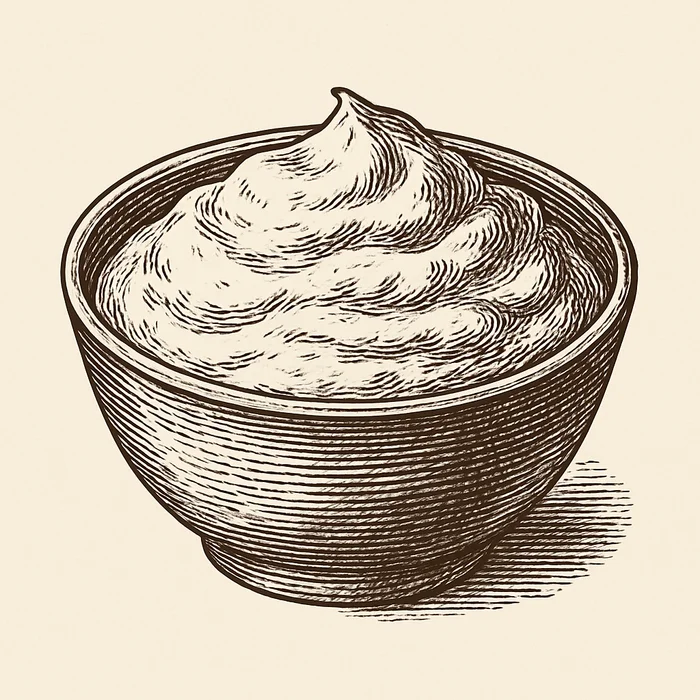
Yogurt
Yogurt (particularly goat's milk yogurt) is used as a snack in the Longevity Diet at 125 g per serving.
Why It Matters for Longevity
Yogurt (particularly goat's milk yogurt) is used as a snack in the Longevity Diet at 125 g per serving. Fermented dairy provides probiotics that support gut microbiome diversity, a key longevity factor. Goat's milk has a different protein and fat profile from cow's milk and has historically been part of the diet of long-lived populations in Sardinia and southern Italy. Higher yogurt consumption is associated with lower all-cause and cardiovascular mortality in meta-analyses of cohort studies, and with reduced type 2 diabetes risk in observational research.
Goat's milk and yogurt were consumed at approximately 84 grams per day in the Biosphere 2 longevity experiment diet. Goat's milk yogurt is recommended for those over 65 who are losing muscle mass, as it is consumed in high-longevity areas.
Mortality and disease-risk evidence. A systematic review and dose-response meta-analysis of 17 cohort studies with 896,871 participants found that higher yogurt intake was significantly associated with lower all-cause mortality (RR 0.93) and CVD mortality (RR 0.89) (Tutunchi et al., 2022, Public Health Nutrition). Across 13 prospective studies examining incident type 2 diabetes, the majority showed an inverse association with yogurt consumption frequency, with some meta-analyses estimating roughly 18% lower T2D risk with regular yogurt intake (Salas-Salvadó et al., 2017, Journal of Nutrition).
Protein quality and muscle. Yogurt's casein-to-whey ratio is approximately 80:20. Fermentation modifies milk protein structure in ways that accelerate amino acid absorption: portal blood amino acid concentrations are significantly higher at 30 and 60 minutes after yogurt consumption compared with unfermented milk, and yogurt consumption measurably increases phosphorylation of p70S6K and 4E-BP1 — canonical activation markers of the mTORC1 muscle-protein-synthesis pathway — to a greater degree than unfermented milk over a 4-hour postprandial window (Sumi et al., 2023, Nutrients). Milk proteins score at or near the ceiling of the DIAAS (Digestible Indispensable Amino Acid Score), making yogurt one of the highest-quality protein sources by this measure. For adults over 65 at risk of sarcopenia — the audience for whom the Longevity Diet specifically recommends yogurt — this combination of high leucine content, rapid early amino acid absorption, and intact mTORC1 signaling is directly relevant to preserving muscle mass.
Probiotic persistence and microbiome effects. The standard yogurt cultures — Lactobacillus delbrueckii subsp. bulgaricus and Streptococcus thermophilus — survive gastrointestinal transit in viable form. A double-blind crossover study (n = 63) found that yogurt consumption significantly increased lactic acid bacteria density in fecal samples, with fresh yogurt producing a greater quantitative shift than heat-treated (pasteurized-after-fermentation) yogurt; both types also altered Bacteroides abundance relative to baseline (García-Albiach et al., 2008, Am J Clin Nutr). These bacteria ferment dietary fiber and prebiotic oligosaccharides into short-chain fatty acids (acetate, propionate, butyrate) that fuel colonocytes, reinforce the intestinal barrier, and modulate innate immune tone — a axis increasingly recognized as central to healthy aging.
Calcium bioavailability. Lactic acid produced during fermentation lowers yogurt's pH to approximately 4.0–4.5, which ionizes calcium and substantially increases its solubility and intestinal uptake. A radiolabeled calcium absorption study found that lactase-deficient subjects absorbed calcium from yogurt equally well as from milk — and that yogurt remains an excellent calcium source precisely because fermentation makes it tolerable for people who cannot consume fluid milk, expanding the population that can reliably meet calcium needs from dairy (Smith et al., 1985, Am J Clin Nutr). For older adults in whom bone-mineral maintenance is a longevity priority, this improved tolerability and maintained bioavailability represent a concrete advantage of the fermented form.
How to Use It
Pairs well with wheat germ, walnuts, berries. Use as a dairy in your daily meals according to the Longevity Diet guidelines.
What to Pair It With
| Ingredient | Why | Tradition |
|---|---|---|
| wheat germ | See synergies | Longevity breakfast bowl; adds vitamin E and spermidine |
| walnuts | See synergies | Sardinian and Greek snack tradition |
| berries | See synergies | Anthocyanin-rich berries pair with probiotic yogurt for gut health |
| honey | See synergies | Prebiotic + probiotic synergy; traditional Cretan breakfast |
| cucumber | See synergies | Tzatziki and raita traditions |
| olive oil | See synergies | Drizzle over labneh (strained yogurt) |
Synergies
- Wheat Germ (complement): Wheat germ adds spermidine (autophagy inducer), vitamin E, and folate to the probiotic and protein base of yogurt; a synergistic longevity breakfast pairing. - Walnuts (complement): Walnuts add omega-3 ALA, polyphenols, and prebiotic fiber to yogurt; the combination supports gut microbiome diversity from both the probiotic (yogurt) and prebiotic (walnuts) sides. - Feta Cheese (complement): Both goat/sheep milk fermented dairy products recommended in the Longevity Diet; together they provide a Mediterranean dairy pattern associated with longevity in Sardinia and Crete.
Flavor Profile
Taste: tangy, slightly sour, creamy, mild. Aroma: lactic, fresh dairy, slightly fermented. Texture: creamy, thick, smooth. Category: dairy / snack / condiment.
The Science
- Tutunchi et al., 2022, Public Health Nutrition: Systematic review and dose-response meta-analysis of 17 cohort studies (896,871 participants, 75,791 deaths); higher yogurt intake significantly associated with lower all-cause mortality (RR 0.93) and CVD mortality (RR 0.89).
- Salas-Salvadó et al., 2017, Journal of Nutrition: Review of 13 prospective studies; most showed inverse association between yogurt consumption frequency and type 2 diabetes risk; multiple meta-analyses estimate ~18% lower T2D risk with regular yogurt intake.
- Ouwehand et al., 2009, Br J Nutr: Probiotic supplementation in elderly subjects reduced plasma endotoxin levels and normalized innate immune responses; probiotic administration attenuates low-grade chronic inflammation in aging populations.
- Sumi et al., 2023, Nutrients: Yogurt raises portal amino acid concentrations faster than unfermented milk at 30 and 60 min; significantly increases phosphorylation of p70S6K and 4E-BP1 (mTORC1 targets), indicating greater muscle-protein-synthesis stimulation than raw milk over 4 hours.
- García-Albiach et al., 2008, Am J Clin Nutr: Double-blind crossover (n = 63); fresh yogurt significantly increased fecal lactic acid bacteria density and altered Bacteroides abundance versus baseline; confirms viable probiotic bacteria modify gut microbiota composition in humans.
- Smith et al., 1985, Am J Clin Nutr: Radiolabeled calcium absorption study; lactase-deficient subjects and controls absorbed calcium equally well from yogurt and milk; fermentation-derived lactic acid maintains calcium bioavailability while eliminating the lactose-intolerance barrier to dairy calcium intake.
- Book claim (high confidence): Yogurt (particularly goat's milk yogurt) is used as a snack in the Longevity Diet at 125 g per serving.
- Book claim (high confidence): Goat's milk and yogurt were consumed at approximately 84 grams per day in the Biosphere 2 longevity experiment diet.
References
- Tutunchi H, Naghshi S, Naemi M, Naeini F, Esmaillzadeh A. Yogurt consumption and risk of mortality from all causes, CVD and cancer: a comprehensive systematic review and dose-response meta-analysis of cohort studies. Public Health Nutrition. 2023;26(3):569–580. PMID: 36349966. doi:10.1017/S1368980022002336
- Salas-Salvadó J, Guasch-Ferré M, Díaz-López A, Babio N. Yogurt and Diabetes: Overview of Recent Observational Studies. Journal of Nutrition. 2017;147(7):1452S–1461S. PMID: 28615384. doi:10.3945/jn.117.248229
- Ouwehand AC, Tiihonen K, Saarinen M, Putaala H, Rautonen N. Influence of a combination of Lactobacillus acidophilus NCFM and lactitol on healthy elderly: intestinal and immune parameters. British Journal of Nutrition. 2009;101(3):367–375. PMID: 19353762. doi:10.1017/S0007114508011999
- Sumi K, Tagawa R, Yamazaki K, et al. Nutritional Value of Yogurt as a Protein Source: Digestibility/Absorbability and Effects on Skeletal Muscle. Nutrients. 2023;15(20):4366. PMID: 37892442. doi:10.3390/nu15204366
- García-Albiach R, Pozuelo de Felipe MJ, Angulo S, et al. Molecular analysis of yogurt containing Lactobacillus delbrueckii subsp. bulgaricus and Streptococcus thermophilus in human intestinal microbiota. Am J Clin Nutr. 2008;87(1):91–96. PMID: 18175741. doi:10.1093/ajcn/87.1.91
- Smith TM, Kolars JC, Savaiano DA, Levitt MD. Absorption of calcium from milk and yogurt. Am J Clin Nutr. 1985;42(6):1197–1200. PMID: 3934956. doi:10.1093/ajcn/42.6.1197
Key Nutrients
| Nutrient | Per 100g | Notes |
|---|---|---|
| Protein | ~10 g (Greek) / ~3.5 g (regular plain low fat) per 100 g | High DIAAS; casein and whey proteins from yogurt are slowly and rapidly digested respectively, providing sustained amino acid availability. |
| Calcium | ~183 mg per 100 g plain low fat (~18% DV) | Lactic acid from fermentation increases calcium bioavailability compared to unfermented milk; important for bone health in aging populations. |
| Live cultures (Lactobacillus, Bifidobacterium) | 10^6–10^8 CFU/g | Surviving probiotic bacteria transiently colonize the colon, producing short-chain fatty acids (butyrate, propionate) that feed colonocytes and modulate immune function. |
| Vitamin A | ~32 mcg RAE per 240 mL (1 cup) plain low fat | Retinol in dairy is highly bioavailable; supports epithelial cell integrity and immune surveillance. |