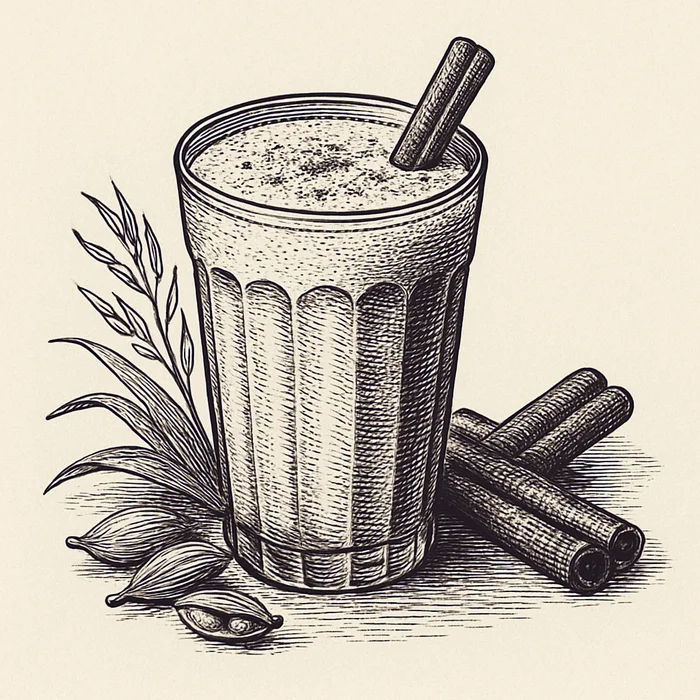
Cardamom-Cinnamon Horchata Blend
Both plant milks here serve as dairy replacements, and they each cover the other's weakness: almond milk has lower carbs and brings a whisper of fat-soluble vitamin E from its native almond solids, while rice milk has a lower allergen profile and a rounder, grain-sweet body. Blend them and you get something neither can do alone — a horchata-adjacent cooler that drinks like Mexican agua de arroz but with the clean, slightly nutty finish of a modern coffee-shop oat-milk latte. The trick is that almond milk on its own can taste thin and chalky cold, and rice milk on its own can taste like sweetened water. Together, at roughly equal parts, the proteins and particulates from each keep the other's flaws in check.
The technique that matters most here is the cinnamon-cardamom bloom — a borrowed move from both Mexican horchata tradition and Indian chai. Whole spices have their aroma compounds (cinnamaldehyde in cinnamon, terpenes like alpha-terpineol in cardamom) locked inside waxy cell walls. Toast them briefly in a dry pan and then steep them in warm liquid, and those compounds become volatile and fat-soluble — which is why we bloom into the almond milk specifically, since its trace fat (and vitamin E solubilizer) carries aroma better than rice milk's near-fat-free matrix. Then we chill hard and shake or blend, because fortified plant milks separate — calcium carbonate settles, and you'll taste it as a gritty last sip if you don't agitate.
Ingredients
- 1 cup (240 ml) unsweetened fortified almond milk, cold
- 1 cup (240 ml) unsweetened fortified rice milk, cold
- 1 cinnamon stick (Ceylon if you can find it — softer, citrusy)
- 3 green cardamom pods, lightly cracked
- 1 tsp vanilla extract (or the scraped seeds of half a vanilla pod)
- 1 tsp maple syrup or date syrup (optional; skip if your milks are sweetened)
- 1 tsp fresh lemon zest (optional, brightens the whole thing)
- A small pinch of fine sea salt
- Ice, for serving
Method
-
Dry-toast the whole spices for 60-90 seconds in a small pan over medium heat. The science: cinnamaldehyde and the cardamom terpenes are locked into plant cell structures. Gentle dry heat ruptures those cells and starts Maillard-adjacent browning on the bark's surface sugars, which is what takes cinnamon from "sweet" to "sweet plus warm woody." Stop the moment you smell them — past that, the volatile aromatics literally evaporate out of the pan and into your kitchen.
-
Warm the almond milk with the toasted spices to a bare steam (around 160 F / 70 C), then pull off the heat and steep 5 minutes. We use the almond milk as the steeping medium because its residual fat from ground almond solids dissolves the fat-soluble aroma compounds in cinnamon and cardamom — rice milk is too lean to hold them. Do not boil. Plant milks, especially those stabilized with gellan gum or locust bean gum, will break and go grainy past a simmer. This is the same gentle-infusion principle French pastry chefs use when steeping vanilla pods into creme anglaise base.
-
Off the heat, stir in the vanilla, salt, and sweetener if using. Vanilla extract is alcohol-based; adding it off-heat preserves the delicate ethyl vanillin notes that flash off above 170 F. The pinch of salt is not for saltiness — it suppresses bitter perception on the tongue, a trick pastry kitchens use to make anything sweet-adjacent taste rounder. Strain out the spices.
-
Combine with the cold rice milk in a pitcher or blender, and add the lemon zest if using. The cold rice milk drops the whole mix to drinkable temperature fast, which matters because warm-then-chilled plant milks re-stabilize better than ones that sat at room temp. Lemon zest adds limonene, a bright top note that lifts the heavy base spices — a move you see in Spanish orxata, where a strip of lemon peel is classic.
-
Blend on high for 15 seconds, or shake very hard in a sealed jar for 20 seconds. This is non-negotiable. Fortified plant milks settle: calcium carbonate sinks, and gums un-hydrate. Aeration also whips micro-foam onto the surface — the same reason a shaken iced latte tastes silkier than a stirred one. You want tiny bubbles, not big ones.
-
Pour over ice immediately and dust the surface with a tiny pinch of extra cinnamon. The cinnamon on top is an aroma flag — as you raise the glass, volatile cinnamaldehyde hits your nose before the liquid hits your tongue, priming the whole sensory experience. This is retronasal olfaction, the same reason garnishes on cocktails aren't just decoration.
What Can Go Wrong
- The drink tastes chalky or grainy at the bottom of the glass. You didn't agitate enough after combining. Fortified almond and rice milks both use suspended minerals (calcium carbonate, tricalcium phosphate) that settle fast. Re-blend or re-shake, and next time use a blender rather than a whisk.
- The spices taste bitter or ashy instead of warm. You toasted too long, or the pan was too hot. Cinnamaldehyde degrades to bitter phenolic compounds past about 30 seconds of active browning. Use medium heat, not medium-high, and pull the pan the instant you smell the spices bloom.
- The mixture looks curdled or separated after steeping. You let the almond milk get above a simmer. The emulsifying gums in commercial plant milks denature with prolonged heat, and no amount of shaking rescues a broken base. Start over, keep it below 170 F, and watch for the first wisps of steam — that's your cue.