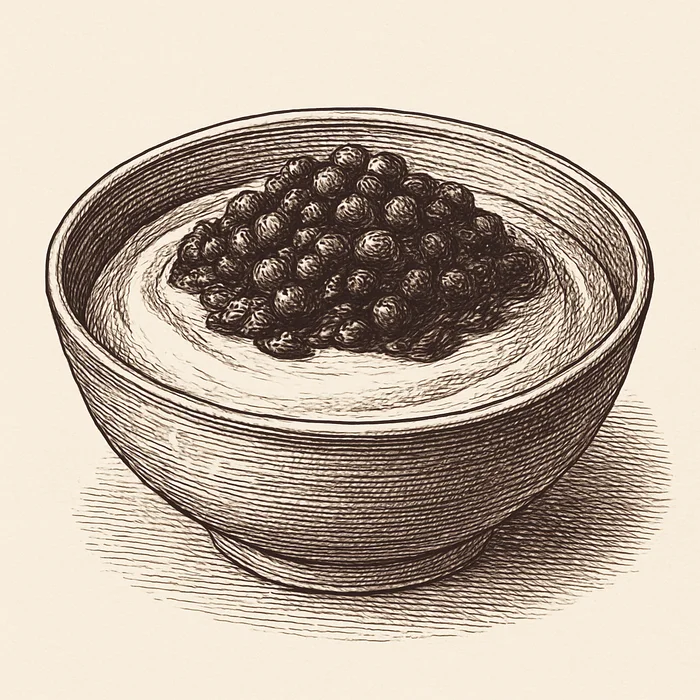
Blueberry Jam and Goat Yogurt Breakfast Bowl
Yogurt and fruit preserves is one of the oldest breakfast combinations in the Mediterranean world, and it turns out the Sardinians were onto something beyond taste. Blueberry anthocyanins — the pigments that give the berries their deep blue — preferentially feed Lactobacillus and Bifidobacterium strains, the same organisms living in a good goat's milk yogurt. Meanwhile, the lactic acid produced by fermentation stabilizes those same anthocyanins, slowing their oxidative degradation in your gut. The two ingredients actively protect each other.
Goat's milk earns its place on the Longevity Diet table for structural reasons: smaller fat globules, higher medium-chain triglycerides, and roughly half the αs1-casein of cow's milk. That protein difference is significant — αs1-casein is the primary culprit in cow's milk digestive intolerance. Longo's Biosphere 2 protocol included about 84 g of goat's milk or yogurt daily. This bowl lands at 125 g, the recommended snack serving, repurposed here as a light breakfast.
The technique, such as it is, is mostly about temperature and layering. Cold yogurt poured over jam smears the jam and muddies the color. Spoon jam on top instead, in the center, and let it bleed naturally at the edge. Walnuts added last stay crunchy.
Ingredients
- 125 g full-fat goat's milk yogurt
- 2 tbsp no-sugar-added blueberry jam (about 30 g)
- 1 tbsp raw walnut halves, roughly broken
- Small pinch of flaky sea salt
Method
-
Temper the yogurt. Pull the yogurt from the refrigerator 5–10 minutes before serving. Cold yogurt suppresses flavor volatiles and makes the texture feel chalky. Room-edge temperature unlocks the lactic tang and the subtle grassiness that distinguishes goat's milk from cow's.
-
Choose your vessel. A small, wide bowl — roughly 15 cm across — gives you surface area so every spoonful catches all three components. A deep narrow bowl forces you to dig, which mashes the layers.
-
Spoon yogurt into the bowl. Use a spatula or the back of a spoon to spread it to the edges in an even layer. Avoid overworking — you want a smooth, slightly domed surface, not beaten foam.
-
Add the jam. Place it in the center of the yogurt, not stirred in. As you eat, you control the jam-to-yogurt ratio per bite. Stirred-in jam also accelerates anthocyanin oxidation through contact with air.
-
Scatter the walnuts. Add them right before eating. Walnuts dropped in too early absorb moisture from the yogurt and soften; you want the contrast of that slight crunch against the creamy base. The ellagitannins in walnuts work synergistically with the blueberry anthocyanins on the NF-kB inflammatory pathway — a bonus you get for free.
-
Finish with salt. A single small pinch on the yogurt, not the jam, rounds the lactic sharpness and makes the berry flavor read as more complex. This is the Samin Nosrat salt-on-dairy move applied to breakfast.
What can go wrong: The biggest mistake is using sweetened commercial jam. No-sugar-added blueberry jam has enough residual fruit sugar to be pleasant; sweetened jam buries the tart-fruity character of the yogurt under pure sucrose, and you lose the textural and flavor counterpoint that makes this worth eating. Check the label — the only ingredients should be blueberries, pectin, and perhaps lemon juice or a small amount of fruit-derived sugar.