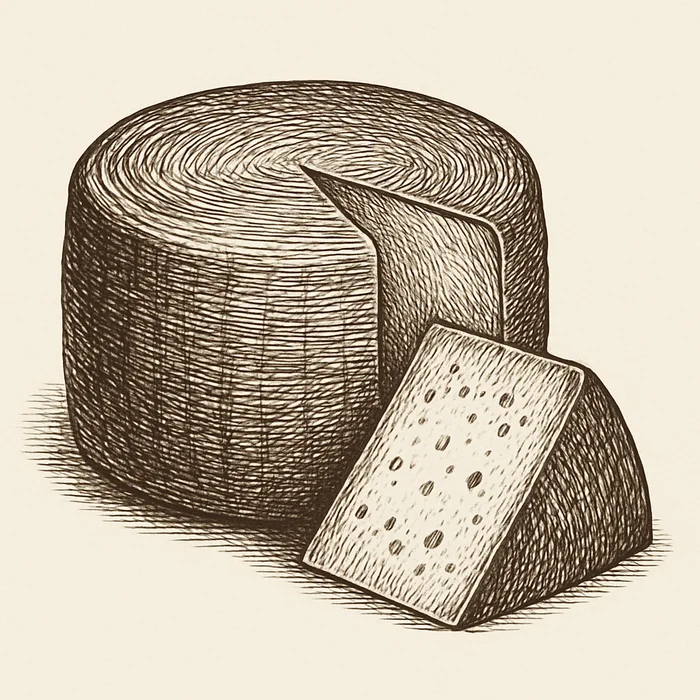
Pecorino Cheese
Pecorino is consumed by Sardinian centenarians and described in the Longevity Diet as a high-omega-3 cheese made from ewe's milk. Sheep's milk has a different fatty acid profile from cow's milk, with higher omega-3 content and conjugated linoleic acid (CLA), and Pecorino is a regular component of the Blue Zone Sardinian dietary pattern.
Why It Matters for Longevity
Pecorino's longevity significance comes from two directions: its unique nutritional profile as a sheep's milk cheese and its consistent presence in the Sardinian centenarian diet. Ewe's milk contains 2–3× higher CLA content than cow's milk, alongside higher omega-3 concentrations. CLA is associated with anti-inflammatory and anti-carcinogenic effects in controlled studies.
A large prospective cohort meta-analysis of 29 studies found that dairy consumption — including cheese — was not associated with increased cardiovascular disease incidence or all-cause mortality; modest cheese consumption showed a neutral-to-beneficial relationship with longevity outcomes (Soedamah-Muthu et al., 2011, Am J Clin Nutr). This supports the Longevity Diet's inclusion of small amounts of traditional fermented dairy.
The Sardinian Blue Zone — identified by the AKEA study as one of the world's most concentrated populations of male centenarians — features a traditional dietary pattern that includes regular consumption of Pecorino and other sheep's milk cheeses, confirming that aged fermented dairy in modest amounts is compatible with exceptional longevity (Poulain et al., 2004, Exp Gerontol).
CLA Content and Anti-Inflammatory Mechanisms
The cis-9, trans-11 isomer of CLA — the predominant form in ruminant dairy fat — is the biologically active form that drives most of the observed health effects. Sheep milk is richer in CLA than both cow and goat milk; the CLA content of sheep dairy fat averages approximately 1.73 mg per 100 mg of fatty acid methyl esters, compared to roughly 0.5–0.8 mg/100 mg FA in commercial cow's milk products.
A dietary intervention study by Sofi et al. (2010, Nutr Metab Cardiovasc Dis, 10 participants, 10-week crossover) fed participants 200 g/week of CLA-rich pecorino cheese versus commercially available cheese. The CLA-rich pecorino produced statistically significant reductions in the inflammatory cytokines IL-6 (from 8.08 to 4.58 pg/mL, p<0.05), IL-8 (from 45.02 to 28.59 pg/mL, p<0.05), and TNF-α (from 53.58 to 32.09 pg/mL, p<0.05), alongside improved platelet aggregation (from 87.8% to 77.7%, p=0.04) and erythrocyte filtration rate. The proposed mechanism: cis-9, trans-11 CLA modulates eicosanoid synthesis by competing with arachidonic acid as a substrate for cyclooxygenase, reducing the production of pro-inflammatory prostaglandins.
A separate RCT by Pintus et al. (2013, Br J Nutr, 42 adults with mild hypercholesterolaemia, crossover design) assigned participants to 90 g/day of sheep cheese enriched in α-linolenic acid, CLA, and vaccenic acid for 3 weeks, followed by 3-week washout and crossover to control cheese. The enriched sheep cheese reduced LDL-cholesterol by 7% and significantly decreased plasma anandamide — an endocannabinoid associated with energy dysregulation — while the control cheese produced no measurable changes in any parameter. The combination of CLA and ALA in sheep milk fat appears to act synergistically on lipid metabolism and endocannabinoid tone.
A2 Beta-Casein and Digestibility
Sheep's milk, like goat and human milk, contains predominantly A2 β-casein rather than the A1 variant common in most commercial cow's milk. The difference lies at position 67 of the β-casein chain: A1 milk contains histidine, which allows proteolytic cleavage during digestion to release β-casomorphin-7 (BCM-7), an opioid peptide fragment. A2 milk contains proline at position 67, which prevents this cleavage and BCM-7 release. BCM-7 production during A1 milk digestion has been associated with enhanced inflammatory markers in human studies, and A2 milk consumption has been associated with higher digestibility and fewer gastrointestinal symptoms in sensitive individuals (Kay et al., 2021, J Nutr). For Pecorino consumers who find cow's milk dairy difficult to tolerate, the sheep milk matrix is a structurally distinct protein environment.
Vitamin K2 (Menaquinone) and Cardiovascular Function
Aged hard cheeses provide meaningful amounts of vitamin K2, primarily as long-chain menaquinones (MK-8 and MK-9), which are produced by lactic acid bacteria during ripening and aging. Vitamin K2 acts as a cofactor for γ-carboxylation of matrix Gla protein (MGP), a key regulator of vascular calcification: without adequate K2, MGP remains inactive and calcium deposits accumulate in arterial walls. A comprehensive analysis of cheeses by Vermeer et al. (2018, Nutrients, PMID: 29617314) found that Pecorino specifically contained approximately 93.7 ng/g total menaquinone — lower than Dutch and German aged hard cheeses (Gouda: 656–729 ng/g), but representing a meaningful dietary contribution when consumed regularly. The menaquinone content is positively correlated with aging duration: ripened Pecorino Stagionato provides more K2 than fresh Pecorino Fresco, primarily because longer fermentation allows greater bacterial menaquinone synthesis.
Poor vitamin K2 status is an established risk factor for both cardiovascular disease and reduced bone mineral density. In the context of a Mediterranean dietary pattern where Pecorino provides a concentrated but modest contribution of K2 alongside calcium and CLA, the combination supports both cardiovascular and skeletal outcomes through complementary mechanisms.
How to Use It
Use in small amounts (10–20 g) as a finishing cheese on pasta, fava beans, or vegetables per Sardinian culinary tradition. Pecorino romano is saltier and sharper than Parmesan; use half the quantity for equivalent flavor. Pair with fava beans in the classic Sardinian spring dish (fave e pecorino), traditional in the Blue Zone diet.
Choose aged Pecorino Stagionato (ripened 8+ months) over fresh Pecorino for higher menaquinone content and a more concentrated CLA profile. The ripening process concentrates fat-soluble nutrients while reducing lactose to negligible levels.
What to Pair It With
| Ingredient | Why | Tradition |
|---|---|---|
| Fava beans | Classic Sardinian Blue Zone combination; legume protein + sheep cheese | Sardinian |
| Pasta | Traditional Italian pairing; use modest portions per Longevity Diet principles | Italian |
| Honey | Traditional Sardinian pairing; sweetness balances sharp salt | Sardinian |
| Broad beans | Same Blue Zone tradition as fava beans; seasonal spring dish | Sardinian |
Flavor Profile
Salty, sharp, tangy, and nutty. Aroma is funky, sharp, and barnyard-like. Texture is hard, granular, and crumbly. Category: aged hard cheese.
The Science
- Soedamah-Muthu et al., 2011, Am J Clin Nutr: Prospective cohort meta-analysis of dairy and cardiovascular outcomes -- modest cheese consumption not associated with increased cardiovascular or all-cause mortality across 29 studies.
- Poulain et al., 2004, Exp Gerontol: AKEA study -- Sardinian Blue Zone characterized by exceptional male longevity; traditional diet includes regular Pecorino and sheep's milk cheese consumption.
- Sofi et al., 2010, Nutr Metab Cardiovasc Dis: 10-week crossover intervention with CLA-rich pecorino (200 g/week) reduced IL-6 by 43%, IL-8 by 37%, TNF-α by 40%, and platelet aggregation by 10 percentage points versus commercial cheese.
- Pintus et al., 2013, Br J Nutr: RCT in 42 hypercholesterolaemic adults — 90 g/day sheep cheese enriched in CLA/ALA/vaccenic acid reduced LDL-cholesterol 7% and decreased plasma anandamide; control cheese produced no changes.
- Kay et al., 2021, J Nutr: A2 β-casein milk (the variant found in sheep milk) associated with higher digestibility and reduced inflammatory markers compared to A1 milk; sheep milk bypasses BCM-7 release during digestion.
- Vermeer et al., 2018, Nutrients: Menaquinone content analysis across cheese types — Pecorino contains ~93.7 ng/g total menaquinone; longer aging increases K2 via bacterial synthesis during ripening.
References
- Soedamah-Muthu SS, Ding EL, Al-Delaimy WK, et al. Milk and dairy consumption and incidence of cardiovascular diseases and all-cause mortality: dose-response meta-analysis of prospective cohort studies. Am J Clin Nutr. 2011;93(1):158-171. PMID: 21068345. doi:10.3945/ajcn.2010.29866
- Poulain M, Pes GM, Grasland C, et al. Identification of a geographic area characterized by extreme longevity in the Sardinia island: the AKEA study. Exp Gerontol. 2004;39(9):1423-1429. PMID: 15489066. doi:10.1016/j.exger.2004.06.016
- Sofi F, Buccioni A, Cesari F, et al. Effects of a dairy product (pecorino cheese) naturally rich in cis-9, trans-11 conjugated linoleic acid on lipid, inflammatory and haemorheological variables: a dietary intervention study. Nutr Metab Cardiovasc Dis. 2010;20(2):117-124. PMID: 19473822. doi:10.1016/j.numecd.2009.03.004
- Pintus S, Murru E, Carta G, et al. Sheep cheese naturally enriched in α-linolenic, conjugated linoleic and vaccenic acids improves the lipid profile and reduces anandamide in the plasma of hypercholesterolaemic subjects. Br J Nutr. 2013;109(7):1453-1462. PMID: 22917075. doi:10.1017/S0007114512003224
- Kay SI, Delgado S, Mittal J, et al. Beneficial Effects of Milk Having A2 β-Casein Protein: Myth or Reality? J Nutr. 2021;151(5):1061-1072. PMID: 33693747. doi:10.1093/jn/nxaa454
- Vermeer C, Raes J, van 't Hoofd C, Knapen MHJ, Xanthoulea S. Menaquinone Content of Cheese. Nutrients. 2018;10(4):446. PMID: 29617314. doi:10.3390/nu10040446
Key Nutrients
| Nutrient | Per 100g | Notes |
|---|---|---|
| CLA (conjugated linoleic acid) | 0.4–0.7 g | Higher than cow's milk cheese; cis-9, trans-11 CLA reduces IL-6, IL-8, TNF-α via eicosanoid pathway modulation |
| Calcium | 760 mg | Well-absorbed; hard cheeses provide concentrated calcium without lactose issues for most people |
| Protein | 26 g | Complete protein; aged cheeses have lower lactose than fresh dairy |
| Vitamin K2 (menaquinones) | ~94 ng/g | MK-8/MK-9 produced by ripening bacteria; activates matrix Gla protein, which inhibits vascular calcification |