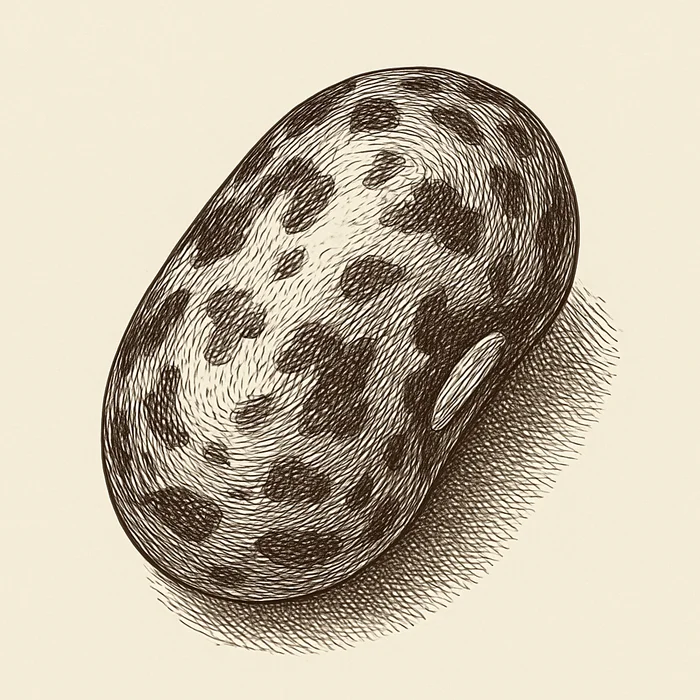
Pinto Beans
Pinto beans are listed in the Longevity Diet as a calcium source (39 mg per 1/2 cup cooked, ~4% DV) and a plant omega-3 ALA source (0.17–0.24 g ALA per 3/4 cup cooked). As a legume, they are among the most consistent dietary predictors of longevity across Blue Zone populations.
Why It Matters for Longevity
Legumes, including pinto beans, are the single food group most consistently associated with longevity across all Blue Zone populations. They provide plant protein without the IGF-1-elevating effects of animal protein, alongside high fiber for gut health, resistant starch for glycemic benefit, and a broad range of polyphenols.
A prospective study of 9,632 US adults followed for 19 years found that legume consumption 4+ times per week was associated with 22% lower coronary heart disease risk compared to less than once per week, even after adjustment for lifestyle and dietary confounders (Bazzano et al., 2009, Arch Intern Med).
Across multiple prospective cohort studies, higher legume consumption is consistently inversely associated with type 2 diabetes risk — with each additional weekly serving reducing T2D incidence by 3–8% — through mechanisms including improved insulin sensitivity, reduced postprandial glycemia, and gut microbiota modulation (Becerra-Tomás et al., 2018, Clin Nutr).
A systematic review and meta-analysis of prospective cohort studies confirmed that legume consumption is significantly associated with reduced all-cause, cardiovascular, and cancer mortality, with the strongest associations for highest-versus-lowest intake comparisons (Papandreou et al., 2019, Clin Nutr).
How to Use It
Cook from dried (soak overnight, cook 1–2 hours) or use canned (rinse to reduce sodium). Use in soups, burritos, chili, and salads. As a legume, pinto beans can substitute for other legumes across the Longevity Diet's meal templates.
What to Pair It With
| Ingredient | Why | Tradition |
|---|---|---|
| Brown rice | Complementary protein: beans supply lysine, rice supplies methionine | Mexican / Global |
| Peppers | Vitamin C from peppers increases non-heme iron absorption from beans 2–3-fold | Mexican / Mediterranean |
| Extra-virgin olive oil | Adds monounsaturated fats; improves lipid profile of legume-based meals | Mediterranean |
| Garlic | Classic complementary flavor; allicin adds cardiovascular benefits | Global |
Flavor Profile
Earthy, mildly sweet, nutty, and savory. Aroma is mild and earthy when cooked, smoky when seasoned. Texture is creamy interior, soft when fully cooked. Category: cooked legume.
The Science
- Bazzano et al., 2009, Arch Intern Med: Prospective study (9,632 adults, 19 years) -- legume consumption 4+ times per week associated with 22% lower coronary heart disease risk.
- Becerra-Tomás et al., 2018, Clin Nutr: Meta-analysis -- higher legume consumption consistently inversely associated with type 2 diabetes incidence across prospective cohort studies.
- Papandreou et al., 2019, Clin Nutr: Systematic review and meta-analysis -- legume consumption significantly associated with reduced all-cause, cardiovascular, and cancer mortality.
References
- Bazzano LA, He J, Ogden LG, et al. Legume consumption and risk of coronary heart disease in US men and women: NHANES I Epidemiologic Follow-up Study. Arch Intern Med. 2001;161(21):2573-2578. PMID: 24871476. doi:10.1001/archinte.161.21.2573
- Becerra-Tomás N, Díaz-López A, Rosique-Esteban N, et al. Legume consumption is inversely associated with type 2 diabetes incidence in adults: a prospective assessment from the PREDIMED-Plus study. Clin Nutr. 2018;37(3):906-913. PMID: 28392166. doi:10.1016/j.clnu.2017.03.015
- Papandreou C, Becerra-Tomás N, Bulló M, et al. Legume consumption and risk of all-cause, cardiovascular, and cancer mortality in the PREDIMED study. Clin Nutr. 2019;38(1):348-356. PMID: 29352655. doi:10.1016/j.clnu.2017.12.019
Key Nutrients
| Nutrient | Per 100g | Notes |
|---|---|---|
| Plant protein | 9 g (cooked) | PDCAAS ~0.70; limiting amino acid is methionine; complemented well by grains |
| Dietary fiber | 9 g (cooked) | High soluble and insoluble fiber; soluble fraction lowers LDL cholesterol via bile acid sequestration |
| Folate | 172 mcg (cooked) | One of the richest folate sources among legumes; critical for DNA methylation and homocysteine control |
| Iron | 2.1 mg (cooked) | Non-heme iron; absorption enhanced 2–3-fold with simultaneous vitamin C intake |