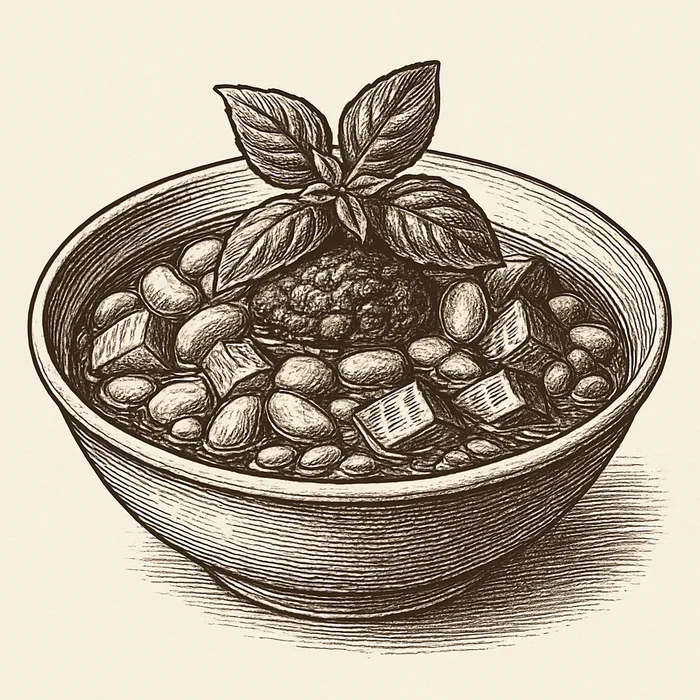
Ligurian Minestrone al Pesto
The dish Emma Morano ate for most of her 117 years -- a thick Ligurian vegetable-bean soup finished with a spoonful of fresh pesto that turns a simple broth into something extraordinary.
Why These Ingredients Together
This is the Longevity Diet's most emblematic dish: high fiber from multiple bean and vegetable sources, low glycemic load, and an olive oil delivery system that makes fat-soluble compounds in every vegetable actually bioavailable. The pesto finish is not decoration -- basil's rosmarinic acid and garlic's allicin together inhibit the NF-kB inflammatory pathway through complementary mechanisms. Rosmarinic acid blocks upstream enzyme activation while allicin disrupts downstream signaling. Together they cover more of the inflammatory network than either could alone. The olive oil in the pesto also dramatically increases the absorption of lycopene from tomatoes and lutein from the greens -- both fat-soluble compounds that pass through without oil.
The borlotti beans provide 8g of fiber per serving, feeding Bifidobacterium and Lactobacillus populations that produce butyrate, a short-chain fatty acid that reduces intestinal permeability and systemic inflammation. Pasta adds structure and slows the soup's glycemic response compared to a broth-only base.
Ingredients
For the soup:
- 3 tablespoons extra-virgin olive oil
- 1 large onion, finely diced
- 3 stalks celery, sliced
- 2 medium carrots, diced
- 4 cloves garlic, minced and rested 10 minutes
- 2 medium zucchini, diced
- 200g green beans, cut in 2cm pieces
- 400g can borlotti or cannellini beans, drained and rinsed
- 400g can crushed tomatoes
- 1.5L vegetable stock
- 100g small pasta (ditalini, elbow, or broken spaghetti)
- 150g spinach or escarole, roughly chopped
- Salt and black pepper to taste
For the pesto:
- 2 large handfuls fresh basil leaves (~40g)
- 2 cloves garlic
- 3 tablespoons pine nuts
- 50ml extra-virgin olive oil
- 30g Parmesan or Pecorino (optional; omit for vegan)
- Pinch of salt
Instructions
-
Make the pesto first. Blend basil, garlic, pine nuts, and a pinch of salt in a food processor. Stream in the olive oil until smooth. Add cheese if using. Taste and adjust salt. Set aside -- it goes in at the very end, off the heat.
-
Build the soffritto. Heat olive oil in a large heavy pot over medium heat. Add onion, celery, and carrot with a pinch of salt. Cook 8-10 minutes, stirring occasionally, until the vegetables are soft and the onion is translucent. Add the rested garlic and cook 1 minute more.
-
Add the vegetables. Add zucchini and green beans, stir to coat in the oil, and cook 3-4 minutes. Pour in the crushed tomatoes and stock. Bring to a boil, then reduce to a gentle simmer.
-
Simmer and add beans. After 15 minutes, add the borlotti beans. Stir well and continue simmering 10 minutes. The soup should be thick -- Ligurian minestrone is not a light broth but closer to a stew.
-
Cook the pasta in the soup. Add the pasta directly to the soup pot and cook according to package time minus 1 minute. The pasta will continue cooking in residual heat and absorbs the broth as it sits -- this is intentional, and means leftovers will be thicker the next day (thin with water when reheating).
-
Add the greens. Stir in the spinach or escarole and cook 2 minutes until wilted. Season with salt and black pepper.
-
Finish with pesto off heat. Remove the pot from the heat entirely before adding the pesto -- boiling destroys the basil's volatile compounds and turns the color from vivid green to brown. Stir one heaped tablespoon of pesto into the pot, then serve with an additional teaspoon on top of each bowl.
What Can Go Wrong
- Adding pesto to boiling soup. The heat kills basil's aromatics and oxidizes the chlorophyll instantly -- you lose both the flavor and the color. Always take the pot off heat, let it stop bubbling for 30 seconds, then stir in the pesto.
- Undersalting the base. Beans and pasta absorb salt as they cook. Season the broth more aggressively than you think is right before adding the pasta, then adjust at the end.
- Watery minestrone. Ligurian minestrone should be thick enough for a spoon to stand up slightly. If too thin, simmer uncovered for 10 minutes. If the pasta absorbed too much liquid overnight, add stock and bring to a gentle simmer before serving.
Science Notes
The pairing of pesto with a bean-vegetable soup is one of the oldest and most nutritionally complete combinations in Italian peasant cooking. The olive oil in both the soup base and the pesto serves as a fat delivery system for fat-soluble compounds across every vegetable in the pot -- including lycopene (tomatoes), lutein (spinach), and beta-carotene (carrots). Studies consistently show that adding a fat source to cooked vegetables increases carotenoid absorption by 2-5x compared to fat-free preparations. The allicin in the pesto's garlic is heat-labile -- a key reason the pesto goes in off heat rather than being cooked in from the start.
Nutrition Highlights
- Fiber: ~14g per serving from beans, vegetables, and pasta combined
- Plant protein: ~12g per serving; combine with whole-grain bread for complete amino acid coverage
- Polyphenols: Rosmarinic acid from basil, quercetin from onion, lycopene from tomatoes -- all in a fat carrier for enhanced absorption
- Olive oil (phenols): Finishing drizzle adds oleocanthal and hydroxytyrosol from fresh EVOO