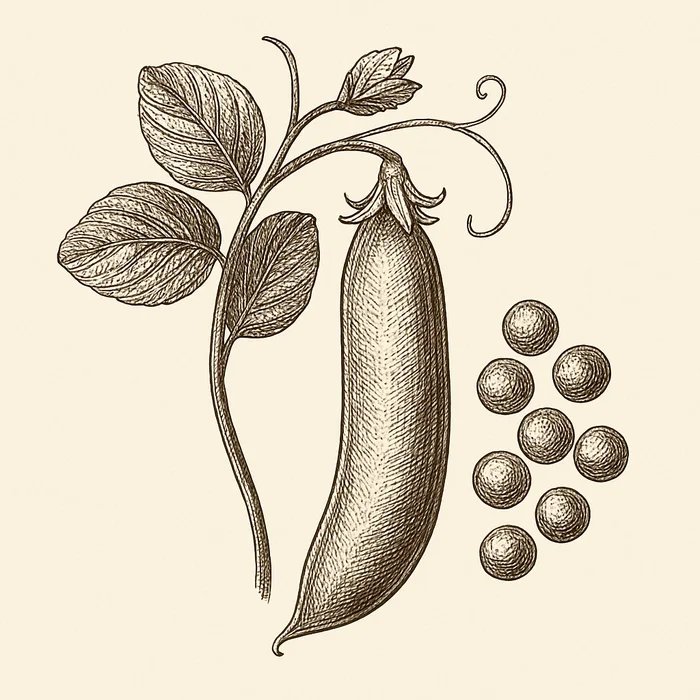
Green Peas
Regular legume consumption (3+ servings/week) is associated with the longest lifespans among Loma Linda Adventists. Legumes are a core food in all five Blue Zone centenarian populations. Green peas are a fresh, versatile legume providing plant protein, fiber, and a broad micronutrient profile.
Why It Matters for Longevity
Green peas provide plant protein, dietary fiber, complex carbohydrates, vitamin C, folate, and vitamin K — a nutritional profile that fits the Longevity Diet's preference for legume-based protein. They contain resistant starch and soluble fiber that act as prebiotics, supporting short-chain fatty acid production and gut microbiome diversity.
A comprehensive review of pea health benefits found that peas (Pisum sativum) provide meaningful amounts of dietary fiber, resistant starch, protein, vitamins, and phytochemicals with documented effects on gut health, glycemic control, and cardiovascular risk factors — making them one of the most nutritionally complete fresh legumes (Dahl et al., 2012, Br J Nutr).
A systematic review and meta-analysis found that legume and bean consumption is associated with significant reductions in cardiovascular disease, type 2 diabetes, and all-cause mortality, with each daily serving of legumes reducing mortality risk by 6–8% (Messina, 2014, Am J Clin Nutr).
Pea Protein and Glycemic Control
Pea protein — roughly 5.4 g per 100 g cooked — influences postprandial glucose through two mechanisms. First, protein co-ingestion slows gastric emptying. Second, pea protein stimulates glucagon-like peptide-1 (GLP-1) and insulin release. A randomized controlled trial found that co-ingestion of 50 g pea protein with a high-carbohydrate beverage reduced postprandial blood glucose by 53% and increased insulin response by 40% compared with carbohydrate alone; the 25 g dose produced a 31% glucose reduction and 28% insulin increase (both p < 0.001) (Thondre et al., 2021, Eur J Nutr). This dose-response relationship is relevant even at the lower protein amounts delivered by a standard portion of cooked peas paired with a grain.
Pulses, LDL Cholesterol, and Cardiovascular Risk
Beyond mortality associations, pulses including peas exert a measurable effect on LDL cholesterol. A meta-analysis of 26 randomized controlled trials (n = 1,037) found that one daily serving of dietary pulses (~130 g/day) significantly lowered LDL cholesterol by a mean of 0.17 mmol/L (95% CI: −0.25 to −0.09 mmol/L) (Ha et al., 2014, CMAJ). The likely mechanism is dual: soluble fiber and saponins in peas both interfere with bile acid reabsorption in the ileum, forcing the liver to draw on circulating LDL cholesterol to synthesize replacement bile salts.
Lutein, Zeaxanthin, and Retinal Health
Green peas are among the richer plant sources of lutein and zeaxanthin — the only two dietary carotenoids that selectively accumulate in the macula of the retina, where they absorb damaging short-wavelength blue light. A systematic review and meta-analysis of prospective studies found that higher dietary lutein and zeaxanthin intake was associated with a 26% lower risk of late age-related macular degeneration (AMD) (RR 0.74; 95% CI 0.57–0.97) and a 32% lower risk of neovascular AMD (RR 0.68; 95% CI 0.51–0.92) (Ma et al., 2012, Br J Nutr). No significant protective effect was observed for early AMD. The recommended daily intake to maintain macular pigment is approximately 10 mg lutein and 2 mg zeaxanthin; green peas contribute around 1.7 mg lutein per 100 g cooked, making them a meaningful dietary source when consumed regularly alongside other green vegetables.
Saponins
Peas contain saponins — amphiphilic glycosides that have shown hypocholesterolemic and anticarcinogenic activity in experimental models. Cooking reduces total saponin content by 14–30%, so lightly cooked or blanched peas retain higher concentrations. The cholesterol-lowering mechanism overlaps with fiber: saponins form insoluble complexes with bile acids in the gut lumen, reducing enterohepatic recycling and compelling upregulation of hepatic LDL receptors.
How to Use It
Use fresh or frozen green peas (frozen preserves nutrient content well). Add to pasta, soups, risottos, and grain salads. Pair with mint and olive oil for a classic Mediterranean preparation. Blanch briefly to preserve vitamin C, color, and saponin content. Pairing peas with a grain-based carbohydrate source is a practical way to take advantage of the protein's glycemic-moderating effect.
What to Pair It With
| Ingredient | Why | Tradition |
|---|---|---|
| Pasta | Complete amino acid profile together; classic Italian dish | Italian |
| Mint | Traditional Mediterranean/Middle Eastern pairing | Mediterranean |
| Extra-virgin olive oil | Fat aids absorption of fat-soluble vitamins; classic preparation | Mediterranean |
| Lemon | Vitamin C enhances non-heme iron absorption from peas | Mediterranean |
Flavor Profile
Sweet, fresh, mildly vegetal. Aroma is fresh, grassy, slightly sweet. Texture is tender with a slight pop when fresh. Frozen peas maintain sweetness better than old fresh peas. Baby peas are sweeter and more tender than mature peas.
The Science
- Dahl et al., 2012, Br J Nutr: Review of pea health benefits found evidence for effects on gut health, glycemic control, and cardiovascular risk factors through fiber, resistant starch, protein, and phytochemical content.
- Messina, 2014, Am J Clin Nutr: Systematic review found legume consumption associated with reduced cardiovascular disease, type 2 diabetes, and all-cause mortality; each daily serving reduces mortality risk 6–8%.
- Thondre et al., 2021, Eur J Nutr: RCT showing dose-dependent glycemic suppression with pea protein co-ingestion; 50 g reduced postprandial glucose by 53% versus carbohydrate-only control.
- Ha et al., 2014, CMAJ: Meta-analysis of 26 RCTs (n = 1,037) showing daily pulse intake lowers LDL cholesterol by 0.17 mmol/L via bile acid sequestration.
- Ma et al., 2012, Br J Nutr: Meta-analysis finding higher lutein/zeaxanthin intake associated with 26% lower risk of late AMD and 32% lower risk of neovascular AMD.
References
- Dahl WJ, Foster LM, Tyler RT. Review of the health benefits of peas (Pisum sativum L.). Br J Nutr. 2012;108 Suppl 1:S3-10. PMID: 22916813. doi:10.1017/S0007114512000852
- Messina V. Nutritional and health benefits of dried beans. Am J Clin Nutr. 2014;100 Suppl 1:437S-442S. PMID: 24871476. doi:10.3945/ajcn.113.071472
- Thondre PS, Achebe I, Sampson A, Maher T, Guérin-Deremaux L, Lefranc-Millot C, Ahlström E, Lightowler H. Co-ingestion of NUTRALYS® pea protein and a high-carbohydrate beverage influences the glycaemic, insulinaemic, GIP and GLP-1 responses. Eur J Nutr. 2021;60(8):4449-4460. PMID: 33515092.
- Ha V, Sievenpiper JL, de Souza RJ, et al. Effect of dietary pulse intake on established therapeutic lipid targets for cardiovascular risk reduction: a systematic review and meta-analysis of randomized controlled trials. CMAJ. 2014;186(8):E252-E262. PMID: 24710915.
- Ma L, Dou HL, Wu YQ, Huang YM, Huang YB, Xu XR, Zou ZY, Lin XM. Lutein and zeaxanthin intake and the risk of age-related macular degeneration: a systematic review and meta-analysis. Br J Nutr. 2012;107(3):350-359. PMID: 21899805.
Key Nutrients
| Nutrient | Per 100g (cooked) | Notes |
|---|---|---|
| Plant protein | 5.4 g | Moderate PDCAAS; complement with grains for complete amino acid profile |
| Dietary fiber | 4.4 g | Mix of soluble and insoluble fiber; prebiotic effect on gut microbiome |
| Vitamin C | 14 mg | Water-soluble; better preserved in frozen peas than in old fresh peas |
| Folate | 65 mcg | Essential for DNA methylation and homocysteine metabolism |
| Lutein + zeaxanthin | ~1.7 mg | Selective retinal carotenoids; protective against advanced AMD |