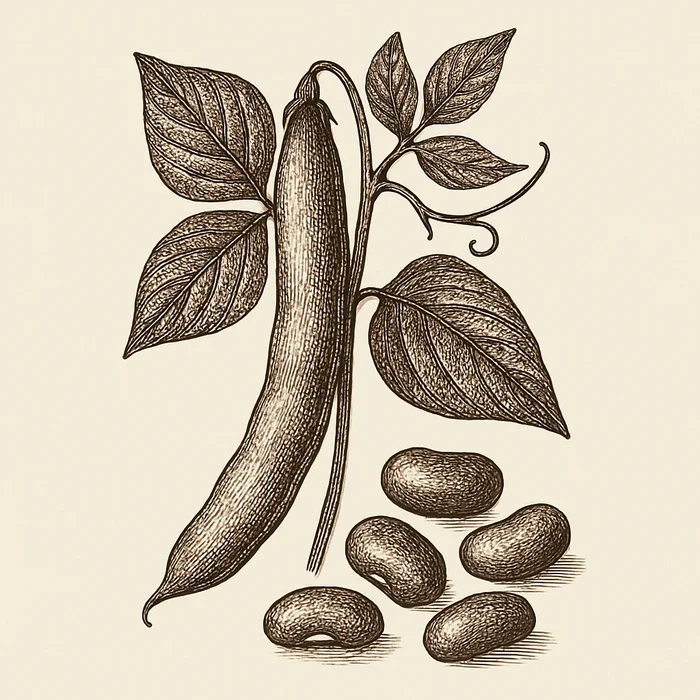
Beans
Green beans are part of the traditional Italian diet used as an example for the ancestral-diet approach to autoimmune disease prevention
Why It Matters for Longevity
Green beans are part of the traditional Italian diet used as an example of the ancestral approach to low autoimmune and chronic disease rates. Beans are a staple in multiple Longevity Diet recipes including pasta e vaianeia (Molochio) and Ligurian minestrone, served at ~150 g per serving. Their high fiber and plant protein content, combined with a low glycaemic index, supports gut microbiome diversity and metabolic health.
The epidemiological evidence is consistent. A large prospective cohort analysis (Papandreou et al., 2019, Clin Nutr) found that higher legume consumption is independently associated with lower all-cause, cardiovascular, and cancer mortality. Becerra-Tomás et al. (2018, Clin Nutr) found that legume intake was inversely associated with type 2 diabetes incidence in adults at high cardiovascular risk -- a particularly important finding given the YMYL overlap between metabolic disease and longevity pathways.
How to Use It
Pairs well with olive oil, garlic, tomatoes. Use as a legume in your daily meals according to the Longevity Diet guidelines.
What to Pair It With
| Ingredient | Why | Tradition |
|---|---|---|
| olive oil | See synergies | culinary tradition |
| garlic | See synergies | culinary tradition |
| tomatoes | See synergies | culinary tradition |
| pasta | See synergies | The Longevity Diet |
| lemon | See synergies | culinary tradition |
Synergies
- Olive Oil (synergy): Olive oil enhances absorption of fat-soluble vitamin K in beans and contributes anti-inflammatory polyphenols - Pasta (complement): Classic longevity combination in pasta e vaianeia; legume fiber lowers the glycemic response of pasta - Garlic (synergy): Garlic's organosulfur compounds and beans' fiber act synergistically on gut microbiome diversity and immune modulation
Flavor Profile
Taste: mildly sweet, grassy, vegetal, slightly earthy. Aroma: fresh, green, herbaceous. Texture: crisp when raw, tender when cooked, slightly firm. Category: vegetable legume.
The Science
- Papandreou et al., 2019, Clin Nutr: Legume consumption associated with lower all-cause, cardiovascular, and cancer mortality in prospective PREDIMED cohort.
- Becerra-Tomás et al., 2018, Clin Nutr: Legume intake inversely associated with type 2 diabetes incidence in high-CVD-risk adults.
- Examine.com: Green beans provide fiber, vitamin C, vitamin K, and folate; fermentable fiber supports beneficial gut bacteria.
- Book claim (Longevity Diet): Beans are a staple across multiple Longevity Diet dishes including pasta e vaianeia and Ligurian minestrone.
References
- Papandreou C, Becerra-Tomás N, Bulló M, et al. Legume consumption and risk of all-cause, cardiovascular, and cancer mortality in the PREDIMED study. Clin Nutr. 2019;38(1):348-356. PMID: 29352655. doi:10.1016/j.clnu.2017.12.019
- Becerra-Tomás N, Díaz-López A, Rosique-Esteban N, et al. Legume consumption is inversely associated with type 2 diabetes incidence in adults: A prospective assessment from the PREDIMED-Plus study. Clin Nutr. 2018;37(3):906-913. PMID: 28392166. doi:10.1016/j.clnu.2017.03.015
Key Nutrients
| Nutrient | Per 100g | Notes |
|---|---|---|
| Dietary fiber | 2.7 g | Mix of soluble and insoluble fiber; supports gut microbiome and bile acid recycling |
| Vitamin C | 12 mg (cooked) | Water-soluble; brief cooking preserves more than prolonged boiling |
| Vitamin K1 | 43 mcg (cooked) | Fat-soluble; absorption enhanced by co-ingestion with olive oil |
| Folate | 37 mcg (cooked) | Essential for DNA methylation; bioavailability ~85% from cooked vegetables |
| Manganese | 0.21 mg (cooked) | Cofactor for SOD2 antioxidant enzyme; plant sources have moderate bioavailability |