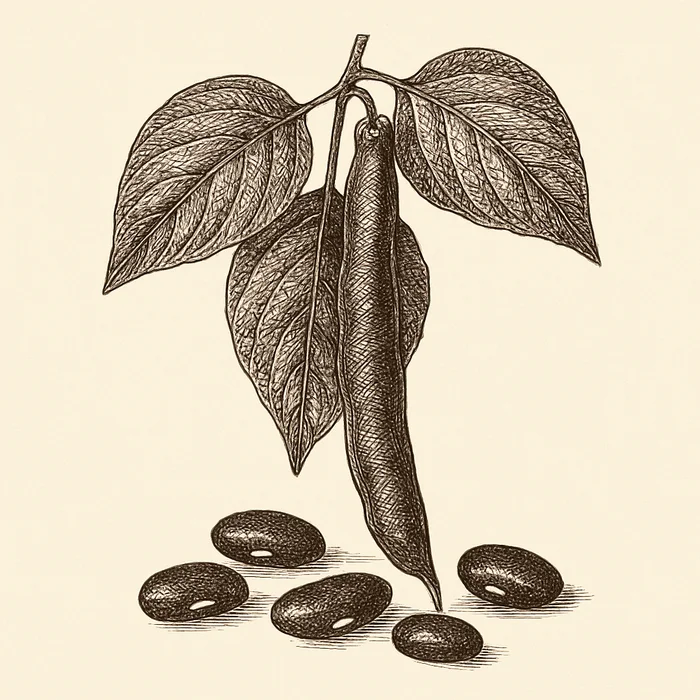
Black Beans
Black beans are used in the Longevity Diet as a primary plant protein source (e.g., pasta with broccoli and black beans), recommended at 150 g wet weight (boiled, drained) per serving.
Why It Matters for Longevity
Black beans are used in the Longevity Diet as a primary plant protein source (e.g., pasta with broccoli and black beans), recommended at 150 g wet weight (boiled, drained) per serving. Provides complete amino acid spectrum when paired with grains; plant protein source associated with longevity in centenarian populations.. Black beans are a notable calcium source (102 mg per cup cooked, ~10% DV) and magnesium source (60 mg per 1/2 cup cooked, ~15% DV). Calcium supports bone mineral density; magnesium is required for ATP synthesis, DNA repair, and over 300 enzymatic reactions.. In a prospective study of 9,632 US adults, legume consumption 4+ times per week versus less than once per week was associated with a 22% lower risk of coronary heart disease and 11% lower risk of cardiovascular disease, establishing legumes as a core longevity food. (Bazzano et al., 2001, Arch Intern Med) Legumes including black beans contain resistant starch, indigestible fiber, and polyphenols (anthocyanins in black beans) that collectively reduce postprandial glucose, feed beneficial microbiota, and reduce systemic inflammation — key pathways in longevity. (Messina, 2014, Am J Clin Nutr)
How to Use It
Pairs well with broccoli, pasta, garlic. Use as a legume in your daily meals according to the Longevity Diet guidelines.
What to Pair It With
| Ingredient | Why | Tradition |
|---|---|---|
| broccoli | See synergies | The Longevity Diet |
| pasta | See synergies | The Longevity Diet |
| garlic | See synergies | General culinary |
| cumin | See synergies | General culinary |
Synergies
- Broccoli (complement): Black beans and broccoli together cover essential amino acids, calcium, and vitamin C in a single dish, forming a nutritionally complete longevity meal component. - Brown-Rice (synergy): Classic complementary protein pairing; together they provide all essential amino acids, including methionine (low in beans) and lysine (low in rice). - Extra-Virgin-Olive-Oil (complement): Olive oil increases carotenoid and fat-soluble polyphenol absorption from the meal.
Flavor Profile
Taste: earthy, mildly sweet, creamy. Aroma: mild, earthy, slightly smoky when cooked with aromatics. Texture: creamy interior, slightly firm skin when cooked al dente. Category: cooked legume.
The Science
- Bazzano et al., 2001, Arch Intern Med: Prospective study of 9,632 US adults (NHANES I) -- legume consumption 4+ times per week vs less than once per week associated with 22% lower coronary heart disease risk and 11% lower cardiovascular disease risk.
- Messina, 2014, Am J Clin Nutr: Review of dried bean/pulse health benefits -- resistant starch, fiber, and polyphenols collectively reduce postprandial glucose and systemic inflammation.
- Elessawy et al., 2020, Phytochem Anal: Black bean seed coat contains exceptionally rich anthocyanin and polyphenol profiles among pulse crops.
- Black beans: 150g cooked provides ~13g protein, ~13g fibre, and 90 mcg folate.
References
- Bazzano LA, He J, Ogden LG, et al. Legume consumption and risk of coronary heart disease in US men and women: NHANES I Epidemiologic Follow-up Study. Arch Intern Med. 2001;161(21):2573-2578. PMID: 11718588.
- Messina V. Nutritional and health benefits of dried beans. Am J Clin Nutr. 2014;100(Suppl 1):437S-442S. PMID: 24871476. doi:10.3945/ajcn.113.071472
- Elessawy FM, Vandenberg A, Shand PJ. Polyphenol profile comparisons of seed coats of five pulse crops using a semi-quantitative liquid chromatography-mass spectrometry method. Phytochem Anal. 2020;31(6):757-768. PMID: 31869515. doi:10.1002/pca.2909
Key Nutrients
| Nutrient | Per 100g | Notes |
|---|---|---|
| Plant protein | 8.9 g (cooked) | PDCAAS ~0.75; improved when combined with grains; lower in sulfur amino acids, so pair with methionine-rich foods. |
| Fiber (total) | 8.7 g (cooked) | High in soluble and insoluble fiber; feeds Bifidobacterium and Faecalibacterium prausnitzii, key longevity-associated microbes. |
| Anthocyanins | ~214 mg (dry) | Primarily in seed coat; partially degraded by cooking; remaining fraction is bioavailable and acts as antioxidant. |
| Folate | 149 mcg (cooked) | High natural folate content; important for DNA synthesis, methylation, and homocysteine regulation. |