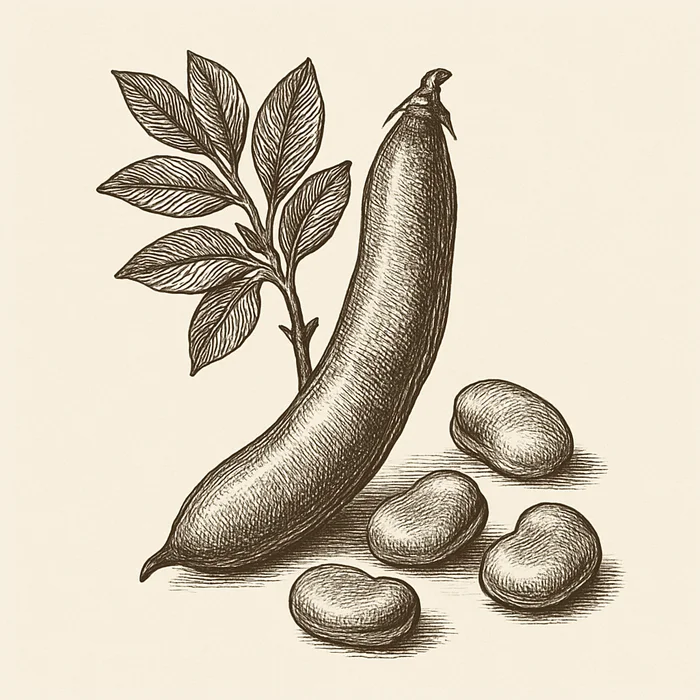
Fava Beans
Core legume in multiple Blue Zone diets — eaten almost daily by Molochio and Sardinian centenarians in traditional dishes. Regular legume consumption is one of the strongest dietary predictors of longevity across all five Blue Zones.
Why It Matters for Longevity
Legumes are the one food most consistently associated with longevity across all five Blue Zone populations (Okinawa, Sardinia, Calabria, Loma Linda, and Costa Rica). They provide plant protein without activating IGF-1/TOR-S6K signaling to the degree of animal protein, high fiber that feeds beneficial gut bacteria, and a low glycemic load.
A systematic review and meta-analysis found that nut and legume consumption was associated with significantly reduced risk of cardiovascular disease, type 2 diabetes, and all-cause mortality, with each daily serving of legumes reducing mortality risk by 6–8% (Afshin et al., 2014, BMC Med).
Fava beans (Vicia faba) are a notable natural source of L-DOPA (levodopa), the dopamine precursor used in Parkinson's disease treatment. Atremorine, a bioactive fava bean extract, demonstrated dopaminergic neuroprotective effects and significantly raised levodopa plasma levels in Parkinson's patients — confirming clinical relevance of fava bean L-DOPA content (Cacabelos et al., 2021, Med Res Rev).
Cholesterol and Metabolic Effects
A controlled trial in 40 young men with hypercholesterolemia found that 90 g/day of field bean (Vicia faba) flour for 30 days produced statistically significant reductions in serum LDL-cholesterol, triglycerides, glucose, and insulin (p ≤ 0.0001 for each), while simultaneously increasing HDL cholesterol and glucagon (Frühbeck et al., 1997, Am J Clin Nutr). Notably, raw bean flour produced a more pronounced reduction in VLDL cholesterol than heat-treated preparations, suggesting heat-labile compounds — likely vicine, convicine, or their aglycones — contribute to the effect. The mechanism appears to involve modulation of cholesterol synthesis and the insulin-glucagon axis rather than simple fiber-mediated bile acid sequestration alone.
The fiber fraction plays a distinct role. Fava beans deliver roughly 5.4 g dietary fiber per 100 g cooked, split between soluble and insoluble fractions. Soluble fiber (primarily pectin and hemicellulose) is fermented by colonic bacteria into short-chain fatty acids — acetate, propionate, and butyrate — that lower hepatic cholesterol synthesis and strengthen intestinal barrier integrity. Insoluble fiber increases fecal bulk and transit speed, reducing exposure of colonic epithelium to carcinogens.
Folate and Cardiovascular Protection
Cooked fava beans deliver approximately 106 mcg of folate per 100 g, covering around 27% of the recommended daily intake in a single serving. Folate drives one-carbon metabolism: via the MTHFR enzyme, it converts 5,10-methylenetetrahydrofolate to 5-methyltetrahydrofolate, the methyl donor required to re-methylate homocysteine back to methionine. Elevated plasma homocysteine is an independent risk factor for arterial stiffness, thrombosis, and cardiovascular disease. Methionine is subsequently converted to S-adenosylmethionine (SAM), the universal methyl donor for DNA methylation — linking adequate folate intake to epigenetic regulation of gene expression in vascular tissue. Fava beans, eaten regularly with other folate-rich legumes and leafy greens, contribute meaningfully to this pathway without the concerns around synthetic folic acid supplementation.
G6PD Caution: Vicine and Convicine
Fava beans contain two beta-glucosides, vicine and convicine, that are hydrolyzed in the intestine to their aglycones divicine and isouramil. These are potent oxidizing agents that deplete reduced glutathione and NADPH. In individuals with glucose-6-phosphate dehydrogenase (G6PD) deficiency — a condition affecting an estimated 400 million people worldwide, with highest prevalence in Mediterranean, Middle Eastern, and sub-Saharan African populations — this oxidative stress can trigger acute hemolytic anemia (favism). The severity ranges from mild and self-limiting to life-threatening; children typically experience more severe episodes than adults. G6PD status should be established before regular fava bean consumption in populations where the deficiency is common. In breastfeeding mothers, fava bean consumption can transmit relevant quantities of vicine/convicine through breast milk, making this a separate consideration for nursing G6PD-deficient infants (LactMed, NCBI, 2024).
For the majority of the population without G6PD deficiency, vicine and convicine present no clinical risk, and the broader antioxidant and fiber profile of fava beans provides net benefit.
How to Use It
Cook dried fava beans (soak overnight, cook 45-60 minutes) or use fresh/frozen. Traditional Calabrian preparation: purée with olive oil and serve with chicory (fave e cicoria). Pair with garlic and lemon. The outer skin of dried favas can be tough — slip it off after cooking or use split/peeled favas.
What to Pair It With
| Ingredient | Why | Tradition |
|---|---|---|
| Chicory / escarole | Classic Calabrian longevity dish; complementary bitter greens and legume fiber | Southern Italian |
| Extra-virgin olive oil | Oleic acid promotes satiety; fave e cicoria con olio tradition | Calabrian/Sardinian |
| Lemon juice | Vitamin C enhances non-heme iron absorption; brightens flavor | Mediterranean |
| Farro | Complete amino acid profile together; traditional grain-legume pairing | Southern Italian |
Flavor Profile
Earthy, slightly bitter, nutty, rich, savory. Aroma is vegetal, grassy, legume-sweet when fresh. Texture is creamy when cooked, meaty, dense. Dried favas are more robust in flavor than fresh.
The Science
- Afshin et al., 2014, BMC Med: Meta-analysis found nut and legume consumption associated with reduced cardiovascular disease, type 2 diabetes, and all-cause mortality; each daily serving of legumes reduces mortality risk by 6–8%.
- Cacabelos et al., 2021, Med Res Rev: Atremorine (fava bean extract) demonstrated dopaminergic neuroprotective effects and significantly increased levodopa plasma levels in Parkinson's patients, confirming fava bean L-DOPA is bioavailable and clinically relevant.
- Frühbeck et al., 1997, Am J Clin Nutr: 40 hypercholesterolemic young men consuming 90 g/day fava bean flour for 30 days showed significant reductions in LDL cholesterol, triglycerides, glucose, and insulin, plus increased HDL; raw flour produced stronger VLDL effects than heat-treated, implicating heat-sensitive bioactive compounds.
- LactMed, NCBI, 2024: Vicine and convicine in fava beans generate oxidizing aglycones (divicine, isouramil) that cause hemolytic anemia in G6PD-deficient individuals; deficiency affects ~400 million people worldwide at highest rates in Mediterranean, Middle Eastern, and sub-Saharan African populations.
References
- Afshin A, Micha R, Khatibzadeh S, Mozaffarian D. Consumption of nuts and legumes and risk of incident ischemic heart disease, stroke, and diabetes: a systematic review and meta-analysis. Am J Clin Nutr. 2014;100(1):278-288. PMID: 24898241. doi:10.3945/ajcn.113.076901
- Cacabelos R, Naidoo V, Martínez-Iglesias O, et al. Atremorine in Parkinson's disease: From dopaminergic neuroprotection to pharmacogenomics. Med Res Rev. 2021;41(5):2500-2594. PMID: 34106485. doi:10.1002/med.21838
- Frühbeck G, Monreal I, Santidrián S. Hormonal implications of the hypocholesterolemic effect of intake of field beans (Vicia faba L.) by young men with hypercholesterolemia. Am J Clin Nutr. 1997;66(6):1452-1460. PMID: 9394699. doi:10.1093/ajcn/66.6.1452
- National Institute of Child Health and Human Development. Fava Beans. Drugs and Lactation Database (LactMed®). 2024. PMID: 30372002
Key Nutrients
| Nutrient | Per 100g | Notes |
|---|---|---|
| Protein | 7.6 g (cooked) | Plant protein with good digestibility; lower leucine than animal protein reduces IGF-1 activation |
| Folate | 106 mcg (cooked) | Water-soluble; essential for DNA methylation via one-carbon metabolism; fuels MTHFR pathway |
| L-DOPA | ~0.5–2 g (fresh)/~3–6 g (dry, varies) | Dopamine precursor; bioavailable and clinically relevant at food doses |
| Dietary fiber | 5.4 g (cooked) | Combination of soluble and insoluble fiber; supports SCFA production and bile acid sequestration |
| Vicine + convicine | ~0.4–1.5% dry weight | Harmless to G6PD-normal individuals; hemolytic risk only in G6PD deficiency |