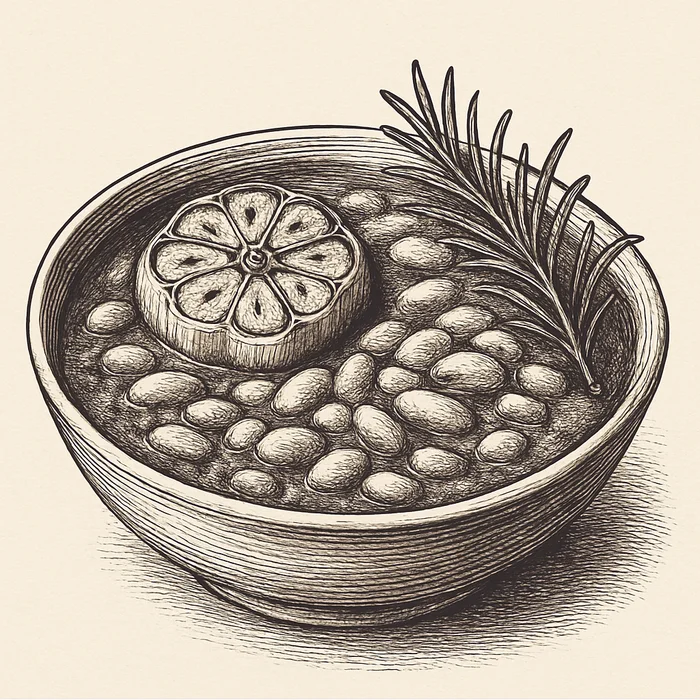
Roasted Garlic and White Bean Soup with Rosemary
A Tuscan-inflected soup that turns two full heads of garlic from seasoning into a main ingredient -- and deploys rosemary not just as an herb but as a lipid oxidation shield backed by peer-reviewed evidence.
Why These Ingredients Together
This soup is built around the cardiovascular axis. Roasted garlic delivers allicin-derived organosulfur compounds (diallyl disulfide, S-allylcysteine) that meta-analyses associate with 8.4 mmHg systolic blood pressure reduction in hypertensive patients -- comparable to first-line antihypertensive medication. White beans contribute 8g of soluble fiber per 100g cooked, which the gut microbiota ferments into butyrate, propionate, and acetate -- short-chain fatty acids that bind to GPR43 receptors on regulatory T cells, directly suppressing inflammatory signaling. Rosemary's carnosic acid activates the Nrf2 pathway, your cells' master antioxidant response, through a unique pro-electrophilic mechanism that becomes more potent under oxidative stress. And the finishing drizzle of raw extra-virgin olive oil delivers oleocanthal -- a natural COX inhibitor with anti-inflammatory potency measured at roughly equivalent to low-dose ibuprofen -- plus hydroxytyrosol, one of the highest-ORAC natural antioxidants known. The lemon juice at the end is not just for brightness: its vitamin C increases non-heme iron absorption from the beans by 2-6x.
Ingredients
- 2 heads garlic
- 4 tablespoons extra-virgin olive oil, divided
- 2 cans (800g total) cannellini or Great Northern beans, drained and rinsed
- 1 medium yellow onion, diced
- 2 stalks celery, diced
- 3 sprigs fresh rosemary (about 2 tablespoons leaves)
- 4 cups (960ml) vegetable stock
- 1 bay leaf
- 1/2 teaspoon red pepper flakes
- 1 tablespoon lemon juice
- 1 teaspoon flaky sea salt, plus more to taste
- Freshly ground black pepper
- Crusty sourdough bread, for serving
Instructions
-
Roast the garlic. Preheat the oven to 200C (400F). Slice the top quarter off each garlic head to expose the cloves. Place each head on a square of aluminum foil, drizzle with 1 tablespoon olive oil total, and wrap tightly. Roast for 35-40 minutes until the cloves are golden and soft enough to squeeze out like paste. (Roasting converts garlic's harsh, pungent allicin into mellower organosulfur compounds -- particularly S-allylcysteine, which is the same compound concentrated in aged garlic extract, the form most consistently shown to reduce blood pressure in clinical trials. You lose some raw allicin potency but gain palatability and retain the cardiovascular-active metabolites.)
-
Start the soup base while the garlic roasts. Heat 2 tablespoons olive oil in a large Dutch oven or heavy pot over medium heat. Add the onion and celery with a pinch of salt. Cook for 6-7 minutes until softened. Strip the rosemary leaves from their stems, mince finely, and add to the pot. Cook for 1 minute until fragrant. (Rosemary's volatile terpenes -- 1,8-cineole and camphor -- are released by heat. These are the same compounds that correlated with improved cognitive performance in the Moss and Oliver 2012 inhalation study. Cooking rosemary in a covered pot concentrates these volatiles.)
-
Add the beans and stock. Stir in the drained beans, vegetable stock, bay leaf, and red pepper flakes. Bring to a boil, then reduce to a simmer. Cook uncovered for 15 minutes, allowing the beans to absorb flavor and the liquid to reduce slightly.
-
Squeeze in the roasted garlic. When the garlic is done, let it cool for a few minutes, then squeeze the soft cloves directly into the soup. Stir to dissolve them into the broth -- they should melt into the liquid almost immediately.
-
Blend to your preferred texture. Remove the bay leaf. Using an immersion blender, puree roughly half the soup directly in the pot, leaving plenty of whole beans for texture. (If you do not have an immersion blender, transfer 2 cups to a countertop blender, puree until smooth, and stir back in.) You want a creamy base studded with intact beans -- not a uniform puree.
-
Season and finish. Remove from heat. Stir in the lemon juice and salt. Taste and adjust -- the soup should be savory with a gentle garlic sweetness and a bright acid lift from the lemon. Ladle into bowls and drizzle each serving generously with the remaining raw extra-virgin olive oil. Crack black pepper on top and serve with sourdough. (The raw finishing oil is non-negotiable from a longevity perspective. Cooking destroys oleocanthal and hydroxytyrosol. The oil you cook with provides fat for satiety and flavor; the oil you finish with provides the polyphenols.)
What Can Go Wrong
-
Under-roasting the garlic. At 35 minutes, the cloves should be deep golden and spreadable. Pale, firm garlic that resists squeezing has not undergone the full Maillard transformation -- it will taste sharp and sulfurous rather than sweet and nutty. If your heads are large, give them the full 40 minutes.
-
Over-blending the soup. The contrast between creamy broth and whole beans is what makes this soup interesting to eat. Puree less than you think you should. You can always blend more; you cannot un-blend.
-
Skipping the lemon. Without acid, this soup tastes flat and one-dimensional no matter how well seasoned it is. The lemon juice restructures the entire flavor balance, and its vitamin C meaningfully improves iron absorption from the beans -- particularly important for anyone on a plant-based diet.
Science Notes
Garlic is one of the most extensively studied food-as-medicine ingredients, with meta-analyses of 11+ randomized controlled trials confirming clinically significant blood pressure reductions. The mechanism involves hydrogen sulfide signaling: organosulfur compounds from garlic are metabolized into H2S, which relaxes vascular smooth muscle and dilates blood vessels. Aged garlic extract and roasted garlic share a similar compound profile (dominated by S-allylcysteine rather than raw garlic's allicin), and it is the aged/roasted form that has the most consistent clinical evidence. The white beans serve as a prebiotic substrate: their resistant starch and oligosaccharides selectively feed Bifidobacterium and Lactobacillus species, which in turn produce butyrate that strengthens the intestinal epithelial barrier and reduces systemic endotoxin translocation -- a key driver of chronic low-grade inflammation.
Nutrition Highlights
- Fiber: ~15g per serving from white beans, exceeding half the daily recommended intake and providing prebiotic fuel for butyrate-producing gut bacteria
- Plant protein: ~14g per serving from cannellini beans, rich in lysine (complement with sourdough bread for complete amino acid coverage)
- Organosulfur compounds: Two full roasted garlic heads provide a substantial dose of S-allylcysteine and diallyl disulfide, the clinically validated cardiovascular-active compounds
- Oleocanthal: The raw EVOO finishing drizzle delivers intact oleocanthal, a natural COX-1/COX-2 inhibitor with measured anti-inflammatory potency