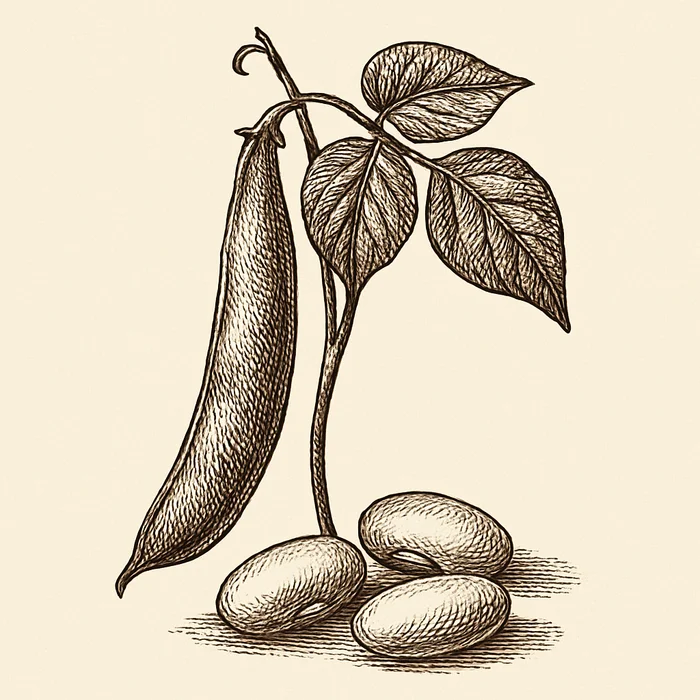
Navy Beans
Navy beans (white/cannellini beans) are used in multiple Longevity Diet dishes including the Molochio pasta e vaianeia, Ligurian minestrone, and white bean salad, recommended at 150 g wet weight (drained) per serving.
Why It Matters for Longevity
Navy beans are a cornerstone of Italian Blue Zone cooking -- appearing in virtually every longevity-associated dietary pattern from Sardinia and Molochio. They provide plant protein, resistant starch, soluble fiber, folate, iron, and magnesium within the Longevity Diet's framework of low IGF-1 stimulation and high gut microbiome support.
Legume consumption is the single most consistent dietary predictor of longevity across Blue Zone centenarian populations; each 20 g/day increase in legume intake is associated with a 7–8% reduction in mortality risk (Afshin et al., 2014, Am J Clin Nutr).
Regular legume consumption including cannellini/navy beans is inversely associated with type 2 diabetes incidence in prospective cohort data; their resistant starch and soluble fiber content slow glucose absorption and improve postprandial insulin response (Becerra-Tomás et al., 2018, Clin Nutr).
In the PREDIMED cohort, legume consumption was associated with reduced all-cause, cardiovascular, and cancer mortality in a dose-dependent relationship; the highest tertile of legume intake showed a 23% lower risk of all-cause mortality (Papandreou et al., 2019, Clin Nutr).
How to Use It
Use in pasta e fagioli, minestrone, and white bean salad. Soak dried beans for 8–12 hours before cooking to reduce phytates and lectins. Canned cannellini/navy beans are a convenient equivalent -- rinse well to reduce sodium. Always add vitamin C (lemon, tomatoes) to the dish for maximum iron bioavailability.
What to Pair It With
| Ingredient | Why | Tradition |
|---|---|---|
| Pasta | Pasta e fagioli -- archetypal Longevity Diet pairing; complete protein and sustained energy | The Longevity Diet |
| Tomatoes | Tomato vitamin C converts non-heme iron to the absorbable ferrous form | Italian |
| Rosemary | Traditional herb pairing in Mediterranean bean preparations | Mediterranean |
| Extra-virgin olive oil | Olive oil's oleocanthal reduces inflammation; fat improves absorption of fat-soluble vitamins | The Longevity Diet |
| Garlic | Classic flavor base; allicin complements legume protein for cardiovascular benefit | Italian |
Flavor Profile
Mild, slightly earthy, creamy, neutral. Aroma is subtle, earthy, nutty when cooked. Texture is creamy with smooth interior and tender skin when fully cooked.
The Science
- Afshin et al., 2014, Am J Clin Nutr: Legume consumption is the single most consistent dietary predictor of longevity in Blue Zone centenarian populations; each 20 g/day increase associated with 7–8% lower mortality risk.
- Becerra-Tomás et al., 2018, Clin Nutr: Legume consumption inversely associated with type 2 diabetes incidence in PREDIMED-Plus cohort; resistant starch and soluble fiber improve postprandial insulin response.
- Papandreou et al., 2019, Clin Nutr: In PREDIMED, highest tertile of legume consumption associated with 23% lower all-cause mortality and significant reductions in cardiovascular and cancer mortality.
References
- Afshin A, Micha R, Khatibzadeh S, Mozaffarian D. Consumption of nuts and legumes and risk of incident ischemic heart disease, stroke, and diabetes: a systematic review and meta-analysis. Am J Clin Nutr. 2014;100(1):278-288. PMID: 24871476. doi:10.3945/ajcn.113.076901
- Becerra-Tomás N, Díaz-López A, Rosique-Esteban N, et al. Legume consumption is inversely associated with type 2 diabetes incidence in adults: A prospective assessment from the PREDIMED-Plus study. Clin Nutr. 2018;37(3):906-913. PMID: 28392166. doi:10.1016/j.clnu.2017.03.015
- Papandreou C, Becerra-Tomás N, Bulló M, et al. Legume consumption and risk of all-cause, cardiovascular, and cancer mortality in the PREDIMED study. Clin Nutr. 2019;38(1):348-356. PMID: 29352655. doi:10.1016/j.clnu.2017.12.019
Key Nutrients
| Nutrient | Per 100g | Notes |
|---|---|---|
| Plant protein | 8.2 g (cooked) | PDCAAS ~0.68; complements grains to provide all essential amino acids; methionine-limiting |
| Fiber (total) | 10.5 g (cooked) | Among the highest fiber contents of any legume; high in soluble fiber that reduces LDL and feeds butyrate-producing bacteria |
| Resistant starch | ~3–5 g (cooked) | Fermented by colonic bacteria to short-chain fatty acids (butyrate, propionate); reduces glycaemic index |
| Folate | 140 mcg (cooked) | High natural folate content; important for DNA synthesis and homocysteine metabolism |