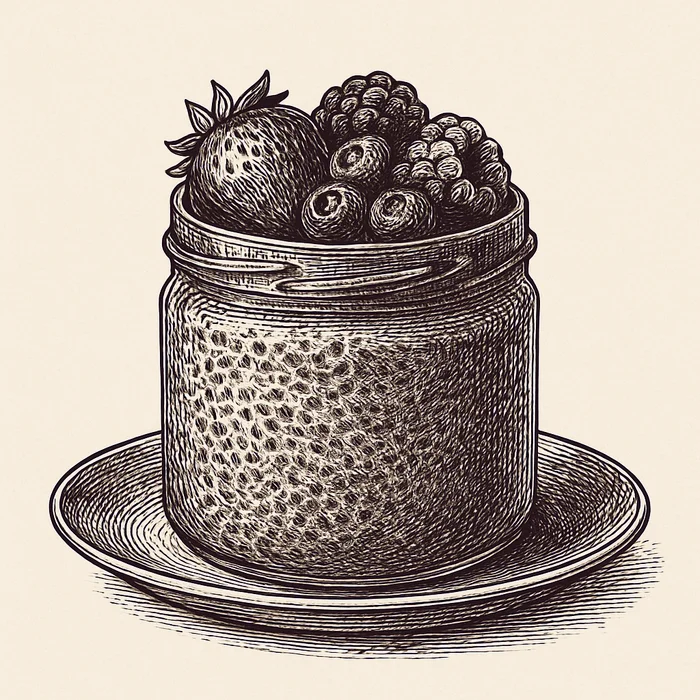
Matcha Green Tea Chia Pudding with Mixed Berries
An overnight pudding that requires zero cooking and delivers one of the most concentrated antioxidant profiles in this collection -- EGCG from matcha, anthocyanins from berries, and ALA omega-3s from two seed sources.
Why These Ingredients Together
Matcha is the nuclear option for green tea catechins: because you consume the entire ground leaf rather than steeping and discarding it, a single teaspoon of matcha delivers roughly the EGCG content of 3 cups of brewed green tea. EGCG (epigallocatechin gallate) promotes apoptosis of damaged cells while sparing healthy ones, reverses endothelial dysfunction, and has shown cancer-preventive effects across multiple organ sites in both animal and human studies. Blueberries bring anthocyanins -- a different class of polyphenol antioxidant that operates through complementary mechanisms, including activation of the Nrf2 pathway and direct neutralization of reactive oxygen species. This antioxidant stacking approach means you are hitting oxidative stress from multiple angles simultaneously. Chia seeds and flaxseeds together deliver a substantial dose of ALA omega-3 fatty acids alongside both soluble and insoluble fiber. The soluble fiber in chia forms a gel (which is literally what makes this pudding set) that slows gastric emptying and feeds beneficial gut bacteria. Flaxseeds add lignans -- phytoestrogens that are converted by gut bacteria into enterolactone, associated with reduced breast cancer risk in observational studies.
Ingredients
- 60g (1/2 cup) chia seeds
- 2 tablespoons ground flaxseeds (golden or brown)
- 2 teaspoons ceremonial or culinary-grade matcha powder
- 400ml unsweetened oat or almond milk
- 200ml coconut milk (from a can, not a carton)
- 1 tablespoon honey or maple syrup (adjust to taste)
- 1/2 teaspoon vanilla extract
- 200g mixed berries (blueberries, raspberries, blackberries)
- 2 tablespoons pomegranate seeds (optional)
- Handful of chopped walnuts or almonds for topping
Instructions
-
Sift the matcha. Push the matcha through a fine-mesh sieve into a small bowl. Add 2 tablespoons of the milk and whisk vigorously with a fork or small whisk until you have a smooth, lump-free paste. (Matcha clumps aggressively in cold liquid. Making a paste first ensures even distribution. Ceremonial-grade matcha is smoother and less bitter than culinary grade, but either works here.)
-
Combine the pudding base. In a large bowl or jar, combine the chia seeds, ground flaxseeds, matcha paste, remaining milk, coconut milk, honey, and vanilla. Whisk thoroughly for about 2 minutes, making sure the chia seeds are not clumping together at the bottom. (The chia seeds begin absorbing liquid immediately and will clump if not dispersed quickly. The coconut milk adds fat, which serves as a carrier for the fat-soluble EGCG and improves its absorption.)
-
Stir again after 10 minutes. The chia seeds will have started to gel. Give the mixture another vigorous stir to break up any clumps and ensure even hydration.
-
Refrigerate overnight. Cover and refrigerate for at least 4 hours, but ideally 8-12 hours. The pudding is ready when it has a thick, tapioca-like consistency and no liquid remains at the bottom. (The extended soak fully hydrates the chia seeds, maximizing the soluble fiber gel formation. This gel is what slows digestion and creates the sustained energy release that makes this a strong breakfast option.)
-
Serve with the berries. Divide the pudding among bowls or jars. Top generously with mixed berries, pomegranate seeds if using, and a scattering of chopped nuts. Do not stir the berries in -- you want them fresh and bright on top.
What Can Go Wrong
-
Lumpy matcha. If you dump the powder straight into cold milk, you will spend the rest of your evening fishing out green clumps. The sift-and-paste method eliminates this completely. Takes 60 seconds and is non-negotiable.
-
Too thick or too thin. The ratio matters. Too much chia and you get something like wallpaper paste; too little and it never sets. If it is too thick in the morning, stir in a splash of milk. If too thin, it probably needed more time -- give it another 2 hours.
-
Bitter matcha taste. Low-quality matcha can be aggressively bitter, especially without the tempering sweetness of a traditional preparation. Use at least culinary-grade matcha from a reputable source. The berries and honey provide enough sweetness to balance good matcha, but they cannot save cheap, stale powder.
Science Notes
Matcha's advantage over brewed green tea is simple math: you consume the entire leaf rather than an infusion. This means roughly 3x the EGCG per serving. A large meta-analysis of 18 prospective studies found green tea consumption associated with significantly reduced all-cause mortality, with the strongest effects for cardiovascular death. The anthocyanins in blueberries have been linked to a 34% reduction in heart attack risk in women consuming 3+ servings per week in the Nurses' Health Study. The fiber in this pudding -- roughly 14g per serving from chia, flax, and berries combined -- exceeds the amount shown to meaningfully shift gut microbiome composition toward anti-inflammatory species. This is a breakfast that quietly stacks four independent longevity mechanisms (antioxidant protection, anti-inflammatory signaling, gut microbiome modulation, and omega-3 provision) in something that tastes like dessert.
Nutrition Highlights
- EGCG: ~100mg per serving from matcha, equivalent to roughly 3 cups of brewed green tea, with absorption aided by the coconut milk fat
- Anthocyanins: ~150mg per serving from mixed berries, associated with cardiovascular protection and reduced all-cause mortality
- ALA omega-3: ~3g per serving from combined chia and flaxseeds, contributing to the plant-based omega-3 pool
- Fiber: ~14g per serving from chia, flax, and berries, supporting gut microbiome diversity and sustained energy release