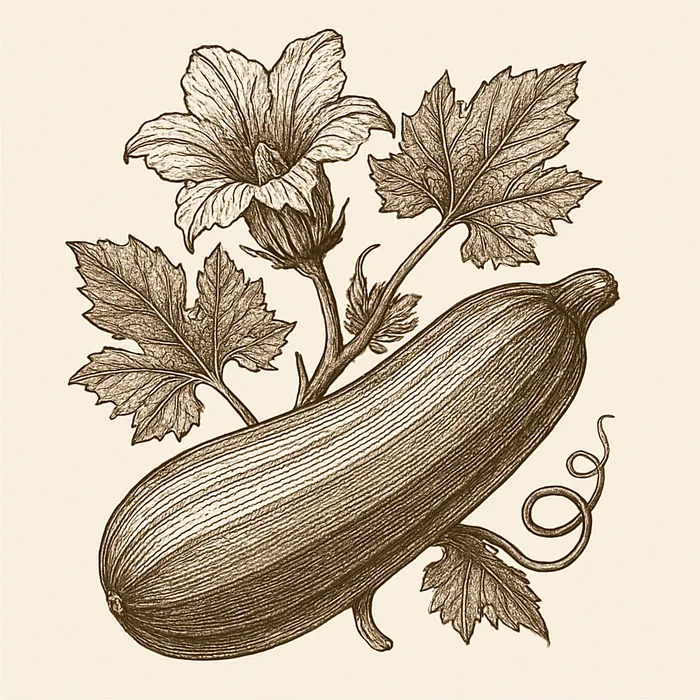
Zucchini
Zucchini is a frequently used vegetable in the Longevity Diet, appearing across multiple dishes including rice with zucchini and peas, Ligurian minestrone, and black rice with shrimp.
Why It Matters for Longevity
Zucchini is a low-calorie, high-water vegetable that contributes volume and micronutrients to meals without significant caloric load, supporting satiety on a calorie-appropriate longevity diet. At roughly 17 kcal per 100g with 1.1g fiber, it is one of the few foods where you can eat 250--300g -- enough to fill most of a dinner plate -- for fewer than 50 kcal.
Aune et al.'s 2017 meta-analysis of 95 prospective studies confirmed that higher vegetable intake is dose-dependently associated with reduced all-cause mortality -- each 100 g/day increment linked to a 9% lower risk of dying. Zucchini fits naturally into the daily vegetable volume (200--400 g/day) the Longevity Diet targets (Aune et al., 2017, Int J Epidemiol).
Lutein and Zeaxanthin: Eye and Brain
Zucchini provides lutein and zeaxanthin at approximately 2.1 mg per 100g -- fat-soluble carotenoids that preferentially accumulate in the macula of the retina and in the cerebral cortex, where they are the dominant carotenoids in brain tissue.
In the retina, lutein and zeaxanthin function as short-wavelength light filters and direct antioxidants, protecting photoreceptors from photo-oxidative damage. Epidemiological evidence is most robust for late-stage macular degeneration: a systematic review and meta-analysis of six longitudinal cohort studies found that the highest versus lowest dietary lutein and zeaxanthin intake was not significantly associated with early AMD (RR 0.96, 95% CI 0.78--1.17) but was associated with a 26% lower risk of late AMD (RR 0.74, 95% CI 0.57--0.97) and a 32% lower risk of neovascular AMD (RR 0.68, 95% CI 0.51--0.92) (Ma et al., 2012, Br J Nutr). The specificity for late rather than early AMD suggests lutein and zeaxanthin are particularly relevant once oxidative stress load has reached the threshold where the antioxidant reserve of the macula becomes rate-limiting.
A longer-term analysis from the Nurses' Health Study and Health Professionals Follow-up Study (~24 years of follow-up, 1,118 advanced AMD cases) confirmed that higher predicted plasma lutein/zeaxanthin score was associated with a 41% lower risk of advanced AMD (HR 0.59, 95% CI 0.48--0.73, P for trend <0.001) (Wu et al., 2015, JAMA Ophthalmol). The magnitude of protection from dietary intake alone -- without supplementation -- is notable, and it was sustained across more than two decades of follow-up.
These fat-soluble carotenoids require dietary fat for intestinal absorption. Sautéing zucchini in olive oil or serving it alongside a fat-containing dish is not optional from a bioavailability standpoint: without a lipid vehicle, micellarization in the small intestine is negligible.
Polyphenol Profile
Beyond carotenoids, zucchini contains a range of phenolic compounds. Quantitative analyses using HPLC have identified chlorogenic acid, caffeic acid, ferulic acid, and p-coumaric acid in the phenolic acid fraction, alongside flavonoids including rutin (quercetin-3-O-rutinoside) as the most abundant individual compound (Kopczyńska et al., 2020, Antioxidants). Organic cultivation has been associated with significantly higher concentrations of these phenolic acids and flavonoids compared to conventionally grown zucchini, likely reflecting the role of biotic stress responses in phenolic biosynthesis.
Chlorogenic acid is the principal hydroxycinnamic acid in zucchini. It reversibly inhibits glucose-6-phosphatase and delays intestinal glucose absorption, with mechanistic studies demonstrating attenuation of postprandial glucose-dependent insulinotropic peptide (GIP) secretion. The concentration in a typical 200g serving is modest compared to coffee (a much richer source), but every incremental contribution to the dietary chlorogenic acid load matters on a diet where fruits, vegetables, and legumes are the primary phenolic sources.
A separate investigation into zucchini bioactive compounds found that lutein, beta-carotene, zeaxanthin, and dehydroascorbic acid isolated from the flesh demonstrated non-genotoxic properties and anti-genotoxic activity against hydrogen peroxide-induced DNA damage. Beta-carotene from the skin fraction was identified as a driver of pro-apoptotic activity in human leukemia cell lines, though these findings are in vitro and cannot be directly extrapolated to human tissue concentrations achievable through diet (Martínez-Valdivieso et al., 2017, Nutrients).
Micronutrient Contributions
Potassium (262 mg/100g): Zucchini is a useful potassium source given its high water content and very low sodium (~8 mg/100g), giving it an extremely favorable sodium:potassium ratio. High potassium intake relative to sodium is associated with lower blood pressure and reduced cardiovascular risk across multiple meta-analyses.
Vitamin C (~18 mg/100g): Light sautéing or steaming preserves most vitamin C; prolonged boiling can reduce content by 30--50%. Given that zucchini is most commonly cooked briefly in olive oil, vitamin C losses in typical Mediterranean preparation are modest.
Folate (~24 mcg/100g): Contributes to daily folate accumulation; important for DNA methylation and one-carbon metabolism. Not a high-folate vegetable by itself, but relevant as part of overall vegetable intake.
Manganese (~0.18 mg/100g): Cofactor for manganese superoxide dismutase (MnSOD), the primary mitochondrial antioxidant enzyme. Adequate manganese intake supports mitochondrial ROS defense -- a mechanistic relevance to longevity biology even at these modest concentrations.
Caloric Density and Satiety
At 17 kcal per 100g, zucchini is among the least calorically dense whole foods. Replacing higher-calorie side dishes with zucchini-based preparations reduces total caloric density of meals without reducing meal volume or satiety -- a strategy that has been demonstrated to improve ad libitum energy intake regulation in controlled trials. On a longevity-oriented diet aiming for moderate caloric restriction without hunger, this volumetric advantage is practically significant.
How to Use It
Sauté in olive oil with garlic -- the standard Italian preparation delivers carotenoid bioavailability alongside polyphenol intake from the oil. Add to minestrone, slice thin for grilling, or spiralize as a pasta substitute. Light cooking (2--3 minutes) is ideal; extended boiling reduces potassium and vitamin C. The skin contains higher concentrations of chlorophyll and some phenolic compounds; peeling is unnecessary and reduces micronutrient density.
What to Pair It With
| Ingredient | Why | Tradition |
|---|---|---|
| wild rice | Featured together in the Longevity Diet rice with zucchini recipe; zucchini adds hydration, vitamin C, and potassium | Rice with zucchini dish in The Longevity Diet |
| shrimp | Paired in the Longevity Diet black rice with shrimp and zucchini dish; shrimp provides omega-3 and iodine while zucchini contributes fiber, potassium, and phytonutrients | Black rice with shrimp and zucchini |
| peas | Together in the Longevity Diet rice with zucchini and peas recipe; complementary micronutrient profiles | Rice with zucchini and peas |
| tomatoes | Ratatouille and Italian soffritto base | Mediterranean |
| basil | Ligurian minestrone featuring zucchini and basil pesto | Ligurian |
| olive oil | Fat required for carotenoid absorption; sautéing is the standard preparation | Italian/Mediterranean |
| garlic | Aglio e zucchine; allicin adds independent sulfur compound synergy | Italian |
Synergies
- Wild Rice (complement): Featured together in the Longevity Diet rice with zucchini recipe; zucchini adds hydration, vitamin C, and potassium while wild rice provides sustained energy and complete grain nutrition.
- Olive Oil (synergy): Sautéing zucchini in olive oil increases absorption of fat-soluble carotenoids (lutein, zeaxanthin, beta-carotene); the standard Mediterranean preparation method.
- Shrimp (complement): Paired in the Longevity Diet black rice with shrimp and zucchini dish; shrimp provides omega-3 and iodine while zucchini contributes fiber, potassium, and phytonutrients.
Flavor Profile
Taste: mild, slightly sweet, fresh, neutral. Aroma: fresh vegetal, light, cucumber-like. Texture: tender, slightly firm when raw, soft when cooked, watery. Category: vegetable / side / soup ingredient.
The Science
- Aune et al., 2017, Int J Epidemiol: Meta-analysis of 95 prospective studies: each 100 g/day vegetable intake increment associated with 9% lower all-cause mortality; higher intake of vegetables including squash varieties consistently linked to reduced chronic disease risk.
- Ma et al., 2012, Br J Nutr: Meta-analysis of 6 cohort studies; dietary lutein/zeaxanthin: late AMD RR 0.74 (95% CI 0.57--0.97); neovascular AMD RR 0.68 (95% CI 0.51--0.92); no significant association with early AMD.
- Wu et al., 2015, JAMA Ophthalmol: Nurses' Health Study + Health Professionals Follow-up (~24 years, 1,118 advanced AMD cases); highest predicted lutein/zeaxanthin score associated with 41% lower advanced AMD risk (HR 0.59, 95% CI 0.48--0.73).
- Kopczyńska et al., 2020, Antioxidants: HPLC characterization of courgette polyphenol profile; chlorogenic acid, ferulic acid, caffeic acid, and rutin identified; organic cultivation associated with significantly higher phenolic acid and flavonoid content.
- Martínez-Valdivieso et al., 2017, Nutrients: Zucchini bioactives (lutein, beta-carotene, zeaxanthin, dehydroascorbic acid) showed non-genotoxic and anti-genotoxic properties; beta-carotene from skin fraction associated with pro-apoptotic activity in leukemia cell lines (in vitro).
- Ribaya-Mercado & Blumberg, 2004, J Am Coll Nutr: Lutein and zeaxanthin are protective against age-related macular degeneration and associated with cognitive health; fat co-ingestion is essential for bioavailability of these fat-soluble carotenoids.
References
- Aune D, Giovannucci E, Boffetta P, et al. Fruit and vegetable intake and the risk of cardiovascular disease, total cancer and all-cause mortality — a systematic review and dose-response meta-analysis of prospective studies. Int J Epidemiol. 2017;46(3):1029-1056. PMID: 28338764. doi:10.1093/ije/dyw319
- Ma L, Dou HL, Wu YQ, et al. Lutein and zeaxanthin intake and the risk of age-related macular degeneration: a systematic review and meta-analysis. Br J Nutr. 2012;107(3):350-359. PMID: 21899805. doi:10.1017/S0007114511004260
- Wu J, Cho E, Willett WC, Sastry SM, Schaumberg DA. Intakes of Lutein, Zeaxanthin, and Other Carotenoids and Age-Related Macular Degeneration During 2 Decades of Prospective Follow-up. JAMA Ophthalmol. 2015;133(12):1415-1424. PMID: 26447482. doi:10.1001/jamaophthalmol.2015.3590
- Kopczyńska K, Kazimierczak R, Średnicka-Tober D, et al. The Profile of Selected Antioxidants in Two Courgette Varieties from Organic and Conventional Production. Antioxidants (Basel). 2020;9(5):437. PMID: 32397495. doi:10.3390/antiox9050437
- Martínez-Valdivieso D, Font R, Fernández-Bedmar Z, et al. Role of Zucchini and Its Distinctive Components in the Modulation of Degenerative Processes: Genotoxicity, Anti-Genotoxicity, Cytotoxicity and Apoptotic Effects. Nutrients. 2017;9(7):755. PMID: 28708122. doi:10.3390/nu9070755
- Ribaya-Mercado JD, Blumberg JB. Lutein and zeaxanthin and their potential roles in disease prevention. J Am Coll Nutr. 2004;23(6 Suppl):567S-587S. PMID: 15637215. doi:10.1080/07315724.2004.10719427
Key Nutrients
| Nutrient | Per 100g | Notes |
|---|---|---|
| Potassium | ~262 mg per 100 g raw | Supports blood pressure regulation and cardiovascular health; very low sodium (~8 mg) gives favorable Na:K ratio; retained well in steaming vs boiling. |
| Vitamin C | ~18 mg per 100 g raw (~20% DV) | Water-soluble; light steaming or sautéing preserves most vitamin C; boiling can reduce by 30--50%. |
| Folate | ~24 mcg per 100 g raw (~6% DV) | Contributes to daily folate intake; important for DNA methylation and cell division. |
| Lutein + Zeaxanthin | ~2.1 mg per 100 g | Fat-soluble carotenoids that accumulate in the macula and brain; highest-evidence dietary protection against late-stage AMD; bioavailability requires co-consumption with fat. |
| Manganese | ~0.18 mg per 100 g | Cofactor for mitochondrial MnSOD antioxidant enzyme; contributes to daily manganese requirement (~2 mg adequate intake). |