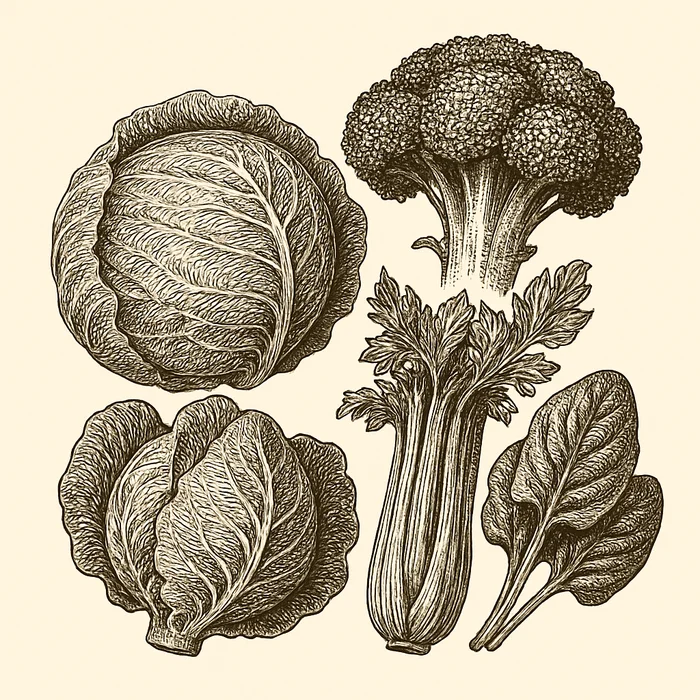
Green Vegetables
Green vegetables have an almost undetectable effect on blood glucose -- very low carbohydrate, very high fiber. Among all vegetable subgroups, greens show the strongest dose-response relationship with reduced mortality.
Why It Matters for Longevity
Increased green vegetable intake is associated with 14% reduced risk of type 2 diabetes per 1.15 servings per day (Carter et al., 2010, BMJ). Cruciferous and green leafy vegetable intake specifically reduces subclinical atherosclerosis in older adults — an effect not seen with other vegetable types, confirming that greens provide unique cardiovascular benefits beyond general vegetable intake (Blekkenhorst et al., 2018, J Am Heart Assoc). Chlorophyll, the pigment responsible for the green color, contains magnesium at its center and may have anti-mutagenic properties.
Deeper Dives
- Spinach, Chard & Beets -- nitrate and folate powerhouses
- Kale -- glucosinolates and sulforaphane
- Escarole -- prebiotic inulin and bitter compounds
How to Use It
Eat green vegetables daily with every main meal. Dress with extra-virgin olive oil to improve fat-soluble nutrient absorption. Brief cooking (steaming, blanching) preserves more nutrients than prolonged boiling. Eat a variety: dark leafy greens (spinach, kale), cruciferous (broccoli, kohlrabi), and aromatic greens (fennel, celery).
What to Pair It With
| Ingredient | Why | Tradition |
|---|---|---|
| Extra-virgin olive oil | Fat-soluble vitamins and polyphenols require dietary fat for absorption | Mediterranean |
| Lemon | Vitamin C enhances non-heme iron absorption from greens | Mediterranean |
| Legumes | Complementary nutrients; traditional combination in Italian cuisine | Mediterranean |
| Garlic | Allicin adds cardiovascular benefit; classic Mediterranean cooking | Mediterranean |
Flavor Profile
Highly variable: from delicate butter lettuce to peppery arugula, bitter escarole to mild spinach, crisp fennel to earthy kale. The bitter notes in darker greens (from glucosinolates, sesquiterpene lactones) diminish with brief cooking. Color intensity reflects polyphenol and chlorophyll concentration.
The Science
- Carter et al., 2010, BMJ: Meta-analysis found 14% reduced risk of type 2 diabetes per 1.15 servings/day of green leafy vegetables.
- Blekkenhorst et al., 2018, J Am Heart Assoc: Cruciferous and total vegetable intake inversely associated with subclinical atherosclerosis progression in older adults, with cruciferous vegetables showing strongest association.
References
- Carter P, Gray LJ, Troughton J, Khunti K, Davies MJ. Fruit and vegetable intake and incidence of type 2 diabetes mellitus: systematic review and meta-analysis. BMJ. 2010;341:c4229. PMID: 20724400. doi:10.1136/bmj.c4229
- Blekkenhorst LC, Sim M, Bondonno CP, et al. Cruciferous and Total Vegetable Intakes Are Inversely Associated With Subclinical Atherosclerosis in Older Adult Women. J Am Heart Assoc. 2018;7(8):e008391. PMID: 29618474. doi:10.1161/JAHA.117.008391
Key Nutrients
| Nutrient | Per 100g (varies by type) | Notes |
|---|---|---|
| Vitamin K1 | 50–600 mcg | Fat-soluble; absorption requires dietary fat; essential for bone and vascular health |
| Folate | 50–200 mcg | Water-soluble; critical for DNA synthesis and methylation |
| Magnesium | 15–50 mg | Central atom in chlorophyll; cofactor for >300 enzymatic reactions |
| Glucosinolates (cruciferous) | 10–100 mg | Hydrolyzed to isothiocyanates and indoles with chemopreventive activity |