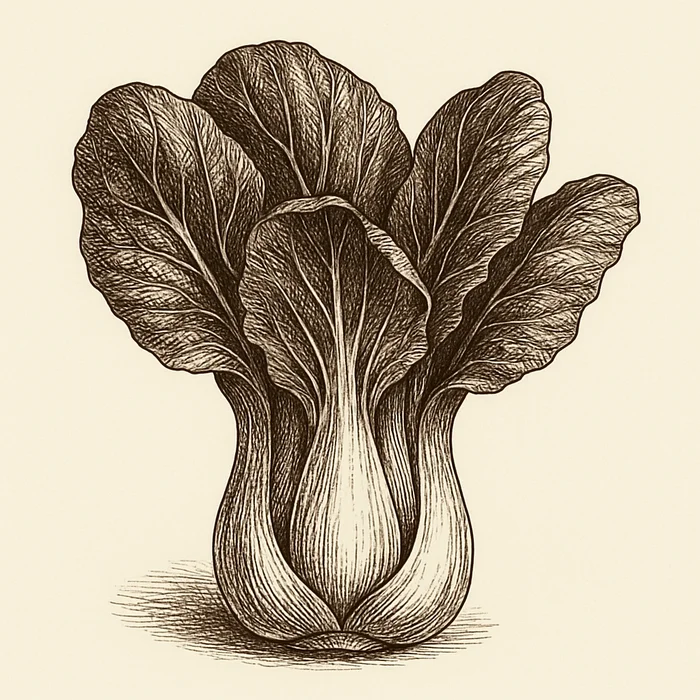
Bok Choy
Bok choy (Brassica rapa subsp. chinensis) is the mildest and most versatile of the cruciferous vegetables, providing vitamin C (45 mg per 100g raw), calcium (105 mg per 100g -- better absorbed than dairy), and glucosinolates that become isothiocyanates on cell damage.
Why It Matters for Longevity
Bok choy delivers two distinct longevity mechanisms. First, it is an outstanding source of bone-supporting nutrients: calcium and vitamin K together, in a matrix where calcium bioavailability (~54%) exceeds cow's milk (~32%), making it genuinely valuable for skeletal health in dairy-light dietary patterns.
Second, like all Brassica vegetables, bok choy produces isothiocyanates when cells are damaged by chopping or chewing. These compounds activate Nrf2-mediated phase II detoxification enzymes and modulate multiple cancer-preventive pathways (Nair & Nair, 2007, Acta Pharmacol Sin).
Higher cruciferous vegetable intake is consistently associated with reduced cancer risk and all-cause mortality in epidemiological data. A systematic review found each daily serving of cruciferous vegetables associated with significantly lower risk of colorectal cancer and cardiovascular disease mortality (Abdull Razis & Noor, 2013, Asian Pac J Cancer Prev).
Higher fruit and vegetable intake -- including cruciferous vegetables like bok choy -- is associated with significantly lower all-cause mortality risk; each 200g/day increment reduces mortality risk by approximately 8% (Aune et al., 2017, Int J Epidemiol).
Calcium Bioavailability: Why Low Oxalate Matters
Bok choy's 105 mg calcium per 100 g only tells half the story. Calcium absorption depends critically on the oxalate content of the food matrix. High-oxalate vegetables like spinach bind calcium as insoluble calcium oxalate in the gut, limiting absorption to below 5%. Bok choy, like kale and broccoli, is a low-oxalate cruciferous vegetable.
A controlled study using intrinsically labeled samples in 11 healthy women found calcium absorption from kale at 40.9% versus milk at 32.1% — a statistically significant advantage (p < 0.025), explained by kale's low oxalate content (Heaney & Weaver, 1990, Am J Clin Nutr). Bok choy shares the same biochemical basis: it is classified with kale, broccoli, and Chinese cabbage as low-oxalate Brassica vegetables. This means a 150 g serving of bok choy delivers more absorbable calcium than a similar caloric portion of spinach, which has substantially more total calcium but locks most of it in an unabsorbable salt.
For people following dairy-free or dairy-light dietary patterns, this distinction matters. Bok choy, combined with sesame, tofu, or other calcium-rich plant foods, can support adequate calcium intake without reliance on dairy.
Glucosinolates and the NRF2 Pathway
Bok choy's glucosinolates (~30–60 mg/100 g) are the biochemical precursors to isothiocyanates. The conversion happens enzymatically: when plant cells are ruptured by chopping or chewing, myrosinase enzyme contacts glucosinolates and hydrolyzes them to isothiocyanates, including sulforaphane (dominant in broccoli) and related compounds found in all Brassica species.
Sulforaphane activates the Nrf2-Keap1 signaling pathway through thiocarbamylation of Cys151 on the Keap1 protein. This disrupts Keap1's control over Nrf2, allowing Nrf2 to accumulate in the nucleus and drive expression of cytoprotective phase II detoxification enzymes (glutathione S-transferases, thioredoxin reductase, heme oxygenase-1). The Keap1-NRF2 axis is considered a validated chemopreventive target, and sulforaphane from cruciferous vegetables is the best-characterized dietary activator of it (Yang et al., 2016, Semin Oncol).
Important cooking note: prolonged boiling or steaming above 70°C inactivates myrosinase, preventing the glucosinolate-to-isothiocyanate conversion in the plant itself. However, gut bacteria retain limited beta-thioglucosidase activity that can partially compensate. Lightly stir-frying bok choy preserves both myrosinase activity and textural integrity — overcooking eliminates both.
Cruciferous Vegetables and Cancer Risk: The Population Evidence
An umbrella review published in 2024 synthesized evidence from 22 meta-analyses encompassing 175 independent cancer studies. Cruciferous vegetable consumption was associated with reduced risk across multiple cancer types, including lung, gastric, prostate, breast, endometrial, ovarian, and renal cell carcinoma (Guo et al., 2024, J Food Sci).
A more specific meta-analysis of 89 observational studies found that the highest cruciferous vegetable intake group had a 19% lower risk of overall gastrointestinal cancer (RR 0.81, 95% CI 0.76–0.87) compared with the lowest intake group. A dose-response analysis found that each additional 50 g/day increment in cruciferous vegetable intake was associated with a 7% further reduction in GI cancer risk (Ren et al., 2024, Crit Rev Food Sci Nutr). These are observational data and subject to confounding, but the consistency across study designs and cancer sites argues for genuine biological effect rather than residual confounding alone.
Glucosinolates and Chronic Disease: Beyond Cancer
The glucosinolate-isothiocyanate pathway matters for cardiometabolic health as well as cancer prevention. A systematic review and meta-analysis of 11 large prospective studies (754,729 participants, 58,297 incident cases of type 2 diabetes) found that high cruciferous vegetable intake was associated with a 13% lower risk of developing type 2 diabetes compared with the lowest intake group (Connolly et al., 2021, Front Pharmacol). The proposed mechanism involves sulforaphane activating Nrf2 and suppressing NF-κB — the latter pathway drives chronic low-grade inflammation that underpins insulin resistance. Preclinical studies additionally show sulforaphane reducing blood pressure by approximately 20 mmHg in hypertensive animal models through endothelial NO synthase upregulation, though human RCT evidence for this specific effect remains limited.
Within cardiometabolic research, bok choy's glucosinolate profile overlaps substantially with broccoli's: both are Brassica rapa relatives and contain gluconasturtiin and glucobrassicin as dominant precursors. A 12-week intervention using 400 g/week of glucoraphanin-rich broccoli significantly reduced plasma LDL-C, and 100 g/day of fresh broccoli sprouts improved HDL-C by 7.6% in women and reduced total cholesterol by 10% in men. These findings are from broccoli, not bok choy specifically, but the shared glucosinolate biochemistry makes the mechanism transferable. Bok choy's lower sulfur intensity means it can be consumed in larger quantities at one sitting without the sensory fatigue that limits broccoli intake in many people.
The Umbrella Review: Synthesizing Evidence Across Cancer Sites
An umbrella review published in 2022 — the most comprehensive synthesis of cruciferous vegetable epidemiology to date — pooled 41 systematic reviews and meta-analyses covering 303 observational studies in approximately 13.4 million participants. The analysis found suggestive-to-probable evidence for reduced risk of gastric cancer, lung cancer, and endometrial cancer, as well as all-cause mortality, associated with higher cruciferous vegetable intake (Li et al., 2022, Food Funct). "Suggestive" in epidemiological grading means the association exceeds chance, is directionally consistent across studies, but stops short of the threshold where confounding explanations become implausible. The consistency across cancer sites and organ systems argues for a mechanism — NRF2 induction, NF-κB suppression — that operates across cell types rather than being site-specific.
The implication for dietary strategy is straightforward: bok choy, consumed 3–5 times per week in the volumes typical of East Asian cooking (100–200 g per portion), likely contributes meaningfully to the intake levels associated with reduced cancer and mortality risk in these cohorts. The dose threshold in most meta-analyses corresponds roughly to one or more daily servings of cruciferous vegetables, which is achievable with bok choy as a regular stir-fry component.
How to Use It
Stir-fry with garlic and ginger over high heat for 2-3 minutes -- the minimum needed to preserve both the texture and the glucosinolate activity. Avoid prolonged cooking, which both softens the leaves excessively and loses glucosinolates into cooking water. Add raw to congee or Asian-style soups just before serving.
What to Pair It With
| Ingredient | Why | Tradition |
|---|---|---|
| Garlic | Allyl sulfides complement glucosinolates for broader Nrf2 induction | East Asian |
| Ginger | Anti-inflammatory synergy; classic stir-fry flavour | Chinese |
| Sesame oil | Fat enhances fat-soluble vitamin K absorption | East Asian |
| Tofu | Calcium from both sources; combined isoflavone + glucosinolate profile | Chinese |
| Soy sauce | Umami depth; classic Cantonese pairing | Chinese |
Flavor Profile
Mild, sweet, and slightly musky with a clean green finish. Stalks are crisp and watery; leaves are tender and more delicate. Less sulfurous than broccoli or cabbage -- the mildest cruciferous vegetable. Stir-frying at high heat develops a slight caramel note in the stalks.
The Science
- Nair & Nair, 2007, Acta Pharmacol Sin: Review of dietary anti-cancer chemopreventive compounds -- isothiocyanates from Brassica vegetables activate Nrf2-mediated phase II detoxification enzymes through redox-sensitive mechanisms.
- Abdull Razis & Noor, 2013, Asian Pac J Cancer Prev: Cruciferous vegetables associated with reduced cancer risk; glucosinolate hydrolysis products (isothiocyanates, indole-3-carbinol) are key anticarcinogenic compounds.
- Aune et al., 2017, Int J Epidemiol: Systematic review -- each 200g/day increase in vegetable intake associated with 8% lower all-cause mortality risk.
- Heaney & Weaver, 1990, Am J Clin Nutr: Controlled trial (n=11) -- calcium absorption from kale 40.9% vs. 32.1% from milk (p < 0.025), attributable to low oxalate content shared by bok choy and other Brassica vegetables.
- Yang et al., 2016, Semin Oncol: Sulforaphane activates Nrf2-Keap1 pathway via thiocarbamylation of Cys151, driving expression of phase II detoxification enzymes; glucoraphanin requires intact myrosinase or gut bacterial conversion.
- Guo et al., 2024, J Food Sci: Umbrella review of 22 meta-analyses (175 studies) -- cruciferous vegetable consumption associated with reduced risk of lung, gastric, prostate, breast, endometrial, ovarian, and renal cell carcinoma.
- Ren et al., 2024, Crit Rev Food Sci Nutr: Meta-analysis of 89 studies -- highest cruciferous vegetable intake associated with 19% lower GI cancer risk (RR 0.81, 95% CI 0.76–0.87); each additional 50g/day = 7% further reduction.
- Connolly et al., 2021, Front Pharmacol: Systematic review — meta-analysis of 11 prospective studies (754,729 participants) found 13% lower type 2 diabetes risk with high cruciferous vegetable intake; Nrf2 and NF-κB modulation as proposed cardiometabolic mechanisms.
- Li et al., 2022, Food Funct: Umbrella review of 41 meta-analyses (303 observational studies, ~13.4 million participants) — suggestive evidence for reduced gastric cancer, lung cancer, endometrial cancer, and all-cause mortality with higher cruciferous vegetable intake.
References
- Nair S, Nair HH. Natural dietary anti-cancer chemopreventive compounds: redox-mediated differential signaling mechanisms in normal and cancer cells. Acta Pharmacol Sin. 2007;28(4):459-472. PMID: 17376285. doi:10.1111/j.1745-7254.2007.00549.x
- Abdull Razis AF, Noor NM. Cruciferous vegetables: dietary phytochemicals for cancer prevention. Asian Pac J Cancer Prev. 2013;14(3):1565-1570. PMID: 23679237. doi:10.7314/APJCP.2013.14.3.1565
- Aune D, Giovannucci E, Boffetta P, et al. Fruit and vegetable intake and the risk of cardiovascular disease, total cancer and all-cause mortality. Int J Epidemiol. 2017;46(3):1029-1056. PMID: 28338764. doi:10.1093/ije/dyw319
- Heaney RP, Weaver CM. Calcium absorption from kale. Am J Clin Nutr. 1990;51(4):656-657. PMID: 2321572. doi:10.1093/ajcn/51.4.656
- Yang L, Palliyaguru DL, Kensler TW. Frugal chemoprevention: targeting Nrf2 with foods rich in sulforaphane. Semin Oncol. 2016;43(1):146-153. PMID: 26970133. doi:10.1053/j.seminoncol.2015.09.013
- Guo C, Liu Y, Fu H, Zhang X, Li M. Effect of cruciferous vegetable intake on cancer: an umbrella review of meta-analysis. J Food Sci. 2024. PMID: 39138635. doi:10.1111/1750-3841.17301
- Ren HG, Nguyen Luu H, Liu Y, Wang DW, Guo X. High intake of cruciferous vegetables reduces the risk of gastrointestinal cancers: results from observational studies. Crit Rev Food Sci Nutr. 2024;64(4):935-949. PMID: 38051036. doi:10.1080/10408398.2022.2121246
- Connolly EL, Sim M, Travica N, Marx W, Beasy G, Lynch GS, Bondonno CP, Lewis JR, Hodgson JM, Blekkenhorst LC. Glucosinolates From Cruciferous Vegetables and Their Potential Role in Chronic Disease: Investigating the Preclinical and Clinical Evidence. Front Pharmacol. 2021;12:767975. PMID: 34764875. doi:10.3389/fphar.2021.767975
- Li YZ, Yang ZY, Gong TT, et al. Cruciferous vegetable consumption and multiple health outcomes: an umbrella review of 41 systematic reviews and meta-analyses of 303 observational studies. Food Funct. 2022;13(8):4247-4259. PMID: 35352732. doi:10.1039/d1fo03094a
Key Nutrients
| Nutrient | Per 100g | Notes |
|---|---|---|
| Vitamin C | 45 mg | 50% DV; water-soluble; best when lightly cooked or raw |
| Calcium | 105 mg | ~54% absorbed -- higher than dairy; important for dairy-light diets |
| Vitamin K1 | 45 mcg | Fat-soluble; requires dietary fat for absorption |
| Glucosinolates | ~30-60 mg | Converted to isothiocyanates by myrosinase on cell damage; activates Nrf2; heat-sensitive |