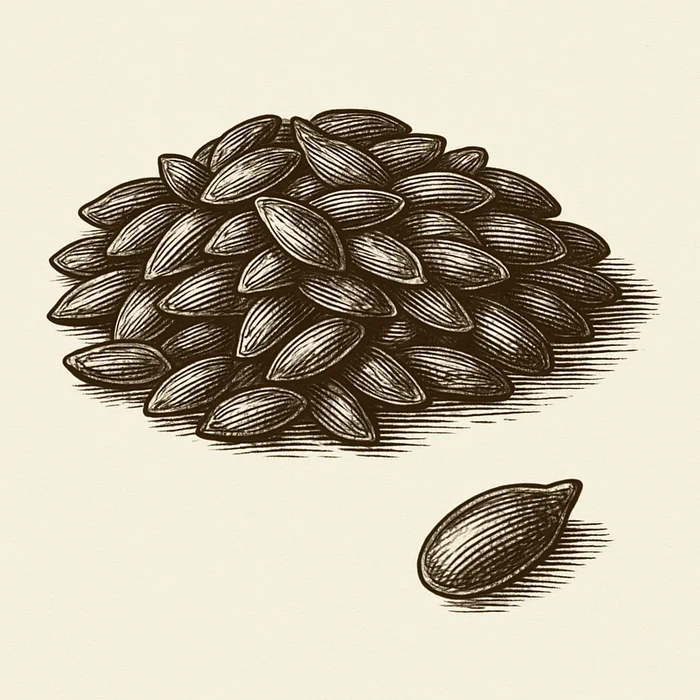
Flaxseeds
The FlaxPAD trial found 30g of ground flaxseed daily reduced systolic blood pressure by 10 mmHg -- one of the strongest dietary BP-lowering effects ever measured in a double-blind RCT.
Why It Matters for Longevity
Flaxseeds are the richest common food source of two distinct longevity compounds: alpha-linolenic acid (ALA, 22.8g per 100g -- more than double walnuts) and lignans (up to 13mg/g, roughly 100x more than any other food). These work through independent mechanisms. ALA incorporates into cell membranes within two weeks, providing the substrate for anti-inflammatory eicosanoid production. Lignans are converted by gut bacteria into enterolactone and enterodiol, compounds with anti-estrogenic activity. A prospective study (Xie et al., 2013, Breast Cancer Res Treat) found higher plasma enterolactone concentrations associated with significantly lower breast cancer risk in the Nurses' Health Study II.
A meta-analysis (Pan et al., 2009, Am J Clin Nutr) confirmed flaxseed supplementation significantly reduces total and LDL cholesterol, with whole/ground flaxseed outperforming flaxseed oil. The FlaxPAD trial (Rodriguez-Leyva et al., 2013, Hypertension) -- a properly blinded RCT -- showed 30g ground flaxseed daily for 6 months lowered systolic BP by 10 mmHg and diastolic by 7 mmHg in hypertensive patients. For context, this rivals the effect of many antihypertensive drugs.
The critical preparation detail: grinding is non-negotiable. Whole flaxseeds pass through the GI tract undigested. Ground flaxseed exposes the ALA and lignans for absorption. Keep ground flaxseed refrigerated -- the high polyunsaturated fat content oxidizes rapidly at room temperature.
How to Use It
1-2 tablespoons ground daily. Grind fresh or buy pre-ground and refrigerate. Add to oatmeal, yogurt, smoothies, or salad dressings. Do not cook at high heat (degrades ALA). The mucilage makes it useful as an egg replacement in baking (1 tbsp ground + 3 tbsp water).
What to Pair It With
| Ingredient | Why | Tradition |
|---|---|---|
| Oats | Complementary soluble fibres; classic porridge addition | Northern European |
| Yogurt | Probiotic supports lignan-to-enterolignan conversion | Global |
| Berries | Lignans + anthocyanins for combined anticancer pathways | Global |
| Lemon juice | Acid preserves ALA from oxidation | Global |
| Dark leafy greens | Combined plant omega-3 sources | Global |
Flavor Profile
Nutty and earthy with a mild sweetness and slight bitterness. Ground flaxseed has a warm, grassy aroma. Whole seeds add crunch; ground seeds create a gritty texture that blends well into porridge or smoothies. When soaked, the mucilage produces a gel-like consistency. The flavor is subtle enough to disappear into most dishes.
The Science
- Rodriguez-Leyva et al., 2013, Hypertension: FlaxPAD trial — 30g ground flaxseed/day for 6 months reduced systolic BP by 10 mmHg and diastolic by 7 mmHg in hypertensive patients.
- Pan et al., 2009, Am J Clin Nutr: Meta-analysis of flaxseed interventions — ground and whole flaxseed significantly reduced total and LDL cholesterol.
- Xie et al., 2013, Breast Cancer Res Treat: Prospective cohort — higher plasma enterolactone associated with significantly lower breast cancer risk in Nurses' Health Study II.
- ALA from ground flaxseed incorporates into cell membranes within 2 weeks. Grinding is essential -- whole seeds pass through the GI tract undigested.
References
- Rodriguez-Leyva D, Weighell W, Edel AL, et al. Potent antihypertensive action of dietary flaxseed in hypertensive patients. Hypertension. 2013;62(6):1081-1089. PMID: 24126178. doi:10.1161/HYPERTENSIONAHA.113.02094
- Pan A, Yu D, Demark-Wahnefried W, Franco OH, Lin X. Meta-analysis of the effects of flaxseed interventions on blood lipids. Am J Clin Nutr. 2009;90(2):288-297. PMID: 19515737. doi:10.3945/ajcn.2009.27469
- Xie J, Yun JP, Yang YN, et al. Plasma enterolactone and breast cancer risk in the Nurses' Health Study II. Breast Cancer Res Treat. 2013;139(3):883-891. PMID: 23760859. doi:10.1007/s10549-013-2586-y
Key Nutrients
| Nutrient | Per 100g | Notes |
|---|---|---|
| Alpha-linolenic acid (ALA) | 22.8 g | Richest common source; must grind for absorption |
| Lignans (SDG) | 294-700 mg | 100x more than most foods; gut bacteria convert to enterolignans |
| Soluble fibre (mucilage) | 5-8 g | Forms gel slowing glucose absorption; 27g total fibre |