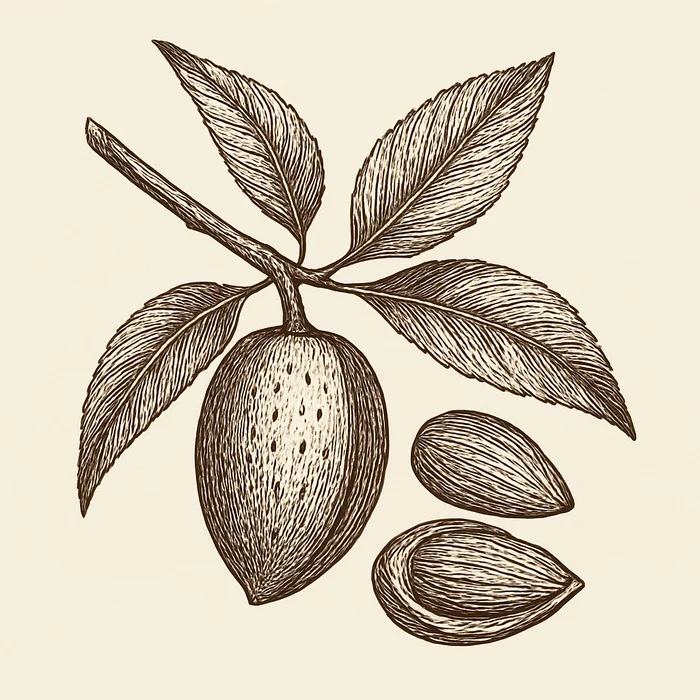
Almonds
The richest common nut source of vitamin E -- 30g provides 37% of your daily requirement -- and a meta-analysis of 15 RCTs confirmed they significantly reduce LDL cholesterol while preserving HDL.
Why It Matters for Longevity
Almonds deliver a rare combination: the same heart-protective oleic acid as olive oil (31g monounsaturated fat per 100g), the highest vitamin E concentration of any common nut (171% DV per 100g), and enough magnesium (64% DV) to meaningfully impact the 300+ enzymatic reactions that depend on it. A six-month RCT published in JAMA found that a cholesterol-lowering food portfolio including almonds achieved ~13% LDL reduction with intensive dietary advice.
The cholesterol-lowering effect is robust. A meta-analysis of 15 RCTs (Lee-Bravatti et al., 2019, Adv Nutr) confirmed that almond consumption significantly reduces total and LDL cholesterol, with the strongest effects at 45g/day or more. An RCT (Dikariyanto et al., 2020, Am J Clin Nutr — ATTIS study) showed that replacing typical snacks with 56g almonds daily improved endothelial function -- the ability of blood vessels to dilate -- within 6 weeks. This vascular benefit operates independently of the cholesterol reduction.
The prebiotic story is emerging but promising. Almond skin polyphenols and fibre increase Bifidobacterium and Lactobacillus populations in the gut. These bacteria produce short-chain fatty acids that strengthen intestinal barrier function and modulate inflammation. Soaking almonds overnight reduces phytic acid content, improving mineral absorption and digestibility.
Gut Microbiome: Diversity and Composition
Eight RCTs analysed in a 2021 comprehensive review (Dreher, 2021, Nutrients) consistently found that almonds support colonic microbiota health by increasing microbial richness and diversity and raising the ratio of symbiotic to pathogenic microflora. The mechanisms include almond's cell wall fiber (primarily cellulose and arabinoxylan) resisting small-intestine digestion and reaching the colon intact, almond skin proanthocyanidins modifying the gut environment, and oleic acid selectively supporting Lactobacillus growth.
A direct test of these mechanisms: an 8-week crossover RCT in 73 college students (Dhillon et al., 2019, Curr Dev Nutr) randomised participants to 56.7g/day almonds versus isocaloric graham crackers. The almond group showed 3% greater Shannon alpha-diversity and 8% greater Chao1 alpha-diversity -- indicating more species richness -- and a 48% reduction in Bacteroides fragilis abundance. B. fragilis includes strains associated with enterotoxin production and colorectal carcinogenesis; its reduction is a plausible mechanism linking almond consumption to lower colorectal disease risk. No significant change in butyrate-producing bacteria was observed, suggesting that diversity gains and pathogen suppression are the primary microbiome benefits at this dose.
Body Composition: What the Data Actually Show
Nuts are energy-dense, which historically made clinicians cautious about recommending them for weight management. The accumulated RCT evidence has largely resolved this concern, but the picture is more nuanced than popular summaries suggest.
A comprehensive review of 64 RCTs (Dreher, 2021, Nutrients) found that almonds were the only nut to show a small but statistically significant decrease in both body mass (−0.38 to −0.56 kg depending on dose and duration) and fat mass (−0.58 kg at ≥45g/day for ≥6 weeks). Waist circumference reductions of −2.4 cm were observed at doses above 42.5 g/day. The proposed mechanism: almonds function physiologically like a lower energy-dense food because a substantial fraction of their fat is encapsulated within intact cell walls and not absorbed -- estimated at 10--15% of total calories being unabsorbed in the gut.
The distribution of fat loss matters as much as total fat loss. A 6-month RCT (n=134) (Hunter et al., 2022, Br J Nutr) assigned adults to 1.5 oz (42g) almonds daily or a nut-free control. In the subset with high android subcutaneous adiposity, almond consumers reduced android fat mass percentage by 1.0% while controls gained 1.1% (p=0.04), and preserved android lean mass (controls lost 1.0%, almond group preserved 0.9%, p=0.04). Visceral adipose tissue trended toward reduction of 13g versus a 127g increase in controls (p=0.08 -- not significant). These results specifically in people with central adiposity are clinically relevant: android fat distribution is the phenotype most strongly associated with cardiometabolic risk.
Vitamin E: Mechanism Specificity
The vitamin E in almonds is almost entirely alpha-tocopherol (25.6 mg per 100g), the isoform with the highest biological activity in humans. Alpha-tocopherol is a chain-breaking antioxidant embedded in cell membranes and LDL particles: it intercepts lipid peroxyl radicals before they can propagate oxidative damage through the polyunsaturated fatty acid chains in phospholipid bilayers. Oxidised LDL is the trigger for foam cell formation and atherosclerotic plaque initiation, which makes the vitamin E content of almonds mechanistically aligned with their LDL-lowering action -- two parallel inputs reducing the same downstream cardiovascular risk.
Vitamin C (found in the citrus fruit recommended as a pairing) regenerates oxidised alpha-tocopherol back to its active form, extending its antioxidant capacity -- a fat-water interface recycling system that makes the citrus-almond combination more than a flavour convention.
How to Use It
A 30g serving (~20 almonds) daily matches the dose in most positive trials. Eat raw or lightly toasted -- high heat degrades vitamin E. Soak overnight to reduce phytate and improve digestion. Use chopped in salads, blended as almond milk, or as almond butter. Store in a cool, dark place; monounsaturated fats are more stable than polyunsaturated but still degrade with heat and light. Leaving the skin on is important: the skin provides the majority of the polyphenol content, including the condensed tannins responsible for the faint bitterness.
What to Pair It With
| Ingredient | Why | Tradition |
|---|---|---|
| Dark chocolate | Complementary polyphenols; vitamin E + flavanols | European |
| Berries | Vitamin E + anthocyanins for combined antioxidant protection | Global |
| Citrus fruits | Vitamin C regenerates oxidized vitamin E | Sicilian / Mediterranean |
| Oats | Complementary fibres; classic porridge topping | Northern European |
| Honey | Antioxidant synergy; traditional sweet pairing | Mediterranean / Middle Eastern |
Flavor Profile
Mildly sweet and nutty with a faint bitterness from the skin that adds complexity. Toasting brings out warm, marzipan-like aromas and deepens the buttery character. Texture is firm and crunchy whole, smooth and creamy when ground into butter or milk. The skin contributes most of the polyphenol content -- leave it on.
The Science
- Meta-analysis of 15 RCTs: almonds significantly reduce total and LDL cholesterol (Lee-Bravatti et al., 2019, Adv Nutr — doi:10.1093/advances/nmz043)
- 56g/day for 6 weeks improved endothelial function and lowered LDL (Dikariyanto et al., 2020, Am J Clin Nutr — doi:10.1093/ajcn/nqaa100)
- Part of food portfolio achieving ~13% LDL reduction in 6-month RCT (Jenkins et al., 2011, JAMA — doi:10.1001/jama.2011.1202)
- Almond skin polyphenols modulate Bifidobacterium and Lactobacillus in the gut (Racioppo et al., 2026, Foods — doi:10.3390/foods15020313)
- 8-week RCT (n=73): 56.7g/day almonds increased gut microbiome alpha-diversity by 3--8% and reduced B. fragilis by 48% versus isocaloric crackers (Dhillon et al., 2019, Curr Dev Nutr)
- Comprehensive review of 64 RCTs: almonds uniquely among nuts show significant reductions in body mass (−0.38 to −0.56 kg) and fat mass (−0.58 kg at ≥45g/day ≥6 weeks); waist circumference reduced by −2.4 cm (Dreher, 2021, Nutrients)
- 6-month RCT (n=134): 42g/day almonds reduced android fat mass percentage by 1.0% in people with high central adiposity; controls gained 1.1% (Hunter et al., 2022, Br J Nutr)
- 30g provides 37% RDA vitamin E and 20% RDA magnesium
References
- Lee-Bravatti MA, Wang J, Avendano EE, et al. Almond Consumption and Risk Factors for Cardiovascular Disease: A Systematic Review and Meta-analysis of Randomized Controlled Trials. Adv Nutr. 2019;10(6):1076-1088. PMID: 31243439. doi:10.1093/advances/nmz043
- Dikariyanto V, Smith L, Francis L, et al. Snacking on whole almonds for 6 weeks improves endothelial function and lowers LDL cholesterol... the ATTIS study. Am J Clin Nutr. 2020;111(6):1178-1189. PMID: 32412597. doi:10.1093/ajcn/nqaa100
- Jenkins DJ, Jones PJ, Lamarche B, et al. Effect of a dietary portfolio of cholesterol-lowering foods given at 2 levels of intensity of dietary advice on serum lipids in hyperlipidemia: a randomized controlled trial. JAMA. 2011;306(8):831-839. PMID: 21862744. doi:10.1001/jama.2011.1202
- Racioppo A, Corbo MR, Guerrieri A, et al. In Vitro Assessment of Gut Microbiota Modulation Through Functional Biscuits Enriched with Almond By-Products. Foods. 2026;15(2). PMID: 41596911. doi:10.3390/foods15020313
- Dhillon J, Li Z, Ortiz RM. Almond Snacking for 8 wk Increases Alpha-Diversity of the Gastrointestinal Microbiome and Decreases Bacteroides fragilis Abundance Compared with an Isocaloric Snack in College Freshmen. Curr Dev Nutr. 2019;3(8):nzz079. PMID: 31528836. doi:10.1093/cdn/nzz079
- Dreher ML. A Comprehensive Review of Almond Clinical Trials on Weight Measures, Metabolic Health Biomarkers and Outcomes, and the Gut Microbiota. Nutrients. 2021;13(6):1968. PMID: 34201139. doi:10.3390/nu13061968
- Hunter SR, Considine RV, Mattes RD. Almond consumption decreases android fat mass percentage in adults with high android subcutaneous adiposity but does not change HbA1c in a randomised controlled trial. Br J Nutr. 2022;127(9):1348-1361. PMID: 33955348. doi:10.1017/S0007114521001495
Key Nutrients
| Nutrient | Per 100g | Notes |
|---|---|---|
| Vitamin E (alpha-tocopherol) | 25.6 mg (171% DV) | Richest common nut source; fat-soluble, absorbed with almond's own fats; chain-breaking antioxidant in LDL particles |
| Magnesium | 270 mg (64% DV) | Soaking improves absorption; essential for 300+ enzyme reactions |
| Monounsaturated fat (oleic acid) | 31 g | Same as olive oil; reduces LDL without lowering HDL |
| Fiber | 12.5 g | Cell-wall cellulose and arabinoxylan reach colon intact; prebiotic substrate |
| Protein | 21 g | Includes arginine, a substrate for endothelial NO synthesis |