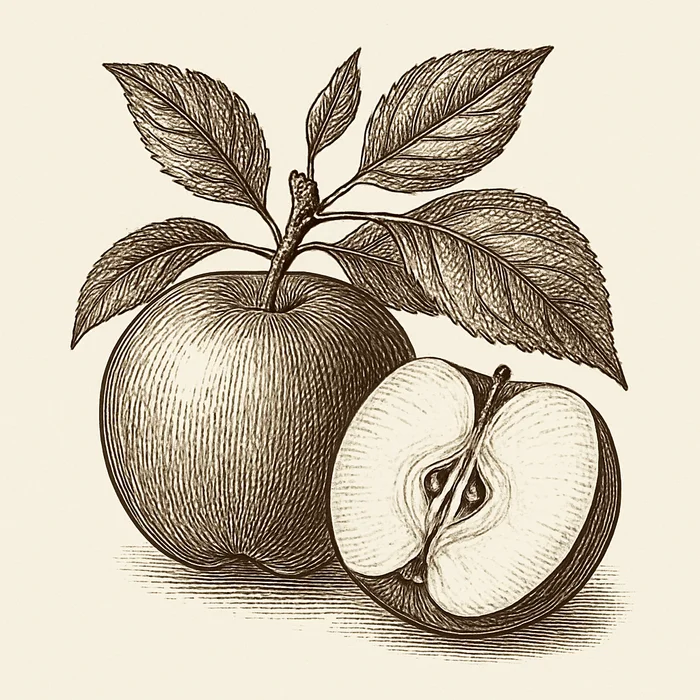
Apples
The most ordinary fruit in the bowl might actually earn its proverb -- a meta-analysis of prospective studies tied each daily serving to measurable reductions in cardiovascular disease, cancer, and all-cause mortality.
Why It Matters for Longevity
The longevity case for apples rests on two pillars: their intact food matrix and their polyphenol payload.
When you eat a whole apple, the cell walls, pectin gel, and fibre physically slow sugar absorption. Fontana's book emphasises this point -- juicing destroys the food matrix and releases free sugars for rapid absorption, spiking blood glucose in a way whole fruit simply does not. This is not a trivial difference. The glycaemic response to whole apple versus apple juice diverges dramatically, and chronically elevated post-meal glucose is a core driver of metabolic aging.
Beyond glycaemic control, apples deliver a meaningful polyphenol profile. Quercetin, concentrated in the skin, is a flavonoid with demonstrated anti-inflammatory properties. Chlorogenic acid and catechins reduce LDL oxidation and improve endothelial function. A study in hypercholesterolaemic adults (Bondonno et al., 2012, Free Radic Biol Med) found that flavonoid-rich apples augmented nitric oxide status and improved endothelial function -- a direct cardiovascular benefit.
Pectin, the soluble fibre that gives apple sauce its gel, feeds gut bacteria that produce butyrate and propionate -- short-chain fatty acids that nourish the colon lining and tamp down systemic inflammation. The broad fruit meta-analysis by Aune et al. (2017, Int J Epidemiol) confirmed dose-dependent benefits: each additional daily serving of fruit reduced all-cause mortality risk by roughly 6%.
The catch? You need to eat the whole fruit. Skin on. Not juiced, not stripped into a supplement. The food matrix is the mechanism.
Phloridzin: Apple's Drug-Like Glycaemic Compound
Apple skin and seeds contain phloridzin (also spelled phlorizin), a dihydrochalcone unique to the Malus genus that has no meaningful presence in other commonly eaten fruits. Its structural resemblance to SGLT inhibitors -- the drug class now used in type 2 diabetes treatment -- is not a coincidence: phloridzin was the original natural template from which pharmaceutical SGLT2 inhibitors (canagliflozin, dapagliflozin) were eventually derived.
The mechanism is specific: phloridzin inhibits sodium-glucose co-transporter 1 (SGLT1) in intestinal brush-border cells, which normally drive active glucose absorption after a meal. In a study by Schulze et al. (2014, Mol Nutr Food Res), apple polyphenol extract and isolated phloridzin reduced SGLT1-mediated glucose uptake in intestinal segments with an IC50 of 4.1 ± 0.6 μM -- a potency comparable to pharmaceutical agents at physiological concentrations. When the extract was administered to human volunteers during an oral glucose tolerance test, it reduced both venous blood glucose and plasma insulin responses, and modestly increased renal glucose excretion.
A randomised, double-blinded, cross-over trial confirmed dose-dependent effects in real-world conditions (Prpa et al., 2020, J Nutr Biochem). Participants received apple polyphenol-rich drinks at three doses (0.9 g, 1.35 g, 1.8 g extract) before a 75 g starch/sucrose meal. Even the lowest dose significantly reduced the incremental area under the glucose curve in the first 30 minutes post-meal (–8.99 mmol·L⁻¹·min at 0.9 g, reaching –15.6 mmol·L⁻¹·min at 1.8 g). In parallel cell studies, the highest physiological equivalent decreased total intestinal glucose uptake by 48%. The key practical implication: eating the whole apple -- skin included, before or with a carbohydrate-rich meal -- delivers a measurable glucose-dampening effect through a defined molecular mechanism.
Apple Polyphenols and the Gut Microbiome
Apple pectin is a prebiotic that selectively feeds Bifidobacterium and Lactobacillus species, two genera consistently linked to reduced intestinal inflammation and improved metabolic outcomes. A controlled feeding study (Shinohara et al., 2010, Anaerobe) gave healthy adults two apples daily for two weeks and tracked fecal microbiota: Bifidobacterium counts increased significantly by day 7 (p < 0.05) and further by day 14 (p < 0.01). Simultaneously, lecithinase-positive Clostridium species -- including C. perfringens, which produce putrefactive metabolites -- declined significantly. Fecal acetic acid rose, while fecal sulfide and ammonia trended downward. The researchers confirmed apple pectin as the active substrate by demonstrating that Bifidobacterium and Lactobacillus isolates could ferment it directly.
This microbiome shift matters because butyrate, the short-chain fatty acid produced when colonic bacteria ferment pectin, is the primary energy source for colonocytes and a potent inhibitor of histone deacetylases -- enzymes whose suppression is associated with reduced colorectal cancer risk and lower systemic inflammation.
Mortality Cohort Evidence
Epidemiological evidence for apple-specific mortality reduction is more robust than for generic "fruit." A 15-year prospective cohort study following 1,456 women over age 70 (Hodgson et al., 2016, Br J Nutr) found that each standard deviation increase in apple intake (53 g/day) was associated with an 11% lower hazard of all-cause mortality (HR 0.89, 95% CI 0.81--0.97). Women consuming more than 100 g of apple daily had a 35% lower mortality hazard compared to those consuming fewer than 5 g per day (HR 0.65). Higher apple intake was specifically associated with reduced cancer mortality -- consistent with quercetin's antiproliferative properties documented in cell models.
The large Nurses' Health Study and Health Professionals Follow-up Study cohort (Muraki et al., 2013, BMJ), following 187,382 participants for up to 24 years, found that three servings of whole apples or pears per week were associated with a 7% lower risk of type 2 diabetes (HR 0.93 per 3 servings/week), reinforcing that the glycaemic effects measurable in short-term trials translate to long-run metabolic protection. Fruit juice had the opposite effect (HR 1.08), underlining the food-matrix point again.
How to Use It
One apple a day is the classic dose and aligns with Fontana's sample diet. Eat it whole with the skin, which holds 2--6x more quercetin than the flesh and delivers the phloridzin payload. Pair with a handful of nuts or some nut butter to slow glucose absorption further and improve quercetin uptake (it is fat-soluble). Slice into salads, bake with cinnamon, or grate into overnight oats. Avoid cooking to mush if you want to preserve the food matrix advantage -- a light bake or raw consumption is ideal.
What to Pair It With
| Ingredient | Why | Tradition |
|---|---|---|
| Walnuts | Fat improves quercetin absorption; complementary polyphenols | European (Waldorf salad) |
| Cinnamon | Cinnamaldehyde adds insulin-sensitising effects to apple's low-GI profile | European / American |
| Oats | Dual soluble fibre sources (pectin + beta-glucan) for cholesterol reduction | Northern European (Bircher muesli) |
| Lemon juice | Vitamin C prevents oxidation; brightens flavour | Global |
| Ginger | Anti-inflammatory gingerols complement apple polyphenols | British / Asian |
Flavor Profile
Crisp and juicy with a balance of sweetness and tartness that varies by variety -- Granny Smith leans sharp and tannic, Fuji runs honey-sweet. The aroma is floral and fruity with faint honey notes when fully ripe. Texture ranges from snappy and firm (fresh) to tender and jammy (baked). The skin adds a mild tannic grip that carries most of the polyphenol punch.
The Science
- Aune et al., 2017, Int J Epidemiol: Meta-analysis of 95 prospective studies — each additional daily fruit serving associated with ~6% lower all-cause mortality risk in dose-response pattern.
- Bondonno et al., 2012, Free Radic Biol Med: Flavonoid-rich apples significantly augmented nitric oxide status and improved endothelial function in hypercholesterolaemic adults.
- Hodgson et al., 2016, Br J Nutr: 15-year cohort (n=1,456 women >70) — HR 0.65 for all-cause mortality in highest vs. lowest apple intake group; reduced cancer mortality specifically.
- Schulze et al., 2014, Mol Nutr Food Res: Apple phloridzin inhibits intestinal SGLT1 with IC50 of 4.1 μM; reduces postprandial blood glucose and insulin in human volunteers.
- Prpa et al., 2020, J Nutr Biochem: Randomised cross-over trial — apple polyphenol drinks reduced early-phase postprandial glucose (iAUC 0-30 min) dose-dependently; 48% decrease in intestinal glucose uptake in cell models.
- Shinohara et al., 2010, Anaerobe: 2 apples/day for 2 weeks — Bifidobacterium significantly increased by day 14 (p<0.01); harmful clostridia decreased; fecal sulfide reduced.
- Muraki et al., 2013, BMJ: 187,382-person cohort — 3 servings/week of apples/pears associated with 7% lower T2D risk; fruit juice associated with 8% higher risk.
- Whole fruit food matrix critical — juicing destroys glycaemic benefit by releasing free sugars and removing fibre.
References
- Aune D, Giovannucci E, Boffetta P, et al. Fruit and vegetable intake and the risk of cardiovascular disease, total cancer and all-cause mortality — a systematic review and dose-response meta-analysis of prospective studies. Int J Epidemiol. 2017;46(3):1029-1056. PMID: 28338764. doi:10.1093/ije/dyw319
- Bondonno CP, Yang X, Croft KD, et al. Flavonoid-rich apples and nitrate-rich spinach augment nitric oxide status and improve endothelial function and blood pressure in healthy adults. Free Radic Biol Med. 2012;52(1):95-102. PMID: 22019438. doi:10.1016/j.freeradbiomed.2011.09.028
- Hodgson JM, Prince RL, Woodman RJ, et al. Apple intake is inversely associated with all-cause and disease-specific mortality in elderly women. Br J Nutr. 2016;115(5):860-867. PMID: 26787402. doi:10.1017/S0007114515005231
- Schulze C, Bangert A, Kottra G, et al. Inhibition of the intestinal sodium-coupled glucose transporter 1 (SGLT1) by extracts and polyphenols from apple reduces postprandial blood glucose levels in mice and humans. Mol Nutr Food Res. 2014;58(9):1795-1808. PMID: 25074384. doi:10.1002/mnfr.201400091
- Prpa EJ, Corpe CP, Atkinson B, et al. Apple polyphenol-rich drinks dose-dependently decrease early-phase postprandial glucose concentrations following a high-carbohydrate meal: a randomized controlled trial in healthy adults and in vitro studies. J Nutr Biochem. 2020;85:108477. PMID: 32739411. doi:10.1016/j.jnutbio.2020.108477
- Shinohara K, Ohashi Y, Kawasumi K, Terada A, Fujisawa T. Effect of apple intake on fecal microbiota and metabolites in humans. Anaerobe. 2010;16(5):510-515. PMID: 20304079. doi:10.1016/j.anaerobe.2010.03.005
- Muraki I, Imamura F, Manson JE, et al. Fruit consumption and risk of type 2 diabetes: results from three prospective longitudinal cohort studies. BMJ. 2013;347:f5001. PMID: 23990623. doi:10.1136/bmj.f5001
Key Nutrients
| Nutrient | Per 100g | Notes |
|---|---|---|
| Quercetin | ~4.4 mg | Concentrated in skin; fat-soluble; senolytic properties in animal models |
| Phloridzin | ~0.5--1.5 mg | Highest in skin; natural SGLT1 inhibitor; dihydrochalcone unique to Malus genus |
| Pectin (soluble fibre) | ~1.5 g | Fermented to butyrate/propionate by gut bacteria; prebiotic for Bifidobacterium |
| Total polyphenols | ~200-300 mg | Chlorogenic acid + catechins; most in skin |
| Dietary fibre | 2.4 g | Intact food matrix slows glucose absorption |
| Vitamin C | 4.6 mg | Modest but contributes to daily intake |