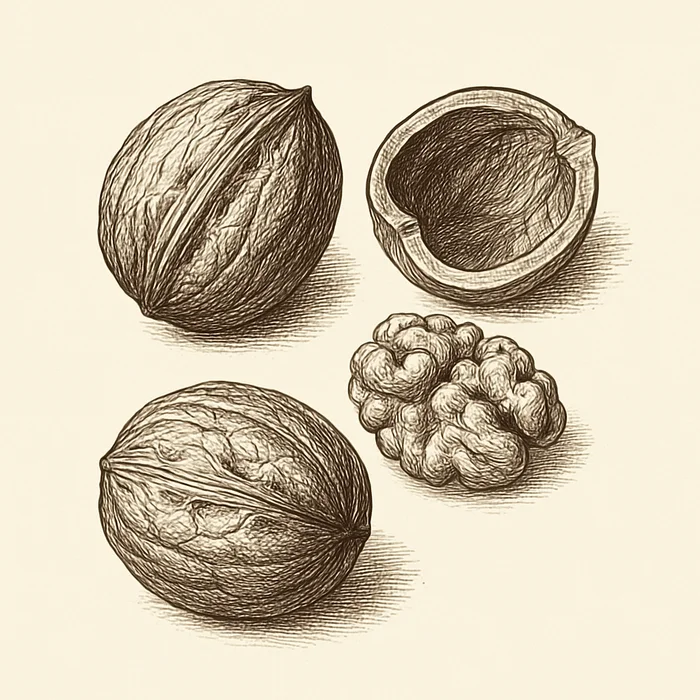
Walnuts
The only common tree nut with serious omega-3 content -- and a Nurses' Health Study analysis tied 5+ servings per week to 14% lower mortality and roughly 1.3 extra years of life.
Why It Matters for Longevity
Walnuts pack 9g of alpha-linolenic acid (ALA) per 100g, making them the richest mainstream nut source of plant-based omega-3. While conversion to EPA and DHA is modest (5-10% and 2-5% respectively), the direct anti-inflammatory effects of ALA itself are well-documented. A meta-analysis of 26 clinical trials (Guasch-Ferré et al., 2018, Am J Clin Nutr) found walnut-enriched diets significantly decreased total cholesterol, LDL cholesterol, triglycerides, and ApoB -- the full panel of atherogenic markers. The WAHA trial (Rajaram et al., 2022) confirmed this in a 2-year intervention with healthy elderly adults consuming 30-60g of walnuts daily.
Beyond the omega-3 story, walnuts are unusually rich in polyphenols. Their ellagitannin content (~1,556 mg gallic acid equivalents per 100g) is among the highest of any nut. These compounds undergo a fascinating transformation in the gut: bacteria convert them into urolithins, metabolites with demonstrated anti-inflammatory and anti-aging properties. The walnut skin -- that slightly bitter, papery layer people sometimes peel off -- is where most of these polyphenols live. Leave it on.
Walnuts also deliver gamma-tocopherol, the form of vitamin E that dominates in food but is absent from most supplements (which use alpha-tocopherol). Gamma-tocopherol has unique anti-inflammatory properties that its alpha cousin lacks, including the ability to trap reactive nitrogen species. Pooled prospective studies (Aune et al., 2016, BMC Medicine) found nut consumption -- especially walnuts -- associated with dose-dependent reductions in coronary heart disease, stroke, and all-cause mortality.
How to Use It
A handful (about 30g, or roughly 7 whole walnuts) daily is the dose used in most positive trials. Eat them raw or lightly toasted -- high heat degrades omega-3 fats. Soaking overnight reduces phytate content and improves mineral absorption. Store shelled walnuts in the fridge or freezer; their high polyunsaturated fat content makes them prone to rancidity at room temperature. Toss them into salads, oatmeal, or yogurt. Blend into pesto or walnut sauce for pasta.
What to Pair It With
| Ingredient | Why | Tradition |
|---|---|---|
| Pomegranate | Complementary polyphenol profiles; both yield urolithins | Persian (fesenjan) |
| Dark chocolate | Additive polyphenol content; both reduce LDL oxidation | French / Global |
| Olive oil | Combined monounsaturated + polyunsaturated fat for broad cardiovascular benefit | Italian (Ligurian) |
| Beets | Nitrate + omega-3 for vascular function | Eastern European |
| Blue cheese | Fat-soluble vitamin absorption; classic flavor contrast | Italian / French |
Flavor Profile
Mildly sweet and earthy with a tannic bitterness from the skin that deepens with age. Toasting brings out buttery, warm notes and reduces the slight mustiness of raw walnuts. The texture is crunchy and meaty with an oily richness that coats the palate. Crumbly when chopped, creamy when blended into sauces or milk.
The Science
- WAHA trial: 2-year walnut consumption reduced LDL-cholesterol in healthy elders (Rajaram et al., 2022, Nutrients)
- Meta-analysis of 26 RCTs: walnut diets reduced total cholesterol, LDL, triglycerides, and ApoB (Guasch-Ferré et al., 2018, Am J Clin Nutr)
- Pooled prospective studies: dose-dependent reduction in CHD, stroke, and all-cause mortality with nut intake (Aune et al., 2016, BMC Medicine)
- Examine.com: strong evidence for LDL reduction; moderate for vascular function and blood pressure
References
- Guasch-Ferré M, Li J, Hu FB, Salas-Salvadó J, Tobias DK. Effects of walnut consumption on blood lipids and other cardiovascular risk factors: an updated meta-analysis and systematic review of controlled trials. Am J Clin Nutr. 2018;108(1):174-187. PMID: 29931130. doi:10.1093/ajcn/nqy091
- Rajaram S, Cofán M, Sala-Vila A, et al. Effects of Walnut Consumption for 2 Years on Lipoprotein Subclasses Among Healthy Elders: Findings From the WAHA Randomized Controlled Trial. Nutrients. 2022;14(7):1473. PMID: 35406086. doi:10.3390/nu14071473
- Aune D, Keum N, Giovannucci E, et al. Nut consumption and risk of cardiovascular disease, total cancer, all-cause and cause-specific mortality: a systematic review and dose-response meta-analysis of prospective studies. BMC Med. 2016;14(1):207. PMID: 27916000. doi:10.1186/s12916-016-0730-3
Key Nutrients
| Nutrient | Per 100g | Notes |
|---|---|---|
| Alpha-linolenic acid (ALA) | 9.08 g | Richest common nut source; conversion to EPA ~5-10%, DHA ~2-5% |
| Polyphenols (ellagitannins) | ~1,556 mg GAE | Gut bacteria convert to urolithins with anti-aging properties |
| Gamma-tocopherol (Vitamin E) | 20.8 mg | Unique anti-inflammatory action vs. alpha-tocopherol in supplements |
| Magnesium | 158 mg (38% DV) | Bioavailability improved by soaking to reduce phytate |
| Copper | 1.59 mg (177% DV) | Essential for SOD antioxidant enzyme function |