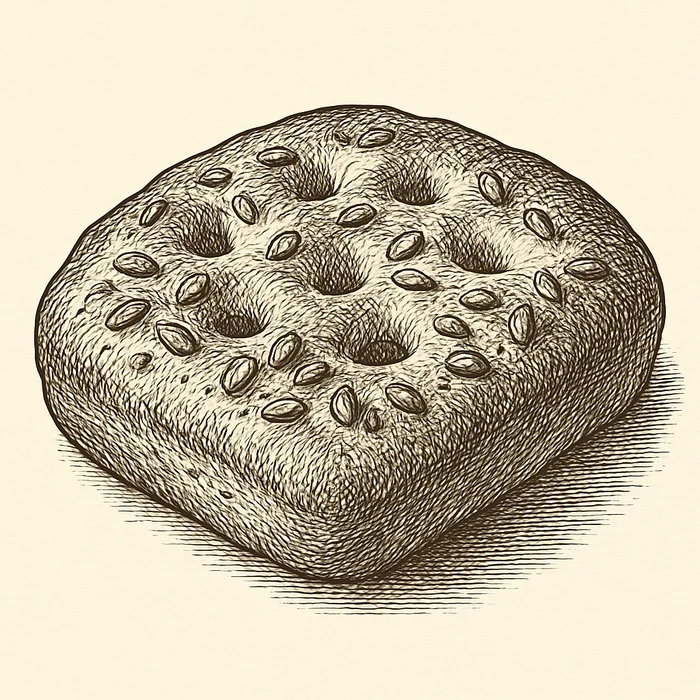
Whole-Wheat Focaccia
Whole-grain bread used in the Longevity Diet as a breakfast and side item. When made with whole-wheat flour, sourdough fermentation, and olive oil — the canonical focaccia preparation — it delivers a cluster of metabolic benefits that plain refined bread cannot match.
Why It Matters for Longevity
Whole-wheat flour retains the bran and germ layers stripped away during refining. Those layers carry most of the dietary fiber, B vitamins, and bound phenolic compounds. The consequences of removing them show up clearly in epidemiology: higher cereal fiber intake is significantly associated with lower all-cause, cardiovascular, and cancer mortality across prospective cohort studies, with a dose-response relationship that continues to strengthen above three daily servings (Benisi-Kohansal et al., 2016, Advances in Nutrition).
At the metabolic level, whole-grain consumption lowers postprandial blood glucose compared to refined equivalents. A systematic review and meta-analysis of RCTs found that whole-grain wheat, rice, and rye each attenuate the postprandial glucose response, with the magnitude depending on grain structure and processing (Hajihashemi & Haghighatdoost, 2018, American Journal of Clinical Nutrition). The implication for the Longevity Diet is direct: stable postprandial glucose reduces the chronic insulin burden associated with accelerated biological aging.
Gut Microbiota and SCFA Production
The fiber fractions in whole wheat — particularly arabinoxylan (AX) — are fermentable substrates for the gut microbiome. Arabinoxylan is the dominant non-starch polysaccharide in wheat bran, and its fate in the colon determines much of whole wheat's metabolic impact.
In a 12-week randomized crossover trial in overweight adults, arabinoxylan oligosaccharides (AXOS) at 10.4 g/day induced a significant bifidogenic effect (p < 0.01) and increased the abundance of butyrate-producing bacterial species (p < 0.05), while shifting overall microbiota structure measurably (PERMANOVA p < 0.02) (Kjølbæk et al., 2020, Clinical Nutrition). Butyrate is the primary energy source for colonocytes, suppresses NF-κB-driven inflammatory signaling in the gut epithelium, and upregulates tight-junction proteins that prevent luminal antigens from entering systemic circulation. Higher colonic butyrate production is one of the more mechanistically grounded links between dietary fiber and reduced colorectal cancer risk.
Ferulic Acid and Antioxidant Defense
Whole-wheat flour contains 200–400 µg/100 g of ferulic acid, almost all of it in bound form cross-linked to arabinoxylan through ester bonds. This linkage limits pre-colonic release but makes ferulic acid a substrate for microbial esterases in the large intestine, extending its biological window.
Once absorbed, ferulic acid distributes primarily to the albumin-rich fraction of plasma, with a smaller proportion partitioning to the LDL phase. A plasma kinetics study in healthy humans found that rice bran extract-enriched porridge — a structurally comparable food matrix — significantly raised plasma ferulic acid concentrations, demonstrating relevant bioavailability when ferulic acid is consumed as part of a cereal food (Calvo-Castro et al., 2019, European Journal of Nutrition). In plasma, ferulic acid acts from the aqueous phase to inhibit LDL oxidation more effectively than ascorbic acid, working through single-electron donation to peroxyl radicals (Castelluccio et al., 1996, Biochemical Journal). Chronic LDL oxidation is a rate-limiting step in atherosclerotic plaque formation, so even modest sustained inhibition carries cardiovascular relevance.
Whole Grains and Systemic Inflammation
A meta-analysis of nine randomized trials (n = 838 adults) found that a whole-grain diet was associated with a significant reduction in CRP (SMD 0.29, 95% CI 0.08–0.50) and IL-6 (SMD 0.19, 95% CI 0.03–0.36). The dose effect was clear: trials using more than 100 g/day of whole grain showed a CRP reduction of SMD 0.51 (95% CI 0.29–0.72), roughly double the effect of lower-dose interventions (Xu et al., 2018, Medicine). The anti-inflammatory pathway is thought to run through butyrate (inhibiting HDAC and NF-κB), ferulic acid (scavenging reactive oxygen species that trigger cytokine release), and the broader metabolic improvement from lowering postprandial glucose spikes. Chronic low-grade inflammation measured by CRP is independently predictive of cardiovascular events, type 2 diabetes progression, and all-cause mortality in middle-aged adults.
The Focaccia Effect: Olive Oil, Fermentation, and Glycemic Load
Whole-wheat bread alone is a reasonable food. Whole-wheat focaccia made with sourdough fermentation and olive oil is meaningfully better, for three reasons that act on different mechanisms.
Sourdough fermentation. Lactic acid bacteria lower dough pH and produce organic acids that partially denature starch-gluten networks, reducing starch gelatinization and slowing amylase access. In a controlled study comparing sourdough whole-grain wheat bread to refined white bread in 43 patients with gestational diabetes and 38 healthy pregnant controls, white wheat bread triggered 45.5% more insulin secretion and 9.6% higher first-hour postprandial blood glucose than the sourdough whole-grain alternative (both p < 0.05); second-hour glucose was equivalent (Özer et al., 2023, Wiener Klinische Wochenschrift). The finding held in both the metabolically compromised group and the healthy controls, suggesting the mechanism is structural rather than disease-specific.
Olive oil. Oleic acid in olive oil slows gastric emptying by stimulating the ileal brake — cholecystokinin and GLP-1 release from the duodenum delays further gastric emptying and attenuates the glucose surge from starch hydrolysis. Extra-virgin olive oil also contributes hydroxytyrosol and oleocanthal, which inhibit COX-1 and COX-2 similarly to ibuprofen at culinary doses. The net result is a flatter glucose curve and an independent anti-inflammatory contribution layered on top of the whole-grain effect.
Physical structure. Focaccia's open, airy crumb structure means the bread is eaten in relatively thin pieces alongside olive oil. Dietary fat co-ingested with starch consistently reduces the glycemic index of the meal regardless of bread type. The cooking format (high hydration, cold proof, shallow pan-bake) also preserves some of the resistant starch fraction that higher-temperature processing can destroy.
How to Use It
At breakfast. Two to three slices of whole-wheat sourdough focaccia (80–100 g) with olive oil for dipping is the preparation closest to the Longevity Diet template. Whole-grain cereal at breakfast reduces postprandial glucose for the rest of the morning, a pattern seen across multiple RCTs.
As a side at lunch. Pair with legume-based dishes — lentil soup, bean salad, hummus. Legumes provide prebiotic fiber (fructooligosaccharides, resistant starch) that complements arabinoxylan's bifidogenic effect, diversifying the fermentable substrate pool and broadening SCFA-producing microbial communities. Legumes also supply lysine, the limiting amino acid in wheat, creating a complete protein profile.
With rosemary and olives. The traditional toppings are not incidental. Rosmarinic acid and carnosic acid in rosemary are potent antioxidants that add to ferulic acid's LDL-protective activity. Olives contribute hydroxytyrosol in concentrated form. Together they extend the antioxidant coverage from the aqueous phase (ferulic acid, rosmarinic acid) into the lipid phase (hydroxytyrosol, oleocanthal).
Baking notes. Use 100% stone-milled whole-wheat flour or at minimum an 80:20 whole-wheat to bread flour ratio. A long cold fermentation (12–18 hours in the refrigerator after shaping) maximizes organic acid production by lactic acid bacteria and delivers the sourdough glycemic benefit. Use a high-polyphenol extra-virgin olive oil: the flavors align with rosemary and the EVOO's phenolic content is dose-dependent on quality. Bake at 220–230°C for 20–25 minutes until the internal temperature reaches 95°C; this seals the resistant starch fraction without over-gelatinizing the starch granules.
What to Pair It With
| Ingredient | Why | Tradition |
|---|---|---|
| Olive oil | Oleic acid slows gastric emptying; EVOO polyphenols add anti-inflammatory synergy | Traditional Italian |
| Rosemary | Rosmarinic acid and carnosic acid complement ferulic acid for combined aqueous-phase antioxidant activity | Traditional Italian |
| Olives | Hydroxytyrosol extends LDL protection into the lipid phase; concentrated polyphenol hit | Traditional Mediterranean |
| Legumes | Complementary fiber types (AX + FOS + RS) broaden SCFA-producing microbiota; complete amino acid profile | Traditional Italian |
Synergies
- Olive Oil: Oleic acid slows gastric emptying via the ileal brake, lowering the meal's glycemic load. Hydroxytyrosol and oleocanthal inhibit COX-1/COX-2 and synergize with whole wheat's anti-inflammatory fiber effect.
- Rosemary: Rosmarinic acid and carnosic acid work in the aqueous phase to complement ferulic acid's antioxidant activity against LDL oxidation and lipid peroxidation.
- Legumes: Pairing creates a complete amino acid profile and combines arabinoxylan with fructooligosaccharides and resistant starch, diversifying the prebiotic substrate and broadening butyrate-producing microbial species.
Flavor Profile
Taste: nutty, slightly sweet, wheaty. Aroma: yeasty, olive oil, toasted grain. Texture: chewy, airy crumb, crisp crust. Category: Italian flatbread.
The Science
- Benisi-Kohansal et al., 2016, Advances in Nutrition: Systematic review and dose-response meta-analysis of prospective cohort studies; higher cereal fiber intake significantly associated with lower all-cause, CVD, and cancer mortality.
- Hajihashemi & Haghighatdoost, 2018, American Journal of Clinical Nutrition: Systematic review and meta-analysis of RCTs showing whole-grain wheat, rice, and rye significantly attenuate postprandial blood glucose compared to refined grain; effects depend on grain structure and processing.
- Kjølbæk et al., 2020, Clinical Nutrition: 12-week randomized crossover trial; AXOS at 10.4 g/day induced a bifidogenic effect (p < 0.01) and increased butyrate-producing bacterial species (p < 0.05) in overweight adults with signs of metabolic syndrome.
- Calvo-Castro et al., 2019, European Journal of Nutrition: Pharmacokinetics study in healthy humans; rice bran-enriched porridge significantly increased plasma ferulic acid concentrations, confirming relevant bioavailability of ferulic acid from cereal food matrices.
- Castelluccio et al., 1996, Biochemical Journal: Ferulic acid distributes primarily to the albumin-rich plasma fraction and inhibits LDL oxidation more effectively than ascorbic acid, acting from the aqueous phase via single-electron donation to peroxyl radicals.
- Özer et al., 2023, Wiener Klinische Wochenschrift: RCT in 43 GDM patients and 38 healthy pregnant controls; white wheat bread produced 45.5% more insulin secretion and 9.6% higher first-hour postprandial glucose than sourdough whole-grain wheat bread (both p < 0.05).
- Xu et al., 2018, Medicine: Meta-analysis of 9 RCTs (n = 838); whole-grain diet significantly reduced CRP (SMD 0.29, 95% CI 0.08–0.50) and IL-6 (SMD 0.19, 95% CI 0.03–0.36); dose above 100 g/day showed CRP SMD 0.51.
References
- Benisi-Kohansal S, Saneei P, Salehi-Marzijarani M, et al. Whole-Grain Intake and Mortality from All Causes, Cardiovascular Disease, and Cancer: A Systematic Review and Dose-Response Meta-Analysis of Prospective Cohort Studies. Advances in Nutrition. 2016;7(6):1052–1065. PMID: 28140323. doi:10.3945/an.116.012567
- Hajihashemi P, Haghighatdoost F. The effects of whole-grain compared with refined wheat, rice, and rye on the postprandial blood glucose response: a systematic review and meta-analysis of randomized controlled trials. American Journal of Clinical Nutrition. 2018. PMID: 30321274. doi:10.1093/ajcn/nqy224
- Kjølbæk L, Benítez-Páez A, Gómez Del Pulgar EM, et al. Arabinoxylan oligosaccharides and polyunsaturated fatty acid effects on gut microbiota and metabolic markers in overweight individuals with signs of metabolic syndrome: A randomized cross-over trial. Clinical Nutrition. 2020;39(1):67–79. PMID: 30827722.
- Calvo-Castro LA, Sus N, Schiborr C, et al. Pharmacokinetics of vitamin E, γ-oryzanol, and ferulic acid in healthy humans after the ingestion of a rice bran-enriched porridge prepared with water or with milk. European Journal of Nutrition. 2019;58(7):2781–2790. PMID: 29978378.
- Castelluccio C, Bolwell GP, Gerrish C, Rice-Evans C. Differential distribution of ferulic acid to the major plasma constituents in relation to its potential as an antioxidant. Biochemical Journal. 1996;316(Pt 2):691–694. PMID: 8687419.
- Özer YE, Cengiz H, Demirci T, Kızılgül M, Varim C, Tamer A. Glycemic responses to whole grain sourdough bread versus refined white bread in patients with gestational diabetes. Wiener Klinische Wochenschrift. 2023;135(13–14):363–369. PMID: 37106088.
- Xu Y, Wan Q, Feng J, Du L, Li K, Zhou Y. Whole grain diet reduces systemic inflammation: A meta-analysis of 9 randomized trials. Medicine (Baltimore). 2018;97(43):e12995. PMID: 30412134.
Key Nutrients
| Nutrient | Per 100g | Notes |
|---|---|---|
| Whole-grain fiber (arabinoxylan, beta-glucan) | ~6g | Fermentable fiber; AXOS at 10.4 g/day significantly increases butyrate-producing bacteria in RCT |
| Phenolic acids (ferulic acid) | ~200–400µg | Bound form released by gut microbial esterases; inhibits LDL oxidation more effectively than ascorbic acid in plasma |
| B vitamins (B1, B3, folate) | ~0.3mg B1, ~2mg B3 | Retained in whole grain; support energy metabolism and DNA methylation |