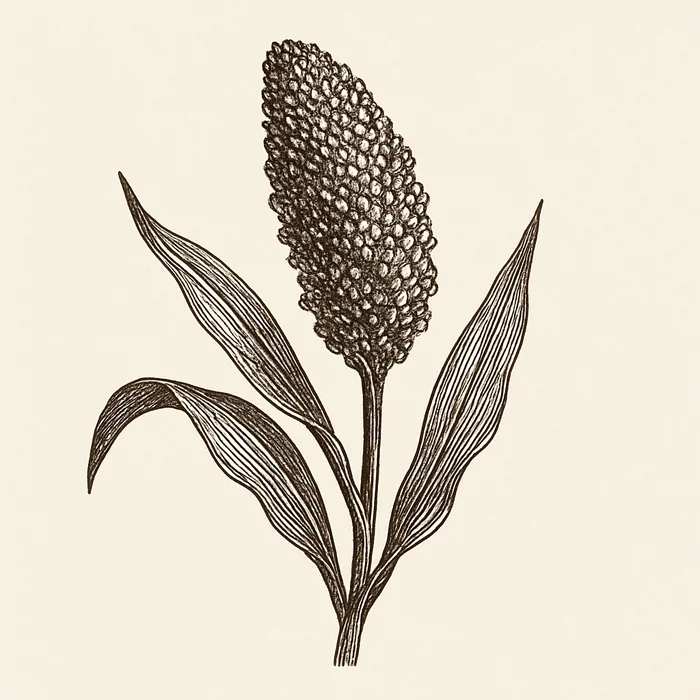
Millet
A whole grain providing complex carbohydrates without activating IGF-1/TOR-S6K pro-aging pathways as strongly as protein or simple sugars. Part of Sardinian and Molochio centenarian diets.
Why It Matters for Longevity
Millet is a naturally gluten-free whole grain consumed as a traditional staple in Sardinian and Southern Italian centenarian populations. It provides complex carbohydrates, dietary fiber, magnesium, B vitamins, and phenolic antioxidants within the low-IGF-1 plant-protein framework of the Longevity Diet.
Foxtail millet (a common millet species) demonstrated significant glucose-lowering effects in a controlled clinical trial in subjects with impaired glucose tolerance, reducing fasting blood glucose and improving glycemic markers — supporting millet as a metabolically favorable grain for longevity dietary patterns (Ren et al., 2018, Nutrients).
Higher dietary fiber intake from whole grains including millet is consistently associated with reduced risk of type 2 diabetes, cardiovascular disease, and all-cause mortality across multiple systematic reviews and meta-analyses; the mechanism involves glycemic moderation, gut microbiome support, and reduced chronic inflammation (Reynolds et al., 2020, PLoS Med).
Glycemic Profile vs. Wheat and Rice
One of millet's strongest functional distinctions is its lower glycemic index relative to the refined grains it can replace. A systematic review and meta-analysis of 65 studies found that millets averaged a GI of 52.7 ± 10.3 — approximately 36% lower than refined wheat (GI 74.2 ± 14.9) and milled rice (GI 71.7 ± 14.4) (Anitha et al., 2021, Front Nutr). Within the millet family, low-GI varieties (foxtail, barnyard, teff, fonio) reduced dietary GI by 35–79% versus controls; intermediate varieties (pearl, finger, kodo, sorghum) reduced GI by 13–35%. Long-term millet consumption in diabetic subjects lowered fasting glucose by 12% and postprandial glucose by 15% (both p < 0.01), and reduced HbA1c from 6.65 ± 0.4% to 5.67 ± 0.4% in pre-diabetic participants.
A crossover study in 105 patients with type 2 diabetes compared a foxtail millet-based breakfast (dosa) to an isocaloric rice-based breakfast and found a significant reduction in postprandial blood glucose (p < 0.001), with foxtail millet dosa having a GI of 59 versus 78 for rice dosa (Narayanan et al., 2016, Indian J Med Res). The mechanism is attributed to millet's high dietary fiber and non-starchy polysaccharides, which slow starch hydrolysis and blunt glucose entry into portal circulation. Millet polyphenols (mainly phenolic acids and tannins) provide additional glycemic modulation through competitive inhibition of α-amylase and α-glucosidase, the enzymes responsible for converting dietary starch into absorbable glucose.
Iron Status and Bioavailability
Millet's nutritional case is complicated by its iron bioavailability challenge. Raw millet is relatively iron-rich (2–8 mg/100g dry weight depending on variety), but phytate and condensed tannins in the seed coat chelate iron and zinc, limiting absorption. A systematic review and meta-analysis of 19 studies (1,022 participants) found that regular millet consumption increased hemoglobin by 13.2% versus 2.7% in control groups, and raised serum ferritin by an average of 54.7% (p < 0.05) — a clinically meaningful improvement that brought adolescent participants from moderate anemia (10.8 ± 1.4 g/dL) to normal hemoglobin levels (12.2 ± 1.5 g/dL) (Anitha et al., 2021, Front Nutr).
These outcomes depend substantially on preparation method. In-vitro data from the same meta-analysis show that fermentation increases bioavailable iron 3.4-fold and germination increases it 2.2-fold relative to raw grain. Fermentation works by activating endogenous grain phytases and introducing microbial phytases from lactic acid bacteria, both of which hydrolyze phytic acid (IP6) into lower inositol phosphate forms (IP5 through IP1) with reduced chelating capacity. Traditional injera (Ethiopia), ogi (West Africa), and other fermented millet preparations reflect millennia of culinary optimization for this exact problem — practices that modern preparation methods often abandon.
Vitamin C co-ingestion enhances non-heme iron absorption from millet through reduction of Fe³⁺ to the more soluble Fe²⁺ form in the duodenum. Pairing millet with citrus, tomato, or fresh herbs at the same meal provides the needed ascorbic acid.
Magnesium and Cardiovascular Function
Millet provides 44 mg of magnesium per 100g cooked weight — a meaningful contribution toward the recommended 310–420 mg/day. Magnesium is a cofactor in over 300 enzymatic reactions, including mitochondrial ATP synthesis, DNA replication and repair, and insulin receptor activation. Adequate dietary magnesium intake is associated with reduced risk of type 2 diabetes, hypertension, and cardiovascular mortality in large prospective cohort data. Phytate binding reduces magnesium bioavailability from raw millet; soaking prior to cooking reduces phytate content and partially restores mineral availability.
Millet's niacin (1.3 mg/100g cooked) is an NAD+ precursor. NAD+ is essential for sirtuins (SIRT1–7), the deacetylase enzymes that regulate gene expression responses to caloric restriction and stress — making dietary niacin supply relevant to the caloric-restriction-mimicking mechanisms of the Longevity Diet.
How to Use It
Pairs well with legumes, roasted vegetables, olive oil. Millet's methionine complements the lysine-rich profile of legumes, together forming a more complete amino acid profile — a traditional pairing across African and Indian diets. Use as a porridge, grain salad, or pilaf. Soak millet for 8–12 hours before cooking to reduce phytate and improve mineral bioavailability. For maximum iron benefit, use fermented preparations (traditional injera, fermented porridge) or add a vitamin C source to the meal.
What to Pair It With
| Ingredient | Why | Tradition |
|---|---|---|
| Legumes | Complementary amino acid profiles; millet methionine + legume lysine = more complete protein | African / Indian |
| Roasted vegetables | Complete longevity grain bowl; fat-soluble vitamins from vegetables absorbed better with olive oil | General |
| Olive oil | Slows glucose absorption from millet starch; aids fat-soluble vitamin uptake | Mediterranean |
| Fresh herbs (cilantro, parsley) | Vitamin C from herbs enhances non-heme iron absorption from millet | Traditional |
Flavor Profile
Mild, slightly nutty, earthy, subtly sweet. Aroma is neutral, faintly cornlike, toasty when dry-roasted. Texture is fluffy when cooked, porridge-like if overcooked, slightly crunchy in grain salads.
The Science
- Ren et al., 2018, Nutrients: Clinical trial in subjects with impaired glucose tolerance — foxtail millet consumption significantly reduced fasting blood glucose and improved glycemic markers, supporting millet as a metabolically favorable grain.
- Reynolds et al., 2020, PLoS Med: Meta-analysis of prospective studies — higher dietary fiber intake from whole grains associated with reduced risk of type 2 diabetes, cardiovascular disease, and all-cause mortality.
- Anitha et al., 2021, Front Nutr: Systematic review and meta-analysis of 65 studies — millets averaged GI 52.7 vs 74.2 for refined wheat and 71.7 for milled rice; long-term consumption reduced fasting glucose 12% and postprandial glucose 15% in diabetic subjects; minimally processed millets 30% more effective than refined forms.
- Narayanan et al., 2016, Indian J Med Res: Crossover trial in 105 type 2 diabetes patients — foxtail millet breakfast (GI 59) significantly reduced postprandial glucose vs rice breakfast (GI 78), p < 0.001; fiber and non-starchy polysaccharides the proposed mechanism.
- Anitha et al., 2021, Front Nutr: Systematic review and meta-analysis of 19 studies (n=1,022) — millet consumption increased hemoglobin 13.2% vs 2.7% in controls; serum ferritin rose 54.7% (p < 0.05); fermentation increased bioavailable iron 3.4-fold vs raw grain.
References
- Ren X, Pei Y, Hou X, et al. The Glucose-Lowering Effect of Foxtail Millet in Subjects with Impaired Glucose Tolerance: A Self-Controlled Clinical Trial. Nutrients. 2018;10(10):1509. PMID: 30326632. doi:10.3390/nu10101509
- Reynolds AN, Akerman A, Mann J. Dietary fiber and whole grain consumption in relation to cardiometabolic outcomes: a systematic review and meta-analysis of prospective studies. PLoS Med. 2020;17(3):e1003053. PMID: 32142510. doi:10.1371/journal.pmed.1003053
- Anitha S, Kane-Potaka J, Tsusaka TW, et al. A Systematic Review and Meta-Analysis of the Potential of Millets for Managing and Reducing the Risk of Developing Diabetes Mellitus. Front Nutr. 2021;8:687428. PMID: 34395493. doi:10.3389/fnut.2021.687428
- Narayanan J, Sanjeevi V, Rohini U, Trueman P, Viswanathan V. Postprandial glycaemic response of foxtail millet dosa in comparison to a rice dosa in patients with type 2 diabetes. Indian J Med Res. 2016;144(5):712-717. PMID: 28361824. doi:10.4103/ijmr.IJMR_551_15
- Anitha S, Kane-Potaka J, Botha R, et al. Millets Can Have a Major Impact on Improving Iron Status, Hemoglobin Level, and in Reducing Iron Deficiency Anemia — A Systematic Review and Meta-Analysis. Front Nutr. 2021;8:725529. PMID: 34722606. doi:10.3389/fnut.2021.725529
Key Nutrients
| Nutrient | Per 100g | Notes |
|---|---|---|
| Magnesium | 44 mg (cooked) | Moderate bioavailability; phytate binding reduced by soaking; supports insulin sensitivity and cardiovascular health |
| Phosphorus | 100 mg (cooked) | Important for bone matrix and cellular energy (ATP); co-ingestion with vitamin D improves utilization |
| Dietary fiber | 1.3 g (cooked, whole grain) | Resistant starch acts as prebiotic; fermented by gut bacteria into short-chain fatty acids |
| Niacin (B3) | 1.3 mg (cooked) | NAD+ precursor; supports mitochondrial function and DNA repair |
| Iron | 2–8 mg/100g (dry, variety-dependent) | Non-heme; phytate binding limits absorption; fermentation increases bioavailable fraction 3.4-fold; pair with vitamin C |