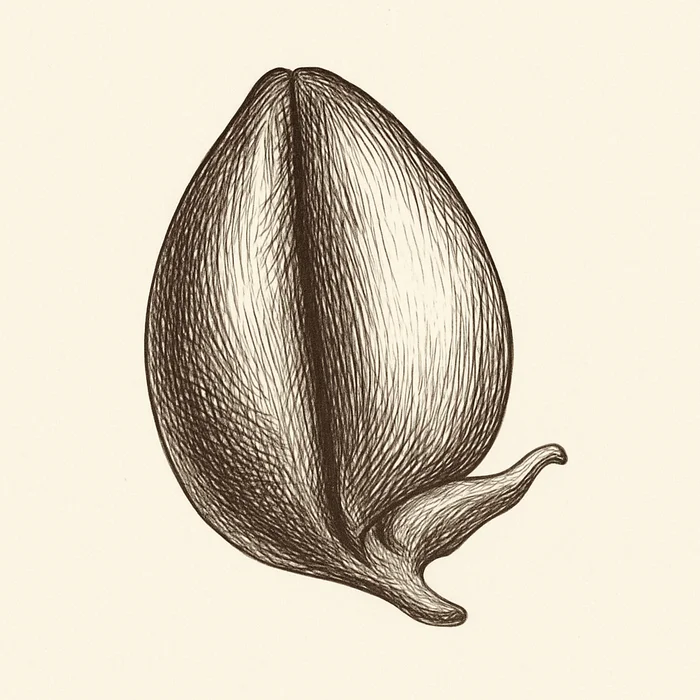
Wheat Germ
Wheat germ is a source of folate (40 mcg per 2 tbsp, 10% DV); wheat germ oil is the top food source of vitamin E (20.3 mg per 1 tbsp, 102% DV). Wheat germ is also the most practical dietary source of spermidine — a polyamine that induces autophagy.
Why It Matters for Longevity
Wheat germ has an unusual longevity story: beyond its vitamins, it contains spermidine at concentrations (~243 nmol/g) sufficient to activate autophagy at typical dietary doses.
Eisenberg et al. (2009) established in a landmark Nature Cell Biology paper that spermidine extends lifespan in yeast, Drosophila, and C. elegans, and induces autophagy across species including human immune cells. Genetically blocking autophagy abolished the lifespan extension — confirming autophagy is the mechanism. Wheat germ is the most concentrated practical food source of spermidine.
Morris et al.'s (2002) JAMA study linked dietary vitamin E from food — not supplements — to reduced Alzheimer's disease risk. Wheat germ oil at 1 tablespoon delivers 100% of the vitamin E RDA as natural mixed tocopherols from the food matrix, the safer and more effective form.
Wheat germ also provides folate essential for DNA methylation and homocysteine regulation, and zinc (though with high phytate binding that reduces bioavailability).
The human epidemiological evidence for spermidine has strengthened considerably. Kiechl et al. (2018, Am J Clin Nutr) followed 829 adults (ages 45–84) for 20 years in the Bruneck cohort, recording 341 deaths. Higher spermidine intake was the single strongest dietary predictor of survival among 146 nutrients examined: each standard deviation increase in intake was associated with a 24% lower all-cause mortality hazard (HR 0.76). The mortality difference between the highest and lowest thirds of spermidine intake corresponded to an age advantage of approximately 5.7 years — comparable in magnitude to the benefit of not smoking. This finding was independently replicated in a second cohort. Wheat germ, as one of the most concentrated sources of dietary spermidine (~220–337 µg/g in commercially available forms), is among the few practical foods capable of meaningfully shifting dietary polyamine intake.
A larger confirmatory analysis — Wu et al. (2022, Front Public Health) in 23,894 NHANES participants with over 2,300 documented deaths — found that the highest quartile of spermidine intake was associated with 30% lower all-cause mortality (HR 0.70) and 32% lower CVD mortality (HR 0.68) compared with the lowest quartile. Cereal-derived spermidine specifically was associated with a 20–25% mortality reduction across subgroups, placing whole grain wheat products — and wheat germ in particular — in a mechanistically important position within the longevity diet.
The mechanistic picture was synthesised by Madeo et al. (2018, Science), who described spermidine as a caloric restriction mimetic: it induces protein deacetylation, activates autophagy through HDAC inhibition, and has "prominent cardioprotective and neuroprotective effects" as well as stimulatory effects on anti-tumour immune surveillance. Critically, because endogenous spermidine levels decline with age, dietary intake becomes increasingly important after mid-life — the population in which the Bruneck mortality benefit was observed.
A 2023 quantitative analysis (Mohajeri et al., Food Sci Nutr) measured polyamine content across commercial wheat germ products using LC-MS/MS and found powdered wheat germ contained 220–337 µg/g of spermidine-class polyamines. This is the reference for the concentrations cited in dietary guidance; germinated wheat grains and less-refined forms contain substantially less.
How to Use It
Pairs well with yogurt, oats, banana. Sprinkle raw wheat germ on yogurt, oatmeal, or smoothie bowls. 2 tablespoons per day provides meaningful spermidine. Wheat germ oil can be drizzled on salads or added to dressings. Store in the refrigerator after opening — high PUFA content means it goes rancid quickly.
What to Pair It With
| Ingredient | Why | Tradition |
|---|---|---|
| yogurt | See synergies | Classic topping for longevity breakfast bowls |
| oats | See synergies | Blended into porridge for texture and nutrition |
| banana | See synergies | Smoothie ingredient combination |
| olive oil | See synergies | Wheat germ oil used as a drizzle in Mediterranean salads |
| honey | See synergies | Traditional wheat germ and honey energy preparation |
Synergies
- Olive Oil (synergy): Wheat germ oil's vitamin E protects polyunsaturated fats (including olive oil's minor components) from oxidation; using both provides complementary fat-soluble antioxidants.
- Yogurt (complement): Sprinkling wheat germ on yogurt combines probiotic gut-health benefits with spermidine-induced autophagy and vitamin E antioxidant protection — a practical longevity breakfast pairing.
- Folate (synergy): Wheat germ provides both folate and spermidine; folate supports one-carbon metabolism and DNA methylation while spermidine promotes cellular renewal via autophagy — complementary anti-aging mechanisms.
Flavor Profile
Taste: nutty, slightly sweet, toasty, mild. Aroma: toasted grain, nutty, warm. Texture: fine granules, slightly oily when toasted. Category: topping / fortifier.
The Science
- Eisenberg et al., 2009, Nat Cell Biol: Spermidine extends lifespan in yeast, flies, and worms and induces autophagy across species; wheat germ is the richest practical dietary source of spermidine at concentrations relevant to autophagy induction.
- Morris et al., 2002, JAMA: Dietary vitamin E from food (not supplements) was inversely associated with incident Alzheimer's disease over 3.9 years; wheat germ oil delivers the full RDA in natural tocopherol form.
- Kiechl et al., 2018, Am J Clin Nutr: 20-year Bruneck cohort (829 adults, 341 deaths) — each SD increase in dietary spermidine intake reduced all-cause mortality hazard by 24% (HR 0.76); mortality advantage equivalent to being 5.7 years younger; wheat germ is among the most concentrated practical dietary sources of spermidine.
- Wu et al., 2022, Front Public Health: NHANES cohort (23,894 participants, 2,365 deaths) — highest spermidine quartile associated with 30% lower all-cause mortality (HR 0.70) and 32% lower CVD mortality (HR 0.68); cereal-derived spermidine contributed 20–25% mortality reduction.
- Madeo et al., 2018, Science: Mechanistic review — spermidine acts as caloric restriction mimetic via protein deacetylation and autophagy induction (HDAC inhibition pathway); prominent cardioprotective and neuroprotective effects; endogenous levels decline with age, increasing importance of dietary intake.
- Mohajeri et al., 2023, Food Sci Nutr: LC-MS/MS quantification of commercial wheat germ products — spermidine-class polyamines 220–337 µg/g in powdered wheat germ; wheat germ is the most concentrated commercially available plant-based polyamine source.
References
- Eisenberg T, Knauer H, Schauer A, et al. Induction of autophagy by spermidine promotes longevity. Nat Cell Biol. 2009;11(11):1305-14. PMID: 19801973. doi:10.1038/ncb1975
- Morris MC, Evans DA, Bienias JL, et al. Dietary intake of antioxidant nutrients and the risk of incident Alzheimer disease in a biracial community study. JAMA. 2002;287(24):3230-7. PMID: 12076219. doi:10.1001/jama.287.24.3230
- Kiechl S, Pechlaner R, Willeit P, et al. Higher spermidine intake is linked to lower mortality: a prospective population-based study. Am J Clin Nutr. 2018;108(2):371-380. PMID: 29955838. doi:10.1093/ajcn/nqy102
- Wu H, Wang J, Jiang H, et al. The association of dietary spermidine with all-cause mortality and CVD mortality: The U.S. National Health and Nutrition Examination Survey, 2003 to 2014. Front Public Health. 2022;10:985783. PMID: 36249217. doi:10.3389/fpubh.2022.985783
- Madeo F, Eisenberg T, Pietrocola F, Kroemer G. Spermidine in health and disease. Science. 2018;359(6374):eaan2788. PMID: 29371440. doi:10.1126/science.aan2788
- Mohajeri M, Ayatollahi SA, Kobarfard F, et al. Wheat germ, a byproduct of the wheat milling industry, as a beneficial source of anti-aging polyamines: A quantitative comparison of various forms. Food Sci Nutr. 2023;11(12):7713-7722. PMID: 37970387. doi:10.1002/fsn3.3692
Key Nutrients
| Nutrient | Per 100g | Notes |
|---|---|---|
| Alpha-tocopherol (vitamin E) | ~149 mg per 100 mL wheat germ oil; ~20.3 mg per 1 tbsp oil | Most concentrated whole-food source of vitamin E; fat-soluble, best absorbed with a meal containing dietary fat. Raw wheat germ (~1.5 mg per 2 tbsp) provides a modest fraction; the oil is the clinically relevant form. |
| Folate | ~281 mcg per 100 g raw wheat germ (~40 mcg per 2 tbsp) | Food folate (polyglutamate form) has ~50% bioavailability relative to synthetic folic acid; wheat germ is a practical whole-food folate source. |
| Spermidine | ~243 nmol/g (one of the highest food sources) | Spermidine is absorbed intact from the intestine and induces autophagy; wheat germ is the most practical dietary source for achieving autophagy-relevant concentrations. |
| Zinc | ~12.3 mg per 100 g | High phytate content reduces bioavailability; soaking or light cooking can improve zinc absorption. |