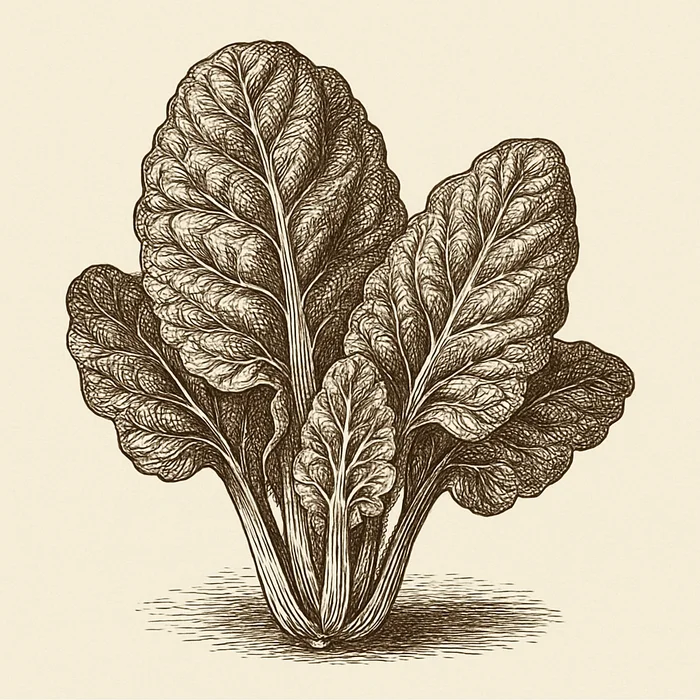
Swiss Chard
Listed as an example green leafy vegetable side dish in the Longevity Diet; served 200 g boiled, seasoned with olive oil and lemon. Exceptionally high in vitamin K1 (830 mcg/100g) and magnesium.
Why It Matters for Longevity
Swiss chard is one of the most nutrient-dense leafy greens: more vitamin K than spinach, excellent magnesium, meaningful folate, and the distinctive betalain antioxidants in its colorful stems (absent in most other greens). It is also among the top vegetable sources of dietary nitrate, sharing this distinction with spinach, beet greens, and arugula.
Aune et al.'s 2010 BMJ meta-analysis of 6 prospective studies found that greater green leafy vegetable intake was associated with a 14% reduction in type 2 diabetes risk — an effect attributed to the combination of magnesium, vitamin K, and antioxidant content. Chard's magnesium content (81 mg/100g cooked) directly supports this mechanism: Larsson & Wolk's 2007 meta-analysis of 7 prospective cohort studies confirmed magnesium intake is significantly inversely associated with type 2 diabetes risk in a dose-dependent manner.
The olive oil pairing is not optional. Chard's vitamin K1 is fat-soluble — without fat in the meal, phylloquinone absorption drops dramatically. The classic Longevity Diet preparation (olive oil + lemon) is mechanistically optimal.
Magnesium and Cardiometabolic Mortality
Chard's magnesium density (81 mg/100g cooked) makes it one of the most efficient vegetable sources of this mineral. A dose-response meta-analysis of 40 prospective cohort studies involving over 1 million participants quantified the benefit per 100 mg/day increment in dietary magnesium: 7% lower stroke risk (RR 0.93), 22% lower heart failure risk (RR 0.78), 19% lower type 2 diabetes risk (RR 0.81), and 10% lower all-cause mortality risk (RR 0.90) (Fang et al., 2016, BMC Med). A subsequent meta-analysis of 19 publications covering 1,168,756 participants extended this: each additional 100 mg/day of dietary magnesium was associated with a 6% reduction in all-cause mortality and a 20% reduction in cancer mortality (Bagheri et al., 2021, Adv Nutr). A 200g serving of boiled chard provides roughly 160 mg magnesium, placing it among the most efficient per-serving dietary sources.
Vitamin K1 and Longevity
At 830 mcg phylloquinone per 100g, a 200g serving of chard provides approximately 1,660 mcg of vitamin K1 — vastly above the AI of 90–120 mcg/day — even accounting for cooking losses of 20–40%. Vitamin K1 activates matrix Gla protein (MGP), a calcification inhibitor expressed in vascular smooth muscle cells, and osteocalcin, required for bone mineralization. A participant-level meta-analysis of 3 prospective US cohorts (3,891 participants; median 13 years follow-up) found that individuals with the lowest circulating phylloquinone (≤0.5 nmol/L) had a 19% higher risk of all-cause mortality (HR 1.19; 95% CI 1.03–1.38) compared to those with the highest concentrations (>1.0 nmol/L), independent of known risk factors (Shea et al., 2020, Am J Clin Nutr). Chard provides the dietary phylloquinone substrate for maintaining this protective status.
Dietary Nitrate and Vascular Function
Swiss chard contains >250 mg nitrate per 100g fresh weight, placing it in the highest-nitrate vegetable tier. Dietary nitrate is reduced to nitrite by oral bacteria on the tongue, then converted to nitric oxide (NO) in the acidic stomach; NO is a vasodilator and endothelial protectant. A meta-analysis of 19 RCTs found that inorganic nitrate supplementation lowered systolic blood pressure by −2.42 mmHg (95% CI −4.28 to −0.57; p = 0.01) in healthy individuals, via NO-mediated relaxation of vascular smooth muscle (Zhang et al., 2023, Food Funct). An observational study of 56,000 Danish adults found that moderate vegetable nitrate intake (~59 mg/day) was associated with 15% lower overall CVD risk, 17% lower ischemic stroke risk, and 26% lower peripheral artery disease risk compared to the lowest intake quintile.
Betalains in the Colored Stems
The red, yellow, and orange stems of Swiss chard contain betacyanins and betaxanthins — water-soluble nitrogen-containing pigments absent from most greens. Betalains function as antioxidants through direct radical scavenging and by upregulating endogenous antioxidant enzymes (superoxide dismutase, catalase, glutathione peroxidase) via Nrf2 pathway activation. They suppress NF-κB-driven pro-inflammatory cytokine release (TNF-α, IL-6) and inhibit LDL oxidation. As water-soluble compounds, betalains are not lost with fat-free cooking and are bioavailable when chard is consumed plain or dressed with lemon. Their concentration varies by stem color — deeper red stems typically contain higher betacyanin levels.
How to Use It
Pairs well with olive oil, lemon, garlic. Boil or sauté briefly; separate stems from leaves (stems take 2–3 minutes longer). The traditional preparation in the book is 200 g boiled, dressed with extra-virgin olive oil and lemon — a side dish standard across Mediterranean longevity regions.
What to Pair It With
| Ingredient | Why | Tradition |
|---|---|---|
| olive oil | See synergies | The Longevity Diet |
| lemon | See synergies | The Longevity Diet |
| garlic | See synergies | traditional |
Synergies
- Olive Oil (synergy): Fat essential for absorbing fat-soluble vitamins K and A concentrated in chard; traditional seasoning.
- Lemon (complement): Vitamin C in lemon enhances non-heme iron absorption; brightens the earthy flavor.
- Spinach (complement): Both leafy greens interchangeable in Longevity Diet side dish rotation; varied colors provide distinct phytonutrients.
Flavor Profile
Taste: earthy, mild bitter, minerally. Aroma: green, vegetal. Texture: tender leaves, slightly fibrous stems. Category: leafy green.
The Science
- Aune et al., 2010, BMJ: Meta-analysis of 6 prospective cohort studies: each additional serving/day of green leafy vegetables associated with 14% reduction in type 2 diabetes risk.
- Larsson & Wolk, 2007, J Intern Med: Meta-analysis of 7 prospective cohort studies (286,668 participants): magnesium intake dose-dependently and inversely associated with type 2 diabetes risk; chard is one of the richest vegetable magnesium sources.
- Fang et al., 2016, BMC Med: Dose-response meta-analysis of 40 cohort studies (>1M participants): each 100 mg/day dietary magnesium increment associated with 7% lower stroke risk, 22% lower heart failure risk, and 10% lower all-cause mortality.
- Bagheri et al., 2021, Adv Nutr: Meta-analysis of 19 publications (1,168,756 participants): dietary magnesium associated with 13% lower all-cause mortality (ES 0.87) and 20% lower cancer mortality (ES 0.80); each 100 mg/day increment reduces all-cause mortality by 6%.
- Shea et al., 2020, Am J Clin Nutr: Participant-level meta-analysis of 3 US cohorts (3,891 adults, 13-year median follow-up): lowest phylloquinone status (≤0.5 nmol/L) associated with 19% higher all-cause mortality (HR 1.19; 95% CI 1.03–1.38) vs. highest status.
- Zhang et al., 2023, Food Funct: Meta-analysis of 19 RCTs: dietary nitrate lowers systolic BP by −2.42 mmHg (95% CI −4.28 to −0.57; p = 0.01) in healthy individuals via NO-mediated vasodilation; chard is a top-tier vegetable nitrate source.
References
- Aune D, Norat T, Romundstad P, Vatten LJ. Whole grain and refined grain consumption and the risk of type 2 diabetes: a systematic review and dose-response meta-analysis of cohort studies. BMJ. 2010;341:c4229. PMID: 20724400. doi:10.1136/bmj.c4229
- Larsson SC, Wolk A. Magnesium intake and risk of type 2 diabetes: a meta-analysis. J Intern Med. 2007;262(2):208-14. PMID: 17645588. doi:10.1111/j.1365-2796.2007.01840.x
- Fang X, Wang K, Han D, et al. Dietary magnesium intake and the risk of cardiovascular disease, type 2 diabetes, and all-cause mortality: a dose-response meta-analysis of prospective cohort studies. BMC Med. 2016;14(1):210. PMID: 27927203. doi:10.1186/s12916-016-0742-z
- Bagheri A, Naghshi S, Sadeghi O, Larijani B, Esmaillzadeh A. Total, dietary, and supplemental magnesium intakes and risk of all-cause, cardiovascular, and cancer mortality: a systematic review and dose-response meta-analysis of prospective cohort studies. Adv Nutr. 2021;12(4):1197-1210. PMID: 33684200. doi:10.1093/advances/nmab001
- Shea MK, Barger K, Booth SL, et al. Vitamin K status, cardiovascular disease, and all-cause mortality: a participant-level meta-analysis of 3 US cohorts. Am J Clin Nutr. 2020;111(6):1228-1237. PMID: 32359159. doi:10.1093/ajcn/nqaa082
- Zhang Y, Zhang H, An W, Li D, Qin L. Regulatory effect of dietary nitrate on blood pressure: a meta-analysis of randomized controlled trials. Food Funct. 2023;14(4):1757-1770. PMID: 36740972. doi:10.1039/d2fo03140j
Key Nutrients
| Nutrient | Per 100g | Notes |
|---|---|---|
| Vitamin K | 830 mcg | Exceptionally high; fat-soluble, must be eaten with olive oil for absorption; low plasma phylloquinone associated with 19% higher all-cause mortality in meta-analysis |
| Magnesium | 81 mg (cooked) | One of the best vegetable magnesium sources; each 100 mg/day dietary increment associated with 7% lower stroke risk, 22% lower heart failure risk, 10% lower all-cause mortality |
| Dietary nitrate | >250 mg NO₃⁻ | Top-tier vegetable nitrate source; converted to nitric oxide via enterosalivary pathway; meta-analysis confirms −2.42 mmHg systolic BP reduction |
| Betalains (stems) | varies by variety | Water-soluble antioxidant pigments; not lost with fat-free cooking; Nrf2 activation and NF-κB suppression in cell studies |