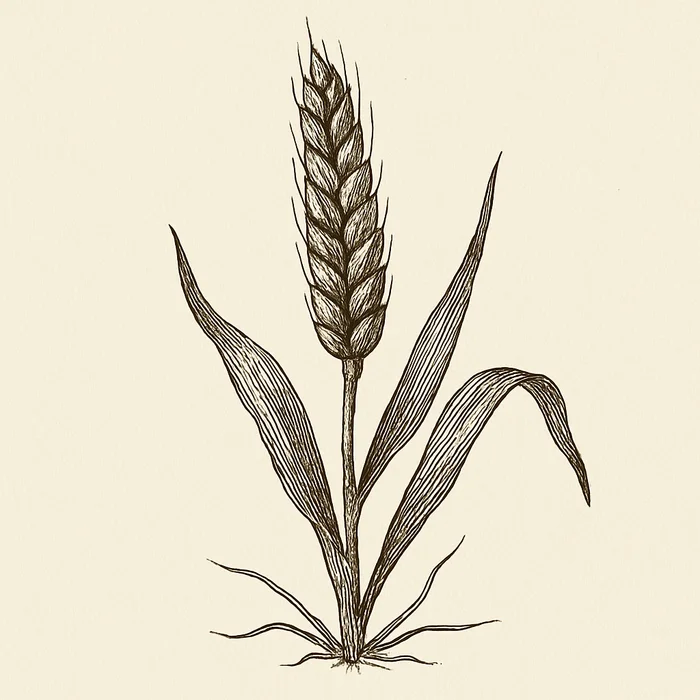
Spelt
Whole ancient grain used as pasta substitute and grain base in the Longevity Diet — acceptable alongside farro, barley, and whole wheat pasta at 40g dry weight per serving.
Why It Matters for Longevity
Spelt (Triticum aestivum ssp. spelta) is an ancient hulled wheat that diverged from common bread wheat (T. aestivum ssp. aestivum) millennia ago and was a staple cereal across Europe before modern breeding displaced it. It sits in the same ancient-wheat family as farro emmer (T. turgidum ssp. dicoccum) and einkorn (T. monococcum) — crops that predate the Green Revolution and have never been subjected to the same intensive selection for yield and dough extensibility that defines modern bread wheat.
The longevity case for spelt rests on three interacting properties: its whole-grain matrix of prebiotic fiber and phytonutrients, a modestly distinct protein and mineral composition relative to modern wheat, and — when consumed in whole or minimally processed form — a moderate glycemic profile. None of these attributes is dramatic in isolation, but together they track closely with the dietary pattern associated with longevity in observational research.
Nutritional Profile vs. Modern Wheat
Spelt delivers more protein per 100 g of dry grain (~14–15 g) than typical bread wheat flour (~10–13 g), though the gap narrows under modern high-nitrogen cultivation. The more consistent difference is in gluten protein architecture. Geisslitz et al. (2019) analyzed 300 samples across five wheat species and found that ancient wheats including spelt had higher total protein and gluten content than common wheat, but a higher gliadin-to-glutenin ratio — more gliadins relative to the cross-linking glutenin subunits that create the tight, elastic gluten network of modern bread wheat. Geisslitz et al., 2019, Foods
This matters because gluten tenacity — the resistance to deformation — is determined largely by high-molecular-weight glutenin subunit (HMW-GS) content. Spelt has fewer of these cross-linking subunits, producing a weaker, more extensible gluten matrix. Spelt is harder to bake into high-volume loaves for this reason, but the same structural difference makes it worth examining from a digestibility standpoint.
Ma and Baik (2021) measured in vitro protein digestibility across 26 wheat varieties — 17 modern US classes and 9 ancient types including spelt, emmer, and einkorn — and found digestibility ranged from 86.5% to 92.3% for whole flour. Importantly, kernel hardness correlated negatively with digestibility, while albumin proportion correlated positively. Spelt's softer kernel relative to hard red spring wheat suggests a structural basis for somewhat higher digestibility, though the study found no single factor dominated: non-protein components (starch, fiber, phytic acid) substantially modulate protein digestibility in the whole grain matrix. Ma & Baik, 2021, J Sci Food Agric
Minerals are another area of consistent advantage. Spelt bran is naturally enriched in magnesium (~136 mg/100g dry vs. ~90 mg in refined bread wheat), zinc, and B vitamins, with calcium content comparable to common wheat and phytic acid levels that do not meaningfully exceed it. Galterio et al., 2005, Plant Foods Hum Nutr Magnesium is especially relevant to longevity mechanisms: it participates in >300 enzymatic reactions including ATP synthesis, insulin receptor signaling, and DNA repair.
Gluten Structure and Digestibility: What the Evidence Actually Shows
A commonly repeated claim is that spelt is "easier to digest" or suitable for people with wheat sensitivities. The scientific picture is more nuanced. Spelt does contain different HMW-GS isoforms from common wheat, and its gluten structure is less tensile — but it is still gluten-containing wheat and is absolutely contraindicated in celiac disease. Ancient wheats including spelt have been shown to contain a range of celiac-active epitopes, and sensitivity claims should not be extrapolated from protein composition data.
What the structural difference does appear to mean is that the whole-grain food matrix is less densely cross-linked, which may slow starch-protein interactions during digestion and modestly affect postprandial glucose kinetics. The fermentation of spelt pasta or whole spelt grain likely differs from an equivalent mass of refined wheat pasta in ways that are physiologically relevant even if the clinical evidence remains thin.
Fiber Fermentation and Gut Health
Spelt's ~10 g dietary fiber per 100 g dry grain is a mix of insoluble cellulose and hemicellulose with a meaningful arabinoxylan (AX) fraction — a soluble, branched polysaccharide found across the wheat family and concentrated in the bran layer. Arabinoxylan is not digested in the small intestine and reaches the colon largely intact, where it serves as a substrate for the colonic microbiota.
Chudan et al. (2023) fed wheat-derived arabinoxylan to mice and demonstrated it selectively increased Lachnospiraceae — a butyrate-producing bacterial family — while elevating fecal butyrate levels and expanding colonic regulatory T cells (Tregs). In a colitis model, AX reduced inflammation and suppressed pro-inflammatory cytokine production. The researchers conclude that wheat-derived arabinoxylan "may be a promising prebiotic for prevention of colitis." Chudan et al., 2023, Molecules
Butyrate is the primary energy substrate for colonocytes, suppresses NF-κB-driven inflammation, and is associated with reduced colorectal cancer risk via epigenetic mechanisms (histone deacetylase inhibition). The protective effect of AX extends beyond butyrate. Belobrajdic et al. (2012) showed that an arabinoxylan-rich wheat fraction increased caecal acetate, propionate, and total SCFA concentrations in pigs, while simultaneously reducing protein fermentation byproducts (phenol, p-cresol) and protecting colonocyte DNA from diet-induced oxidative damage. Belobrajdic et al., 2012, Br J Nutr
These effects are AX-class effects, not spelt-specific. The key distinction between whole spelt and refined spelt is that the AX is almost entirely in the bran fraction. Refined spelt flour loses most of this benefit. The whole grain — consumed as spelt grain, wholemeal spelt bread, or spelt pasta made from wholemeal flour — is the relevant form.
Glycemic Response
Spelt's glycemic index depends heavily on the form consumed. A 2020 Polish study measuring the GI of six commercial groat varieties found spelt groats at GI 69.8 (high GI), well above barley (31.3) and buckwheat (34.7). Różańska et al., 2020, Rocz Panstw Zakl Hig This is an important qualifier: cooked whole spelt grain, eaten plain, does not deliver a low glycemic response.
What modulates the response in practice is the food matrix and meal context. Biskip et al. (2017) reviewed spelt-specific bioactive compounds — including dietary fiber, phytic acid, and alkylresorcinols — and documented evidence that these compounds modulate postprandial glycemia, insulin sensitivity, and may protect against complications of chronic hyperglycemia through antioxidant mechanisms. Biskip et al., 2017, Adv Clin Exp Med
In practice, the longevity-relevant preparation of spelt is in combination with olive oil, legumes, and vegetables — all of which lower the glycemic load of the overall meal. The 40g dry-weight serving recommended in the Longevity Diet delivers approximately 25–30g available carbohydrate, and paired with fat and protein this sits well within a moderate glycemic load range. The expectation is not that spelt outperforms barley on glycemic metrics — it does not — but that whole spelt consumed in the context of a Mediterranean-style meal pattern delivers a reasonable glycemic outcome alongside its fiber and mineral benefits.
Cardiovascular and Inflammatory Evidence
Direct spelt-cardiovascular trial data does not exist. The cardiovascular evidence base is shared with whole grains broadly. Aune et al.'s 2016 BMJ meta-analysis of 45 prospective studies remains the landmark reference: 90g/day whole grain consumption associated with 19% lower coronary heart disease risk, 22% lower CVD risk, and 17% lower all-cause mortality — dose-dependent across the range studied. Aune et al., 2016, BMJ Spelt consumed as whole grain contributes to this dose.
The mechanistic candidates are the same as for other whole grains: butyrate-mediated gut barrier maintenance reducing endotoxin translocation; lignans and alkylresorcinols acting as weak phytoestrogens with antioxidant activity; magnesium contributing to vascular smooth muscle function and insulin sensitivity; and soluble fiber lowering LDL through bile acid sequestration. None of these pathways has been specifically attributed to spelt's unique characteristics in RCT data — the honest summary is that spelt shares in the well-documented whole-grain benefit, and loses most of it when refined.
The Farro / Spelt Family Relationship
Spelt is frequently conflated with farro, and the overlap is real but imprecise. "Farro" in Italian culinary tradition most commonly refers to emmer (T. turgidum ssp. dicoccum), though it can also label einkorn or spelt depending on region. Nutritionally, the three ancient wheats are similar: higher gliadin-to-glutenin ratios than modern bread wheat, comparable or higher mineral content, and a roughly equivalent prebiotic fiber profile. From a longevity diet standpoint they are interchangeable at the 40g serving size; emmer is more commonly available in Italian cuisine while spelt dominates Northern European traditions.
How to Use It
Cook spelt grain like rice (1:2 water ratio, ~45–50 minutes), or use as spelt pasta — widely available and with a nuttier flavor than standard wheat pasta that pairs well with olive oil-based sauces. Wholemeal spelt flour can substitute for a portion of wheat flour in baking, though the weaker gluten structure reduces rise. For maximum fiber benefit, choose spelt pasta made from wholemeal spelt, not refined spelt flour.
What to Pair It With
| Ingredient | Why | Tradition |
|---|---|---|
| legumes | complement: complete amino acid profile; slows gastric emptying and blunts glycemic load | traditional Mediterranean |
| olive oil | synergy: monounsaturated fat lowers glycemic load; enhances fat-soluble phytonutrient absorption | The Longevity Diet |
| vegetables | complement: fiber stacking; polyphenols complement spelt's lignans | traditional |
Synergies
- Legumes (complement): Ancient grain + legume combination provides complete amino acid profile; the fiber in legumes stacks with spelt's arabinoxylan for enhanced SCFA production and further glycemic dampening.
- Olive Oil (synergy): Fat slows gastric emptying and lowers the glycemic load of spelt dishes; traditional dressing in grain salads across Mediterranean cultures.
- Pasta (complement): Listed as an interchangeable 40g dry-weight substitute for pasta in longevity meal plans. Wholemeal spelt pasta is preferable to refined.
Flavor Profile
Taste: nutty, earthy, slightly sweet. Aroma: toasty, wheaty. Texture: chewy, dense. Category: ancient grain.
The Science
- Aune et al., 2016, BMJ: Dose-response meta-analysis of 45 studies: whole grain consumption (90 g/day) associated with 19% lower coronary heart disease risk, 22% lower CVD risk, and 17% lower all-cause mortality.
- Galterio et al., 2005, Plant Foods Hum Nutr: Spelt bran enriched in minerals and oleic acid; magnesium, calcium, and zinc higher than common wheat flour with comparable phytic acid.
- Geisslitz et al., 2019, Foods: Spelt, emmer, and einkorn have higher protein and gluten content than common wheat but a higher gliadin-to-glutenin ratio; weaker, more extensible gluten network than modern bread wheat.
- Ma & Baik, 2021, J Sci Food Agric: In vitro protein digestibility across 26 wheat varieties (modern and ancient including spelt); kernel hardness negatively correlated with digestibility; non-protein components substantially affect the whole-grain digestibility outcome.
- Chudan et al., 2023, Molecules: Wheat-derived arabinoxylan increased Lachnospiraceae and fecal butyrate, expanded colonic regulatory T cells, and attenuated inflammation in a murine colitis model.
- Belobrajdic et al., 2012, Br J Nutr: Arabinoxylan-rich wheat fraction increased caecal SCFA, reduced protein fermentation byproducts, and protected colonocyte DNA from oxidative damage in pigs.
- Biskip et al., 2017, Adv Clin Exp Med: Review of spelt and common wheat bioactive compounds (fiber, phytic acid, alkylresorcinols) and their role in glycemic control and insulin sensitivity.
- Różańska et al., 2020, Rocz Panstw Zakl Hig: GI of commercial groats: spelt groats GI 69.8 (high), compared to barley 31.3 and buckwheat 34.7; form and processing strongly influence glycemic outcome.
References
- Aune D, Keum N, Giovannucci E, et al. Whole grain consumption and risk of cardiovascular disease, cancer, and all cause and cause specific mortality: systematic review and dose-response meta-analysis of prospective studies. BMJ. 2016;353:i2716. PMID: 27301975. doi:10.1136/bmj.i2716
- Galterio G, Codianni P, Giusti AM, Cacciatori P, Pezzali G, Sgrulletta D. Spelt (Triticum aestivum ssp. spelta) as a source of breadmaking flours and bran naturally enriched in oleic acid and minerals but not phytic acid. Plant Foods Hum Nutr. 2005;60(2):51-7. PMID: 15796621. doi:10.1007/s11130-005-4580-3
- Geisslitz S, Longin CFH, Scherf KA, Koehler P. Comparative Study on Gluten Protein Composition of Ancient (Einkorn, Emmer and Spelt) and Modern Wheat Species (Durum and Common Wheat). Foods. 2019;8(9):409. PMID: 31547385. doi:10.3390/foods8090409
- Ma F, Baik BK. Influences of grain and protein characteristics on in vitro protein digestibility of modern and ancient wheat species. J Sci Food Agric. 2021;101(8):3424-3431. PMID: 33474737. doi:10.1002/jsfa.11100
- Chudan S, Ishibashi R, Nishikawa M, et al. Effect of Wheat-Derived Arabinoxylan on the Gut Microbiota Composition and Colonic Regulatory T Cells. Molecules. 2023;28(7):3079. PMID: 37049841. doi:10.3390/molecules28073079
- Belobrajdic DP, Brownlee IA, DeVries J, et al. An arabinoxylan-rich fraction from wheat enhances caecal fermentation and protects colonocyte DNA against diet-induced damage in pigs. Br J Nutr. 2012;107(9):1274-82. PMID: 22115395. doi:10.1017/S0007114511004338
- Biskip I, Gajcy M, Fecka I. The potential role of selected bioactive compounds from spelt and common wheat in glycemic control. Adv Clin Exp Med. 2017;26(6):1013-1019. PMID: 29068605. doi:10.17219/acem/61665
- Różańska D, Mikoś K, Regulska-Ilow B. Assessment of the glycemic index of groats available on the Polish food market. Rocz Panstw Zakl Hig. 2020;71(1):81-87. PMID: 32227786. doi:10.32394/rpzh.2020.0101
Key Nutrients
| Nutrient | Per 100g | Notes |
|---|---|---|
| Fiber | 10 g (dry) | Mix of arabinoxylan, cellulose, hemicellulose; bran fraction is the active prebiotic fraction |
| Magnesium | 136 mg (dry) | Higher than modern wheat; supports glucose metabolism, ATP synthesis, and DNA repair |
| Protein | 14–15 g (dry) | Higher gliadin-to-glutenin ratio than bread wheat; contains gluten — not suitable for celiac disease |
| Zinc | ~3.5 mg (dry) | Higher than refined wheat; cofactor for >200 enzymes including immune and antioxidant pathways |