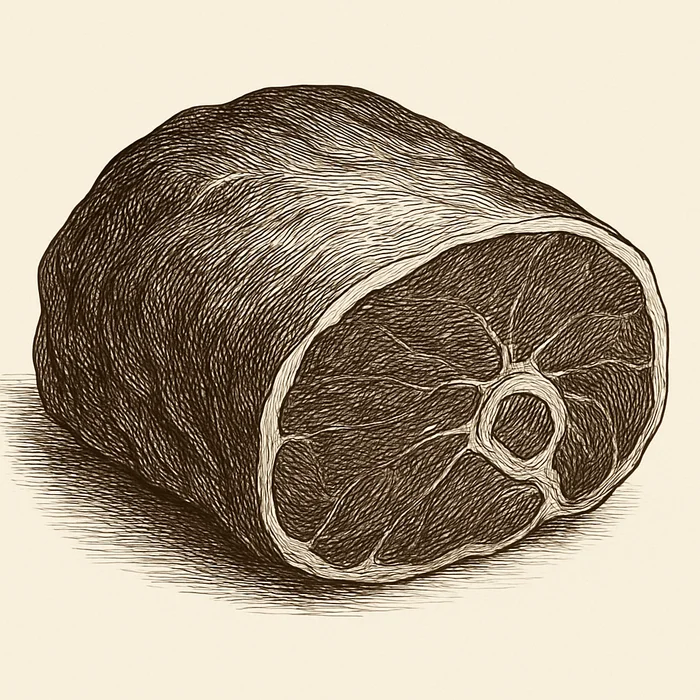
Red Meat
Red meat occupies a contested but carefully delineated place in longevity nutrition: the evidence against high, regular consumption is among the most consistent in dietary epidemiology, yet small amounts of unprocessed red meat — lean cuts, occasionally eaten — sit in a different risk category than the bacon-and-sausage dietary pattern that dominates the harm data. The Longevity Diet reflects this distinction directly: it does not forbid red meat but limits it sharply, favoring fish as the primary animal protein and legumes as the everyday protein foundation.
Why It Matters for Longevity
Mortality and cancer evidence at high intakes
The epidemiological record linking frequent red meat consumption to earlier death and colorectal cancer is large and reasonably consistent. A dose-response meta-analysis of 17 prospective cohorts — more than 150,000 deaths — found that each daily serving of processed red meat was associated with a 15% higher all-cause mortality risk (RR 1.15, 95% CI 1.11–1.19) and a 15% higher cardiovascular mortality risk, while the all-cause mortality signal for unprocessed red meat was present mainly in US cohorts and not consistently replicated in European or Asian populations — an important caveat that suggests dietary context and preparation habits matter (Wang et al., 2016, Public Health Nutrition).
Earlier Harvard cohort work, the most widely cited in this space, found that each additional daily serving of unprocessed red meat was associated with a 13% increase in all-cause mortality and each serving of processed red meat with a 20% increase across two large prospective cohorts (Pan et al., 2012, Arch Intern Med). These magnitude estimates have been broadly replicated, though the confidence intervals are wide enough that precise numbers should be treated as directional rather than precise.
On cancer, the World Cancer Research Fund / AICR Continuous Update Project — a systematic review of 111 cohort studies — estimated a 12% increase in colorectal cancer risk for each 100 g/day increment of combined red and processed meat intake (95% CI 4–21%), with a linear dose-response relationship up to roughly 140 g/day (Vieira et al., 2017, Ann Oncol). A meta-analysis comparing unprocessed and processed red meat head-to-head across 148 prospective studies found colorectal cancer risk elevated 10% for unprocessed red meat and 18% for processed meat — with the processed-meat signal extending to colon cancer (+21%) and rectal cancer (+22%), consistently stronger than for unprocessed cuts (Farvid et al., 2021, Eur J Epidemiol). The WCRF classifies processed meat as a Group 1 carcinogen for colorectal cancer and unprocessed red meat as a probable (Group 2A) carcinogen.
Both low-carbohydrate diets high in animal protein and high red meat intakes are associated with significantly elevated all-cause and cardiovascular mortality in large cohort studies, while plant-protein low-carbohydrate diets are not — a finding that points to the source of protein, not carbohydrate restriction per se, as the relevant variable (Fung et al., 2010, Ann Intern Med).
Mechanisms: three converging pathways
1. Heme iron → reactive oxygen species in the colon. Red meat contains 2–3 mg of heme iron per 100 g, and heme iron is far more bioavailable than non-heme iron from plants — a nutritional advantage that becomes a liability at high intake levels. In the colonic lumen, heme iron catalyzes the Fenton reaction, producing hydroxyl radicals (•OH) that oxidize polyunsaturated fatty acids and generate cytotoxic and genotoxic lipid peroxidation aldehydes. Heme simultaneously promotes endogenous formation of N-nitroso compounds (NOCs), potent DNA alkylating agents. A meta-analysis of 566,607 individuals found that the highest versus lowest dietary heme iron intake was associated with an 18% increase in colorectal cancer risk (RR 1.18, 95% CI 1.06–1.32), and the review of mechanistic data confirmed that both the NOC pathway and lipoperoxidation are operative in human colonic mucosa (Bastide et al., 2011, Cancer Prev Res). Notably, pairing red meat with calcium or antioxidant-rich vegetables can partially attenuate the lipoperoxidation signal in animal models, though the clinical magnitude of this protection is uncertain.
2. L-carnitine → TMA → TMAO → atherosclerosis. Red meat is among the richest dietary sources of L-carnitine, a trimethylamine-containing compound. Gut bacteria belonging to the Proteobacteria and Firmicutes phyla metabolize L-carnitine to trimethylamine (TMA); hepatic flavin monooxygenases (FMO1, FMO3) then oxidize TMA to trimethylamine N-oxide (TMAO). Elevated plasma TMAO impairs reverse cholesterol transport, promotes cholesterol deposition in macrophages, and augments platelet hyperreactivity. A landmark study in Nature Medicine demonstrated that dietary L-carnitine supplementation in mice accelerated atherosclerotic plaque development through a gut-microbiota-dependent mechanism; germ-free and antibiotic-treated animals showed no effect. In humans undergoing cardiac evaluation, elevated plasma L-carnitine predicted incident major adverse cardiac events — myocardial infarction, stroke, or death — only when concurrent TMAO was also elevated, suggesting the microbiome-mediated conversion is the critical intermediate (Koeth et al., 2013, Nature Medicine). Omnivores produce substantially more TMAO than vegans or vegetarians following the same L-carnitine load, implying that habitual diet shapes gut microbial composition in ways that modulate individual cardiovascular susceptibility.
3. N-nitroso compounds from processed meat. Cured, smoked, and chemically preserved meats (bacon, sausage, salami, hot dogs) contain added sodium nitrite or generate nitrate through the curing process. In the acidic, protein-rich environment of the gastrointestinal tract, nitrite reacts with secondary amines from protein digestion to form N-nitrosamines and N-nitrosamides — compounds that directly alkylate DNA. This NOC pathway is distinct from the heme iron mechanism (though both are amplified when heme is present) and is considered the primary reason epidemiological risk estimates for processed red meat are consistently higher than for unprocessed red meat across cancer outcomes. Cooking methods that generate polycyclic aromatic hydrocarbons (PAHs) and heterocyclic amines (HCAs) — charring, smoking, high-temperature grilling — add a third genotoxic pathway on top of the curing chemistry.
Processed vs. unprocessed red meat: a critical distinction
The risk data for processed and unprocessed red meat are not interchangeable, and conflating them misrepresents both the hazard and the appropriate response. Processed meats carry a higher and more consistent cancer and cardiovascular risk signal across study populations; unprocessed red meat shows weaker and more context-dependent associations. This matters for practical guidance: a serving of grilled lean beef a few times a month is not epidemiologically equivalent to daily bacon or cold-cut consumption. The Longevity Diet operationalizes this distinction by permitting small, infrequent amounts of unprocessed red meat while treating processed meats as effectively off the table.
What "occasional" means in the Longevity Diet
Valter Longo's Longevity Diet framework treats red meat as a food to minimize — not as a forbidden substance. In practice, this translates to no more than a few servings per month of unprocessed red meat for most adults, with processed forms (sausage, deli meats, bacon, hot dogs) excluded from the regular diet. This places the intake level well below the doses driving the large RR estimates in the cohort literature, most of which compare ≥1 serving/day to <1 serving/week. At very low intake frequencies the absolute risk increment is small, and the protein quality, heme iron bioavailability, B12, and zinc that red meat provides can be nutritionally relevant for people who do not consume fish or dairy.
How to Use It
Frequency: For those who choose to include red meat, unprocessed lean cuts (beef, lamb, venison) no more than 2–3 times per month. Processed red meats — bacon, sausage, hot dogs, salami, cured hams — should be treated as rare exceptions rather than dietary staples.
Portion size: A standard serving is approximately 85–100 g (3–3.5 oz) cooked weight. Larger portions increase heme iron exposure and TMAO substrate load in proportion.
Preparation to reduce carcinogen formation:
- Avoid charring or blackening. HCA formation accelerates sharply above 150°C (300°F) direct contact with flame or hot metal surfaces.
- Marinating in acidic marinades (vinegar, citrus, wine) before grilling reduces HCA formation by 50–90% in controlled studies.
- Avoid smoking or prolonged high-heat cooking; braising and stewing at lower temperatures generate fewer PAHs.
- Do not use the drippings of charred or well-done meat as sauce.
Pairings that matter:
- Fiber-rich vegetables and legumes alongside red meat dilute heme iron contact with colonic epithelium, bind cytotoxic compounds, and increase fecal transit time. Animal model data show that supplementing heme-rich diets with fermented dairy or plant fiber reduces lipoperoxidation markers in colonic mucosa.
- Calcium from dairy or calcium-fortified foods binds free heme iron in the gut, reducing its luminal bioavailability for ROS generation.
- Vitamin C-rich foods may partially offset N-nitrosation by competing with amine substrates for nitrite, though this is not a license for processed meat consumption.
The better defaults: The Longevity Diet's preferred animal protein is oily fish (sardines, mackerel, salmon) eaten 2–3 times per week. Legumes — lentils, chickpeas, black beans — provide the everyday protein backbone and come with fiber that actively counteracts several of the mechanistic hazards associated with red meat. If red meat is chosen over these options on a given occasion, unprocessed, lean, and cooked without charring is the appropriate form.
What to Pair It With
| Ingredient | Why | Tradition |
|---|---|---|
| Legumes | Recommended plant-protein replacement in the Longevity Diet; fiber dilutes heme iron ROS in the colon | The Longevity Diet |
| Fish | The primary animal protein in the Longevity Diet; preferred over red meat for CVD risk profile | The Longevity Diet |
| Leafy greens and cruciferous vegetables | Fiber and antioxidants attenuate lipoperoxidation and carcinogen formation | General |
| Calcium-rich foods | Calcium binds free heme iron in the gut lumen, reducing ROS generation | Mechanistic evidence |
Flavor Profile
Taste: savory, umami, rich. Aroma: meaty, iron-forward. Texture: chewy, fibrous. Category: animal protein.
The Science
- Pan et al., 2012, Arch Intern Med: Each additional daily serving of unprocessed red meat associated with 13% increased all-cause mortality; processed red meat with 20% increase, in two large Harvard prospective cohorts.
- Wang et al., 2016, Public Health Nutrition: Dose-response meta-analysis of 17 cohorts (150,328 deaths); processed meat HR 1.15 per daily serving for all-cause mortality; unprocessed red meat associations present in US populations but not consistently replicated in European/Asian cohorts.
- Vieira et al. (WCRF/AICR), 2017, Ann Oncol: 12% increase in colorectal cancer risk per 100 g/day combined red and processed meat intake; linear dose-response in 111 cohort studies.
- Farvid et al., 2021, Eur J Epidemiol: Processed meat associated with 18% higher colorectal cancer risk vs. 10% for unprocessed red meat, across 148 prospective studies — establishing quantitative difference between categories.
- Bastide et al., 2011, Cancer Prev Res: Highest vs. lowest heme iron intake associated with 18% higher colorectal cancer risk; review of mechanisms identifies heme-catalyzed N-nitroso compound formation and lipoperoxidation as the primary carcinogenic pathways.
- Koeth et al., 2013, Nature Medicine: Gut-microbial conversion of dietary L-carnitine (from red meat) to TMAO promotes atherosclerosis in mice and predicts cardiac events in humans — with cardiac risk only elevated when both L-carnitine and TMAO are high, confirming the microbiome-dependent mechanism.
- Fung et al., 2010, Ann Intern Med: Animal-protein low-carbohydrate diets associated with significantly higher all-cause and cardiovascular mortality; plant-protein low-carbohydrate diets are not — directly supporting the Longevity Diet's protein-source distinction.
References
- Pan A, Sun Q, Bernstein AM, et al. Red meat consumption and mortality: results from 2 prospective cohort studies. Arch Intern Med. 2012;172(7):555-563. PMID: 22412075. doi:10.1001/archinternmed.2011.2287
- Wang X, Lin X, Ouyang YY, Liu J, Zhao G, Pan A, Hu FB. Red and processed meat consumption and mortality: dose-response meta-analysis of prospective cohort studies. Public Health Nutr. 2016;19(5):893-905. PMID: 26143683. doi:10.1017/S1368980015002062
- Vieira AR, Abar L, Chan DSM, et al. Foods and beverages and colorectal cancer risk: a systematic review and meta-analysis of cohort studies, an update of the evidence of the WCRF-AICR Continuous Update Project. Ann Oncol. 2017;28(8):1788-1802. PMID: 28407090. doi:10.1093/annonc/mdx171
- Farvid MS, Sidahmed E, Spence ND, Mante Angua K, Rosner BA, Barnett JB. Consumption of red meat and processed meat and cancer incidence: a systematic review and meta-analysis of prospective studies. Eur J Epidemiol. 2021;36(9):937-951. PMID: 34455534. doi:10.1007/s10654-021-00741-9
- Bastide NM, Pierre FH, Corpet DE. Heme iron from meat and risk of colorectal cancer: a meta-analysis and a review of the mechanisms involved. Cancer Prev Res (Phila). 2011;4(2):177-184. PMID: 21209396. doi:10.1158/1940-6207.CAPR-10-0113
- Koeth RA, Wang Z, Levison BS, et al. Intestinal microbiota metabolism of L-carnitine, a nutrient in red meat, promotes atherosclerosis. Nat Med. 2013;19(5):576-585. PMID: 23563705. doi:10.1038/nm.3145
- Fung TT, van Dam RM, Hankinson SE, Stampfer M, Willett WC, Hu FB. Low-carbohydrate diets and all-cause and cause-specific mortality: two cohort studies. Ann Intern Med. 2010;153(5):289-298. PMID: 20820038. doi:10.7326/0003-4819-153-5-201009070-00003
Key Nutrients
| Nutrient | Per 100g | Notes |
|---|---|---|
| Heme iron | 2–3 mg | Highly bioavailable; at high intake catalyzes colonic ROS and N-nitroso compound formation |
| Saturated fat | 5–15 g | Raises LDL; no recommended intake in the Longevity Diet |
| Leucine | 1.7–2 g | Potent mTOR/IGF-1 activator; at consistently high intake associated with accelerated aging in preclinical models |
| L-carnitine | ~80–100 mg | Substrate for gut-microbial TMAO production; cardiovascular risk modifier in omnivores |
| Vitamin B12 | 2–3 µg | Meets ~80–125% of RDA per serving; relevant for those who limit all animal foods |
| Zinc | 4–6 mg | ~36–55% of RDA; heme iron bioavailability advantage is shared by zinc in red meat |