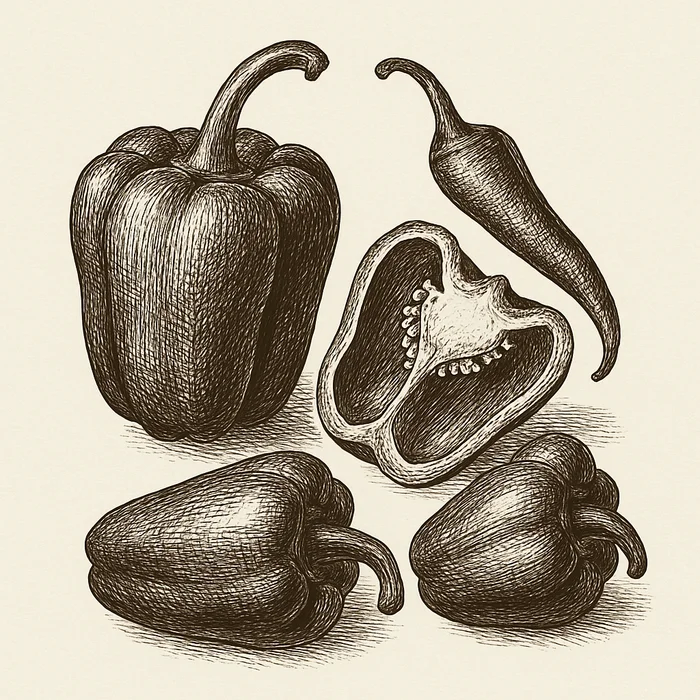
Peppers
Red peppers are the top food source of vitamin C (95 mg per 1/2 cup raw, 158% DV) and a significant source of vitamin A (117 mcg RAE per 1/2 cup, 47% DV). Green peppers provide 60 mg vitamin C per 1/2 cup (100% DV). Used in salads and side dishes throughout the Longevity Diet.
Why It Matters for Longevity
Peppers are exceptionally rich in vitamin C — the primary water-soluble antioxidant in plasma — alongside carotenoids (beta-carotene, lutein, capsanthin) and quercetin. Vitamin C is essential for collagen synthesis, immune competence, iron absorption enhancement, and regeneration of oxidized vitamin E, making peppers one of the most effective vegetables for addressing multiple hallmarks of aging simultaneously.
A comprehensive review of antioxidant compounds in functional foods confirmed that vitamin C, carotenoids, and polyphenols from vegetables like peppers act synergistically to scavenge reactive oxygen species, inhibit lipid peroxidation, and modulate the inflammatory NF-κB pathway — with the food matrix providing superior biological activity compared to isolated supplements (Lobo et al., 2010, Pharmacogn Rev).
Adequate vitamin C intake supports both innate and adaptive immune defenses: it stimulates neutrophil chemotaxis and oxidant generation, supports lymphocyte proliferation and differentiation, and reduces infection duration and severity. A systematic review confirmed that vitamin C deficiency substantially impairs all stages of immune function, while adequate dietary intake from sources like peppers supports immune longevity (Carr & Maggini, 2017, Nutrients).
A large Chinese prospective cohort study (487,375 participants, 7 years) found that daily consumption of spicy foods — which include capsaicin-containing peppers — was associated with 14% lower all-cause mortality compared to less than once weekly consumption, with benefits for cancer, ischemic heart disease, and respiratory disease mortality (Lv et al., 2015, BMJ).
Vitamin C and Collagen Synthesis
Vitamin C's role in collagen synthesis goes beyond antioxidant protection: it is an obligate cofactor for prolyl and lysyl hydroxylases, the enzymes that hydroxylate proline and lysine residues during collagen fiber assembly. Without adequate vitamin C, newly synthesised collagen triple helices are structurally weak and prone to degradation. Fibroblasts in the dermis maintain the highest tissue concentrations of vitamin C in the body precisely because collagen turnover in connective tissue is continuous. A detailed review of vitamin C in skin health confirmed that normal skin contains high concentrations of ascorbate and that depletion accelerates skin aging, impaired wound healing, and reduced barrier integrity; adequate dietary intake from foods like red peppers supports collagen synthesis and provides antioxidant protection against UV-induced photodamage (Pullar et al., 2017, Nutrients). The practical implication is that a half cup of raw red pepper (delivering ~95–130 mg vitamin C) is sufficient to saturate plasma ascorbate and maintain fibroblast function.
Capsanthin and Capsorubin: Pepper-Exclusive Carotenoids
Red peppers contain two carotenoids found nowhere else in the plant kingdom: capsanthin and capsorubin. These keto-carotenoids are chemically distinct from beta-carotene — their conjugated keto-extended polyene chains confer stronger antioxidant activity than beta-carotene on a molar basis, even though their bioavailability is lower. In ripe red fruit, capsanthin accounts for approximately 31.7% of total carotenoids and capsorubin for 7.5%, making them the dominant pigments and antioxidants. A review of the biological activities of paprika carotenoids found that capsanthin and capsorubin are absorbed into circulation and detectable in red blood cells, and that dietary paprika carotenoids may reduce oxygen consumption (VO₂) and heart rate under exertion in preliminary studies — pointing to a role in oxidative metabolism beyond simple free radical scavenging (Maeda et al., 2021, Adv Exp Med Biol). Additionally, pretreatment with these compounds significantly reduces UVB-induced DNA strand breaks in human fibroblasts, a finding relevant to photoaging.
Colour as a Nutritional Signal
Not all peppers are equivalent. An analytical study of coloured Capsicum annuum varieties found that red and orange peppers contained the highest total carotenoid concentrations (237 mg/100g and 277 mg/100g respectively), while vitamin C content was broadly similar across red, orange, yellow, and green varieties (28.9–31.0 mg/g), with purple peppers showing somewhat lower levels. Yellow peppers, despite lower carotenoid levels, showed superior DPPH and ABTS radical scavenging activity, attributable to their higher polyphenol content. Green peppers delivered the highest capsaicinoid concentrations (2,417 µg/g), suggesting that even non-pungent green peppers contribute meaningful capsaicinoid intake (Choi et al., 2022, Food Sci Biotechnol). The takeaway: rotating colours across meals maximises coverage of all bioactive fractions — carotenoids from red/orange, polyphenols from yellow, capsaicinoids from green.
Quercetin and Luteolin: Anti-Inflammatory Flavonoids
Beyond the carotenoids, peppers contain quercetin and luteolin — flavonoids that inhibit the NF-κB pathway, suppress COX-2 expression, and reduce pro-inflammatory cytokine production. These compounds are structurally distinct from the carotenoids and act via different mechanisms: quercetin chelates transition metals to prevent Fenton-type oxidative damage and directly inhibits IKK (the kinase that activates NF-κB), while luteolin suppresses prostaglandin synthesis via COX-2 inhibition. Both are fat-soluble and benefit significantly from co-consumption with olive oil, which both enhances their absorption and provides oleocanthal — a further NF-κB inhibitor — making the classic pepper-olive oil combination mechanistically synergistic, not merely culinary tradition.
How to Use It
Eat raw in salads for maximum vitamin C (heat destroys ~30–50%). Roast or sauté with olive oil to enhance carotenoid absorption. Always combine with a small amount of fat for fat-soluble carotenoid uptake. Red and orange peppers have the highest vitamin C and carotenoid content; green peppers are a reasonable vitamin C source at lower cost.
What to Pair It With
| Ingredient | Why | Tradition |
|---|---|---|
| Extra-virgin olive oil | Fat dramatically enhances absorption of fat-soluble carotenoids (beta-carotene, lutein) | Mediterranean |
| Chickpeas | Vitamin C from peppers enhances non-heme iron absorption from chickpeas | Mediterranean |
| Spinach | Vitamin C converts ferric iron in spinach to more absorbable ferrous form | General |
| Garlic | Complementary cardiovascular compounds; classic Mediterranean aromatic pairing | Mediterranean |
Flavor Profile
Sweet and crisp when raw (red/yellow), mildly bitter (green). Tender and silky when roasted. Aroma is fresh, grassy, and faintly fruity when ripe. Category: raw or roasted vegetable.
The Science
- Lobo et al., 2010, Pharmacogn Rev: Review of antioxidant compounds in functional foods -- vitamin C, carotenoids, and polyphenols from peppers act synergistically to scavenge ROS, inhibit lipid peroxidation, and modulate NF-κB; food matrix superior to isolated supplements.
- Carr & Maggini, 2017, Nutrients: Systematic review -- vitamin C supports all stages of immune function; deficiency impairs neutrophil, lymphocyte, and natural killer cell function; adequate dietary intake supports immune longevity.
- Lv et al., 2015, BMJ: Prospective cohort of 487,375 adults -- daily spicy food (capsaicin-containing pepper) consumption associated with 14% lower all-cause mortality over 7 years.
- Pullar et al., 2017, Nutrients: Review of 187 studies -- vitamin C is obligate cofactor for collagen synthesis via prolyl/lysyl hydroxylases; skin depletion accelerates aging and impairs barrier function; dietary intake from peppers sufficient to maintain fibroblast function.
- Maeda et al., 2021, Adv Exp Med Biol: Review of capsanthin and capsorubin biological activities -- pepper-exclusive keto-carotenoids absorbed into circulation, reduce UVB-induced DNA strand breaks in human fibroblasts, and may decrease VO₂ and heart rate under exertion.
- Choi et al., 2022, Food Sci Biotechnol: Analytical study -- red and orange peppers highest in carotenoids (237–277 mg/100g); vitamin C similar across colours (28.9–31.0 mg/g); yellow peppers superior in DPPH/ABTS radical scavenging; green peppers highest in capsaicinoids (2,417 µg/g).
References
- Lobo V, Patil A, Phatak A, Chandra N. Free radicals, antioxidants and functional foods: Impact on human health. Pharmacogn Rev. 2010;4(8):118-126. PMID: 22228951. doi:10.4103/0973-7847.70902
- Carr AC, Maggini S. Vitamin C and immune function. Nutrients. 2017;9(11):1211. PMID: 29099763. doi:10.3390/nu9111211
- Lv J, Qi L, Yu C, et al. Consumption of spicy foods and total and cause specific mortality: population based cohort study. BMJ. 2015;351:h3942. PMID: 26242395. doi:10.1136/bmj.h3942
- Pullar JM, Carr AC, Vissers MCM. The roles of vitamin C in skin health. Nutrients. 2017;9(8):866. PMID: 28805671. doi:10.3390/nu9080866
- Maeda H, Nishino A, Maoka T. Biological activities of paprika carotenoids, capsanthin and capsorubin. Adv Exp Med Biol. 2021;1261:285-293. PMID: 33783751. doi:10.1007/978-981-15-7360-6_26
- Choi MH, Kim MH, Han YS. Physicochemical properties and antioxidant activity of colored peppers (Capsicum annuum L.). Food Sci Biotechnol. 2022;32(2):209-219. PMID: 36647520. doi:10.1007/s10068-022-01212-z
Key Nutrients
| Nutrient | Per 100g | Notes |
|---|---|---|
| Vitamin C (ascorbic acid) | 128 mg (red, raw) | Heat-labile; highest when consumed raw; even lightly cooked peppers retain ~50–70% |
| Beta-carotene (pro-vitamin A) | 1,624 mcg (red, raw) | Fat-soluble; absorption increased when consumed with olive oil or other dietary fat |
| Capsanthin + capsorubin | ~237 mg/100g total carotenoids (red) | Pepper-exclusive keto-carotenoids; absorbed into circulation; stronger antioxidant than beta-carotene per mole |
| Vitamin B6 (pyridoxine) | 0.29 mg (red, raw) | Important for amino acid metabolism and neurotransmitter synthesis |
| Quercetin and luteolin | ~5 mg combined (red, raw) | Anti-inflammatory flavonoids; inhibit NF-κB and COX-2; bioavailability enhanced by fat |