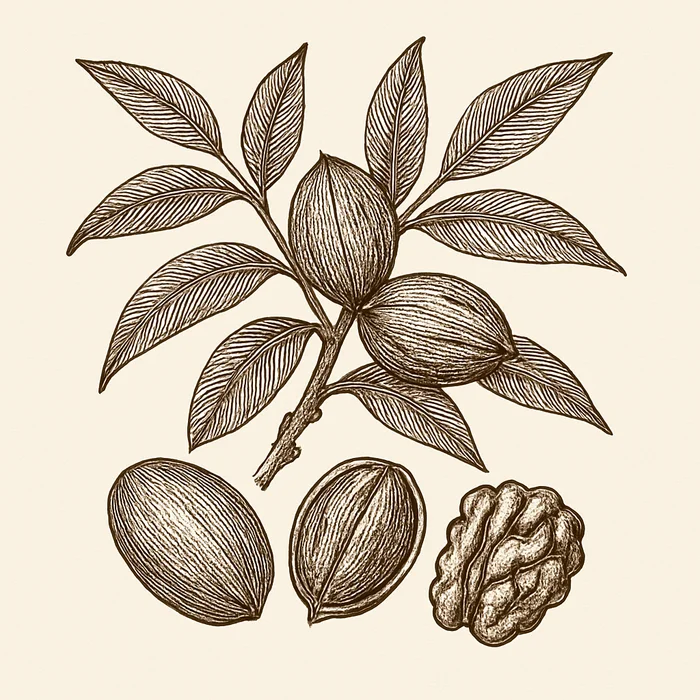
Pecans
Used in the Longevity Diet barley salad and as a dessert nut; provides omega-3 ALA (0.25–0.29 g per ¼ cup) and has one of the highest antioxidant capacities of any tree nut — primarily from gamma-tocopherol and ellagitannin polyphenols.
Why It Matters for Longevity
Pecans belong to the tree nut family that represents one of the most consistently beneficial food categories in nutrition epidemiology. A dose-response meta-analysis of 29 prospective studies found that nut consumption was associated with 22% lower all-cause mortality, 21% lower cardiovascular mortality, and 15% lower cancer mortality at 28 g/day, with evidence that each nut type contributes distinct polyphenol and fatty acid profiles (Aune et al., 2016, BMC Med).
A pooled analysis of 25 controlled intervention trials (583 participants total) found that tree nut consumption significantly reduced total cholesterol, LDL cholesterol, and triglycerides while increasing HDL, with effects consistent across nut types including pecans. Each 67 g/day serving of mixed nuts reduced LDL by approximately 7.4% (Sabaté et al., 2010, Arch Intern Med).
Pecan-Specific RCT Evidence
Beyond the general nut literature, pecan-specific trials show effects that extend past lipid lowering. A randomized crossover trial with 16 healthy adults found that a pecan-containing meal acutely increased plasma postprandial antioxidant capacity by 10–12% and reduced oxidized LDL by 26–33% in the hours after eating — effects attributed to gamma-tocopherol (which doubled in plasma at 8 hours) and catechin release from ellagitannins (Hudthagosol et al., 2011, J Nutr). The 23% decrease in MDA-to-triglyceride ratio at multiple time points confirms that pecan antioxidants act systemically, not only on lipid panels.
A 4-week RCT in 44 older adults (mean age 59) consuming 68 g pecans daily found that LDL-cholesterol declined by 15 mg/dL while the control group saw a 1.9 mg/dL rise (P = .01). Total cholesterol fell by 14 mg/dL versus essentially no change in controls (P = .04). LDL particle number decreased by 126 nmol/L in the pecan group against a 43 nmol/L increase in controls (P = .01) — a metric more predictive of cardiovascular risk than LDL-C alone. The same trial also found improvements in postprandial microvascular reactivity, suggesting vascular benefits that precede large-artery changes (Cogan et al., 2023, Nutr Res).
An 8-week RCT in 56 adults at cardiovascular risk (BMI ≥ 28 or elevated baseline cholesterol) found that adding or substituting pecans into the diet reduced fasting LDL from ~143 mg/dL to ~129–135 mg/dL and lowered postprandial triglycerides (P ≤ 0.01), with the TC/HDL ratio improving from ~4.0 to ~3.6–3.8 (Guarneiri et al., 2021, J Nutr).
Ellagitannins and Urolithins
Pecans are one of the richest nut sources of ellagitannins — hydrolysable tannins that gut bacteria convert into urolithins A and B. Urolithins are of growing interest in longevity research because urolithin A activates mitophagy (cellular clearance of dysfunctional mitochondria) through an AMPK/mTOR pathway. The conversion efficiency is highly individual, depending on gut microbiome composition, but regular pecan consumption reliably delivers the precursor ellagic acid. Whether circulating urolithin A levels after pecan consumption reach the concentrations shown to activate mitophagy in cell models remains an open question in human pharmacokinetics.
Pecans' gamma-tocopherol content is particularly relevant alongside their ellagitannins: gamma-tocopherol, unlike the more common alpha-tocopherol, is effective at trapping reactive nitrogen species (peroxynitrite), and its plasma levels rise directly and measurably after pecan consumption, offering a distinct anti-inflammatory mechanism not shared by most other foods.
Fatty Acid Profile
The predominant fatty acid in pecans is oleic acid (MUFA, ~40 g/100 g), the same cardioprotective fat found in olive oil. Oleic acid lowers LDL when substituted for saturated fat and maintains HDL, contributing to the favorable lipid shifts seen in pecan trials. The ALA content (0.99 g/100 g) provides plant-form omega-3 with approximately 5–15% conversion to EPA/DHA — a modest but additive contribution to total omega-3 status alongside marine sources.
How to Use It
Use 30 g (~¼ cup) as a serving. The Longevity Diet features pecans in barley salad and as a dessert nut. Raw or lightly toasted; avoid sugar-coated or salted commercial preparations. Store in the refrigerator to prevent rancidity of the polyunsaturated fatty acids. Unlike walnuts, pecans have a low moisture content that makes refrigerated shelf life longer — up to 2 years in the freezer.
What to Pair It With
| Ingredient | Why | Tradition |
|---|---|---|
| Barley | Longevity Diet barley salad pairing; nut fat improves absorption of fat-soluble vitamins | The Longevity Diet |
| Walnuts | Both recommended in Longevity Diet; walnuts higher ALA, pecans higher antioxidant capacity | Mediterranean |
| Fresh fruit | Traditional dessert pairing; nut fat slows sugar absorption and reduces glycemic spike | Traditional |
| Honey | Traditional sweetener pairing; minimal serving with nuts satisfies dessert requirements | Mediterranean |
Flavor Profile
Rich, buttery, and slightly sweet with a toasty, caramel-like aroma when roasted. Texture is crisp and rich. Category: tree nut.
The Science
- Aune et al., 2016, BMC Med: Dose-response meta-analysis of 29 prospective studies — nut consumption at 28 g/day associated with 22% lower all-cause mortality, 21% lower cardiovascular mortality, and 15% lower cancer mortality.
- Sabaté et al., 2010, Arch Intern Med: Pooled analysis of 25 controlled trials — tree nut consumption significantly reduced total cholesterol, LDL, and triglycerides across nut types; ~7.4% LDL reduction at 67 g/day.
- Hudthagosol et al., 2011, J Nutr: Crossover trial (16 adults) — pecans acutely reduced oxidized LDL 26–33%, doubled plasma gamma-tocopherol at 8 h, increased antioxidant capacity 10–12%.
- Cogan et al., 2023, Nutr Res: RCT (44 older adults, 4 weeks, 68 g/day) — LDL fell 15 mg/dL vs. +1.9 mg/dL in controls; LDL particle number fell 126 nmol/L vs. +43 nmol/L; microvascular reactivity improved.
- Guarneiri et al., 2021, J Nutr: RCT (56 CVD-risk adults, 8 weeks) — pecan consumption reduced LDL ~8–10 mg/dL and improved TC/HDL ratio; postprandial triglycerides decreased (P ≤ 0.01).
References
- Aune D, Keum N, Giovannucci E, et al. Nut consumption and risk of cardiovascular disease, total cancer, all-cause and cause-specific mortality: a systematic review and dose-response meta-analysis of prospective studies. BMC Med. 2016;14(1):207. PMID: 27916000. doi:10.1186/s12916-016-0730-3
- Sabaté J, Oda K, Ros E. Nut consumption and blood lipid levels: a pooled analysis of 25 intervention trials. Arch Intern Med. 2010;170(9):821-827. PMID: 20458092. doi:10.1001/archinternmed.2010.79
- Hudthagosol C, Haddad EH, McCarthy K, Wang P, Oda K, Sabaté J. Pecans acutely increase plasma postprandial antioxidant capacity and catechins and decrease LDL oxidation in humans. J Nutr. 2011;141(1):56-62. PMID: 21106921.
- Cogan B, Pearson RC, Paton CM, Jenkins NT, Cooper JA. Pecan-enriched diet improves cholesterol profiles and enhances postprandial microvascular reactivity in older adults. Nutr Res. 2023;112:27-37. PMID: 36822079.
- Guarneiri LL, Paton CM, Cooper JA. Pecan-Enriched Diets Alter Cholesterol Profiles and Triglycerides in Adults at Risk for Cardiovascular Disease in a Randomized, Controlled Trial. J Nutr. 2021;151(10):2997-3007. PMID: 34383903.
Key Nutrients
| Nutrient | Per 100g | Notes |
|---|---|---|
| ALA (omega-3) | 0.99 g | Plant-form omega-3; ~5–15% conversion to EPA/DHA; contributes to omega-3 targets |
| Oleic acid (MUFA) | 40 g | Primary fatty acid; cardioprotective; lowers LDL when replacing saturated fat |
| Vitamin E (gamma-tocopherol) | ~1.4 mg | Gamma-tocopherol form predominant; traps reactive nitrogen species; plasma levels double within 8 h of pecan consumption |
| Ellagitannins | ~50–100 mg | Hydrolysable tannins; gut bacteria convert to urolithins A/B (mitophagy activators); conversion is microbiome-dependent |