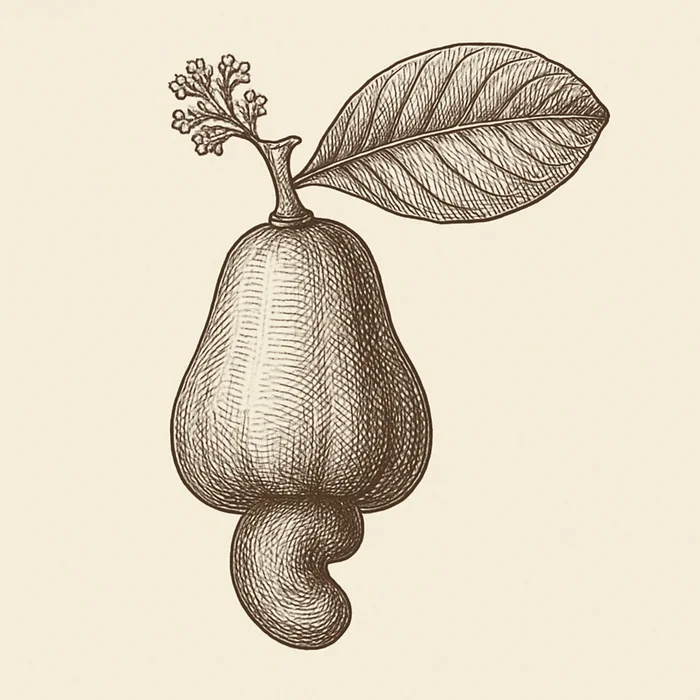
Cashews
Cashews are a source of iron (2 mg per 1 oz, ~11% DV) and magnesium (74 mg per 1 oz, ~19% DV), recommended at 1 oz (~18 nuts) as a between-meal snack in the Longevity Diet.
Why It Matters for Longevity
Cashews are lower in total fat than most other nuts (~44g per 100g vs ~65g for almonds) but rich in oleic acid (MUFA), magnesium, copper, zinc, and iron. Their magnesium content -- among the highest of common nuts -- supports insulin signaling, blood pressure regulation, and sleep quality.
Nut consumption of 28g/day (1 oz) is associated with 22% lower cardiovascular disease risk, 13% lower cancer risk, and 22% lower all-cause mortality in a dose-response meta-analysis of 29 prospective cohort studies (Aune et al., 2016, BMC Med). The evidence supports cashews as part of a mixed-nut longevity pattern.
A systematic review and meta-analysis found that cashew nut consumption significantly improved blood lipid profiles, with reductions in total cholesterol, LDL cholesterol, and improvements in HDL:LDL ratio (Morvaridzadeh et al., 2020, Complement Med Res).
A systematic review and meta-analysis specifically of cashew nut intake confirmed reductions in LDL cholesterol and blood pressure without adverse effects on body weight, supporting inclusion in cardiovascular-protective dietary patterns (Jalali et al., 2020, Complement Ther Med).
Lipid Effects: RCT Evidence
The most rigorous controlled-feeding trial on cashews enrolled 51 participants (men and women aged 21–73) in a randomized crossover design with 28-day treatment phases and ≥2-week washout. Participants consuming 28–64 g of cashews daily saw total cholesterol decline by 3.9% and LDL cholesterol by 4.8%, while the control group showed a 0.8% and 1.2% increase respectively in those same markers. Non-HDL cholesterol — a composite that captures VLDL and IDL in addition to LDL — decreased 5.3% with cashews versus a 1.7% increase in controls (Mah et al., 2017, Am J Clin Nutr). HDL and triglycerides did not change significantly.
An independent RCT from Baer and Novotny (2019) taking a different approach — isocaloric substitution with 42 g/day cashews for 4 weeks in 42 adults — found no significant changes in LDL or total cholesterol but did observe a significant decrease in PCSK9 (Baer & Novotny, 2019, Am J Clin Nutr). PCSK9 is the protein that degrades hepatic LDL receptors; lower PCSK9 activity means more receptors available to clear LDL from circulation. The discrepancy between the two trials likely reflects differences in the comparison diet: when cashews replace refined carbohydrates (Mah et al.), the lipid effect is more favorable than when they replace mixed macronutrients at caloric equivalence.
Oleic Acid and the MUFA Mechanism
Approximately 59% of cashew fat is oleic acid (18:1), the same MUFA that characterizes olive oil. The LDL-lowering mechanism of oleic acid operates via increased hepatic LDL receptor expression: oleic acid enrichment of hepatocyte membranes upregulates LDLR transcription through sterol regulatory element-binding proteins (SREBPs), increasing the clearance rate of LDL particles from plasma. This mechanism is distinct from — and additive to — the effect of reducing dietary saturated fatty acids, which reduces VLDL and LDL production.
A 16-week RCT in 29 overweight and obese adults testing 42.5 g/day of mixed nuts (including cashews, almonds, walnuts, pistachios, Brazil nuts, macadamia nuts, pecans, and peanuts) found that, while LDL cholesterol did not differ significantly from the pretzel control, the mixed-nut group showed significantly lower body fat percentage and diastolic blood pressure, alongside higher circulating adiponectin (Nora et al., 2023, Nutr Metab Cardiovasc Dis). Adiponectin is an insulin-sensitizing adipokine with anti-inflammatory and anti-atherogenic properties; its elevation is independently associated with reduced cardiovascular event risk.
Magnesium: Cardiovascular and Metabolic Roles
At 74 mg per 1 oz serving, cashews deliver 19% of the daily value for magnesium — more per serving than almonds (76 mg per 1 oz is closely comparable, though individual lot variation exists) and substantially more than walnuts (~45 mg). Magnesium's cardiovascular relevance operates through several pathways: it functions as a calcium channel antagonist at the cellular level, reducing vascular smooth muscle tone and contributing to blood pressure regulation; it is a cofactor for over 300 enzymatic reactions including ATP synthesis; and at the receptor level it modulates insulin signaling by facilitating GLUT4 translocation to the cell membrane during glucose uptake.
A review of epidemiological studies and RCTs found that higher dietary magnesium intake was inversely associated with metabolic syndrome, type 2 diabetes, hypertension, stroke, and total cardiovascular disease, with circulating magnesium levels showing independent predictive associations with ischemic heart disease and coronary heart disease risk (Rosique-Esteban et al., 2018, Nutrients). Cashews are a reliable daily vehicle for magnesium because the recommended 1 oz portion is small enough to fit into any eating pattern.
Copper and Ceruloplasmin
Cashews deliver 0.6 mg of copper per 1 oz — 67% of the daily value — making them one of the most concentrated common food sources of this trace mineral. Copper is the catalytic cofactor of ceruloplasmin, the plasma ferroxidase responsible for oxidizing Fe²⁺ to Fe³⁺ for binding to transferrin, enabling iron transport and preventing pro-oxidant free iron accumulation. Ceruloplasmin also functions as an antioxidant enzyme, scavenging reactive oxygen species in plasma.
Copper is also required for cytochrome c oxidase (Complex IV of the mitochondrial electron transport chain), for superoxide dismutase 1 (Cu/Zn-SOD), and for cross-linking of collagen and elastin via lysyl oxidase — all processes with implications for cardiovascular and connective tissue integrity. Marginal copper deficiency is not uncommon in Western diets, and the 1 oz cashew snack recommended in the Longevity Diet provides a practical route to closing that gap.
How to Use It
Eat 1 oz (~18 cashews) as a between-meal snack. Pair with a piece of fruit to moderate the glycemic response of the fruit and add satiating fat. Use raw or dry-roasted rather than oil-roasted. Cashew butter provides similar nutrients with better portion control.
What to Pair It With
| Ingredient | Why | Tradition |
|---|---|---|
| Fruit | Fat + fiber combination moderates fruit's glycemic impact | The Longevity Diet |
| Dark chocolate | Flavanols + magnesium combination; complementary antioxidant mechanisms | Global |
| Leafy greens | Iron from cashews + vitamin C from greens improves non-heme iron absorption | Global |
| Coconut | Classic tropical combination; complementary fat profiles | Southeast Asian |
Flavor Profile
Mildly sweet, buttery, and creamy with a subtle earthy undertone. Less overtly bitter than almonds or walnuts -- the mildest-tasting of the major nuts. When roasted, they develop a slightly caramelised, toasty flavour. The texture is soft and starchy compared to the harder crunch of almonds or Brazil nuts.
The Science
- Aune et al., 2016, BMC Med: Meta-analysis of 29 studies -- 28g/day nut consumption associated with 22% lower CVD risk, 13% lower cancer risk, and 22% lower all-cause mortality.
- Morvaridzadeh et al., 2020, Complement Med Res: Meta-analysis -- cashew nut consumption significantly reduced total and LDL cholesterol and improved HDL:LDL ratio.
- Jalali et al., 2020, Complement Ther Med: Systematic review -- cashew nut intake reduced LDL cholesterol and blood pressure without adverse effect on body weight.
- Mah et al., 2017, Am J Clin Nutr: Controlled-feeding RCT (51 adults, 28 days) -- cashews reduced total cholesterol by 3.9% and LDL by 4.8% vs control; non-HDL cholesterol fell 5.3% vs a 1.7% increase in controls.
- Baer & Novotny, 2019, Am J Clin Nutr: RCT (42 adults, 4 weeks) -- 42 g/day cashews produced no significant LDL change but significantly reduced PCSK9, a protein that degrades hepatic LDL receptors.
- Nora et al., 2023, Nutr Metab Cardiovasc Dis: 16-week RCT -- 42.5 g/day mixed nuts (including cashews) reduced body fat percentage and diastolic blood pressure, and increased adiponectin.
- Rosique-Esteban et al., 2018, Nutrients: Epidemiological review -- higher dietary magnesium associated with lower risk of metabolic syndrome, T2DM, hypertension, stroke, and total CVD.
References
- Aune D, Keum N, Giovannucci E, et al. Nut consumption and risk of cardiovascular disease, total cancer, all-cause and cause-specific mortality: a systematic review and dose-response meta-analysis of prospective studies. BMC Med. 2016;14(1):207. PMID: 27916000. doi:10.1186/s12916-016-0730-3
- Morvaridzadeh M, Faghih S, Agah S, et al. Effect of cashew nut on lipid profile: a systematic review and meta-analysis. Complement Med Res. 2020;27(4):272-280. PMID: 32160624. doi:10.1159/000506593
- Jalali M, Ziaei R, Morvaridzadeh M, et al. The effects of cashew nut intake on lipid profile and blood pressure: a systematic review and meta-analysis of randomized controlled trials. Complement Ther Med. 2020;51:102387. PMID: 32444052. doi:10.1016/j.ctim.2020.102387
- Mah E, Schulz JA, Kaden VN, Lawless AL, Rotor J, Mantilla LB, Liska DJ. Cashew consumption reduces total and LDL cholesterol: a randomized, crossover, controlled-feeding trial. Am J Clin Nutr. 2017;105(5):1070-1078. PMID: 28356271. doi:10.3945/ajcn.116.150037
- Baer DJ, Novotny JA. Consumption of cashew nuts does not influence blood lipids or other markers of cardiovascular disease in humans: a randomized controlled trial. Am J Clin Nutr. 2019;109(2):269-275. PMID: 30753323. doi:10.1093/ajcn/nqy242
- Nora CL, Zhang L, Castro RJ, Marx A, Carman HB, Lum T, Tsimikas S, Hong MY. Effects of mixed nut consumption on LDL cholesterol, lipoprotein(a), and other cardiometabolic risk factors in overweight and obese adults. Nutr Metab Cardiovasc Dis. 2023;33(8):1583-1591. PMID: 37263914. doi:10.1016/j.numecd.2023.05.013
- Rosique-Esteban N, Guasch-Ferré M, Hernández-Alonso P, Salas-Salvadó J. Dietary Magnesium and Cardiovascular Disease: A Review with Emphasis in Epidemiological Studies. Nutrients. 2018;10(2):168. PMID: 29389872. doi:10.3390/nu10020168
Key Nutrients
| Nutrient | Per 1 oz (28g) | Notes |
|---|---|---|
| Magnesium | 74 mg (19% DV) | Among highest of common nuts; supports insulin sensitivity and sleep |
| Iron | 1.9 mg (11% DV) | Non-heme; absorption enhanced by concurrent vitamin C consumption |
| Copper | 0.6 mg (67% DV) | Cofactor for ceruloplasmin (iron transport), Cu/Zn-SOD (antioxidant defense), and lysyl oxidase (collagen crosslinking) |
| Oleic acid (MUFA) | ~8 g | Primary fatty acid (~59% of total fat); upregulates hepatic LDL receptor expression via SREBP pathway |