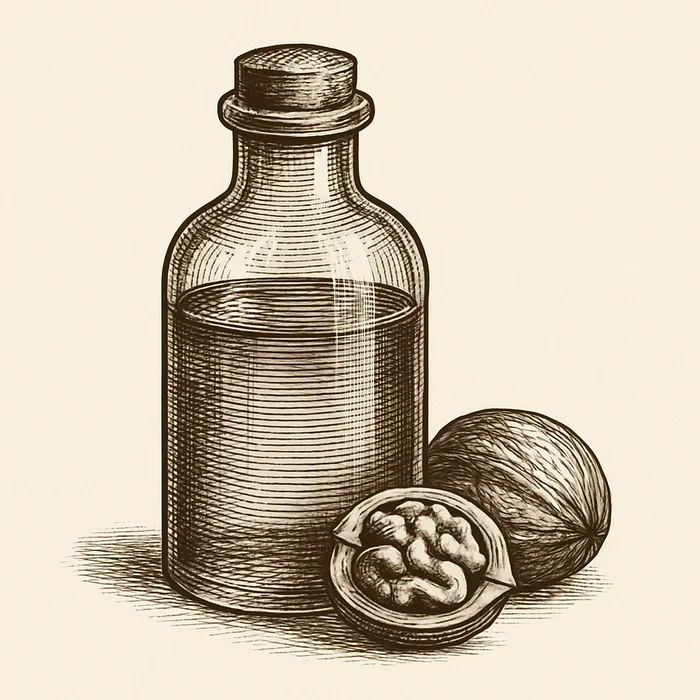
Walnut Oil
Walnut oil is listed as a dietary source of omega-3 ALA providing 0.48 g per 1 tsp (5 mL) — among the highest plant-based ALA densities of any culinary oil.
Why It Matters for Longevity
Walnut oil provides a concentrated source of alpha-linolenic acid (ALA, ~47% of total fat), making it one of the richest plant ALA sources alongside linseed oil. It also delivers gamma-tocopherol, ellagitannin polyphenols, and phytosterols not present in refined olive oil.
The cardiovascular case for walnuts is supported by a 2018 meta-analysis of 26 clinical trials (1,059 participants) showing walnut-enriched diets reduced LDL cholesterol by 5.5 mg/dL and total cholesterol by 7.0 mg/dL, with improvements in endothelial function. The oil form delivers concentrated ALA for use in dressings and cold preparations where whole walnuts aren't practical.
Endothelial Function: ALA and Flow-Mediated Dilation
One of the most clinically meaningful cardiovascular benefits of walnut consumption — and by extension, the ALA it delivers — is improvement in endothelial function as measured by flow-mediated dilation (FMD). A randomized controlled crossover trial in hypercholesterolemic adults testing three diets found that the ALA-enriched diet (6.5% of energy from ALA, achieved with walnuts and flax oil) increased FMD by +34% relative to the average American diet baseline, while also reducing diastolic blood pressure by 2–3 mmHg at rest and under stress (P < 0.02) (West et al., 2010, J Am Coll Nutr). A mechanism for this effect is ALA's role as a substrate for eicosapentaenoic acid (EPA) synthesis, which shifts prostaglandin balance toward vasodilatory and anti-aggregatory mediators; independent of EPA conversion, ALA itself reduces thromboxane A2 production in platelets, lowering arterial constriction tone.
A 2024 systematic review and meta-analysis of 6 RCTs (250 participants) specifically evaluating walnut consumption and endothelial function found that walnut intake significantly increased FMD by 0.94% (95% CI: 0.12–1.75; P = 0.02) (Hsu et al., 2024, Phytother Res). The authors note that effects on cell adhesion molecules (ICAM-1, VCAM-1) were not statistically significant, suggesting the FMD improvement is driven more by ALA-mediated vasodilatory signaling than by reduced endothelial adhesion. Walnut oil, as a concentrated ALA source, is the vehicle for achieving equivalent ALA intake without the caloric bulk of whole nuts.
Polyphenols: Ellagitannins and the Urolithin Pathway
Walnut polyphenols (principally ellagitannins and pedunculagin) provide anti-inflammatory and antioxidant benefits beyond the fatty acid profile. Cold-pressed walnut oil retains these polyphenols; refined versions largely lose them. Ellagitannins are hydrolyzed in the gut to ellagic acid, which gut bacteria convert into urolithins — a class of metabolites with anti-inflammatory, antioxidant, and cardioprotective activity that are far better absorbed than the parent compounds.
The cardiometabolic relevance of this pathway was demonstrated in a study comparing urolithin metabotypes across normal-weight, overweight, and metabolic syndrome subjects: urolithin-A producers showed higher apolipoprotein A-I and HDL-cholesterol levels, while the B metabotype was associated with unfavorable LDL and oxidized-LDL markers (Selma et al., 2018, Clin Nutr). The clinical implication for walnut oil is that its ellagitannin content — delivered in the oil along with ALA — may confer cardiovascular benefit that is partly dependent on individual gut microbiota composition, which determines which urolithins are produced and in what quantities.
Cold-pressed walnut oil is the form that retains ellagitannins. Expeller-pressed and especially refined walnut oils have substantially lower polyphenol content due to heat and solvent processing.
How to Use It
Pairs well with arugula, beets, endive. Use cold as a finishing oil — not for cooking at high heat (low smoke point). Add to salad dressings, drizzle over grain bowls, or mix into pesto as partial olive oil replacement.
What to Pair It With
| Ingredient | Why | Tradition |
|---|---|---|
| arugula | See synergies | Classic bitter green salad |
| beets | See synergies | Salade de betteraves aux noix |
| endive | See synergies | Walnut vinaigrette on Belgian endive |
| lemon juice | See synergies | Dressing base for grain bowls |
| wild rice | See synergies | Finishing oil for wild rice salads |
Synergies
- Linseed Oil (complement): Both are plant ALA sources; linseed oil has a higher ALA concentration (~7 g/tsp), while walnut oil offers superior culinary palatability. Using both diversifies polyphenol and tocopherol intake.
- Walnuts (complement): Whole walnuts provide fiber and protein in addition to ALA; walnut oil provides concentrated omega-3 fat without the caloric bulk of the whole nut — useful for adding omega-3 to dressings and light dishes.
- Leafy Greens (synergy): Fat-soluble vitamins K, A, and E in dark leafy greens require dietary fat for absorption; using walnut oil as a dressing simultaneously delivers ALA and enhances micronutrient bioavailability.
Flavor Profile
Taste: nutty, rich, slightly bitter, earthy. Aroma: toasted walnut, woody, warm. Texture: light oil, fluid. Category: finishing oil / salad dressing.
The Science
- Bamberger et al., 2018, Nutrients: Meta-analysis of 26 walnut clinical trials (1,059 participants): walnut-enriched diets significantly reduced LDL cholesterol and total cholesterol vs control diets.
- Sánchez-González et al., 2017, Crit Rev Food Sci Nutr: Walnut polyphenols (ellagitannins) contribute anti-inflammatory and cardiovascular benefits beyond ALA content; pedunculagin is the dominant polyphenol, hydrolyzed to bioactive ellagic acid.
- West et al., 2010, J Am Coll Nutr: Randomized crossover trial in hypercholesterolemic adults — an ALA-enriched diet (walnuts + flax oil) increased FMD by +34% and reduced diastolic BP by 2–3 mmHg vs average American diet.
- Hsu et al., 2024, Phytother Res: Meta-analysis of 6 RCTs (250 participants) — walnut consumption significantly increased FMD by 0.94% (95% CI: 0.12–1.75; P = 0.02).
- Selma et al., 2018, Clin Nutr: Ellagitannin metabotype study — urolithin-A producers (from walnut/pomegranate ellagitannins) had higher apolipoprotein A-I and HDL-cholesterol; urolithin-B associated with unfavorable LDL and oxidized-LDL markers.
References
- Bamberger C, Rossmeier A, Lechner K, et al. Effects of walnut consumption on blood lipids and other cardiovascular risk factors: an updated meta-analysis and systematic review of controlled trials. Nutrients. 2018. PMID: 29931130. doi:10.1093/ajcn/nqy366
- Sánchez-González C, Ciudad CJ, Noé V, Izquierdo-Pulido M. Health benefits of walnut polyphenols: An exploration beyond their lipid profile. Crit Rev Food Sci Nutr. 2017;57(16):3373-3383. PMID: 26713565. doi:10.1080/10408398.2015.1126218
- West SG, Krick AL, Klein LC, et al. Effects of diets high in walnuts and flax oil on hemodynamic responses to stress and vascular endothelial function. J Am Coll Nutr. 2010;29(6):595-603. PMID: 21677123.
- Hsu CY, Alzahrani AA, Maabreh HG, et al. Effect of walnut consumption on markers of endothelial function in adults: A systematic review and meta-analysis of randomized controlled trials. Phytother Res. 2024. PMID: 38200617.
- Selma MV, González-Sarrías A, Salas-Salvadó J, et al. The gut microbiota metabolism of pomegranate or walnut ellagitannins yields two urolithin-metabotypes that correlate with cardiometabolic risk biomarkers. Clin Nutr. 2018;37(3):897-905. PMID: 28347564.
Key Nutrients
| Nutrient | Per 100g | Notes |
|---|---|---|
| Alpha-linolenic acid (ALA, omega-3) | ~10.4 g per 100 mL (~0.48 g per 1 tsp) | ALA bioavailability from oil is high; however, conversion to EPA/DHA is limited (~5–10%); best used alongside direct EPA/DHA sources (fatty fish) for full omega-3 benefits. ALA-enriched diets increase FMD by +34% vs average American diet in crossover trials. |
| Linoleic acid (omega-6) | ~53 g per 100 mL | High omega-6 content; omega-3:omega-6 ratio (~1:5) is better than most vegetable oils but should be balanced with EPA/DHA-rich foods. |
| Gamma-tocopherol (vitamin E) | ~0.4 mg per 100 mL | Gamma-tocopherol has distinct anti-inflammatory activity from alpha-tocopherol; cold-pressed walnut oil retains more tocopherols than refined versions. |
| Ellagitannins | Present in cold-pressed oil only | Hydrolyzed to ellagic acid, then converted by gut bacteria to urolithins A and B; urolithin-A metabotype associated with higher apolipoprotein A-I and HDL. Not present in refined walnut oil. |