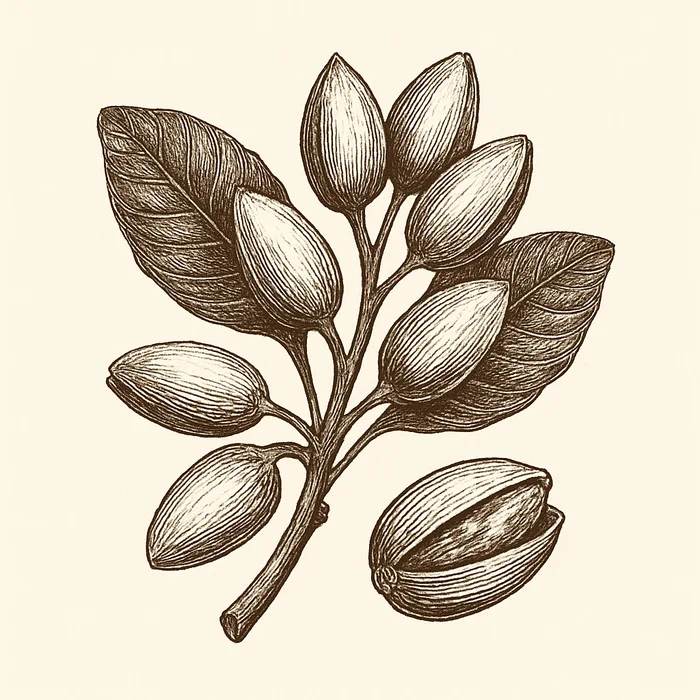
Pistachios
Pistachios are recommended in the Longevity Diet as a 25 g unsalted dessert nut. They are a notable calcium source (129 mg per cup raw, ~13% DV) and the highest tree nut source of lutein and zeaxanthin (~1,160 mcg per 100 g), alongside gamma-tocopherol, resveratrol, and phytosterols.
Why It Matters for Longevity
Pistachios combine a favorable fatty acid profile (high MUFA, moderate PUFA) with one of the most polyphenol-dense profiles of any tree nut, supporting both cardiovascular and ocular longevity.
A dose-response meta-analysis of 29 prospective studies found that nut consumption — including pistachios — was associated with 22% lower all-cause mortality, 21% lower cardiovascular mortality, and 15% lower cancer mortality at 28 g/day (Aune et al., 2016, BMC Med). Pistachios specifically contributed to the cholesterol and lipid evidence in a pooled analysis of 25 controlled intervention trials, which found that tree nut consumption significantly reduced LDL cholesterol by ~7.4% at 67 g/day, with effects consistent across nut types (Sabaté et al., 2010, Arch Intern Med).
Blood Pressure and Cardiometabolic Effects
Pistachio consumption consistently reduces systolic blood pressure in controlled trials. A meta-analysis of 17 RCTs involving 940 adults found that pistachio supplementation reduced systolic blood pressure by 2.89 mmHg (95% CI: −4.11 to −1.67; P < 0.001), reduced fasting blood glucose by 3.62 mg/dL, reduced triglycerides by 16.76 mg/dL, and increased HDL by 1.43 mg/dL (Baghery et al., 2022, Nutr Rev). A second independent meta-analysis of 13 RCTs (563 participants) confirmed the systolic blood pressure reduction at −2.12 mmHg (95% CI: −3.65 to −0.59; P = 0.007) (Asbaghi et al., 2021, Br J Nutr). The mechanism is thought to involve pistachio's high arginine content (a nitric oxide precursor supporting endothelial vasodilation) and its phytosterols and MUFA, which together modulate vascular tone and lipid profiles.
Ocular Longevity
Pistachios' highest-among-tree-nuts lutein and zeaxanthin content (~1,160 mcg per 100 g) is relevant to ocular longevity: these carotenoids accumulate preferentially in the macula and crystalline lens, protecting against age-related macular degeneration and cataracts — leading causes of vision loss in older adults. Their phytosterol content (~214 mg per 100 g) further supports LDL reduction through competitive inhibition of intestinal cholesterol absorption.
Gut Microbiome: Prebiotic Effects
Pistachios are among the most structurally complex tree nuts from a fermentation standpoint. Their cell wall matrix (resistant starch, fiber, polyphenols) reaches the colon largely intact, where gut bacteria ferment it. A randomized, controlled, crossover feeding study of 16 adults consuming 0, 1.5, or 3 servings of pistachios per day for 18 days found that pistachio consumption substantially increased butyrate-producing bacteria — specifically Faecalibacterium prausnitzii and Eubacterium rectale/Roseburia spp. — whereas almond consumption at the same serving sizes produced weaker effects (Ukhanova et al., 2014, Br J Nutr). Butyrate is the preferred energy source for colonocytes and is associated with reduced colonic inflammation and lower colorectal cancer risk. The polyphenols in pistachios (including resveratrol and flavonoids) are themselves substrates for colonic fermentation, extending the prebiotic effect beyond fiber alone.
How to Use It
25 g (~1 oz, approximately 49 kernels) as a dessert nut. Choose unsalted raw or dry-roasted. The Longevity Diet features pistachios as a light dessert paired with dates or fruit. Pistachios are one of the lowest-calorie tree nuts by weight, allowing slightly larger volumes for the same caloric load.
What to Pair It With
| Ingredient | Why | Tradition |
|---|---|---|
| Dates | Healthy fats and protein slow absorption of natural sugars in dates | The Longevity Diet |
| Dark chocolate | Complementary polyphenol classes: flavanols from chocolate + lutein/resveratrol from pistachios | Global |
| Extra-virgin olive oil | Both are monounsaturated-fat-rich Mediterranean foods; combined pattern has strongest longevity evidence | Mediterranean |
| Cherries | Traditional Blue Zone dessert pairing; diverse polyphenol profile | The Longevity Diet |
Flavor Profile
Mildly sweet, buttery, and slightly savory with earthy notes. Aroma is faintly floral and lightly sweet, with mild roasted notes when dry-roasted. Texture is crunchy and dense. Category: tree nut / dessert nut.
The Science
- Aune et al., 2016, BMC Med: Dose-response meta-analysis of 29 prospective studies — nut consumption at 28 g/day associated with 22% lower all-cause mortality, 21% lower cardiovascular mortality, 15% lower cancer mortality.
- Sabaté et al., 2010, Arch Intern Med: Pooled analysis of 25 controlled trials — tree nut consumption significantly reduced total cholesterol, LDL, and triglycerides; ~7.4% LDL reduction at 67 g/day across nut types including pistachios.
- Baghery et al., 2022, Nutr Rev: Meta-analysis of 17 RCTs (940 adults) — pistachio supplementation reduced systolic BP by 2.89 mmHg, triglycerides by 16.76 mg/dL, fasting glucose by 3.62 mg/dL, and raised HDL by 1.43 mg/dL.
- Asbaghi et al., 2021, Br J Nutr: Meta-analysis of 13 RCTs (563 participants) — pistachio consumption significantly reduced systolic BP by 2.12 mmHg; effects on endothelial function and inflammation markers were not statistically significant.
- Ukhanova et al., 2014, Br J Nutr: Randomized crossover feeding study (16 adults, 18 days) — pistachio consumption increased butyrate-producing bacteria (F. prausnitzii, Eubacterium rectale/Roseburia spp.) more than almond consumption at equivalent servings.
References
- Aune D, Keum N, Giovannucci E, et al. Nut consumption and risk of cardiovascular disease, total cancer, all-cause and cause-specific mortality: a systematic review and dose-response meta-analysis of prospective studies. BMC Med. 2016;14(1):207. PMID: 27916000. doi:10.1186/s12916-016-0730-3
- Sabaté J, Oda K, Ros E. Nut consumption and blood lipid levels: a pooled analysis of 25 intervention trials. Arch Intern Med. 2010;170(9):821-827. PMID: 20458092. doi:10.1001/archinternmed.2010.79
- Baghery F, Mohammadifard N, Khanamani Falahati-Pour S. The effect of pistachio supplementation on metabolic syndrome and its components in adults: a systematic review and meta-analysis of randomized controlled trials. Nutr Rev. 2022. PMID: 35689651.
- Asbaghi O, Hadi A, Campbell MS, Venkatakrishnan K, Ghaedi E. Effects of pistachios on anthropometric indices, inflammatory markers, endothelial function and blood pressure in adults: a systematic review and meta-analysis of randomised controlled trials. Br J Nutr. 2021. PMID: 33198823.
- Ukhanova M, Wang X, Baer DJ, Novotny JA, Fredborg M, Mai V. Effects of almond and pistachio consumption on gut microbiota composition in a randomised cross-over human feeding study. Br J Nutr. 2014;111(12):2146-2152. PMID: 24642201. doi:10.1017/S0007114514000385
Key Nutrients
| Nutrient | Per 100g | Notes |
|---|---|---|
| Protein | 20.2 g | One of the highest-protein nuts; contains all essential amino acids including high arginine, a nitric oxide precursor supporting vascular health |
| Lutein + Zeaxanthin | ~1,160 mcg | Highest of all tree nuts; accumulate in the macula and lens, protecting against age-related macular degeneration and cataracts |
| Gamma-tocopherol (vitamin E) | ~2.9 mg | Fat-soluble antioxidant; gamma form has distinct anti-inflammatory properties |
| Phytosterols | ~214 mg | Among the highest phytosterol contents of any nut; competitively inhibit intestinal cholesterol absorption |
| Fiber | ~10.3 g | Feeds butyrate-producing colonic bacteria (Faecalibacterium prausnitzii, Roseburia spp.); prebiotic effect stronger than almonds at equivalent servings |