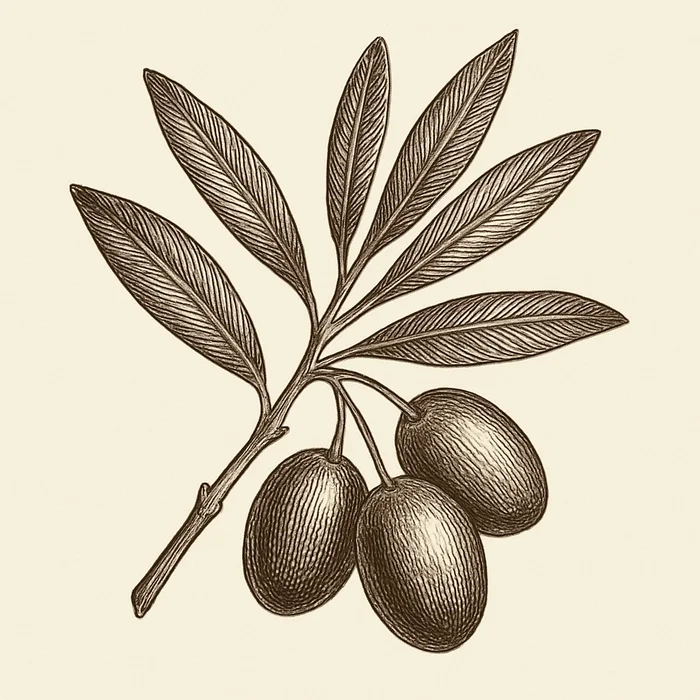
Olives
A staple at the tables of Molochio centenarians, olives deliver the same cardioprotective polyphenols as extra-virgin olive oil -- oleocanthal, oleuropein, and hydroxytyrosol -- in whole-food form, alongside a full dose of monounsaturated fat.
Why It Matters for Longevity
Olives were a regular food of Molochio centenarians in Calabria, one of the ancestral populations studied in The Longevity Diet. Their health value comes from two sources that work together: the monounsaturated fatty acid (MUFA) oleic acid, which constitutes roughly 70% of olive fat and has well-established cardioprotective properties, and a distinctive set of polyphenols that make olives genuinely functional food.
The most pharmacologically active of these is oleocanthal, a phenolic aldehyde responsible for the peppery throat-burn of fresh extra-virgin olive oil and high-quality olives. Beauchamp et al. (2005, Nature) showed that oleocanthal inhibits cyclooxygenase (COX-1 and COX-2) enzymes by the same mechanism as ibuprofen -- a non-steroidal anti-inflammatory drug -- which explains the persistent interest in olive polyphenols as natural anti-inflammatory agents.
The second major polyphenol is oleuropein, the bitter compound found at highest concentrations in unprocessed olives. Oleuropein and its metabolite hydroxytyrosol have demonstrated antioxidant activity several times greater than vitamin C in cell studies, with anti-inflammatory effects and the ability to reduce LDL oxidation. As olives are cured to remove bitterness, much of the oleuropein is removed -- meaning less-processed varieties like Kalamata or Castelvetrano retain more polyphenol activity than heavily processed canned black olives. Pojero et al. (2022, Int J Mol Sci) reviewed how oleuropein and hydroxytyrosol modulate inflammaging -- the chronic low-grade sterile inflammation that underlies most age-related chronic diseases -- by reducing inflammatory mediator synthesis and blunting oxidative stress in ageing immune cells.
The PREDIMED trial, the landmark Mediterranean diet study that used olive-rich dietary patterns, found significant reductions in major cardiovascular events with the Mediterranean diet supplemented by olive oil (Estruch et al., 2018, N Engl J Med). Whole olives consumed alongside olive oil in traditional Mediterranean meals provide complementary polyphenol sources.
Polyphenol dose-response and cardiometabolic effects. The dose-dependence of olive polyphenol benefits has now been established at a meta-analytic level. George et al. (2019, Crit Rev Food Sci Nutr) synthesised 26 RCTs comparing high-polyphenol versus low-polyphenol olive oil and found that high-polyphenol oil significantly reduced oxidised LDL (standardised mean difference -0.44; 95% CI: -0.78 to -0.10; P = 0.01), malondialdehyde by 0.07 µmol/L (P = 0.004), total cholesterol by 4.5 mg/dL (P < 0.0001), and increased HDL by 2.37 mg/dL (P = 0.02). Critically, these differences emerged when comparing high-polyphenol to low-polyphenol oil -- indicating that the polyphenol fraction, not just the oleic acid backbone, drives the benefit. Whole olives retain polyphenols in a food matrix alongside dietary fibre, which slows glucose absorption and supports gut microbial production of short-chain fatty acids.
A more recent meta-analysis by Frumuzachi et al. (2025, Crit Rev Food Sci Nutr) pooled 14 RCTs (594 participants) specifically on oleuropein, hydroxytyrosol, and tyrosol supplementation and found significant reductions in total cholesterol (SMD -0.19; 95% CI: -0.37 to -0.01; P = 0.04), triacylglycerols (SMD -0.32; 95% CI: -0.60 to -0.03; P = 0.03), and insulin (SMD -0.42; 95% CI: -0.82 to -0.01; P = 0.04). The greatest benefits emerged in individuals not already following a Mediterranean diet baseline -- suggesting that for populations eating Western diets, the introduction of olive polyphenols via whole olives or EVOO provides substantial incremental benefit beyond what oleic acid alone can explain.
Whole olives vs oil: the fibre advantage. Extra-virgin olive oil concentrates the fat-soluble polyphenols (oleocanthal, oleuropein aglycone, hydroxytyrosol) but strips away the dietary fibre present in whole olives. A 100g portion of whole olives provides approximately 3.2g of fibre -- predominantly insoluble cellulose and hemicelluloses -- alongside the polyphenol payload. This matters because gut microbiota ferment the fibre fraction to produce butyrate and propionate, short-chain fatty acids that reduce colonic epithelial oxidative stress, maintain gut barrier integrity, and exert anti-inflammatory effects on peripheral immune cells. The combination of polyphenols plus fibre in whole olives thus engages two parallel longevity-relevant pathways simultaneously. From a practical standpoint, eating 10 whole olives (roughly 30--40g) contributes approximately 1g of fibre and a meaningful dose of oleuropein and hydroxytyrosol, in addition to the EVOO typically used in the same meal.
How to Use It
Eat 5–10 olives per day as part of meals rather than as a salty snack. Use whole olives in salads, pasta, and grain dishes. Choose less-processed varieties -- Kalamata, Castelvetrano, Niçoise, or Gaeta -- over canned black olives, which have been lye-treated and stripped of much of their polyphenol content. The salt in cured olives is worth considering for those watching sodium, but the quantities eaten as condiments are typically modest.
What to Pair It With
| Ingredient | Why | Tradition |
|---|---|---|
| Tomatoes | Fat in olives enhances lycopene absorption | Mediterranean |
| Capers | Complementary polyphenol sources in the same culinary tradition | Mediterranean |
| Legumes | Olives as fat source mirrors traditional Blue Zone Mediterranean meal composition | Calabrian / Greek |
| Whole grain bread | Traditional pairing; MUFA slows carbohydrate absorption | Mediterranean |
| Fish | Classic antipasto combination; complementary omega-3 and MUFA fats | Mediterranean |
Flavor Profile
Briny, savoury, bitter, and rich with a meaty texture. The flavour varies dramatically by variety and curing method -- Kalamata olives are deeply fruity with a slight wine-like tang; Castelvetrano olives are buttery and mild; Moroccan oil-cured olives are intensely wrinkled and complex. The bitterness of less-processed varieties reflects higher oleuropein content. Aroma is fruity and vegetal with an underlying richness from oleic acid.
The Science
- Beauchamp et al., 2005, Nature: Oleocanthal in olive oil and olives inhibits COX-1 and COX-2 enzymes by the same mechanism as ibuprofen -- a natural anti-inflammatory mechanism.
- Estruch et al., 2018, N Engl J Med: PREDIMED trial -- Mediterranean diet including olive-rich foods reduced major cardiovascular events by ~30% vs low-fat control.
- Pojero et al., 2022, Int J Mol Sci: Review of oleuropein and hydroxytyrosol effects on inflammaging -- both compounds modulate synthesis and release of inflammatory mediators and reduce oxidative stress in ageing immune cells.
- George et al., 2019, Crit Rev Food Sci Nutr: Meta-analysis of 26 RCTs -- high-polyphenol vs low-polyphenol olive oil: ox-LDL SMD -0.44 (P = 0.01), MDA -0.07 µmol/L (P = 0.004), total cholesterol -4.5 mg/dL (P < 0.0001), HDL +2.37 mg/dL (P = 0.02).
- Frumuzachi et al., 2025, Crit Rev Food Sci Nutr: Meta-analysis of 14 RCTs (n=594) on olive phenolics -- significant reductions in total cholesterol (SMD -0.19), triacylglycerols (SMD -0.32), and insulin (SMD -0.42); greatest benefit in non-Mediterranean-diet populations.
References
- Beauchamp GK, Keast RS, Morel D, et al. Phytochemistry: ibuprofen-like activity in extra-virgin olive oil. Nature. 2005;437(7055):45-46. PMID: 16136122. doi:10.1038/437045a
- Estruch R, Ros E, Salas-Salvadó J, et al. Primary prevention of cardiovascular disease with a Mediterranean diet supplemented with extra-virgin olive oil or nuts. N Engl J Med. 2018;378(25):e34. PMID: 29897866. doi:10.1056/NEJMoa1800389
- Pojero F, Aiello A, Gervasi F, et al. Effects of Oleuropein and Hydroxytyrosol on Inflammatory Mediators: Consequences on Inflammaging. Int J Mol Sci. 2022;24(1):380. PMID: 36613822. doi:10.3390/ijms24010380
- George ES, Marshall S, Mayr HL, et al. The effect of high-polyphenol extra virgin olive oil on cardiovascular risk factors: A systematic review and meta-analysis. Crit Rev Food Sci Nutr. 2019;59(17):2772-2795. PMID: 29708409. doi:10.1080/10408398.2018.1470491
- Frumuzachi O, Kieserling H, Rohn S, Mocan A. The impact of oleuropein, hydroxytyrosol, and tyrosol on cardiometabolic risk factors: a meta-analysis of randomized controlled trials. Crit Rev Food Sci Nutr. 2025;65(30):6898-6918. PMID: 39828996. doi:10.1080/10408398.2025.2453090
Key Nutrients
| Nutrient | Per 100g | Notes |
|---|---|---|
| Oleic acid (MUFA) | 11 g | Primary fatty acid; cardioprotective; anti-inflammatory |
| Oleuropein | Varies by variety and curing | Bitter polyphenol; antioxidant and anti-inflammatory; reduced in heavy curing |
| Oleocanthal | Trace–50 mg (higher in less-processed) | COX inhibitor; responsible for the peppery bite |
| Vitamin E | 3.8 mg (26% DV) | Fat-soluble antioxidant; protects cell membranes |
| Dietary fibre | ~3.2 g | Insoluble and soluble fractions; fermented by gut microbiota to butyrate and propionate; absent from olive oil; maintains gut barrier integrity |
| Hydroxytyrosol | ~10--50 mg (varies by variety) | Metabolite of oleuropein; most bioavailable olive polyphenol (40--95% absorbed); reduces ox-LDL and inflammatory markers in RCTs |