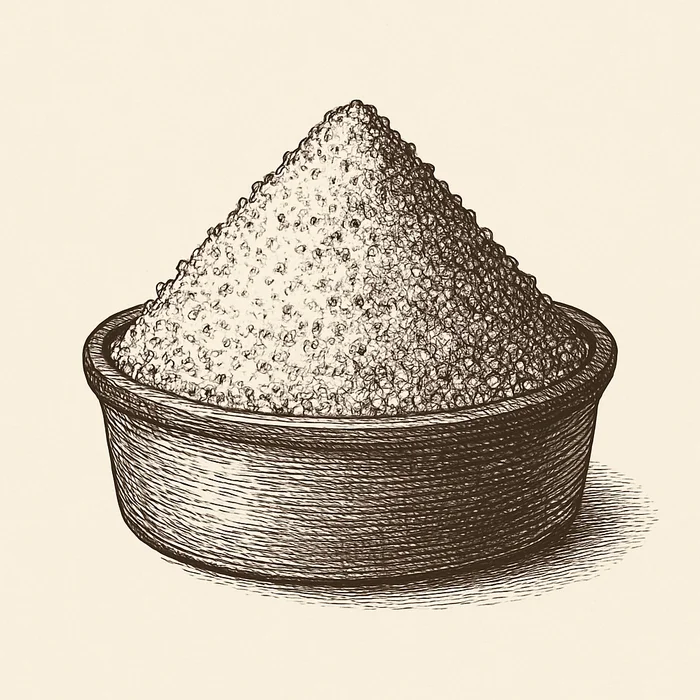
Salt
High salt consumption is linked to hypertension, autoimmune activation, and gut microbiome disruption. The Longevity Diet recommends avoiding a high-salt diet, particularly for those at risk of autoimmune conditions.
Why It Matters for Longevity
The Longevity Diet's salt guidance is grounded in three distinct biological mechanisms — each independently harmful.
First, the cardiovascular risk is well-established. A meta-analysis of 19 prospective cohort studies (177,025 participants) found that higher salt intake is associated with significantly increased risk of stroke (RR 1.23) and total cardiovascular disease (RR 1.14), with a dose-response relationship.
Second, excess sodium promotes differentiation of pro-inflammatory T helper 17 (Th17) cells via activation of serum glucocorticoid kinase 1 (SGK1). Kleinewietfeld et al. (2013) showed this in a landmark Nature paper: high-salt conditions dramatically accelerated induction of pathogenic Th17 cells, and mice on a high-salt diet developed more severe experimental autoimmune encephalomyelitis.
Third, Wilck et al. (2017) found that a high-salt diet depletes gut Lactobacillus species, disrupts intestinal immune homeostasis, and worsens hypertension — establishing a gut-immune axis through which excess salt accelerates systemic inflammation.
Blood Pressure: Dose-Response from the DASH-Sodium Trial
The DASH-Sodium trial (Sacks et al., 2001) is the most rigorous controlled test of sodium reduction in humans. In a randomized crossover design, 412 adults consumed three sodium levels — high (~3,500 mg/day), intermediate (~2,300 mg/day), and low (~1,150 mg/day) — each for 30 consecutive days, on either the DASH diet or a typical control diet. Sodium reduction from high to low levels reduced systolic blood pressure by 6.7 mmHg on the control diet and by 3.0 mmHg on the already-beneficial DASH diet. The combined effect of the DASH diet with low sodium versus the control diet with high sodium was a systolic reduction of 7.1 mmHg in non-hypertensive participants and 11.5 mmHg in hypertensive participants — a magnitude comparable to some antihypertensive drugs. The effect was smooth and dose-dependent across the three sodium tiers, with no threshold below which further reduction was harmful.
The Sodium-Potassium Interaction: Joint Exposure Matters
The question of sodium cannot be separated from potassium. The PURE prospective cohort study (O'Donnell et al., 2019) measured urinary sodium and potassium in 103,570 participants across 18 countries with a median 8.2-year follow-up, tracking 7,884 deaths and major cardiovascular events. The key finding was that risk is determined not by sodium alone but by the joint exposure pattern. The group with low potassium plus high sodium excretion faced a 21% higher risk of cardiovascular events and mortality (HR 1.21, 95% CI 1.11–1.32) compared to the moderate-sodium/higher-potassium reference group. Higher potassium intake significantly attenuated the harm from high sodium (interaction p=0.007). Remarkably, only 0.002% of the 103,570 participants simultaneously achieved the WHO sodium target (<2,000 mg/day) and the recommended potassium intake (>3,500 mg/day) — confirming that the population almost universally fails both targets, and that potassium insufficiency is as important to address as sodium excess.
A large Korean cohort analysis by Kwon et al. (2022) extended this: across 143,050 participants over 10 years, higher potassium intake in the top quintile was associated with 21% lower all-cause mortality (HR 0.79, 95% CI 0.69–0.91) relative to the lowest quintile, while dietary sodium alone showed no significant association after full adjustment. This reinforces the emerging picture: potassium sufficiency is the more tractable and potentially more impactful dietary lever than sodium restriction alone.
Iodized Salt: A Trade-Off to Navigate
Not all salt is the same from a nutritional standpoint. Iodized table salt remains a primary iodine source in many populations where seafood and dairy are not dominant in the diet. Iodine is required for synthesis of thyroid hormones (thyroxine and triiodothyronine) by thyroid peroxidase. Severe iodine deficiency causes goiter and, during pregnancy, irreversible cognitive impairment in the developing fetus (cretinism). Sea salt and artisan salts contain negligible iodine because iodine is volatile and lost during evaporation. People who substantially reduce table salt intake — whether for cardiovascular reasons or preference — while relying on artisan salts and avoiding iodine-rich foods may inadvertently create iodine insufficiency. Longo's recommendation to minimize salt does not conflict with this concern if dietary iodine is maintained through fish, seafood, and dairy, which are already privileged in the Longevity Diet framework.
SGK1 Pathway and Autoimmune Risk
The molecular link between sodium and adaptive immunity runs through SGK1, a serine/threonine kinase upregulated by osmotic stress. When extracellular sodium rises in tissues — a local phenomenon that can occur in skin and interstitium even when serum sodium remains tightly controlled — SGK1 activates the transcription factor NFAT5 and increases expression of IL-17A, the defining cytokine of Th17 cells. Th17 cells are the primary drivers of several autoimmune diseases including multiple sclerosis, rheumatoid arthritis, and psoriasis. Kleinewietfeld et al.'s 2013 Nature paper demonstrated that a modest increase in NaCl concentration (roughly equivalent to the difference between low-salt and high-salt diets) is sufficient to tip naïve CD4+ T cells toward pathogenic Th17 differentiation in vitro, and that mice fed a high-salt chow developed significantly more severe experimental autoimmune encephalomyelitis. This identifies salt as a modifiable environmental trigger in populations with genetic predisposition to autoimmunity.
How to Use It
Use herbs, extra-virgin olive oil, and lemon as primary flavor enhancers to reduce reliance on salt. When salt is needed, use modestly. The WHO recommends less than 2,000 mg sodium per day (less than 5 g salt).
What to Pair It With
| Ingredient | Why | Tradition |
|---|---|---|
| herbs | See synergies | General culinary |
| extra-virgin olive oil | See synergies | General culinary |
| lemon | See synergies | General culinary |
Synergies
- Potassium-Rich Foods (antagonism): High sodium intake antagonizes potassium's blood pressure-lowering effects; pairing salt moderation with potassium-rich foods (legumes, leafy greens) partially offsets cardiovascular risk.
- Herbs (complement): Using herbs and spices as primary flavor enhancers reduces reliance on salt while adding bioactive polyphenols — a practical strategy the Longevity Diet implicitly promotes.
Flavor Profile
Taste: salty, mineral, flavor-enhancing. Aroma: neutral, faintly mineral (sea salt). Texture: crystalline granules, flaky (fleur de sel). Category: seasoning / mineral.
The Science
- Strazzullo et al., 2009, BMJ: Meta-analysis of 19 prospective cohort studies found higher salt intake associated with 23% increased stroke risk and 14% increased total cardiovascular disease risk.
- Kleinewietfeld et al., 2013, Nature: High-salt conditions accelerate pathogenic Th17 cell induction via SGK1 upregulation; mice on high-salt diet developed more severe autoimmune encephalomyelitis.
- Wilck et al., 2017, Nature: High-salt diet depletes gut Lactobacillus species, increases TH17 cells, and worsens blood pressure in both mice and a human pilot study.
- Sacks et al., 2001, N Engl J Med: DASH-Sodium RCT (n=412): reducing sodium from high to low lowered systolic BP by 6.7 mmHg on control diet; combined DASH diet + low sodium reduced systolic BP by 11.5 mmHg in hypertensive adults versus control diet + high sodium.
- O'Donnell et al., 2019, BMJ: PURE cohort (n=103,570, 8.2 years): low potassium + high sodium associated with HR 1.21 (95% CI 1.11–1.32) for cardiovascular events; higher potassium attenuated sodium harm (interaction p=0.007).
References
- Strazzullo P, D'Elia L, Kandala NB, Cappuccio FP. Salt intake, stroke, and cardiovascular disease: meta-analysis of prospective studies. BMJ. 2009;339:b4567. PMID: 19934192. doi:10.1136/bmj.b4567
- Kleinewietfeld M, Manzel A, Titze J, et al. Sodium chloride drives autoimmune disease by the induction of pathogenic TH17 cells. Nature. 2013;496(7446):518-22. PMID: 23467095. doi:10.1038/nature11868
- Wilck N, Matus MG, Kearney SM, et al. Salt-responsive gut commensal modulates TH17 axis and disease. Nature. 2017;551(7682):585-589. PMID: 29143823. doi:10.1038/nature24628
- Sacks FM, Svetkey LP, Vollmer WM, et al. Effects on blood pressure of reduced dietary sodium and the Dietary Approaches to Stop Hypertension (DASH) diet. N Engl J Med. 2001;344(1):3-10. PMID: 11136953. doi:10.1056/NEJM200101043440101
- O'Donnell M, Mente A, Rangarajan S, et al. Joint association of urinary sodium and potassium excretion with cardiovascular events and mortality: prospective cohort study. BMJ. 2019;364:l772. PMID: 30867146. doi:10.1136/bmj.l772
Key Nutrients
| Nutrient | Per 100g | Notes |
|---|---|---|
| Sodium | ~38,750 mg | Near-complete absorption in the gut; excess sodium is renally excreted but long-term high intake elevates blood pressure and drives Th17-mediated inflammation. WHO recommends <2,000 mg sodium/day (<5 g salt/day). |
| Iodine (iodized salt only) | ~7,600 mcg (iodized) | Iodized table salt is a primary iodine source in many populations; essential for thyroid hormone synthesis and metabolic regulation. Sea salt typically has negligible iodine. |