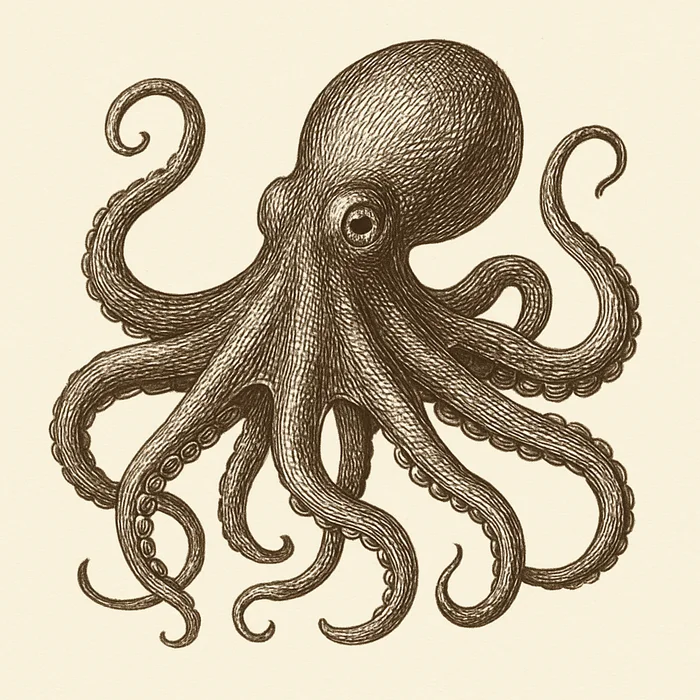
Octopus
Octopus is a Longevity Diet seafood featured in the traditional dish polpo e patate. It provides lean protein, taurine, vitamin B12, and a modest contribution of omega-3 DHA (~0.17 g per 100 g cooked), consumed regularly in Mediterranean Blue Zone communities in Sardinia and Calabria.
Why It Matters for Longevity
Octopus is a low-fat, high-protein marine food with exceptionally high vitamin B12 content and meaningful taurine levels. As a cephalopod consumed in Blue Zone Mediterranean regions, it contributes to the seafood intake pattern associated with reduced cardiovascular and all-cause mortality. Cephalopods and other shellfish have been identified as nutritionally valuable seafood sources providing omega-3 fatty acids, zinc, selenium, and B12 alongside bioactive compounds like taurine (Venugopal & Gopakumar, 2017, Compr Rev Food Sci Food Saf).
Taurine — a conditionally essential sulfur amino acid abundant in cephalopods — has emerged as a longevity-relevant nutrient. A landmark study in Science found that taurine levels in blood decline with aging in mice, monkeys, and humans; taurine supplementation extended lifespan by 10–12% and improved multiple healthspan markers including bone density, muscle function, neurogenesis, and gut microbiota composition in middle-aged mice and monkeys (Singh et al., 2023, Science). Dietary intake from seafood like octopus represents a food-first approach to maintaining taurine levels.
Fatty Acid Profile and Omega-3 Content
Octopus is not an oily fish, but its fatty acid profile is structured differently than its modest total fat content suggests. An analysis of three octopus species across multiple ocean regions found that unsaturated fatty acids comprised over 65% of total fatty acids, with DHA representing 18.4–29.3% of lipid composition and EPA 11.4–23.9%, depending on species, region, and body size (Torrinha et al., 2014, J Agric Food Chem). This means that while the absolute omega-3 grams per serving are lower than sardines or mackerel, the proportion of those fats that are long-chain marine omega-3s is high. In a varied seafood diet, octopus contributes meaningful EPA and DHA alongside its other nutritional strengths.
Marine omega-3 intake at the population level is associated with reduced cardiovascular mortality. A meta-analysis of 25 prospective cohort studies covering over 2 million participants found that higher marine n-3 PUFA intake was associated with a 13% lower risk of CVD mortality (RR 0.87; 95% CI 0.85–0.89), with each additional 80 mg/day of marine n-3 PUFA reducing CVD mortality risk by 4% (Jiang et al., 2021, Nutrients). Octopus, as a regular contributor to seafood variety, supports this accumulation of daily marine omega-3 intake.
Copper and Mitochondrial Energy Production
Octopus contains approximately 2–3 mg of copper per 100 g cooked — among the highest copper concentrations of any commonly consumed food. This matters because copper is not interchangeable with other minerals: it is a required cofactor for cytochrome c oxidase (complex IV of the mitochondrial respiratory chain), the terminal enzyme responsible for transferring electrons to oxygen to generate the proton gradient driving ATP synthesis. Copper chaperones (including COX17 and SCO2) deliver copper ions specifically to the CuA and CuB active sites of this enzyme, and when copper levels fall, complex IV expression decreases and cells shift from efficient oxidative phosphorylation to glycolysis — a less energy-efficient pathway that has been associated with accelerated cellular aging (Ruiz et al., 2021, Front Mol Biosci). A single 100 g serving of cooked octopus can cover 200–300% of the daily adequate intake for copper, making it one of the most practical food sources for meeting copper requirements in a typical Western diet.
Vitamin B12 and Homocysteine Clearance
Octopus provides approximately 20 mcg of vitamin B12 per 100 g cooked — well above the adult daily requirement of 2.4 mcg — making a single serving sufficient to meet requirements many times over from food alone. B12 is required by the enzyme methionine synthase for the remethylation of homocysteine back to methionine; when B12 is insufficient, plasma homocysteine rises, and elevated homocysteine is a recognized modest independent predictor of cardiovascular disease and stroke (Strain et al., 2004, Proc Nutr Soc). The B12 from animal seafood sources, including cephalopods, is in its active cobalamin form and is highly bioavailable; this distinguishes dietary seafood B12 from B12 in plant-based analogues and from supplemental cyanocobalamin. Maintaining adequate dietary B12 from food is particularly relevant in aging populations, where gastric atrophy reduces intrinsic factor secretion and impairs B12 absorption from all sources.
Taurine: Cardiovascular Mechanisms
Beyond the aging-related findings, taurine exerts cardiovascular effects through multiple distinct mechanisms. A 2024 systematic review and meta-analysis of 20 randomized controlled trials involving 808 participants found that taurine supplementation reduced systolic blood pressure by approximately 4 mmHg, diastolic blood pressure by roughly 1.4 mmHg, and heart rate by a weighted mean difference of 3.6 bpm, while left ventricular ejection fraction improved by nearly 5 percentage points (Tzang et al., 2024, Nutr J). Effects were most pronounced in individuals with heart failure and hypertension. Taurine acts through bile acid conjugation, osmoregulation of cardiomyocytes, reduction of oxidative stress, and calcium handling in cardiac muscle — mechanisms that are distinct from those of omega-3 fatty acids, creating a complementary profile within a single food.
Octopus is among the richest dietary taurine sources (~1.2 g per 100 g raw), comparable to or exceeding levels found in other shellfish and well above those in finfish. Regular consumption through traditional preparations provides a practical route to sustained dietary taurine intake throughout adulthood.
Selenium: Thyroid Function and Antioxidant Defense
Octopus is one of the richer dietary sources of selenium among commonly consumed foods, providing approximately 44–58 mcg per 100 g cooked — covering 80–100% of the adult daily requirement in a single serving. Selenium is an essential cofactor for the glutathione peroxidase (GPx) and thioredoxin reductase enzyme families, which defend cell membranes, mitochondria, and DNA against oxidative damage from lipid peroxides and hydrogen peroxide. Selenium also drives iodothyronine deiodinase, the enzyme that converts thyroxine (T4) to the active thyroid hormone triiodothyronine (T3) in peripheral tissues, making adequate selenium intake a practical requirement for normal thyroid function. In cephalopods, selenium accumulates predominantly in organic forms (selenomethionine, selenocysteine) that have higher bioavailability than the inorganic selenite found in many supplements.
Cooking and Nutrient Retention
A concern with extended boiling of octopus — necessary to achieve the collagen hydrolysis that produces tender texture — is potential nutrient loss into cooking water. An analysis of industrial boiling (45 minutes in water without added salt) of Octopus vulgaris found that essential amino acids were retained at 74.6% or higher across the indispensable amino acid profile, with leucine as the most abundant indispensable amino acid at 1,613 mg per 100 g in boiled samples. EPA and DHA were particularly well-retained: 90.2% and 89.1%, respectively, remained in the cooked tissue. Zinc increased in concentration per unit weight after boiling (to 16.6 mg/kg), consistent with moisture loss concentrating mineral content. Iodine was retained at 86.8%. Contaminant levels — cadmium, lead, mercury — remained well below established European food safety limits (Oliveira et al., 2019, Foods). These data address the common concern that boiling destroys nutritional value: for octopus, the key long-chain fatty acids and amino acids are largely preserved.
How to Use It
Traditional Longevity Diet preparation: polpo e patate (octopus with potatoes). Slow cooking is essential — octopus becomes tender at 60–90 minutes braised or simmered. Finish with extra-virgin olive oil, parsley, and lemon. Overcooked at high temperature without moisture it becomes rubber; low-and-slow is the rule.
What to Pair It With
| Ingredient | Why | Tradition |
|---|---|---|
| Potatoes | Complete amino acids, complex carbohydrates, potassium, and omega-3 in one dish | Calabrian (Blue Zone) |
| Extra-virgin olive oil | Olive oil polyphenols complement octopus lean protein; forms a heart-protective combination | Mediterranean |
| Parsley | Vitamin C enhances iron absorption from octopus; classic Mediterranean seafood herb | Mediterranean |
| Lemon | Acid brightens flavor; vitamin C aids non-heme iron absorption | Mediterranean |
| Garlic | Allicin complements taurine as a cardiovascular protective compound | Mediterranean |
Flavor Profile
Mild, slightly sweet, and umami. Aroma is oceanic and faintly briny when raw, neutral and savory when braised. Texture is tender when slow-cooked, chewy if undercooked, firm. Category: seafood / cephalopod.
The Science
- Venugopal & Gopakumar, 2017, Compr Rev Food Sci Food Saf: Shellfish and cephalopods are valuable nutritional sources providing omega-3 fatty acids, zinc, selenium, B12, and bioactive peptides with cardiovascular and anti-inflammatory properties.
- Singh et al., 2023, Science: Taurine levels decline with aging in mammals; taurine supplementation extended lifespan and improved multiple healthspan markers in middle-aged animal models, identifying dietary taurine from seafood as a longevity-relevant nutrient.
- Torrinha et al., 2014, J Agric Food Chem: Analysis of three octopus species across multiple ocean regions found unsaturated fatty acids exceed 65% of total lipids, with DHA comprising 18.4–29.3% and EPA 11.4–23.9% of fatty acid composition.
- Jiang et al., 2021, Nutrients: Meta-analysis of 25 prospective cohort studies (>2 million participants) found higher marine n-3 PUFA intake associated with 13% lower CVD mortality risk; each additional 80 mg/day marine n-3 reduced risk by 4%.
- Ruiz et al., 2021, Front Mol Biosci: Copper is required for cytochrome c oxidase (complex IV) assembly and mitochondrial oxidative phosphorylation; deficiency causes a shift to less-efficient glycolytic metabolism.
- Tzang et al., 2024, Nutr J: Meta-analysis of 20 RCTs (808 participants) showed taurine reduced systolic BP ~4 mmHg, diastolic BP ~1.4 mmHg, and heart rate ~3.6 bpm, with ejection fraction improving ~5 percentage points.
- Strain et al., 2004, Proc Nutr Soc: Vitamin B12 is required by methionine synthase for homocysteine remethylation; B12 deficiency raises plasma homocysteine, a modest independent predictor of CVD and stroke.
- Oliveira et al., 2019, Foods: Industrial boiling of Octopus vulgaris retained EPA at 90.2% and DHA at 89.1%; essential amino acids retained ≥74.6%; minerals concentrated per unit weight; contaminants remained below EU food safety limits.
References
- Venugopal V, Gopakumar K. Shellfish: nutritive value, health benefits, and consumer safety. Compr Rev Food Sci Food Saf. 2017;16(6):1219-1242. PMID: 33371588. doi:10.1111/1541-4337.12312
- Singh P, Gollapalli K, Mangiola S, et al. Taurine deficiency as a driver of aging. Science. 2023;380(6649):eabn9257. PMID: 37289866. doi:10.1126/science.abn9257
- Torrinha A, Cruz R, Gomes F, Mendes E, Casal S, Morais S. Octopus lipid and vitamin E composition: interspecies, interorigin, and nutritional variability. J Agric Food Chem. 2014;62(34):8508-8517. PMID: 25087929. doi:10.1021/jf5025834
- Jiang L, Wang J, Xiong K, Xu L, Zhang B, Ma A. Intake of fish and marine n-3 polyunsaturated fatty acids and risk of cardiovascular disease mortality: a meta-analysis of prospective cohort studies. Nutrients. 2021;13(8):2750. PMID: 34371852. doi:10.3390/nu13082750
- Ruiz LM, Libedinsky A, Elorza AA. Role of copper on mitochondrial function and metabolism. Front Mol Biosci. 2021;8:711227. PMID: 34504870. doi:10.3389/fmolb.2021.711227
- Tzang CC, Lin WC, Lin LH, Lin TY, Chang KV, Wu WT, Özçakar L. Insights into the cardiovascular benefits of taurine: a systematic review and meta-analysis. Nutr J. 2024;23(1):96. PMID: 39148075. doi:10.1186/s12937-024-00998-0
- Strain JJ, Dowey L, Ward M, Pentieva K, McNulty H. B-vitamins, homocysteine metabolism and CVD. Proc Nutr Soc. 2004;63(4):597-603. PMID: 15831132. doi:10.1079/PNS2004394
- Oliveira H, Muniz JA, Bandarra NM, et al. Effects of Industrial Boiling on the Nutritional Profile of Common Octopus (Octopus vulgaris). Foods. 2019;8(10):437. PMID: 31547442. doi:10.3390/foods8100437
Key Nutrients
| Nutrient | Per 100g | Notes |
|---|---|---|
| Protein (lean) | ~14.9 g (cooked) | Complete protein with high digestibility; very low in saturated fat, making it a preferred animal protein in longevity-oriented diets |
| Taurine | ~1.2 g (raw) | Conditionally essential sulfur amino acid; high bioavailability from animal sources; blood levels decline with aging |
| DHA (omega-3) | ~0.17 g (cooked) | Marine long-chain omega-3; directly incorporated into neuronal membranes; lower per 100 g than oily fish but still a useful contributor in a varied seafood diet |
| EPA (omega-3) | variable | Comprises 11.4–23.9% of total octopus fatty acids by species; anti-inflammatory via COX and LOX pathway modulation |
| Vitamin B12 | ~20 mcg (cooked) | Very high B12 concentration; a single serving substantially exceeds daily requirements; active cobalamin form with high bioavailability |
| Copper | ~2–3 mg (cooked) | Required cofactor for cytochrome c oxidase; one serving can cover 200–300% of the daily adequate intake |
| Selenium | ~44–58 mcg (cooked) | Organic selenomethionine form with high bioavailability; cofactor for glutathione peroxidase, thioredoxin reductase, and iodothyronine deiodinase (T4→T3 conversion) |