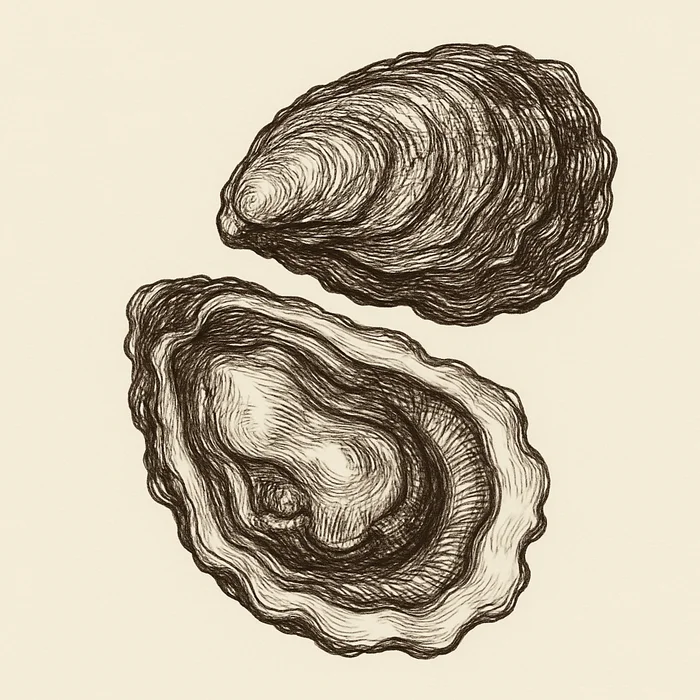
Oysters
Oysters are top shellfish sources of vitamin B12 (18.2 mcg per 75 g cooked, 303% DV) and iron (8 mg per 3 oz eastern oysters, 44% DV). Pacific oysters deliver 1.04 g omega-3 EPA/DHA per 75 g cooked. They are also the richest dietary source of zinc of any commonly consumed food.
Why It Matters for Longevity
Vitamin B12 is essential for neurological integrity, DNA methylation, and red blood cell formation. Zinc is required for over 300 enzymatic reactions including DNA repair, immune function, and antioxidant enzyme activation. Both nutrients decline with age and are commonly deficient in older adults, making oysters a uniquely efficient longevity food.
Shellfish — including oysters — are among the most nutrient-dense animal protein sources, providing omega-3 fatty acids (EPA/DHA), vitamin B12, zinc, selenium, and iron in a lean, low-saturated-fat matrix. A comprehensive review confirmed that shellfish consumption contributes meaningfully to dietary omega-3 intake, supports cardiovascular and immune health, and provides bioactive peptides with anti-inflammatory properties (Venugopal & Gopakumar, 2017, Compr Rev Food Sci Food Saf).
Zinc — for which oysters are the single richest dietary source at 32–74 mg per 3 oz cooked — is essential for immune cell development, neutrophil function, and the antioxidant enzyme superoxide dismutase. Deficiency is associated with impaired wound healing, increased infection susceptibility, and accelerated cellular aging. An overview of zinc biochemistry and immunology confirmed its indispensable role across all aspects of immunity and cellular longevity (Prasad, 1995, Nutrition).
Zinc and Immunosenescence
The immune system deteriorates with age in a process called immunosenescence — characterized by declining T cell output from the thymus, reduced T cell proliferative capacity, and impaired cytokine signaling. Zinc deficiency accelerates each of these processes and is unusually common in older adults, with studies consistently showing 20–30% of adults over 60 have suboptimal serum or functional zinc status even in high-income countries.
A randomized, double-blind, placebo-controlled trial in 50 healthy older adults aged 55–87 years (Prasad et al., 2007) found that zinc supplementation at 45 mg elemental zinc per day for 12 months significantly reduced infection incidence and significantly raised PHA-stimulated IL-2 mRNA in peripheral mononuclear cells compared to placebo. Plasma oxidative stress markers and TNF-α generation were also significantly lower in the zinc group, demonstrating that correcting zinc insufficiency in older adults simultaneously improves immune signaling, reduces pro-inflammatory cytokine burden, and lowers systemic oxidative stress (Prasad et al., 2007, Am J Clin Nutr).
A separate double-blind RCT in zinc-deficient nursing home residents (n = 31, aged ≥65, serum zinc <70 μg/dL) found that 30 mg/day zinc supplementation for 3 months raised serum zinc 16% higher than placebo (p = 0.007), and significantly increased anti-CD3/CD28 and PHA-stimulated T cell proliferation and the number of peripheral T cells (p < 0.05) (Barnett et al., 2016, Am J Clin Nutr). The mechanism runs through zinc's role as a structural cofactor in TCR signaling complexes and transcription factors (including NF-κB and AP-1) that regulate T cell activation.
A single serving of 6 medium eastern oysters (approximately 85 g cooked) provides 32–74 mg zinc — enough to fully cover the therapeutic doses tested in the above trials. No other commonly consumed whole food comes close; the next-richest sources (beef, pumpkin seeds) provide 5–7 mg per 100 g, roughly 5–10 times less.
Taurine: Cardiovascular Mechanism
Oysters are among the richest whole-food sources of taurine, a sulfur-containing amino acid found at particularly high concentrations in bivalves and other shellfish. Unlike most amino acids, taurine is not incorporated into structural proteins; instead it serves as a free intracellular osmolyte and direct modulator of calcium handling in cardiomyocytes. By competing with chloride for transport into cells, taurine stabilizes the voltage-gated channels responsible for myocardial contraction, reducing calcium overload that underpins arrhythmia and pressure-overload cardiomyopathy.
A systematic review and meta-analysis of 20 RCTs (808 participants) found that taurine supplementation significantly reduced heart rate (WMD −3.58 bpm), systolic blood pressure (WMD −4.00 mmHg), and diastolic blood pressure (WMD −1.44 mmHg), and improved left ventricular ejection fraction by 4.98 percentage points (WMD 4.98%), with no significant adverse effects compared to controls (Tzang et al., 2024, Nutr J). These are clinically meaningful effects: a 4 mmHg reduction in systolic blood pressure is associated with approximately 16% lower stroke risk and 12% lower coronary heart disease risk in epidemiological models. The taurine mechanism operates via SIRT1-p53 pathway activation in cardiomyocytes, anti-inflammatory toll-like receptor modulation, and direct reduction of ROS-mediated oxidative damage in vascular endothelium.
Omega-3 EPA and DHA
Pacific oysters provide approximately 0.7–1.4 g EPA + DHA per 100 g cooked, placing them among the richest shellfish sources of marine omega-3s. These fatty acids are incorporated directly into neuronal and cardiovascular cell membranes in the phospholipid bilayer, improving membrane fluidity and modulating ion channel function. Their clinical relevance to cardiovascular risk is supported at the meta-analytic level: a meta-analysis of 38 RCTs (149,051 participants) found omega-3 supplementation associated with a 7% reduction in cardiovascular mortality (RR 0.93, 95% CI 0.88–0.98) and 13% reduction in non-fatal myocardial infarction (RR 0.87, 95% CI 0.81–0.93) (Khan et al., 2021, EClinicalMedicine).
Vitamin B12
Oysters contain 16–24 mcg B12 per 100 g cooked — among the highest concentrations of any food. This exceeds the weekly B12 requirement (≈14 mcg for a 2 mcg/day RDA) in a single typical serving of 6 oysters. B12 is the cofactor for methionine synthase, which remethylates homocysteine back to methionine — an essential step in the one-carbon cycle that supplies methyl groups for DNA methylation, histone modification, and neurotransmitter synthesis. Elevated homocysteine (which rises when B12 is insufficient) is an independent risk factor for cardiovascular disease, cognitive decline, and stroke. Low B12 status assessed by functional biomarkers (methylmalonic acid, holotranscobalamin) was consistently associated with increased risk of cognitive decline and dementia in older adults across systematic review evidence (O'Leary et al., 2012, Br J Nutr).
How to Use It
Consume raw on the half-shell with lemon (vitamin C enhances iron absorption) or cooked — baked, steamed, or sautéed. Even 3–4 oysters provide a week's supply of B12 and zinc. For the Longevity Diet, pair with lemon and a green salad to maximize micronutrient uptake from a single small serving.
What to Pair It With
| Ingredient | Why | Tradition |
|---|---|---|
| Lemon | Vitamin C enhances non-heme iron absorption; brightens mineral flavor | Classic |
| Mussels | Together provide the highest B12, iron, omega-3, and zinc density of any shellfish combination | Mediterranean |
| Extra-virgin olive oil | Fat supports absorption of fat-soluble vitamins (A, E) in oysters | Mediterranean |
| Shallots | Classic mignonette pairing; low-calorie flavor complement | French |
Flavor Profile
Briny, mineral, creamy, and faintly sweet. Aroma is oceanic and fresh. Texture is slippery, plump, and tender when raw; firmer when cooked. Category: shellfish / bivalve.
The Science
- Venugopal & Gopakumar, 2017, Compr Rev Food Sci Food Saf: Review confirming shellfish as nutrient-dense sources of EPA/DHA omega-3, vitamin B12, zinc, selenium, and bioactive peptides with cardiovascular and immune health benefits.
- Prasad, 1995, Nutrition: Overview of zinc biochemistry — essential for over 300 enzymatic reactions, DNA repair, immune cell function, and antioxidant enzyme activity; oysters are the single richest dietary zinc source.
- Prasad et al., 2007, Am J Clin Nutr: 12-month RCT in 50 adults aged 55–87 — zinc supplementation (45 mg/day) significantly reduced infection incidence, increased IL-2 mRNA in immune cells, and reduced TNF-α and oxidative stress markers vs. placebo.
- Barnett et al., 2016, Am J Clin Nutr: 3-month RCT in zinc-deficient nursing home elderly (n = 31) — 30 mg/day zinc raised serum zinc 16% vs. placebo (p = 0.007) and significantly increased T cell proliferation (p < 0.05).
- Tzang et al., 2024, Nutr J: Meta-analysis of 20 RCTs (808 participants) — taurine supplementation reduced systolic BP by 4.00 mmHg, heart rate by 3.58 bpm, and improved left ventricular ejection fraction by 4.98%; mechanism via calcium handling, SIRT1-p53 activation, and reduced vascular oxidative stress.
- Khan et al., 2021, EClinicalMedicine: Meta-analysis of 38 RCTs (149,051 participants) — EPA/DHA associated with 13% lower non-fatal MI (RR 0.87) and 7% lower cardiovascular mortality (RR 0.93).
- O'Leary et al., 2012, Br J Nutr: Systematic review of 35 cohort studies — low B12 by functional biomarkers (MMA, holotranscobalamin) associated with increased cognitive decline and dementia risk; serum B12 alone insufficient biomarker.
References
- Venugopal V, Gopakumar K. Shellfish: nutritive value, health benefits, and consumer safety. Compr Rev Food Sci Food Saf. 2017;16(6):1219-1242. PMID: 33371588. doi:10.1111/1541-4337.12312
- Prasad AS. Zinc: an overview. Nutrition. 1995;11(1 Suppl):93-99. PMID: 7749260
- Prasad AS, Beck FWJ, Bao B, et al. Zinc supplementation decreases incidence of infections in the elderly: effect of zinc on generation of cytokines and oxidative stress. Am J Clin Nutr. 2007;85(3):837-844. PMID: 17344507. doi:10.1093/ajcn/85.3.837
- Barnett JB, Dao MC, Hamer DH, et al. Effect of zinc supplementation on serum zinc concentration and T cell proliferation in nursing home elderly: a randomized, double-blind, placebo-controlled trial. Am J Clin Nutr. 2016;103(3):942-951. PMID: 26817502. doi:10.3945/ajcn.115.115188
- Tzang CC, Lin WC, Lin LH, Lin TY, Chang KV, Wu WT, Özçakar L. Insights into the cardiovascular benefits of taurine: a systematic review and meta-analysis. Nutr J. 2024;23(1):96. PMID: 39148075. doi:10.1186/s12937-024-00994-4
- Khan SU, Lone AN, Khan MS, et al. Effect of omega-3 fatty acids on cardiovascular outcomes: A systematic review and meta-analysis. EClinicalMedicine. 2021;38:100997. PMID: 34505026. doi:10.1016/j.eclinm.2021.100997
- O'Leary F, Allman-Farinelli M, Samman S. Vitamin B₁₂ status, cognitive decline and dementia: a systematic review of prospective cohort studies. Br J Nutr. 2012;108(11):1948-1961. PMID: 23084026. doi:10.1017/S0007114512004175
Key Nutrients
| Nutrient | Per 100g | Notes |
|---|---|---|
| Vitamin B12 | ~16–24 mcg (cooked) | Highest bioavailable B12 concentration of any common food; supports methionine synthase in one-carbon methylation cycle; a single serving substantially covers weekly requirements |
| Zinc | ~16–39 mg (cooked) | Richest dietary zinc source; structural cofactor in TCR signaling, NF-κB, and AP-1 transcription factors; essential for T cell activation, DNA repair, and superoxide dismutase |
| Taurine | ~500–800 mg (cooked) | Free intracellular amino acid; modulates cardiomyocyte calcium handling; reduces BP and improves LVEF; anti-inflammatory via toll-like receptor modulation |
| EPA + DHA (omega-3) | ~0.7–1.4 g (Pacific oysters, cooked) | Marine long-chain omega-3; directly incorporated into neuronal and cardiovascular cell membranes without hepatic ALA conversion |
| Iron (heme) | ~6.7 mg (eastern, cooked) | Heme iron absorption 15–35%; one of the most concentrated shellfish iron sources |