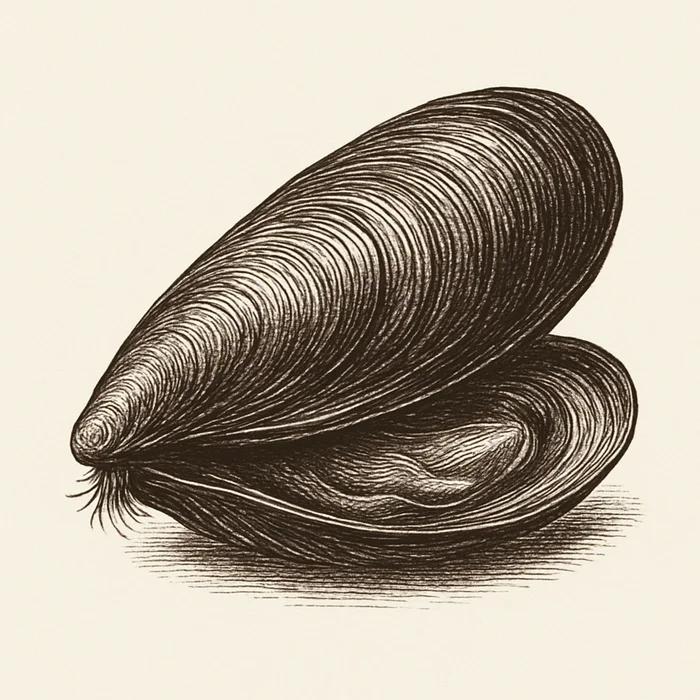
Mussels
Mussels are used in the Longevity Diet (spaghetti with clams and mussels) and are an outstanding source of vitamin B12 (25 mcg per 75 g cooked, 417% DV), iron (5.71 mg per 3 oz cooked, 32% DV), and omega-3 EPA/DHA (0.59 g per 75 g cooked).
Why It Matters for Longevity
Mussels provide one of the most nutrient-dense profiles of any food per calorie: exceptional vitamin B12 (one serving meets weekly B12 requirements), heme iron with superior bioavailability versus plant sources, marine omega-3 EPA and DHA, selenium for antioxidant defense, and complete protein. They are also among the most ecologically sustainable protein sources available.
Among 191,558 participants across 58 countries, fish and shellfish consumption of 175–350 g/week was associated with significantly lower risk of cardiovascular mortality and myocardial infarction; mussels and other shellfish contributed meaningfully to the protective marine protein and omega-3 intake in this analysis (Mohan et al., 2021, JAMA Intern Med).
A comprehensive review of shellfish nutritional value found that bivalves including mussels provide high-quality complete protein, bioavailable omega-3 phospholipids, heme-associated zinc, selenium, copper, and exceptional vitamin B12 concentrations — making shellfish among the most nutrient-dense animal foods per calorie (Venugopal and Gopakumar, 2017, Compr Rev Food Sci Food Saf).
Omega-3 EPA and DHA: Cardiovascular Mechanism
Mussels deliver roughly 0.79 g EPA + DHA per 100 g cooked — substantially more than most non-fatty fish. These long-chain omega-3s enter cell membranes directly without the hepatic conversion step required for plant-based ALA, and exert cardiovascular benefit through several converging pathways: lowering plasma triglycerides via PPAR-α activation in hepatocytes, reducing platelet aggregation by competing with arachidonic acid for cyclooxygenase, and shifting eicosanoid synthesis toward less pro-inflammatory prostaglandins and thromboxanes.
A meta-analysis and meta-regression of 40 RCTs (135,267 combined participants) found dose-dependent cardiovascular protection from EPA/DHA supplementation: a 13% reduction in myocardial infarction risk (RR 0.87, 95% CI 0.80–0.96) and a 35% reduction in fatal myocardial infarction (RR 0.65, 95% CI 0.46–0.91), with the protective effect increasing with higher dosage (Bernasconi et al., 2021, Mayo Clin Proc). Each 100 g serving of cooked mussels contributes nearly 0.8 g toward the 1–2 g/day EPA + DHA range that consistently shows benefit in these trials.
Vitamin B12 and Cognitive Aging
Mussels contain approximately 20 mcg B12 per 100 g cooked — one of the highest concentrations of any food. Vitamin B12 is the cofactor for methionine synthase (which remethylates homocysteine to methionine, driving the one-carbon methylation cycle) and methylmalonyl-CoA mutase (which processes odd-chain fatty acids and branched amino acids in mitochondria). Deficiency impairs myelin synthesis, elevates homocysteine, and is associated with accelerated brain atrophy and cognitive decline in older adults.
A systematic review of 35 prospective cohort studies found that low B12 status assessed by functional biomarkers (methylmalonic acid, holotranscobalamin) — rather than serum B12 alone — was consistently associated with increased risk of cognitive decline and dementia diagnosis across four studies using these more sensitive markers (O'Leary et al., 2012, Br J Nutr). The functional biomarker finding matters because serum B12 can appear normal even when cellular B12 delivery is insufficient; mussels provide B12 in a form with high bioavailability that reliably raises holotranscobalamin. Adults over 50 are at particular risk because gastric acid production — required to release protein-bound B12 — declines with age, making highly bioavailable seafood sources more valuable than fortified foods or low-dose supplements that rely on the same acid-dependent pathway.
Heme Iron: Bioavailability Advantage
Mussels provide approximately 7.6 mg iron per 100 g cooked, a substantial portion of which is heme iron. Heme iron is absorbed by a dedicated transporter pathway independent of the luminal iron concentration, phytate, or polyphenol inhibitors that sharply reduce non-heme iron absorption. Absorption of heme iron from animal foods ranges from 15–35% depending on iron stores, compared to 2–20% for non-heme plant iron — a 2- to 5-fold bioavailability advantage in practice. Adding parsley or lemon (vitamin C sources) to a mussel dish provides ascorbate that further reduces any contaminating non-heme iron to the ferrous state, enhancing its absorption without requiring any change to the heme iron fraction, which is already taken up intact.
Iron deficiency remains the most prevalent micronutrient deficiency globally and is particularly common among women of reproductive age and elderly individuals with low meat intake. Mussels represent an unusually high-density heme iron source for their calorie load: roughly 7.6 mg iron per ~86 kcal per 100 g cooked, making them one of the most calorie-efficient sources of bioavailable iron available in a whole food.
Selenium and Antioxidant Defense
Mussels contain approximately 44 mcg selenium per 100 g cooked, delivered as selenocysteine and selenomethionine in the context of intact protein. Selenium is the catalytic center of the glutathione peroxidase (GPx) family — enzymes that reduce hydrogen peroxide and lipid hydroperoxides to water and lipid alcohols, respectively, preventing the propagation of oxidative chain reactions in cell membranes. Selenium also supports thioredoxin reductase activity, which regenerates reduced thioredoxin for ribonucleotide reductase and maintains the redox state of protein thiols throughout the cell. A cohort analysis of 25,801 US adults found that higher dietary selenium intake (top quartile in those aged ≥50) was associated with a 25% lower all-cause mortality hazard ratio (HR 0.75, 95% CI 0.60–0.93) driven largely by cardiovascular and metabolic disease reduction (Zhang et al., 2024, Front Nutr).
Ecological Footnote
Farmed mussels are filter feeders that require no feed inputs, fertilizers, or freshwater — they extract nitrogen and phosphorus from the water column while growing, and their cultivation is net carbon-negative per unit protein relative to all other animal foods. This is worth noting for those considering both longevity and planetary sustainability in their food choices.
How to Use It
Pairs with pasta, garlic, and white wine in the traditional Longevity Diet spaghetti recipe. Steam or cook in white wine — mussels open when cooked; discard any that remain closed. Consume the broth: it concentrates B12 and minerals that leach during cooking.
What to Pair It With
| Ingredient | Why | Tradition |
|---|---|---|
| Pasta | Traditional longevity spaghetti alle vongole e cozze | The Longevity Diet |
| Garlic | Allicin and mussels' omega-3s provide complementary cardiovascular benefits | Mediterranean |
| White wine | Traditional cooking medium; flavonoids complement shellfish protein | Italian |
| Parsley | Vitamin C enhances iron absorption from mussels; classic Mediterranean herb pairing | Italian |
| Clams | Traditional combination in Longevity Diet pasta; complements B12 and iron from mussels | The Longevity Diet |
Flavor Profile
Briny, sweet, umami. Aroma is oceanic, fresh sea air, lightly mineral. Texture is tender, slightly chewy, plump when just cooked.
The Science
- Mohan et al., 2021, JAMA Intern Med: Among 191,558 participants in 58 countries, fish and shellfish consumption of 175–350 g/week associated with significantly lower cardiovascular mortality and myocardial infarction risk.
- Venugopal and Gopakumar, 2017, Compr Rev Food Sci Food Saf: Comprehensive review — bivalves including mussels provide high-quality protein, bioavailable omega-3 phospholipids, heme zinc, selenium, and exceptional B12 concentrations; among the most nutrient-dense animal foods per calorie.
- Bernasconi et al., 2021, Mayo Clin Proc: Meta-analysis of 40 RCTs (135,267 participants) — EPA/DHA supplementation reduced MI risk 13% (RR 0.87) and fatal MI 35% (RR 0.65) in a dose-dependent relationship.
- O'Leary et al., 2012, Br J Nutr: Systematic review of 35 cohort studies — low B12 status by functional biomarkers (methylmalonic acid, holotranscobalamin) consistently associated with increased risk of cognitive decline and dementia in older adults.
- Zhang et al., 2024, Front Nutr: NHANES cohort (n = 25,801) — highest selenium intake quartile in adults ≥50 associated with 25% lower all-cause mortality hazard (HR 0.75, 95% CI 0.60–0.93).
References
- Mohan D, Mente A, Dehghan M, et al. Associations of Fish Consumption With Risk of Cardiovascular Disease and Mortality Among Individuals With or Without Vascular Disease From 58 Countries. JAMA Intern Med. 2021;181(5):631-649. PMID: 33683310. doi:10.1001/jamainternmed.2021.0036
- Venugopal V, Gopakumar K. Shellfish: Nutritive Value, Health Benefits, and Consumer Safety. Compr Rev Food Sci Food Saf. 2017;16(6):1219-1242. PMID: 33371588. doi:10.1111/1541-4337.12312
- Bernasconi AA, Wiest MM, Lavie CJ, Milani RV, Laukkanen JA. Effect of Omega-3 Dosage on Cardiovascular Outcomes: An Updated Meta-Analysis and Meta-Regression of Interventional Trials. Mayo Clin Proc. 2021;96(2):304-313. PMID: 32951855. doi:10.1016/j.mayocp.2020.08.029
- O'Leary F, Allman-Farinelli M, Samman S. Vitamin B₁₂ status, cognitive decline and dementia: a systematic review of prospective cohort studies. Br J Nutr. 2012;108(11):1948-1961. PMID: 23084026. doi:10.1017/S0007114512004175
- Zhang M, Meng Y, Yu X, Bi Y, Tian H, Zhang L. Associations of dietary selenium intake with the risk of chronic diseases and mortality in US adults. Front Nutr. 2024;11:1369000. PMID: 38978702. doi:10.3389/fnut.2024.1369000
Key Nutrients
| Nutrient | Per 100g | Notes |
|---|---|---|
| Vitamin B12 | ~20 mcg (cooked) | One of the highest bioavailable B12 sources; supports methionine synthase and methylmalonyl-CoA mutase; critical for aging populations at risk of B12 insufficiency |
| EPA + DHA (omega-3) | ~0.79 g (cooked) | Marine long-chain omega-3; directly incorporated into cell membranes; lowers triglycerides via PPAR-α and shifts eicosanoid synthesis toward less pro-inflammatory prostaglandins |
| Iron (heme) | ~7.6 mg (cooked) | Heme iron absorbed at 15–35% via dedicated transporter; unaffected by phytate or polyphenol inhibitors that reduce non-heme iron absorption by 2–5 fold |
| Selenium | ~44 mcg (cooked) | Cofactor for glutathione peroxidase (GPx) and thioredoxin reductase; reduces lipid hydroperoxides and supports mitochondrial redox homeostasis |