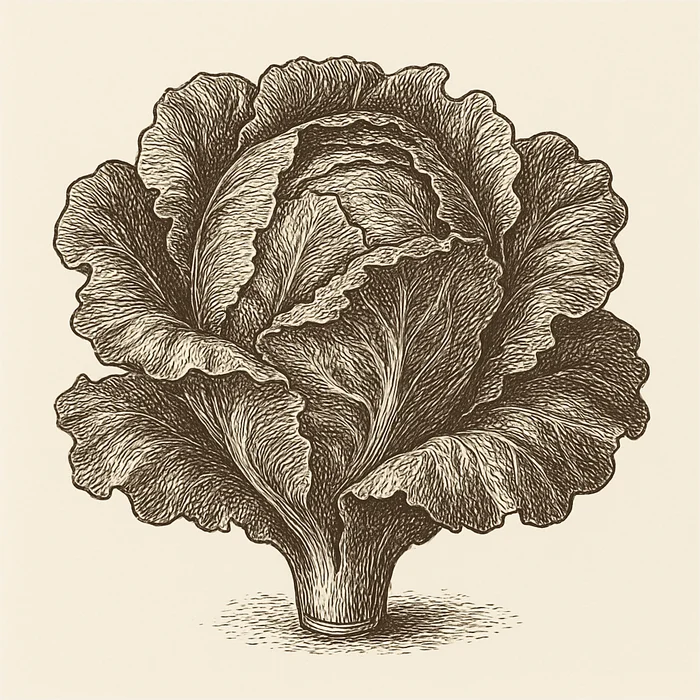
Lettuce
Salad base used throughout the Longevity Diet. Romaine is a source of folate (64 mcg per cup shredded, 16% DV). Recommended: 150–200 g per salad.
Why It Matters for Longevity
Lettuce is the daily foundation of Longevity Diet salads — providing folate essential for DNA methylation and repair, vitamin K for bone and vascular health, and lutein/zeaxanthin for cognitive and eye protection.
Morris et al. (2015) found that the MIND diet, which emphasizes green leafy vegetables as a primary component, was associated with substantially slower cognitive decline — equivalent to being 7.5 years younger cognitively for the highest vs lowest intake group. The active compounds include phylloquinone (vitamin K1), lutein, folate, nitrate, and kaempferol.
Aune et al.'s 2017 meta-analysis of 95 prospective studies (142 publications) confirmed that higher vegetable intake is dose-dependently associated with reduced cardiovascular disease, cancer, and all-cause mortality — with each 100g/day increment associated with a 9% reduction in all-cause mortality risk.
The olive oil in the dressing is not optional — lutein, zeaxanthin, and vitamin K1 are fat-soluble, and without fat in the meal, absorption drops by up to 90%.
Dietary Nitrates and the NO Pathway
Lettuce — romaine in particular — is one of the primary dietary sources of inorganic nitrate, contributing 100–200 mg nitrate per 100g fresh weight. That figure matters because the nitrate-nitrite-nitric oxide (NO) pathway is a well-characterized cardiovascular mechanism: oral bacteria reduce nitrate to nitrite; in the acidic stomach environment, nitrite is further reduced to NO, the vasodilatory signaling molecule that relaxes smooth muscle and lowers blood pressure.
Lidder and Webb's 2013 review in the British Journal of Clinical Pharmacology (PMID 22882425) summarized the clinical evidence: dietary nitrate from green leafy vegetables reduces systolic and diastolic blood pressure, inhibits platelet aggregation, preserves endothelial function, and reduces arterial stiffness. Lettuce was identified alongside spinach and celery as the dominant contributors to nitrate intake in population diets — meaning that a daily romaine salad is a functionally relevant NO-pathway intervention, not just a source of micronutrients.
A 2024 review in Advances in Nutrition (Pinaffi-Langley et al., PMID 38008359) went further, arguing that plant-based dietary nitrate should be reclassified as conditionally essential for cardiovascular health. Meta-analyses and population-based studies consistently show an inverse association between vegetable nitrate intake and both blood pressure and cardiovascular disease outcomes. Critically, the source of nitrate determines the health effect: plant-source nitrate (from lettuce, beet, spinach) is consistently protective; nitrate from processed meats and drinking water is not, due to co-occurring nitrosamines and lack of accompanying antioxidants.
Folate, Homocysteine, and Cardiovascular Risk
Romaine delivers approximately 136 mcg folate per 100g — eaten raw, none of that is lost to heat. Folate's cardiovascular relevance runs through homocysteine: folate is the methyl donor for remethylating homocysteine back to methionine; when folate status is inadequate, homocysteine accumulates and damages endothelial cells.
A 2016 meta-analysis in the Journal of the American Heart Association (Li et al., PMID 27528407) analyzed 30 RCTs involving 82,334 participants and found that folate supplementation was associated with a 10% lower stroke risk (RR 0.90, 95% CI 0.84–0.96) and 4% lower overall cardiovascular disease risk. Effect sizes were larger in participants with lower baseline folate and in those without pre-existing cardiovascular disease — exactly the profile of a healthy adult eating a Longevity Diet. Food-source folate from lettuce operates through the same remethylation pathway; the RCT data quantify what adequate folate status is worth.
Lactucin: The Bitter Sesquiterpene Lactone
Romaine's mild bitterness — especially in outer leaves and the rib — comes from lactucin and lactucopicrin, sesquiterpene lactones in the guaianolide family. These compounds are not incidental flavor molecules; they have measurable pharmacological activity.
Wesołowska et al. (2006, Journal of Ethnopharmacology, PMID 16621374) tested lactucin, lactucopicrin, and 11β,13-dihydrolactucin in mice. At 15–30 mg/kg doses, the compounds showed analgesic efficacy comparable to ibuprofen at 30 mg/kg in hot-plate testing; at 30 mg/kg, lactucopicrin matched ibuprofen at twice the dose (60 mg/kg) in tail-flick testing. Lactucin and lactucopicrin also exhibited sedative activity in locomotor assays, consistent with the centuries-old use of lactucarium (dried lettuce latex) as a sleep aid. The concentrations in fresh lettuce are well below pharmacological doses, but the bitter sesquiterpene lactone content is real biochemistry, not folklore.
How to Use It
Pairs well with olive oil, lemon, kidney beans. Use as a vegetable in your daily meals according to the Longevity Diet guidelines. Dress salads with extra-virgin olive oil as a matter of nutritional principle, not just taste.
What to Pair It With
| Ingredient | Why | Tradition |
|---|---|---|
| olive oil | See synergies | The Longevity Diet |
| lemon | See synergies | The Longevity Diet |
| kidney beans | See synergies | The Longevity Diet |
| fennel | See synergies | culinary tradition |
| grapes | See synergies | culinary tradition |
| walnuts | See synergies | culinary tradition |
Synergies
- Olive Oil (synergy): Fat in olive oil dressing is essential for absorbing fat-soluble vitamin K, lutein, and zeaxanthin from lettuce — consuming lettuce without fat reduces absorption by up to 90%.
- Lemon (complement): Classic Longevity Diet dressing combination; lemon's vitamin C complements lettuce's folate, and acidity preserves freshness.
- Kidney Beans (complement): Longevity Diet salad pairing; lettuce provides volume and micronutrients while kidney beans contribute protein, fiber, and additional folate.
Flavor Profile
Taste: mild, slightly bitter (romaine), neutral (butterhead), crisp-watery. Aroma: fresh, green, neutral. Texture: crisp (romaine), tender (butterhead), crunchy. Category: salad green.
The Science
- Morris et al., 2015, Alzheimers Dement: MIND diet (emphasizing green leafy vegetables) was associated with substantially slower cognitive decline — equivalent to being 7.5 years younger for high vs low adherence.
- Aune et al., 2017, Int J Epidemiol: Meta-analysis of 95 studies: each 100g/day vegetable intake increment associated with 9% lower all-cause mortality risk; green leafy vegetables among the most protective.
- Lidder & Webb, 2013, Br J Clin Pharmacol: Review of dietary nitrate via the nitrate-nitrite-NO pathway — reduces blood pressure, inhibits platelet aggregation, preserves endothelial function; lettuce identified as a primary dietary nitrate source.
- Pinaffi-Langley et al., 2024, Adv Nutr: Argues plant-based dietary nitrate should be classified as conditionally essential for cardiovascular health; meta-analyses show consistent inverse association with blood pressure and CVD outcomes.
- Li et al., 2016, J Am Heart Assoc: Meta-analysis of 30 RCTs (82,334 participants) — folate associated with 10% lower stroke risk (RR 0.90) and 4% lower overall CVD risk; greater effects in folate-deficient individuals.
- Wesołowska et al., 2006, J Ethnopharmacol: Lettuce sesquiterpene lactones (lactucin, lactucopicrin) showed analgesic activity comparable to ibuprofen and sedative activity in locomotor assays in mice.
References
- Morris MC, Tangney CC, Wang Y, Sacks FM, Barnes LL, Bennett DA, Aggarwal NT. MIND diet slows cognitive decline with aging. Alzheimers Dement. 2015;11(9):1015-22. PMID: 26086182. doi:10.1016/j.jalz.2015.04.011
- Aune D, Giovannucci E, Boffetta P, et al. Fruit and vegetable intake and the risk of cardiovascular disease, total cancer and all-cause mortality — a systematic review and dose-response meta-analysis of prospective studies. Int J Epidemiol. 2017;46(3):1029-1056. PMID: 28338764. doi:10.1093/ije/dyw319
- Lidder S, Webb AJ. Vascular effects of dietary nitrate (as found in green leafy vegetables and beetroot) via the nitrate-nitrite-nitric oxide pathway. Br J Clin Pharmacol. 2013;75(3):677-696. PMID: 22882425. doi:10.1111/j.1365-2125.2012.04420.x
- Pinaffi-Langley AC, Dajani RM, Prater MC, et al. Dietary Nitrate from Plant Foods: A Conditionally Essential Nutrient for Cardiovascular Health. Adv Nutr. 2024;15(1):100158. PMID: 38008359. doi:10.1016/j.advnut.2023.100158
- Li Y, Huang T, Zheng Y, Muka T, Troup J, Hu FB. Folic Acid Supplementation and the Risk of Cardiovascular Diseases: A Meta-Analysis of Randomized Controlled Trials. J Am Heart Assoc. 2016;5(8):e003768. PMID: 27528407. doi:10.1161/JAHA.116.003768
- Wesołowska A, Nikiforuk A, Michalska K, Kisiel W, Chojnacka-Wójcik E. Analgesic and sedative activities of lactucin and some lactucin-like guaianolides in mice. J Ethnopharmacol. 2006;107(2):254-258. PMID: 16621374. doi:10.1016/j.jep.2006.03.003
Key Nutrients
| Nutrient | Per 100g | Notes |
|---|---|---|
| Folate | ~136 mcg (romaine) | Water-soluble and heat-sensitive; eating lettuce raw preserves full folate content |
| Vitamin K | ~102 mcg (romaine) | Fat-soluble; absorption significantly enhanced by consuming with olive oil dressing |
| Lutein + Zeaxanthin | ~1.7 mg (romaine) | Carotenoids requiring fat for absorption; olive oil dressing is essential for uptake |
| Dietary nitrates | ~100–200 mg | Converted to nitric oxide by oral bacteria and gastric acid; improves vascular function |
| Vitamin C | ~4 mg (romaine) | Modest source; synergizes with lemon juice in salad dressings |
| Lactucin / Lactucopicrin | Trace (outer leaves, rib) | Sesquiterpene lactones responsible for bitter taste; analgesic and sedative activity demonstrated in animal models |