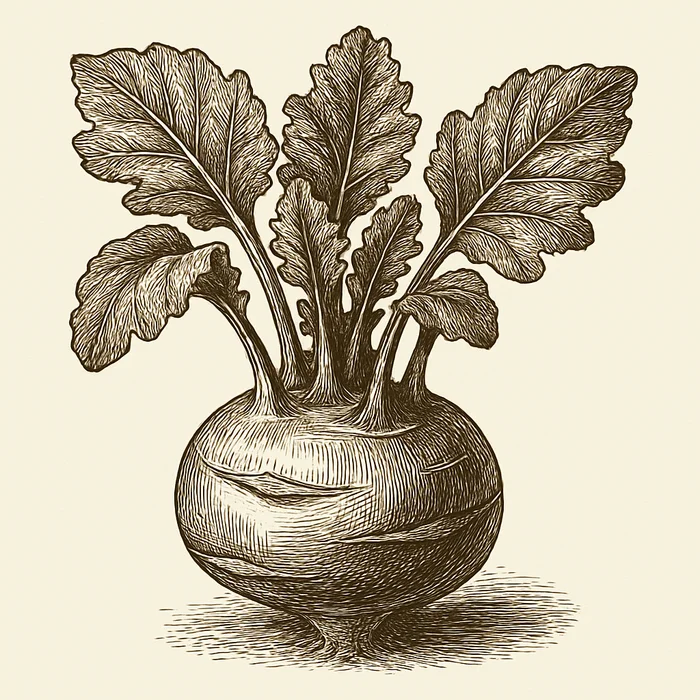
Kohlrabi
Kohlrabi (Brassica oleracea var. gongylodes) is the odd-looking swollen-stem member of the cabbage family, sometimes called German turnip or turnip cabbage -- though it is neither a turnip nor a root vegetable. The edible bulb is actually a swollen stem that grows above ground, and both it and its leaves are fully edible. Crunchy and mildly sweet when raw, tender and subtly nutty when cooked, kohlrabi occupies a useful middle ground: the crispness of a radish, the substance of a broccoli stem, the versatility of a turnip -- without the bitterness of any of them.
Why It Matters for Longevity
Kohlrabi earns its place in a longevity pantry through three well-documented mechanisms: glucosinolate-mediated cancer prevention, cardiovascular and all-cause mortality reduction from cruciferous vegetable intake, and a robust vitamin C and fibre profile that supports immune resilience and gut health.
Cancer prevention via glucosinolates. Like all Brassica vegetables, kohlrabi contains glucosinolates (principally sinigrin and gluconapin) that are hydrolysed by the enzyme myrosinase -- activated by chewing or chopping -- into bioactive isothiocyanates. These compounds activate the Nrf2 antioxidant response pathway and have demonstrated chemopreventive activity across multiple cancer models. A comprehensive review of Brassica kale chemistry and bioactivity confirmed that cruciferous glucosinolate hydrolysis products modulate detoxification enzymes and inflammatory signaling pathways relevant to cancer prevention (Šamec et al., 2019, Crit Rev Food Sci Nutr).
All-cause and cardiovascular mortality. Cruciferous vegetable intake is inversely associated with subclinical atherosclerosis in epidemiological studies; in a cohort of older women, each 10 g/day increase in cruciferous vegetable intake was associated with approximately 0.8% less carotid intima-media thickness -- a direct arterial aging marker (Blekkenhorst et al., 2018, J Am Heart Assoc).
Vitamin C and healthy ageing. Kohlrabi provides approximately 62 mg of vitamin C per 100 g raw -- about 69% of the RDA in a single 100 g serving. Vitamin C supports collagen synthesis, immune defence, and the attenuation of oxidative stress, all of which are mechanisms directly linked to healthy ageing.
Gut health and metabolic regulation. At 3.6 g dietary fibre per 100 g, kohlrabi contributes inulin-type fructans that feed beneficial gut bacteria and support short-chain fatty acid production. This pathway is associated with reduced systemic inflammation and improved metabolic health -- both key longevity levers.
Cancer prevention: dose-response evidence. A 2024 systematic review and dose-response meta-analysis of 226 case-control and cohort studies (published in Nutrition Reviews) found that cruciferous vegetable intake was inversely associated with overall cancer risk (OR 0.77 in case-control studies; RR 0.96 in cohort studies). The analysis identified optimal protective intakes for specific cancer types: approximately 5.4 servings per week for colorectal and lung cancers, 5.5 for upper gastrointestinal and bladder cancers, and 7.4 for gynaecological cancers. Kohlrabi was explicitly cited in the list of cruciferous vegetables analysed. The meta-analysis also found that cohort participants monitored for 2–15 years showed a higher cancer risk ratio when cruciferous vegetable intake was limited, reinforcing the importance of habitual rather than sporadic consumption (Zheng et al., 2025, Nutr Rev).
Colorectal cancer specifically. An earlier meta-analysis of 35 observational studies (24 case-control + 11 prospective) found high cruciferous vegetable intake inversely associated with colorectal cancer risk (RR 0.82; 95% CI 0.75–0.90) -- an 18% relative risk reduction. Both colon and rectal subsites showed significant inverse associations (Wu et al., 2013, Ann Oncol).
Vitamin C and cardiovascular mortality. Kohlrabi's vitamin C content (62 mg/100 g, roughly 69% RDA) is directly relevant to cardiovascular longevity. A 2019 dose-response meta-analysis of 18 prospective studies (320,548 participants, 16,974 cardiovascular deaths) found that the highest versus lowest category of dietary vitamin C intake was associated with 21% lower cardiovascular mortality (RR 0.79; 95% CI 0.68–0.89). Each 50 mg/day increment in dietary vitamin C was associated with an 8% lower risk (RR 0.92; 95% CI 0.88–0.96). A single 90 g serving of raw kohlrabi delivers roughly 55 mg vitamin C, putting it squarely within the dose range where protective associations were observed (Jayedi et al., 2019, Public Health Nutr).
Glucosinolates and insulin resistance. A 2021 systematic review in Frontiers in Pharmacology on glucosinolates from cruciferous vegetables found that broccoli sprout supplementation providing 225 µmol sulforaphane -- the isothiocyanate structurally related to kohlrabi's iberin -- decreased fasting serum insulin and insulin resistance by 18.2% and 14.2%, respectively (p < 0.05). The review also confirmed a 13% lower risk of type 2 diabetes with high cruciferous vegetable intake across meta-analyses, with NRF2-mediated anti-inflammatory effects and upregulated glucose transporter expression as the proposed mechanisms (Connolly et al., 2021, Front Pharmacol).
How to Use It
Kohlrabi is remarkably forgiving in the kitchen, but the longevity case is strongest for raw or minimally cooked preparations. Myrosinase -- the enzyme that converts glucosinolates into their bioactive isothiocyanate forms -- is heat-sensitive. Cooking inactivates it, which means glucosinolates pass through to the colon largely unconverted unless you restore exogenous myrosinase (see the mustard seed synergy below).
Key preparation tip: When cooking kohlrabi (roasting, steaming, stir-frying), add a small amount of finely minced raw kohlrabi or raw mustard seed to the finished dish to restore myrosinase activity and maximise isothiocyanate yield.
Practical ideas:
- Raw: peel and slice into matchsticks for slaws, salads, or crudités with hummus
- Shaved thin on a mandoline with apple, lemon, and olive oil (Central European tradition)
- Roasted wedges at high heat with olive oil, salt, and herbs
- Miso-glazed: halved and roasted with white miso, mirin, and sesame (Japanese-fusion)
- Fermented as kimchi or sauerkraut -- kohlrabi is a traditional base for both
- Grated raw into grain bowls for crunch and fresh bite
Seasonality: Spring and autumn; available year-round in temperate climates.
What to Pair It With
| Ingredient | Why | Tradition |
|---|---|---|
| Apple | Sweet crunch complements kohlrabi's mild sweetness; classic slaw pairing | Central European |
| Lemon and olive oil | Brightens flavour; olive oil aids absorption of fat-soluble carotenoids in the leaves | Mediterranean |
| Miso | Umami depth balances kohlrabi's mild sweetness; fermented synergy | Japanese-fusion |
| Mustard seed | Provides exogenous myrosinase to restore glucosinolate conversion when kohlrabi is cooked | Modern culinary |
| Fermented foods (kimchi, sauerkraut) | Kohlrabi is a traditional fermentation base; fermentation increases glucosinolate product bioavailability and adds probiotic benefit | Korean / Eastern European |
Synergies
- Mustard seed (synergy): Heat inactivates myrosinase in kohlrabi, preventing glucosinolate-to-isothiocyanate conversion. Adding raw mustard seed (which is rich in exogenous myrosinase) to cooked kohlrabi restores this conversion, recovering the chemopreventive potential of an otherwise cooked dish.
- Olive oil (complement): Fat-soluble carotenoids in kohlrabi leaves (lutein, beta-carotene) are absorbed significantly better with dietary fat. Olive oil is the traditional Mediterranean pairing and the most bioavailability-efficient fat to use here.
- Fermented foods (synergy): Kohlrabi is a traditional base for kimchi and Eastern European ferments. Fermentation increases the bioavailability of glucosinolate breakdown products and adds probiotic benefit, creating a two-for-one gut-longevity effect aligned with current microbiome research.
Flavor Profile
Mildly sweet, subtly peppery, faintly nutty. Aroma is fresh, green, and mildly cruciferous. Texture is crisp and juicy when raw, tender when cooked.
The Science
- Šamec et al., 2019, Crit Rev Food Sci Nutr: Cruciferous glucosinolate hydrolysis products (isothiocyanates) activate Nrf2 antioxidant pathways and modulate detoxification enzymes; chemopreventive activity demonstrated across multiple cancer models.
- Blekkenhorst et al., 2018, J Am Heart Assoc: Cruciferous vegetable intake inversely associated with subclinical atherosclerosis (carotid intima-media thickness) in older women; each 10 g/day increase associated with ~0.8% less arterial thickening.
- Zheng et al., 2025, Nutr Rev: Dose-response meta-analysis of 226 studies -- cruciferous vegetable intake reduces cancer risk (OR 0.77 case-control; RR 0.96 cohort); optimal intakes 3–7.4 servings/week depending on cancer site; kohlrabi explicitly listed among analysed vegetables.
- Wu et al., 2013, Ann Oncol: Meta-analysis of 35 studies -- high cruciferous intake associated with 18% lower colorectal cancer risk (RR 0.82; 95% CI 0.75–0.90); significant for both colon and rectal subsites.
- Jayedi et al., 2019, Public Health Nutr: Dose-response meta-analysis (18 studies, 320,548 participants) -- highest vs lowest dietary vitamin C associated with 21% lower cardiovascular mortality (RR 0.79; 95% CI 0.68–0.89); each 50 mg/day increment → 8% lower risk; one 90 g serving kohlrabi delivers ~55 mg vitamin C.
- Connolly et al., 2021, Front Pharmacol: Systematic review of glucosinolates and chronic disease -- 13% lower T2D risk with high cruciferous intake; sulforaphane supplementation (225 µmol) reduced fasting insulin by 18.2% and insulin resistance by 14.2%; NRF2 + NF-κB pathway mechanisms confirmed.
References
- Šamec D, Urlić B, Salopek-Sondi B. Kale (Brassica oleracea var. acephala) as a superfood: Review of the scientific evidence behind the statement. Crit Rev Food Sci Nutr. 2019;59(15):2411-2422. PMID: 29557674. doi:10.1080/10408398.2018.1454400
- Blekkenhorst LC, Sim M, Bondonno CP, et al. Cruciferous and Total Vegetable Intakes Are Inversely Associated With Subclinical Atherosclerosis in Older Adult Women. J Am Heart Assoc. 2018;7(8):e008391. PMID: 29618474. doi:10.1161/JAHA.117.008391
- Zheng S, Yan J, Wang J, et al. Unveiling the Effects of Cruciferous Vegetable Intake on Different Cancers: A Systematic Review and Dose-Response Meta-analysis. Nutr Rev. 2025;83(3):e747-e761. PMID: 39348271. doi:10.1093/nutrit/nuae128
- Wu QJ, Yang Y, Vogtmann E, et al. Cruciferous vegetables intake and the risk of colorectal cancer: a meta-analysis of observational studies. Ann Oncol. 2013;24(4):1079-1087. PMID: 23211939. doi:10.1093/annonc/mds601
- Jayedi A, Rashidy-Pour A, Parohan M, Zargar MS, Shab-Bidar S. Dietary and circulating vitamin C, vitamin E, β-carotene and risk of total cardiovascular mortality: a systematic review and dose-response meta-analysis of prospective observational studies. Public Health Nutr. 2019;22(10):1872-1887. PMID: 30630552. doi:10.1017/S1368980018003439
- Connolly EL, Sim M, Travica N, et al. Glucosinolates From Cruciferous Vegetables and Their Potential Role in Chronic Disease: Investigating the Preclinical and Clinical Evidence. Front Pharmacol. 2021;12:767975. PMID: 34764875. doi:10.3389/fphar.2021.767975
Key Nutrients
| Nutrient | Per 100g | Notes |
|---|---|---|
| Vitamin C | 62 mg raw (~69% RDA) | Water-soluble; best preserved raw or lightly steamed. Degrades with prolonged heat. |
| Glucosinolates (sinigrin, gluconapin) | ~50-100 mg total | Converted to bioactive isothiocyanates by myrosinase on chewing/chopping. Heat destroys myrosinase -- eat raw or add raw mustard seed to cooked dishes. |
| Potassium | 350 mg | Supports blood pressure regulation and cardiovascular health; bioavailability high across all preparation methods. |
| Dietary fibre | 3.6 g | Inulin-type fructans feed beneficial gut bacteria, supporting short-chain fatty acid production, reduced inflammation, and metabolic health. |