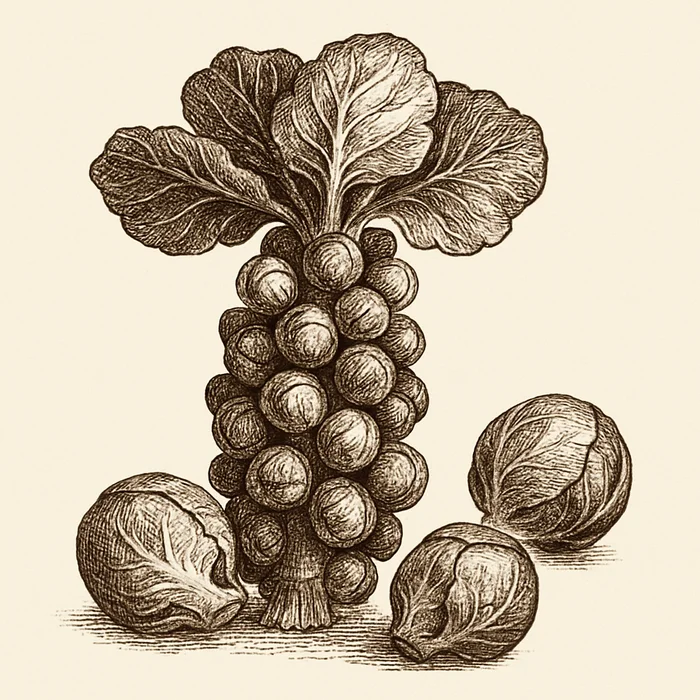
Brussels Sprouts
Brussels sprouts are featured as a Longevity Diet lunch dish (250g boiled, with garlic, pine nuts, and Parmesan). They provide folate (78 mcg per half-cup cooked), vitamin K, and one of the highest glucosinolate concentrations of any commonly eaten vegetable.
Why It Matters for Longevity
Brussels sprouts belong to the cruciferous family, where the cancer-preventive data is strongest. Their glucosinolates — particularly glucoraphanin and sinigrin — are converted to sulforaphane and allyl isothiocyanate by myrosinase when leaves are chopped or chewed.
Glucosinolates and Cancer Prevention: Epidemiological Evidence
A 2025 systematic review and dose-response meta-analysis synthesized data from 226 case-control and cohort studies on cruciferous vegetable intake and cancer risk. Cruciferous vegetables showed an odds ratio of 0.77 and a risk ratio of 0.96 across cancer types. The meta-analysis identified protective dose thresholds for specific cancers: colorectal and lung cancer (5.41 servings/week), upper gastrointestinal cancer (5.5 servings/week), bladder cancer (5.5 servings/week), renal cancer (4.85 servings/week), and prostate cancer (3 servings/week). These are realistic intake levels achievable with regular cruciferous consumption several times per week (Zheng et al., 2025, Nutr Rev).
A comprehensive review confirmed that cruciferous vegetables reduce cancer risk through epidemiological and mechanistic evidence: glucosinolate hydrolysis products inhibit carcinogen activation enzymes (phase I) and induce detoxification enzymes (phase II) including glutathione S-transferase and NQO1 (Higdon et al., 2007, Pharmacol Res).
Cruciferous vegetables including Brussels sprouts are associated with reduced cancer risk; regular consumption provides isothiocyanates and indole-3-carbinol that modulate estrogen metabolism, suppress tumor cell growth, and activate apoptotic pathways (Abdull Razis & Noor, 2013, Asian Pac J Cancer Prev).
Sulforaphane and the Keap1-Nrf2 Pathway
Sulforaphane (derived from glucoraphanin via myrosinase) is one of the most studied dietary activators of the Nrf2 (nuclear factor erythroid 2-related factor 2) pathway. Under basal conditions, Keap1 (Kelch-like ECH-associated protein 1) sequesters Nrf2 in the cytoplasm, targeting it for proteasomal degradation. Sulforaphane modifies specific cysteine residues on Keap1, disrupting this repressor function and allowing Nrf2 to translocate to the nucleus, where it activates the antioxidant response element (ARE) and drives transcription of phase II enzymes including NQO1, heme oxygenase-1 (HO-1), glutathione S-transferase, and thioredoxin reductase.
Clinical trials confirm this mechanism operates in humans. A 12-week placebo-controlled RCT in Qidong, China (n = 291) provided a broccoli sprout beverage containing 40 μmol sulforaphane and 600 μmol glucoraphanin daily. Urinary levels of benzene mercapturic acid — a biomarker of benzene detoxication — increased 61%, and acrolein mercapturic acid increased 23% in the intervention group, demonstrating that dietary sulforaphane activates carcinogen detoxication pathways at realistic doses in humans (Kensler et al., 2013, Top Curr Chem). Mechanistic evidence also indicates sulforaphane-driven Nrf2 pathway activation reaches saturation at approximately 40 g/day of mature Brussels sprouts, and sprouts from 3-day-old seedlings can contain 10–100 times the glucosinolate concentration of mature plants.
Sulforaphane's absolute oral bioavailability is approximately 82% — far higher than most polyphenol antioxidants, which typically show less than 10% systemic absorption. This makes the dose delivered from a standard serving of Brussels sprouts pharmacologically meaningful in circulating tissues (Houghton et al., 2016, Oxid Med Cell Longev).
Indole-3-Carbinol and Estrogen Metabolism
Brussels sprouts are among the three cruciferous vegetables — alongside cabbage and cauliflower — with the highest concentrations of glucobrassicin, the glucosinolate precursor to indole-3-carbinol (I3C). In the gut, I3C is converted to 3,3'-diindolylmethane (DIM), which shifts estrogen metabolism toward the 2-hydroxyestrone pathway and away from the more proliferative 16α-hydroxyestrone pathway. This shift is measurable in urine after several weeks of cruciferous intake and may partly explain the epidemiological association between cruciferous vegetables and reduced hormone-sensitive cancer risk.
Vitamin K1 and Vascular Calcification
Brussels sprouts provide approximately 140 mcg of vitamin K1 (phylloquinone) per 100 g cooked — more than the adult daily adequate intake of 90–120 mcg in a single serving. Vitamin K1 is required for the γ-carboxylation of glutamate residues on matrix Gla protein (MGP), a calcification inhibitor expressed by vascular smooth muscle cells. Uncarboxylated (inactive) MGP accumulates in arteries under conditions of vitamin K insufficiency and promotes calcium crystal deposition in vessel walls. Brussels sprouts' high vitamin K1 content contributes to maintaining adequate MGP carboxylation. A review of vitamin K-dependent proteins found that carboxylated MGP inhibits arterial calcification through multiple mechanisms: binding free calcium and hydroxyapatite crystals, blocking BMP-2 receptor signaling, and activating autophagic clearance of calcification foci (Wen et al., 2018, Mol Med Rep).
Individuals on vitamin K antagonist anticoagulants (warfarin) need to keep Brussels sprouts intake consistent rather than eliminate it, as sudden large increases can reduce anticoagulant efficacy.
Folate and DNA Methylation
Brussels sprouts provide 78 mcg folate per half-cup cooked — approximately 20% of the daily value. Folate is the dietary precursor to 5-methyltetrahydrofolate (5-MTHF), the methyl donor in the conversion of homocysteine to methionine and in the synthesis of S-adenosylmethionine (SAM), the universal methyl donor for DNA methylation reactions. Adequate folate status supports proper epigenetic regulation, DNA repair, and uracil incorporation prevention in DNA — mechanisms relevant to both cancer prevention and cellular aging.
Cooking Method and Glucosinolate Preservation
Cooking method critically affects bioactive yield. Light steaming preserves 80–90% of glucosinolates and myrosinase activity; boiling in large volumes of water leaches glucosinolates and inactivates myrosinase, reducing isothiocyanate production by 50–70%. Chopping or halving sprouts before cooking activates myrosinase and begins glucoraphanin hydrolysis before heat can inactivate the enzyme — a practical step that meaningfully increases sulforaphane yield from any cooking method. The gut microbiome can also convert glucoraphanin to sulforaphane via bacterial myrosinase-like enzymes, though at lower efficiency than food-matrix myrosinase.
Vegetable Intake and Mortality
Higher fruit and vegetable intake is associated with significantly lower all-cause mortality risk; each 200 g/day increment in vegetable intake is associated with approximately 8% lower mortality risk across prospective cohort studies (Aune et al., 2017, Int J Epidemiol).
How to Use It
Steam or roast rather than boil. Halving the sprouts and roasting at high heat (220°C) develops caramel sweetness while preserving glucosinolate integrity. The Longevity Diet serves them boiled and dressed with garlic, pine nuts, and Parmesan — the olive oil in the dressing enhances fat-soluble vitamin K absorption. Cut before cooking to activate myrosinase.
What to Pair It With
| Ingredient | Why | Tradition |
|---|---|---|
| Garlic | Allyl sulfides + isothiocyanates — complementary Nrf2 activators | The Longevity Diet |
| Olive oil | Fat-soluble vitamin K requires fat for absorption | Mediterranean |
| Pine nuts | Fat-soluble compound absorption; classic Longevity Diet preparation | Italian |
| Parmesan | Calcium + protein complement; classic Italian combination | Italian |
| Lemon | Acid brightens bitterness; vitamin C preserves folate | Mediterranean |
Flavor Profile
Mildly bitter with a sweet, nutty undertone — especially when roasted or halved and caramelised. Overcooked Brussels sprouts develop a sulphurous, acrid flavour from glucosinolate degradation products. Properly cooked, they are one of the sweetest cruciferous vegetables. The outer leaves char easily when roasted, adding complexity.
The Science
- Zheng et al., 2025, Nutr Rev: Systematic review and dose-response meta-analysis of 226 studies — cruciferous vegetable intake associated with OR 0.77 and RR 0.96 across cancer types; protective thresholds identified for colorectal, lung, bladder, renal, and prostate cancers.
- Kensler et al., 2013, Top Curr Chem: Clinical trial evidence — sulforaphane disrupts Keap1-Nrf2 interaction; 12-week RCT demonstrated 61% increase in urinary benzene detoxication biomarkers in broccoli sprout intervention group.
- Houghton et al., 2016, Oxid Med Cell Longev: Review — sulforaphane absolute oral bioavailability ~82%; 200g broccoli sprout homogenate (102 μmol sulforaphane) increased NQO1 mRNA expression by ~200% in airway tissue.
- Higdon et al., 2007, Pharmacol Res: Review of cruciferous vegetable cancer evidence — glucosinolate hydrolysis products activate Nrf2, induce phase II enzymes, and inhibit phase I carcinogen-activating enzymes.
- Abdull Razis & Noor, 2013, Asian Pac J Cancer Prev: Cruciferous vegetables associated with reduced cancer risk through isothiocyanate and indole-3-carbinol mechanisms.
- Wen et al., 2018, Mol Med Rep: Review — vitamin K-dependent MGP carboxylation inhibits vascular calcification; uncarboxylated MGP accumulates in arteries under vitamin K insufficiency.
- Aune et al., 2017, Int J Epidemiol: Systematic review — each 200 g/day increase in vegetable intake associated with 8% lower all-cause mortality risk.
References
- Zheng S, Yan J, Wang J, et al. Unveiling the effects of cruciferous vegetable intake on different cancers: a systematic review and dose-response meta-analysis. Nutr Rev. 2025;83(3):e537. PMID: 39348271. doi:10.1093/nutrit/nuae131
- Kensler TW, Egner PA, Agyeman AS, et al. Keap1-nrf2 signaling: a target for cancer prevention by sulforaphane. Top Curr Chem. 2013;329:163-177. PMID: 22752583. doi:10.1007/128_2012_339
- Houghton CA, Fassett RG, Coombes JS. Sulforaphane and other nutrigenomic Nrf2 activators: can the clinician's expectation be matched by the reality? Oxid Med Cell Longev. 2016;2016:7857186. PMID: 26881038. doi:10.1155/2016/7857186
- Higdon JV, Delage B, Williams DE, et al. Cruciferous vegetables and human cancer risk: epidemiologic evidence and mechanistic basis. Pharmacol Res. 2007;55(3):224-236. PMID: 17317210. doi:10.1016/j.phrs.2007.01.009
- Abdull Razis AF, Noor NM. Cruciferous vegetables: dietary phytochemicals for cancer prevention. Asian Pac J Cancer Prev. 2013;14(3):1565-1570. PMID: 23679237. doi:10.7314/APJCP.2013.14.3.1565
- Wen L, Chen J, Duan L, Li S. Vitamin K-dependent proteins involved in bone and cardiovascular health. Mol Med Rep. 2018;18(1):3-15. PMID: 29749440. doi:10.3892/mmr.2018.8940
- Aune D, Giovannucci E, Boffetta P, et al. Fruit and vegetable intake and the risk of cardiovascular disease, total cancer and all-cause mortality. Int J Epidemiol. 2017;46(3):1029-1056. PMID: 28338764. doi:10.1093/ije/dyw319
Key Nutrients
| Nutrient | Per 100g (cooked) | Notes |
|---|---|---|
| Folate (B9) | 78 mcg (half-cup) | ~20% DV; important for DNA methylation and cellular aging |
| Vitamin K1 | 140 mcg | Fat-soluble; requires olive oil or fat source for absorption; activates MGP to inhibit arterial calcification |
| Vitamin C | 54 mg | Reduced from 85mg raw; partial loss on cooking |
| Glucosinolates | 30-100 mg (fresh) | Activated by myrosinase on cell damage; heat-labile enzyme; sulforaphane has 82% oral bioavailability |