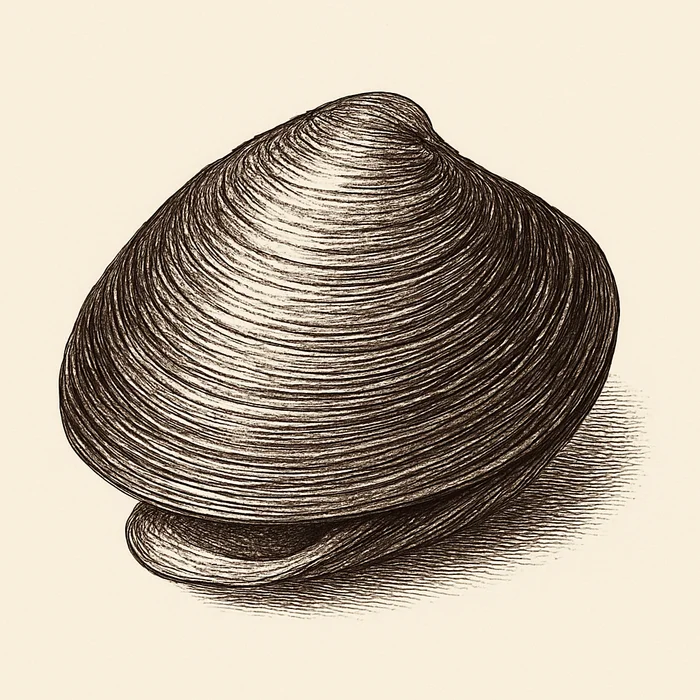
Clams
Clams deliver over 4,000% of the daily vitamin B12 requirement per 100g cooked -- the highest B12 concentration of any food -- alongside highly bioavailable heme iron, omega-3 EPA and DHA, selenium, and zinc, all in roughly 148 kcal.
Why It Matters for Longevity
Clams are the centerpiece of spaghetti alle vongole in the Longevity Diet, providing 2--3 shellfish servings per week as part of the recommended seafood pattern.
Vitamin B12 deficiency is common and under-recognised. B12 from animal foods -- especially bivalve mollusks -- is the most bioavailable dietary form, absorbed via intrinsic factor at physiological doses and passively at high doses. Watanabe et al. (2007, Exp Biol Med) confirmed that animal-sourced B12, particularly from shellfish, has the highest bioavailability of any dietary source, substantially exceeding plant-based pseudocobalamins.
The broader health case for shellfish consumption is supported by a comprehensive review of shellfish nutritional science (Venugopal et al., 2017, Compr Rev Food Sci Food Saf), which documented clams and mussels as exceptional sources of B12, heme iron, zinc, selenium, and omega-3 EPA/DHA -- with mercury burden well below that of large predatory fish. The cardioprotective benefits of seafood consumption, including shellfish, are well-established: a landmark review by Mozaffarian and Rimm (2006, JAMA) found that eating fish or shellfish 1--2 times per week reduces coronary heart disease mortality by approximately 36% and all-cause mortality by 17%.
Vitamin B12 and Brain Aging
Clams' exceptional B12 content is directly relevant to the neuroscience of aging. Serum B12 status declines with age -- roughly 10--15% of adults over 60 are deficient, and another 20--25% are in the low-normal range that impairs methylation. The pathway is well-mapped: B12 is a cofactor for methionine synthase, converting homocysteine to methionine. When B12 is insufficient, homocysteine accumulates, which is toxic to vascular endothelium and promotes cerebral white matter damage.
Smith et al. (2010, PLoS One) ran a 24-month randomised controlled trial in 271 adults over 70 with mild cognitive impairment, supplementing with folic acid (0.8 mg/day), B12 (0.5 mg/day), and B6 (20 mg/day). Among 168 completers who underwent serial MRI, the treatment group showed an annual brain atrophy rate of 0.76% versus 1.08% in placebo -- a 30% reduction overall. The effect was concentrated in the subgroup with elevated baseline homocysteine (>13 µmol/L), who experienced 53% slower atrophy with B vitamin treatment. This demonstrates that B12 sufficiency -- achievable through regular clam consumption -- is a modifiable factor in the trajectory of brain aging, operating via homocysteine lowering rather than direct neurotropic effects.
Free B12 in Canned Clam Broth
A detail worth noting for practical use: approximately 72% of the vitamin B12 in canned clam broth exists in free (unbound) form rather than protein-bound form. Ueta et al. (2011, J Agric Food Chem) confirmed that canned clam broth contains 2.7--14.1 µg B12 per 100 g and that the free B12 fraction is particularly valuable for elderly individuals with food-bound B12 malabsorption -- a condition caused by atrophic gastritis and reduced gastric acid secretion that affects roughly 30% of adults over 50. In this population, protein-bound B12 from meat and eggs cannot be cleaved by pepsin and is poorly absorbed; free B12 from clam broth, however, bypasses this step and is absorbed normally via intrinsic factor. The broth from steamed clams, often discarded or used only to sauce pasta, is therefore a genuinely functional ingredient for the age group most at risk of B12 deficiency.
Taurine: Clams as a Dietary Source
Clams are among the highest dietary sources of taurine, a conditionally essential sulfur-containing amino acid that is not incorporated into structural proteins but is present at high concentrations in cardiac muscle, skeletal muscle, and the central nervous system. Taurine modulates intracellular calcium handling, stabilises cell membranes, functions as an osmoregulator, and exerts anti-inflammatory effects via inhibition of hypochlorous acid generation.
A 2024 systematic review and meta-analysis of 20 randomised controlled trials (808 participants) by Tzang et al. (Nutr J) found that taurine supplementation produced a significant reduction in systolic blood pressure (−4.0 mmHg, 95% CI: −7.3 to −0.7, p=0.017), diastolic blood pressure (−1.4 mmHg, 95% CI: −2.5 to −0.4, p=0.007), and heart rate (−3.6 bpm, 95% CI: −6.0 to −1.1, p=0.004), and a significant increase in left ventricular ejection fraction (+4.98%, 95% CI: 1.56 to 8.41, p=0.004). These effects were observed without significant adverse events. The mechanism involves taurine's role in regulating Na+/K+-ATPase activity and attenuating β-adrenergic hypersensitivity, which together lower cardiac workload and improve systolic function. Regular clam consumption provides dietary taurine in a food matrix that simultaneously delivers B12, heme iron, selenium, and omega-3s -- a combination not replicated by any single supplement.
How to Use It
Steam clams in white wine, garlic, and extra-virgin olive oil -- this is spaghetti alle vongole. The steaming liquid (clam broth) contains water-soluble B vitamins and minerals; use it as part of the sauce. Canned clams retain most B12 and are a practical alternative. Two servings of shellfish per week is sufficient to maintain robust B12 status.
What to Pair It With
| Ingredient | Why | Tradition |
|---|---|---|
| Pasta | Carbohydrate base for complete meal; spaghetti alle vongole | Italian (The Longevity Diet) |
| Extra-virgin olive oil | Fat enhances absorption of fat-soluble vitamins A and E; reduces any pro-inflammatory effect | Mediterranean |
| Garlic | Allicin provides complementary cardiovascular benefit; flavor synergy | Italian |
| Parsley | Vitamin C enhances non-heme iron absorption from clam broth | Mediterranean |
| Lemon | Vitamin C enhances iron absorption; brightens the dish | Mediterranean |
| Mussels | Both Longevity Diet shellfish; diversifies minerals and trace elements | Mediterranean |
Flavor Profile
Briny, sweet, and oceanic with a pronounced umami depth. Aroma is clean and marine. Texture is tender and silky when cooked just until the shells open -- rubbery if overcooked. The broth is intensely flavoured and worth consuming.
The Science
- Watanabe et al., 2007, Exp Biol Med: Animal-sourced B12, particularly from bivalve mollusks, has the highest bioavailability of any dietary source; deficiency prevalent in vegetarians and older adults.
- Venugopal et al., 2017, Compr Rev Food Sci Food Saf: Comprehensive review of shellfish nutritional science -- clams among the richest sources of B12, heme iron, zinc, selenium, and omega-3 EPA/DHA; low mercury relative to large predatory fish.
- Mozaffarian and Rimm, 2006, JAMA: Fish and shellfish consumption 1--2 times per week associated with ~36% lower coronary heart disease mortality and ~17% lower all-cause mortality.
- Smith et al., 2010, PLoS One: RCT (n=271, 24 months) in adults with mild cognitive impairment -- B vitamin supplementation (including 0.5 mg B12/day) reduced annual brain atrophy rate from 1.08% to 0.76% (30% reduction); 53% reduction in the high-homocysteine subgroup.
- Ueta et al., 2011, J Agric Food Chem: Canned clam broth contains 2.7--14.1 µg B12 per 100 g, with ~72% in free (unbound) form -- directly absorbable by elderly individuals with food-bound B12 malabsorption due to atrophic gastritis.
- Tzang et al., 2024, Nutr J: Meta-analysis of 20 RCTs (808 participants) -- taurine supplementation reduced systolic BP by 4.0 mmHg, diastolic BP by 1.4 mmHg, heart rate by 3.6 bpm, and raised left ventricular ejection fraction by 4.98%; clams are a primary dietary taurine source.
References
- Watanabe F. Vitamin B12 sources and bioavailability. Exp Biol Med (Maywood). 2007;232(10):1266-1274. PMID: 17959839. doi:10.3181/0703-MR-67
- Venugopal V, Gopakumar K. Shellfish: Nutritive Value, Health Benefits, and Consumer Safety. Compr Rev Food Sci Food Saf. 2017;16(6):1219-1242. PMID: 33371588. doi:10.1111/1541-4337.12312
- Mozaffarian D, Rimm EB. Fish intake, contaminants, and human health: evaluating the risks and the benefits. JAMA. 2006;296(15):1885-1899. PMID: 17047219. doi:10.1001/jama.296.15.1885
- Smith AD, Smith SM, de Jager CA, et al. Homocysteine-lowering by B vitamins slows the rate of accelerated brain atrophy in mild cognitive impairment: a randomized controlled trial. PLoS One. 2010;5(9):e12244. PMID: 20838622. doi:10.1371/journal.pone.0012244
- Ueta K, Takenaka S, Yabuta Y, Watanabe F. Broth from canned clams is suitable for use as an excellent source of free vitamin B12. J Agric Food Chem. 2011;59(22):12054-12058. PMID: 22026331. doi:10.1021/jf2037104
- Tzang CC, Lin WC, Lin LH, et al. Insights into the cardiovascular benefits of taurine: a systematic review and meta-analysis. Nutr J. 2024;23(1):96. PMID: 39148075. doi:10.1186/s12937-024-00995-5
Key Nutrients
| Nutrient | Per 100g (cooked) | Notes |
|---|---|---|
| Vitamin B12 | 98.9 mcg (4,120% DV) | Highest B12 concentration of any food; absorbed via intrinsic factor; highly bioavailable methylcobalamin form |
| Iron (heme) | 13.98 mg (78% DV) | Heme iron absorbs at 20--30% vs ~5% for plant non-heme iron; not inhibited by phytate |
| Omega-3 (EPA + DHA) | ~0.4 g | Marine-sourced; superior bioavailability vs plant ALA; cardiovascular and neurological benefits |
| Selenium | 32 mcg (58% DV) | Selenomethionine form; ~90% bioavailable; glutathione peroxidase cofactor |
| Zinc | 2.1 mg | ~30--40% bioavailability from shellfish; immune function and DNA repair |
| Taurine | ~240 mg | High concentration; cardiovascular and osmoregulatory roles; absent from plant foods |