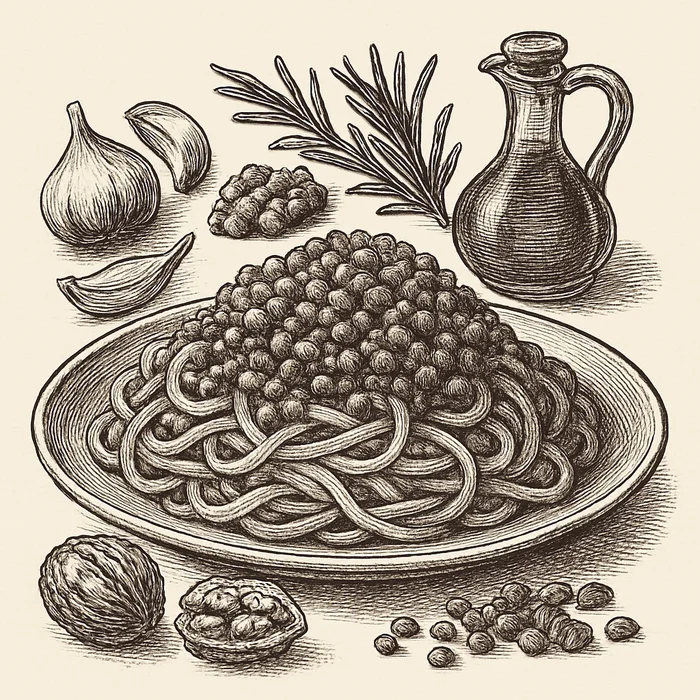
Lentil and Walnut Bolognese
A ragù built entirely from plants that actually tastes like ragù -- meaty, rich, slow-simmered -- while replacing every gram of red meat with ingredients linked to longer cardiovascular healthspan.
Why These Ingredients Together
This sauce stacks two distinct cholesterol-lowering mechanisms. Lentils deliver 8g of soluble fiber per 100g cooked, which physically blocks bile acid reabsorption in the small intestine, forcing the liver to pull LDL cholesterol from the blood to manufacture more. Walnuts attack from the other side: their 9g of alpha-linolenic acid (ALA) per 100g reduces triglycerides and inhibits platelet aggregation, while ellagitannins -- converted by gut bacteria into urolithins -- provide anti-inflammatory and anti-aging effects distinct from any fiber mechanism. The Nurses' Health Study found eating 5+ servings of walnuts per week was associated with 14% lower all-cause mortality. Meanwhile, the garlic contributes allicin (a potent vasodilator that lowers blood pressure by 7-16 mmHg systolic in hypertensive individuals), the lycopene in the tomatoes is a fat-soluble carotenoid whose absorption increases dramatically in the presence of olive oil, and rosemary's carnosic acid activates the Nrf2 antioxidant pathway -- the same defense system that protects neurons against oxidative damage in Alzheimer's models. By eliminating red meat, you also eliminate the carnitine and choline that gut bacteria convert into TMAO, a metabolite directly linked to arterial plaque formation.
Ingredients
- 1 cup (200g) brown or green lentils, rinsed
- 1 cup (100g) walnuts, pulsed in a food processor to a coarse rubble
- 3 tablespoons extra-virgin olive oil
- 1 large onion, finely diced
- 2 medium carrots, finely diced
- 2 stalks celery, finely diced
- 6 cloves garlic, minced and rested 10 minutes
- 2 tablespoons tomato paste
- 1 can (400g) crushed San Marzano tomatoes
- 2 sprigs fresh rosemary, leaves stripped and finely minced
- 1 cup (240ml) dry red wine or vegetable stock
- 1 1/2 cups (360ml) vegetable stock
- 1 teaspoon flaky sea salt, plus more to taste
- 1/2 teaspoon freshly ground black pepper
- 400g durum wheat pasta (rigatoni or pappardelle)
- Fresh basil, for finishing
Instructions
-
Prep the garlic first. Mince the garlic and spread it on the cutting board. Walk away for 10 minutes. (Crushing garlic activates alliinase, which converts alliin into allicin. This enzymatic reaction needs time at room temperature. Skip this step and you lose most of the organosulfur compounds responsible for garlic's cardiovascular benefits.)
-
Pulse the walnuts. Process in 3-4 short bursts until they resemble coarse breadcrumbs -- you want irregular pieces ranging from fine meal to pea-sized chunks. This mimics the textural variety of ground meat. Do not over-process into butter.
-
Build the soffritto. Heat the olive oil in a large, heavy-bottomed pot or Dutch oven over medium heat. Add the onion, carrots, and celery with a pinch of salt. Cook for 8-10 minutes, stirring occasionally, until the vegetables are soft and the onion is translucent. (This slow sweat extracts water-soluble flavor compounds without browning, creating the backbone of the sauce.)
-
Add the garlic and tomato paste. Stir in the rested garlic and tomato paste. Cook for 2 minutes, stirring constantly, until the paste darkens from bright red to a rusty brick color. (This is called pincer -- concentrating the tomato paste in direct contact with the hot pan caramelizes its sugars and develops deep umami.)
-
Deglaze and add the lentils. Pour in the wine (or stock) and scrape up any fond. Add the crushed tomatoes, vegetable stock, lentils, and minced rosemary. Bring to a boil, then reduce to a low simmer. Cover with the lid slightly ajar and cook for 30-35 minutes, stirring every 10 minutes, until the lentils are tender but still hold their shape.
-
Add the walnuts. Stir in the pulsed walnuts during the last 5 minutes of cooking. (Adding them late preserves their crunch and prevents the polyunsaturated ALA oils from oxidizing in prolonged heat, which would both damage the omega-3s and turn the walnuts bitter.)
-
Finish and serve. Cook the pasta in well-salted boiling water until 1 minute short of al dente. Reserve 1 cup of pasta water. Drain the pasta and add it directly to the sauce, tossing over medium heat for 1-2 minutes with splashes of pasta water until the starch creates a glossy, clingy coating. (The lycopene in the tomatoes is fat-soluble -- the olive oil in the sauce is doing active work dissolving it into a form your intestinal epithelial cells can absorb.) Finish with a generous drizzle of raw EVOO and torn basil.
What Can Go Wrong
-
Over-processing the walnuts. The line between coarse rubble and walnut butter is about two pulses. Use the pulse function, check after each burst, and stop when you see a mix of textures. Walnut paste will make the sauce greasy rather than meaty.
-
Overcooking the lentils. Brown and green lentils hold their shape much better than red lentils, but they will still turn to mush past 40 minutes. Start checking at 25 minutes. You want them tender with a slight bite, not collapsed.
-
Skipping the finishing EVOO. The olive oil you cook with loses most of its polyphenols to heat. The raw drizzle at the end is where the oleocanthal and hydroxytyrosol -- the compounds with measurable anti-inflammatory activity -- actually survive to reach your plate.
Science Notes
Red meat bolognese is a longevity problem for two specific reasons: the L-carnitine and choline in beef are converted by gut bacteria into trimethylamine N-oxide (TMAO), which accelerates atherosclerosis, and high-heat browning of muscle meat generates heterocyclic amines linked to colorectal cancer. This recipe eliminates both exposure pathways while building equivalent protein from lentils (which provide the lysine) and walnuts (which provide the methionine and tryptophan), yielding a complete amino acid profile without any animal-derived TMAO precursors. The WAHA trial found daily walnut consumption for two years significantly reduced LDL cholesterol in healthy elderly adults. Rosemary's carnosic acid further earns its place: research shows it reduces lipid oxidation in cooked foods, meaning it is not just flavoring the sauce but actively protecting the walnut and olive oils from oxidative degradation during cooking.
Nutrition Highlights
- Plant protein: ~22g per serving from the lentil-walnut combination, providing a complete amino acid profile when paired with durum wheat pasta
- ALA omega-3: ~2.3g per serving from walnuts, the richest common food source of plant-based omega-3
- Fiber: ~14g per serving from lentils, supporting butyrate-producing gut bacteria and LDL cholesterol clearance
- Lycopene: Cooked tomatoes provide 2-3x more bioavailable lycopene than raw, and the olive oil matrix further increases intestinal absorption by up to 4x