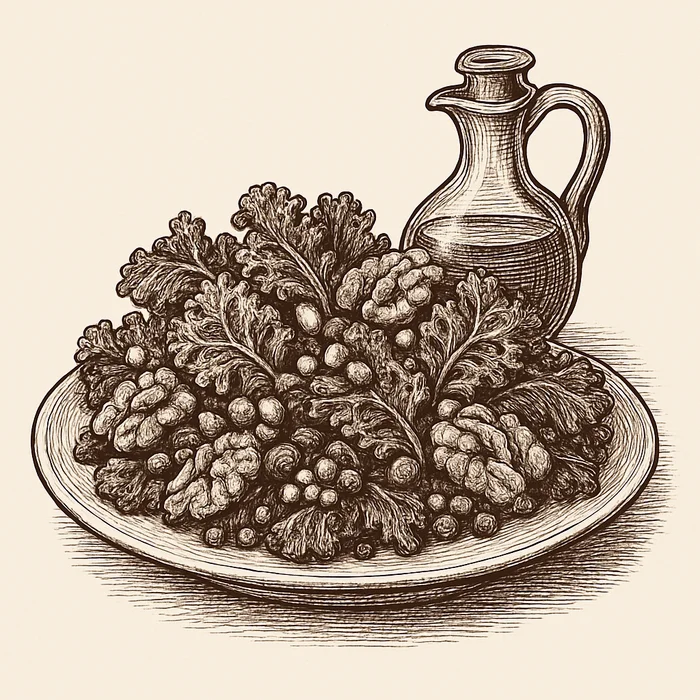
Kale Salad with Walnuts, Pomegranate and Olive Oil
A no-cook salad that stacks three distinct antioxidant families -- ALA omega-3s, punicalagins, and fat-soluble vitamin K -- with the fats required to actually absorb them.
Why These Ingredients Together
Kale is one of the richest food sources of vitamin K1 (phylloquinone), essential for both blood clotting and calcium metabolism in bones. But vitamin K is fat-soluble -- without co-ingested fat, most of it passes through you unused. The olive oil dressing is the functional delivery vehicle. Walnuts bring alpha-linolenic acid (ALA), a plant-based omega-3 that independently reduces LDL cholesterol and cardiovascular mortality, plus vitamin E and polyphenols that prevent LDL oxidation -- the critical step that turns circulating cholesterol into arterial plaque. Pomegranate seeds deliver punicalagins, ellagitannins with potent antioxidant activity that are metabolized by gut bacteria into urolithins -- compounds currently under active research for their anti-aging effects on mitochondrial function. The lemon dressing adds vitamin C, which protects the ALA from oxidation and enhances non-heme iron absorption from the kale.
Ingredients
- 200g lacinato (Tuscan) kale, stems removed, leaves thinly sliced
- 100g (about 3/4 cup) walnut halves, roughly chopped
- Seeds from 1 large pomegranate (about 150g arils)
- 1 small shallot, very thinly sliced into rings
- 4 tablespoons extra-virgin olive oil
- 2 tablespoons fresh lemon juice
- 1 teaspoon Dijon mustard
- 1/2 teaspoon honey (optional)
- 1/2 teaspoon flaky sea salt
- Freshly ground black pepper
Instructions
-
Massage the kale. Place the sliced kale in a large bowl. Sprinkle with the salt and use your hands to massage it firmly for 2-3 full minutes, squeezing and scrunching the leaves until they darken in color, reduce in volume by about half, and feel noticeably softer. (This is not optional. Raw kale is tough and waxy. The physical manipulation breaks down the cellulose cell walls and releases intracellular enzymes that soften the texture. Massaged kale also tastes significantly less bitter because you are rupturing the cells that store glucosinolates -- the same compounds that give broccoli its bite.)
-
Make the dressing. In a small jar or bowl, combine the olive oil, lemon juice, Dijon mustard, honey if using, and several grinds of black pepper. Whisk or shake vigorously until emulsified. (Building an emulsion ensures the oil coats every leaf evenly rather than pooling at the bottom. This matters for both flavor and for vitamin K absorption -- you want lipid contact with every bite of kale.)
-
Toast the walnuts lightly. Spread the walnut pieces in a dry skillet over medium-low heat and toast for 3-4 minutes, tossing occasionally, until fragrant and just barely golden. Remove from heat immediately. (Light toasting amplifies the nutty flavor without degrading the ALA omega-3 content. Walnuts burn fast once they start -- pull them early if in doubt.)
-
Combine and dress. Pour the dressing over the massaged kale and toss thoroughly with your hands or tongs. Let it sit for 5 minutes -- the acid in the dressing continues to tenderize the leaves. Add the toasted walnuts, pomegranate seeds, and shallot rings. Toss gently once more.
-
Serve immediately. This salad is best eaten within 30 minutes of dressing. The pomegranate seeds lose their burst and the walnuts lose their crunch if it sits too long.
What Can Go Wrong
-
Skipping the massage. Undressed, un-massaged kale tastes like chewing a houseplant. Two to three minutes of firm hand-massaging transforms both the texture and the flavor. If you skip this, nobody will want to eat your salad, and the longevity benefits become irrelevant.
-
Using pre-chopped supermarket kale. It is often curly kale, already partially dehydrated, and does not massage well. Lacinato (also called Tuscan, dinosaur, or cavolo nero) kale has a flatter, more tender leaf that responds beautifully to massaging and holds dressing better.
-
Overdressing. The kale looks like it can absorb a lot, but too much oil makes it heavy and slick. Start with the amount listed and add more only if the leaves feel dry after tossing.
Science Notes
This salad works because it concentrates three independent antioxidant and anti-inflammatory systems in a single raw preparation that preserves all heat-sensitive compounds. Walnuts are the only tree nut with substantial ALA omega-3 content (9g per 100g), and the Nurses' Health Study found that consuming 5+ servings per week was associated with 14% lower all-cause mortality and roughly 1.3 years of additional life expectancy. Pomegranate punicalagins are converted by gut bacteria into urolithin A, which in early clinical trials has shown the ability to improve mitochondrial function in aged muscle -- a direct mechanism for biological age reversal. The olive oil provides oleocanthal and hydroxytyrosol, both validated in the PREDIMED trial as contributors to the Mediterranean diet's cardiovascular benefits.
Nutrition Highlights
- Vitamin K1: ~500mcg per serving from kale (over 400% of the adequate intake), with absorption enhanced by the olive oil fat matrix
- ALA omega-3: ~2.5g per serving from walnuts, contributing to the plant-based omega-3 pool for cardiovascular protection
- Punicalagins: Significant dose from pomegranate arils, precursor to the anti-aging metabolite urolithin A
- Oleocanthal + hydroxytyrosol: From the EVOO dressing, providing ibuprofen-like anti-inflammatory activity and potent antioxidant protection