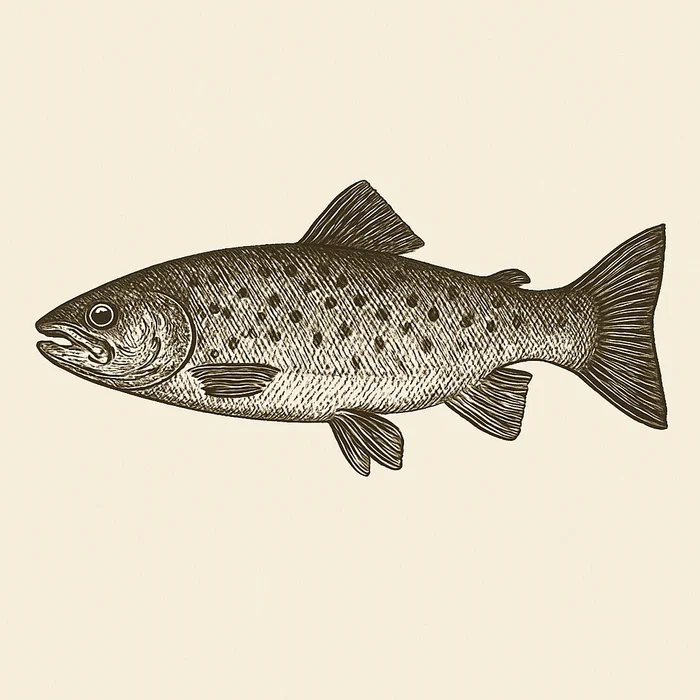
Trout
Trout is recommended as a high omega-3, vitamin B12, and vitamin D fish for the Longevity Diet — an oily freshwater fish with high EPA/DHA content and very low mercury levels.
Why It Matters for Longevity
Omega-3 content in context
Trout is one of the most nutrient-dense freshwater fish available: rich in vitamin D (635 IU/100g cooked), vitamin B12 (6.6 mcg/100g), EPA+DHA (1.15–2.0 g/100g depending on wild vs. farmed), and selenium (12.6 mcg/100g). That omega-3 payload places it squarely alongside — and in some preparations above — salmon, sardines, and mackerel. The comparison matters because many discussions of fatty fish focus on ocean species; trout demonstrates that a widely available, affordable freshwater fish can deliver equivalent cardiovascular benefit.
| Fish (100g cooked) | EPA+DHA (g) | Mercury (ppm mean) |
|---|---|---|
| Rainbow trout (farmed) | 1.15–2.0 | ~0.07 |
| Atlantic salmon (farmed) | 1.8–2.2 | ~0.05 |
| Sardines (canned in oil) | 1.4–1.8 | ~0.01 |
| Light tuna (canned) | 0.2–0.3 | ~0.13 |
| Albacore tuna | 0.7–0.9 | ~0.35 |
Sources: USDA FoodData Central; Karimi et al., 2012, Environ Health Perspect (mercury); FDA Advice About Eating Fish (2024).
The table makes two things plain. First, trout omega-3 is competitive with farmed salmon. Second, its mercury load (~0.07 ppm) is among the lowest of any commercially available fish — far below the 0.3 ppm EPA health criterion — a critical advantage for the elderly, pregnant women, and anyone eating fish multiple times per week.
EPA/DHA mechanisms and CVD mortality data
EPA and DHA are not simple anti-inflammatory supplements. They act through at least three mechanistic channels that matter directly for cardiovascular aging:
-
NF-κB inhibition. Both EPA and DHA suppress nuclear factor kappa B signaling, reducing transcription of pro-inflammatory cytokines (IL-6, TNF-α, CRP) that drive atherosclerotic plaque progression and arrhythmia risk.
-
Specialized pro-resolving mediators. EPA gives rise to E-series resolvins; DHA yields D-series resolvins and protectins. These lipid mediators do not merely dampen inflammation — they actively coordinate its resolution, clearing cellular debris and preventing the chronic smoldering inflammation that characterizes cardiovascular aging. Protectin D1 has been shown in animal models to protect cardiomyocytes under ischemic stress.
-
Membrane fluidity and ion channel function. DHA incorporation into cardiomyocyte membranes reduces ventricular arrhythmia susceptibility by modulating sodium and calcium channel gating, contributing to lower sudden cardiac death rates in populations with high EPA+DHA status.
The clinical evidence is substantial. A 2021 meta-analysis by Khan et al. covering 38 RCTs and 149,051 participants found that omega-3 supplementation reduced cardiovascular mortality by 7%, non-fatal myocardial infarction by 13%, and coronary heart disease events by 9% (Khan et al., 2021, EClinicalMedicine). Critically for whole-food consumption, these benefits were dose-dependent — the reductions were most robust at intakes achievable through regular fish meals (1–2 g EPA+DHA/day), not only pharmacological doses. A 100g serving of trout delivers the lower bound of that range in a single meal.
Mozaffarian & Rimm's landmark 2006 JAMA review confirmed that the benefits of EPA and DHA from fish consumption substantially exceed contaminant risks for low-mercury species; for trout specifically, the risk-benefit calculus is unambiguously favorable (Mozaffarian & Rimm, 2006, JAMA).
Cognitive and dementia protection
Brain gray matter is approximately 20% DHA by dry weight. Depletion of DHA with age — a well-documented phenomenon driven by inadequate dietary intake combined with declining hepatic synthesis — correlates with accelerated cognitive aging, smaller hippocampal volume, and elevated dementia risk. Regular fatty fish consumption replenishes brain DHA more efficiently than supplementation alone because the intact food matrix provides phospholipid-form DHA, which crosses the blood-brain barrier more readily than triglyceride-form EPA+DHA in most supplements.
A 2022 dose-response meta-analysis by Kosti et al. (n = multiple cohorts, systematic review of observational and experimental studies) found that fish intake of up to two portions per week (approximately 250g) was associated with a 10% reduction in all-cause dementia risk and a 30% reduction in Alzheimer's disease risk (Kosti et al., 2022, Nutr Rev). The association plateaued beyond two portions per week — suggesting that trout two to three times per week is close to the optimal dose range. Notably, EPA and DHA body status specifically improved executive function, which is the cognitive domain most sensitive to early neurodegenerative change.
Lund's 2013 review in Food Chemistry adds a parallel argument: trout's combined selenium and B12 load is relevant because both are required cofactors for methionine cycle enzymes, and B12 depletion with age is independently linked to brain atrophy and elevated homocysteine — a modifiable dementia risk factor (Lund, 2013, Food Chem).
Muscle preservation and sarcopenia
After age 50, adults lose approximately 1–2% of skeletal muscle mass per year in the absence of counteracting nutrition and exercise. This sarcopenia trajectory determines walking speed, grip strength, fall risk, metabolic rate, and ultimately independence. Fish is unusual among protein sources in that it delivers both a structural anti-sarcopenic benefit (high leucine content, fast-digesting complete protein) and a hormonal/mechanistic one (omega-3 fatty acids sensitize muscle protein synthesis by enhancing the mTORC1 pathway's response to amino acids).
Rondanelli et al.'s 2020 review in Nutrients compiled evidence that fish consumption has a "protective and anti-inflammatory function on skeletal muscle" and recommends at least three servings per week for elderly individuals to achieve minimum protective omega-3 intakes (Rondanelli et al., 2020, Nutrients). An intervention study by Alhussain and ALshammari found that consuming 150–170g of fish twice weekly for 10 weeks significantly increased skeletal muscle mass, appendicular lean mass, handgrip strength, and gait speed in adults aged 50–85 (Alhussain & ALshammari, 2021, Front Nutr). Trout's protein quality (PDCAAS near 1.0) and leucine content (~1.9g/100g) make it as effective a muscle stimulus as any other animal protein source.
Mercury safety context
The mercury concern with fish consumption is legitimate but highly species-specific. Large predatory ocean fish — shark, swordfish, king mackerel, tilefish — bioaccumulate methylmercury through long food chains and long lifespans. Rainbow trout sits at the opposite end of that spectrum: short-lived (2–3 years at market weight), occupying a relatively low trophic position, and raised predominantly in clean-water aquaculture.
Karimi et al.'s 2012 quantitative synthesis of mercury in commercial seafood found farmed rainbow trout to have some of the lowest mercury concentrations among commercially sold fish, well below the FDA's 0.3 ppm action threshold (Karimi et al., 2012, Environ Health Perspect). The FDA's current "Best Choices" guidance (2024) explicitly lists trout — both farmed and wild — in the safest category, alongside sardines and salmon, recommending 2–3 servings per week for adults and pregnant women. This is the context in which trout's omega-3 benefit should be understood: the mechanism is potent, the contaminant risk is negligible, and the frequency of consumption can be high without toxicological concern.
How to Use It
Pairs well with almonds, lemon, capers. Bake or pan-sear whole or as fillets. The skin crisps well and contains fat-soluble nutrients. Trout meunière (pan-fried with brown butter and almonds) is the classic preparation.
What to Pair It With
| Ingredient | Why | Tradition |
|---|---|---|
| almonds | See synergies | culinary tradition |
| lemon | See synergies | culinary tradition |
| capers | See synergies | culinary tradition |
| dill | See synergies | culinary tradition |
| olive oil | See synergies | culinary tradition |
Synergies
- Almonds (complement): Classic French pairing; almonds' vitamin E complements trout's omega-3s for combined anti-inflammatory effect.
- Salmon (complement): Rotating between trout and salmon diversifies omega-3 sources and micronutrient profiles while maintaining low mercury intake.
- Lemon (complement): Vitamin C aids absorption of trout's non-heme iron; brightens flavor.
Flavor Profile
Taste: mild, slightly nutty, clean, delicate. Aroma: fresh water fish, mild oceanic, neutral. Texture: flaky, tender, moist, fine-grained flesh. Category: oily freshwater fish.
The Science
- Mozaffarian & Rimm, 2006, JAMA: Benefits of EPA and DHA consumption substantially outweigh methylmercury risks for low-mercury fish species; trout is consistently in the safest category.
- Lund, 2013, Food Chem: Seafood's health benefits extend well beyond fatty acids to include vitamin D, selenium, B12, and iodine — the full micronutrient package that trout delivers.
- Khan et al., 2021, EClinicalMedicine: Meta-analysis of 38 RCTs (149,051 participants) — omega-3 supplementation reduced cardiovascular mortality 7%, non-fatal MI 13%, and coronary heart disease events 9%.
- Kosti et al., 2022, Nutr Rev: Dose-response meta-analysis — two portions of fish per week associated with 10% lower all-cause dementia risk and 30% lower Alzheimer's disease risk; EPA/DHA body status specifically improved executive function.
- Rondanelli et al., 2020, Nutrients: Review establishing fish consumption as protective against sarcopenia via omega-3, high-quality protein, vitamin D, and magnesium; three servings/week recommended for elderly.
- Alhussain & ALshammari, 2021, Front Nutr: Ten-week intervention in adults 50–85 — fish twice weekly significantly increased skeletal muscle mass, handgrip strength, and gait speed vs. baseline.
- Karimi et al., 2012, Environ Health Perspect: Quantitative synthesis of mercury in commercial seafood — farmed rainbow trout among the lowest-mercury fish available; well below FDA's 0.3 ppm health criterion.
References
- Mozaffarian D, Rimm EB. Fish intake, contaminants, and human health: evaluating the risks and the benefits. JAMA. 2006;296(15):1885-99. PMID: 17047219. doi:10.1001/jama.296.15.1885
- Lund EK. Health benefits of seafood; is it just the fatty acids? Food Chem. 2013;140(3):413-420. PMID: 23601384. doi:10.1016/j.foodchem.2013.03.062
- Khan SU, Lone AN, Khan MS, et al. Effect of omega-3 fatty acids on cardiovascular outcomes: A systematic review and meta-analysis. EClinicalMedicine. 2021;38:100997. PMID: 34505026. doi:10.1016/j.eclinm.2021.100997
- Kosti RI, Kasdagli MI, Kyrozis A, et al. Fish intake, n-3 fatty acid body status, and risk of cognitive decline: a systematic review and a dose-response meta-analysis of observational and experimental studies. Nutr Rev. 2022;80(4):929-946. PMID: 34605891. doi:10.1093/nutrit/nuab078
- Rondanelli M, Cereda E, Klersy C, et al. Novel Insights on Intake of Fish and Prevention of Sarcopenia: All Reasons for an Adequate Consumption. Nutrients. 2020;12(2):307. PMID: 31991560. doi:10.3390/nu12020307
- Alhussain MH, ALshammari MM. Association Between Fish Consumption and Muscle Mass and Function in Middle-Age and Older Adults. Front Nutr. 2021;8:746880. PMID: 34966766. doi:10.3389/fnut.2021.746880
- Karimi R, Fitzgerald TP, Fisher NS. A quantitative synthesis of mercury in commercial seafood and implications for exposure in the United States. Environ Health Perspect. 2012;120(11):1512-9. PMID: 22732656. doi:10.1289/ehp.1205122
Key Nutrients
| Nutrient | Per 100g | Notes |
|---|---|---|
| Vitamin D | 635 IU (farmed rainbow, cooked) | Exceptionally high natural vitamin D3; fat in fish significantly aids absorption |
| EPA + DHA (omega-3) | 1.15–2.0 g (cooked) | Highly bioavailable marine long-chain omega-3s; range reflects wild vs. farmed |
| Vitamin B12 | 6.6 mcg (cooked) | Animal-sourced; nearly 100% bioavailability |
| Selenium | 12.6 mcg (cooked) | Organic selenocysteine; supports glutathione peroxidase and antioxidant function |
| Potassium | 481 mg (cooked) | Supports cardiovascular health and blood pressure regulation |
| Leucine | ~1.9 g (cooked) | Key mTORC1-activating amino acid for muscle protein synthesis |