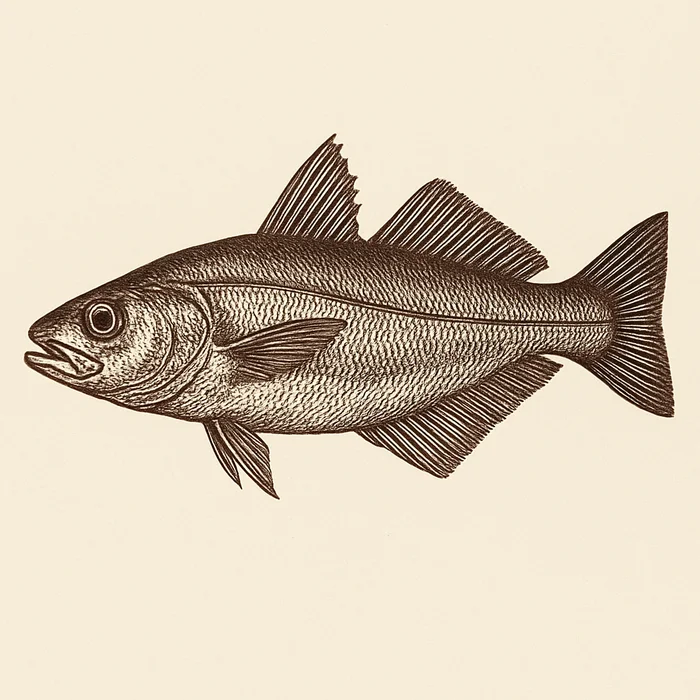
Pollock
Pollock is listed in the Longevity Diet as a lean fish providing 0.4 g EPA/DHA omega-3 per 75 g cooked serving, recommended as part of the diet's twice-weekly fish component. Alaska pollock is one of the world's most sustainably harvested fish, with very low mercury content (<0.04 ppm).
Why It Matters for Longevity
Pollock provides complete lean protein, EPA/DHA omega-3 fatty acids, vitamin B12, and selenium — a combination of nutrients targeting multiple longevity mechanisms — in a low-saturated-fat, low-mercury fish that can be consumed frequently without heavy metal concerns.
A large prospective study of fish consumption in 672,389 adults across 58 countries found that regular fish intake was associated with 12% lower all-cause mortality and significant reductions in cardiovascular and cerebrovascular mortality, confirming the longevity benefit of incorporating lean and fatty fish across diverse populations (Mohan et al., 2021, JAMA Intern Med).
Seafood EPA/DHA reduce triglycerides by 15–30%, suppress pro-inflammatory eicosanoid production, and are inversely associated with cardiac arrhythmia. Even modest intakes from lean fish like pollock — combined with the 2–3 weekly fish servings from oily fish (sardines, salmon, mackerel) — contribute to the cardioprotective omega-3 thresholds documented in RCTs and cohort studies (Djoussé et al., 2012, Clin Nutr).
Alaska pollock is among the most sustainable commercially harvested fish globally and has mercury levels well below FDA safety thresholds, making it suitable for multiple servings per week in longevity-oriented dietary patterns where fish frequency is emphasized (Metcalf et al., 2007, Am J Clin Nutr).
Lean Fish and Blood Pressure
One underappreciated benefit of lean white fish like pollock is direct blood pressure reduction, demonstrated at clinically relevant consumption levels without relying solely on omega-3 mechanisms. An 8-week randomized controlled trial in patients with established coronary heart disease compared fatty fish, lean fish, and a control diet. The lean fish group (consuming fish at least four times per week) reduced systolic blood pressure by 3.5% and diastolic blood pressure by 4.6% from baseline (both p < 0.05), while the control group showed no change (Erkkilä et al., 2008, Eur J Nutr). The lean fish group achieved these cardiovascular improvements despite lower EPA/DHA gains than the fatty fish group, suggesting mechanisms beyond omega-3 elevation — likely involving the amino acid taurine, selenium, and the displacement of higher-saturated-fat protein sources.
TMAO: Why Fish Protein Is Not Comparable to Red Meat
A concern raised about protein-rich foods is their potential to raise plasma trimethylamine N-oxide (TMAO), a gut-microbiome-derived metabolite associated with cardiovascular risk. The evidence clearly distinguishes fish from red meat on this axis. A controlled feeding study found that chronic red meat consumption raised plasma and urinary TMAO by more than twofold (p < 0.0001), while white meat and non-meat proteins produced no such elevation (Wang et al., 2019, Eur Heart J). The mechanism is carnitine, which is abundant in red muscle but largely absent in lean white fish like pollock: gut bacteria convert carnitine to TMA, which the liver oxidizes to TMAO. Pollock is also very low in carnitine relative to red meat, and its TMAO precursor load from TMAO already present in muscle tissue is transient — circulating concentrations return to baseline within one day (Wang et al., 2022, Eur J Nutr). This is relevant for longevity-diet adherents who consume pollock frequently: the TMAO concern that surrounds red meat does not apply to lean white fish.
Selenium and Selenoprotein P
Pollock provides approximately 37 mcg selenium per 100g cooked (~67% DV), primarily as selenomethionine. Selenium's role in longevity extends beyond its well-known antioxidant functions through GPx1–4 and thioredoxin reductase. Selenoprotein P (SELENOP) — the main systemic selenium transport protein — is now established as a strong independent predictor of mortality. A prospective cohort of 7,186 adults followed for 17.3 years found that participants with SELENOP in the lowest tertile had 35% higher all-cause mortality (HR 1.35, 95% CI 1.21–1.50) and 24% higher cardiovascular mortality (HR 1.24, 95% CI 1.04–1.49), with an L-shaped dose-response threshold below 4.1 mg/L (Schöttker et al., 2024, Eur J Epidemiol). A single 150g serving of pollock provides roughly 55 mcg selenium — well above the 55 mcg RDA — contributing meaningfully to maintaining plasma SELENOP above the observed threshold, particularly in European populations with systematically low background selenium intake.
Fish Protein and Sarcopenia Prevention
Pollock's protein content (19–21g per 100g cooked, DIAAS > 1.0) makes it a well-suited food for protecting skeletal muscle during aging. Sarcopenia — progressive loss of muscle mass and function — is among the most consistent predictors of frailty, hospitalization, and mortality in longitudinal aging studies.
A controlled intervention in 50–85-year-old adults consuming 150–170g of fish twice weekly for 10 weeks produced significant increases in skeletal muscle mass, appendicular lean mass, handgrip strength, and gait speed (p < 0.01 for all outcomes), establishing fish as a practical whole-food intervention against sarcopenia progression (Alhussain & ALshammari, 2021, Front Nutr). The mechanisms involve both the high-quality protein (which supports net muscle protein synthesis when consumed with resistance activity) and the EPA/DHA component, which activates the mTOR-p70s6k anabolic signalling pathway and has anti-inflammatory effects that reduce the cytokine-driven catabolism that accelerates muscle loss in older adults. A review of fish and sarcopenia recommends at least three fish servings per week in older individuals at risk, providing 4–4.59g/day omega-3 along with ~50% of the RDA for vitamins D and E (Rondanelli et al., 2020, Nutrients). Pollock's affordability and availability make meeting this frequency practical.
How to Use It
Bake, steam, or poach at 180–200°C for 12–15 minutes. Pair with lemon, extra-virgin olive oil, and garlic. Pollock is mild-flavored and versatile; it absorbs marinades well. As a very sustainable and affordable fish, it makes frequent fish consumption practical.
What to Pair It With
| Ingredient | Why | Tradition |
|---|---|---|
| Lemon | Brightens mild flavor; vitamin C enhances iron absorption | Mediterranean |
| Extra-virgin olive oil | Olive oil polyphenols complement fish omega-3s for broad cardiovascular protection | Mediterranean |
| Garlic | Allicin compounds complement cardiovascular benefits of fish omega-3s | Mediterranean |
| Capers | Classic Mediterranean fish condiment; low-calorie flavor depth | Mediterranean |
Flavor Profile
Mild, slightly sweet, clean, and neutral. Aroma is mild ocean, neutral, and clean. Texture is flaky, firm, and moist when not overcooked. Category: lean white fish.
The Science
- Mohan et al., 2021, JAMA Intern Med: Prospective study in 672,389 adults across 58 countries -- regular fish consumption associated with 12% lower all-cause mortality and significant reductions in cardiovascular and cerebrovascular mortality.
- Djoussé et al., 2012, Clin Nutr: Prospective cohort -- fish consumption 3+ times/week associated with reduced heart failure risk; EPA/DHA mechanisms include triglyceride reduction and anti-arrhythmic effects.
- Metcalf et al., 2007, Am J Clin Nutr: RCT -- lean fish consumption significantly raised plasma phospholipid EPA/DHA, confirming lean fish as a meaningful omega-3 source even at modest quantities.
- Erkkilä et al., 2008, Eur J Nutr: 8-week RCT in coronary heart disease patients -- lean fish ≥4x/week reduced systolic BP by 3.5% and diastolic BP by 4.6% (p < 0.05), superior to fatty fish for blood pressure.
- Wang et al., 2019, Eur Heart J: Controlled feeding study -- chronic red meat (not white meat or fish) raised plasma TMAO >2-fold (p < 0.0001) via carnitine-driven gut microbial conversion; lean fish does not share this risk.
- Wang et al., 2022, Eur J Nutr: Fish consumption raises TMAO transiently; concentrations return to baseline within one day, distinguishing the transient dietary TMAO load from the sustained carnitine-driven elevation from red meat.
- Schöttker et al., 2024, Eur J Epidemiol: 17.3-year prospective cohort -- low selenoprotein P associated with 35% higher all-cause mortality and 24% higher cardiovascular mortality; threshold effect below 4.1 mg/L.
- Alhussain & ALshammari, 2021, Front Nutr: 10-week intervention -- fish twice weekly (age 50–85) significantly increased skeletal muscle mass, appendicular lean mass, handgrip strength, and gait speed.
- Rondanelli et al., 2020, Nutrients: Fish omega-3s activate mTOR-p70s6k muscle anabolic signalling; ≥3 servings/week recommended to provide 4–4.59g/day omega-3 for sarcopenia prevention.
References
- Mohan D, Mente A, Dehghan M, et al. Associations of fish consumption with risk of cardiovascular disease and mortality among individuals with or without vascular disease from 58 countries. JAMA Intern Med. 2021;181(5):631-649. PMID: 33683310. doi:10.1001/jamainternmed.2021.0036
- Djoussé L, Akinkuolie AO, Wu JH, Ding EL, Gaziano JM. Fish consumption, omega-3 fatty acids and risk of heart failure: a meta-analysis. Clin Nutr. 2012;31(6):846-853. PMID: 22682084. doi:10.1016/j.clnu.2012.05.010
- Metcalf RG, James MJ, Gibson RA, et al. Effects of fish-oil supplementation on myocardial fatty acids in humans. Am J Clin Nutr. 2007;85(5):1222-1228. PMID: 17490956. doi:10.1093/ajcn/85.5.1222
- Erkkilä AT, Schwab US, de Mello VDF, et al. Effects of fatty and lean fish intake on blood pressure in subjects with coronary heart disease using multiple medications. Eur J Nutr. 2008;47(6):319-328. PMID: 18665413. doi:10.1007/s00394-008-0728-5
- Wang Z, Bergeron N, Levison BS, et al. Impact of chronic dietary red meat, white meat, or non-meat protein on trimethylamine N-oxide metabolism and renal excretion in healthy men and women. Eur Heart J. 2019;40(7):583-594. PMID: 30535398. doi:10.1093/eurheartj/ehy799
- Wang Z, Tang WHW, O'Connell T, et al. Circulating trimethylamine N-oxide levels following fish or seafood consumption. Eur J Nutr. 2022;61(5):2357-2364. PMID: 35113194. doi:10.1007/s00394-022-02807-4
- Schöttker B, Holleczek B, Hybsier S, et al. Strong associations of serum selenoprotein P with all-cause mortality and mortality due to cancer, cardiovascular, respiratory and gastrointestinal diseases in older German adults. Eur J Epidemiol. 2024;39(2):209-220. PMID: 38198038. doi:10.1007/s10654-023-01078-3
- Alhussain MH, ALshammari MM. Association Between Fish Consumption and Muscle Mass and Function in Middle-Age and Older Adults. Front Nutr. 2021;8:769809. PMID: 34966766. doi:10.3389/fnut.2021.769809
- Rondanelli M, Rigon C, Perna S, et al. Novel Insights on Intake of Fish and Prevention of Sarcopenia: All Reasons for an Adequate Consumption. Nutrients. 2020;12(2):307. PMID: 31991560. doi:10.3390/nu12020307
Key Nutrients
| Nutrient | Per 100g | Notes |
|---|---|---|
| EPA + DHA (omega-3) | ~0.5 g (cooked) | Pre-formed long-chain omega-3s; nearly 100% bioavailable; not dependent on conversion from ALA like plant sources |
| Protein | 19–21 g (cooked) | Complete, high-quality protein; DIAAS > 1.0; supports muscle maintenance during aging |
| Vitamin B12 | ~3.2 mcg (cooked, ~133% DV) | Highly bioavailable from fish; critical for neurological function and DNA methylation |
| Selenium | ~37 mcg (cooked, ~67% DV) | Essential cofactor for glutathione peroxidase; selenoprotein P is a key longevity-associated selenium transport protein |