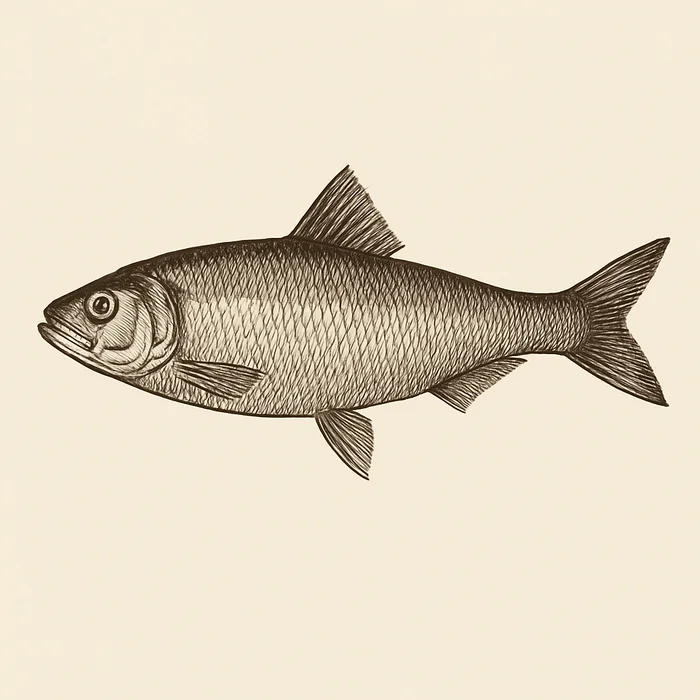
Herring
Rich source of vitamin B12 (7.2 mcg per 250 mL cooked or kippered, 120% DV), omega-3 fatty acids (1.6 g EPA/DHA per 75 g cooked), vitamin A (Atlantic pickled: 219 mcg RAE per 3 oz, 15% DV), and vitamin D (Atlantic cooked dry heat: 306 IU per fillet, 76.5% DV).
Why It Matters for Longevity
Herring is one of the richest dietary sources of marine omega-3 fatty acids (EPA and DHA), with approximately 2.1 g per 100 g cooked. EPA and DHA reduce systemic inflammation and cardiovascular disease risk through multiple mechanisms — lowering triglycerides, improving endothelial function, and modulating platelet aggregation.
Herring also supplies vitamin D (one of the few reliable dietary sources), vitamin B12 for neurological function and DNA methylation, and selenium as a cofactor for glutathione peroxidase antioxidant defense.
Fish-oil supplementation significantly alters myocardial phospholipid fatty acid composition, increasing EPA and DHA in cardiac tissue — demonstrating that dietary marine omega-3s from herring and similar fatty fish directly reach and modify heart tissue (Metcalf et al., 2007, Am J Clin Nutr).
A meta-analysis of prospective studies found that fish consumption is inversely associated with risk of heart failure; each additional serving per week of fatty fish was associated with a statistically significant reduction in heart failure risk, with omega-3 fatty acids identified as the likely mechanism (Djoussé et al., 2012, Clin Nutr).
Among 191,558 participants across 58 countries, fish consumption of 175–350 g/week was associated with significantly lower risk of cardiovascular mortality and myocardial infarction, supporting the inclusion of herring and other fatty fish as a longevity dietary staple (Mohan et al., 2021, JAMA Intern Med).
The Omega-3 Index
One of the most actionable aspects of regular herring consumption is its effect on the Omega-3 Index — the proportion of EPA + DHA in red blood cell membranes, expressed as a percentage of total fatty acids. This metric integrates long-term dietary intake rather than measuring a single meal's contribution.
Harris and Von Schacky (2004, Prev Med) proposed the Omega-3 Index as a modifiable, graded risk factor for coronary heart disease mortality. They defined an index of ≥8% as a low-risk zone and ≤4% as high-risk, with EPA + DHA in red blood cell membranes reflecting sustained dietary patterns. The typical Western population clusters between 4–6%, meaning most people are in intermediate-to-high risk territory.
A subsequent meta-analysis of 10 cohort studies (Harris et al., 2017, Atherosclerosis) quantified this risk: each 1-standard-deviation increase in the Omega-3 Index (roughly 2.1 percentage points) was associated with a 15% lower hazard ratio for fatal coronary heart disease (HR 0.85, 95% CI 0.80–0.91). Moving from the bottom quintile (mean index 4.2%) to the top quintile (mean index 8.3%) was estimated to reduce fatal coronary heart disease risk by approximately 30%. Regular consumption of fatty fish like herring — providing roughly 2 g EPA/DHA per 100 g — is one of the most efficient dietary strategies for raising the Omega-3 Index into the protective range.
Phospholipid Form of Omega-3 in Herring
The form in which omega-3s are packaged within fish tissue matters for absorption kinetics. Herring roe, in particular, contains omega-3 fatty acids in phospholipid-bound form rather than the triglyceride form typical of fish body oil and most supplements. A randomized crossover study in adults with mildly elevated triglycerides (n=32) compared phospholipid-rich herring roe oil against triglyceride-rich fish oil (Cook et al., 2016, Prostaglandins Leukot Essent Fatty Acids). Over the 12-hour postprandial window, plasma phosphatidylcholine EPA, DHA, and EPA+DHA were significantly higher after the herring roe oil than fish oil (p<0.01), indicating faster acute incorporation. After two weeks of daily supplementation, both conditions raised fasting plasma PC EPA+DHA by approximately 2.8–3.0-fold from baseline with no significant difference between groups, suggesting that herring roe's phospholipid advantage is primarily kinetic — faster early uptake — rather than a difference in final tissue accumulation.
For practical purposes, consuming whole herring (muscle and roe) captures both triglyceride-bound and phospholipid-bound EPA/DHA, alongside the fat-soluble vitamins and selenium that are absent from isolated supplements.
Selenium and Antioxidant Defense
Herring provides approximately 36 mcg of selenium per 100 g — close to the recommended daily intake of 55 mcg for adults. In fish, selenium is predominantly present as selenomethionine and as selenocysteine incorporated into selenoproteins. The key selenoproteins relevant to cardiovascular and longevity biology are glutathione peroxidases (GPx1, GPx4), which neutralize lipid hydroperoxides and hydrogen peroxide generated by mitochondrial metabolism, and thioredoxin reductases, which maintain the intracellular redox balance. Suboptimal selenium status allows oxidative damage to accumulate in endothelial tissue and myocardium. Fish selenium is highly bioavailable (~85–90% absorption from selenomethionine form), making herring a particularly efficient dietary selenium source compared to plant foods where bioavailability depends on soil selenium content.
How to Use It
Pairs well with mustard, onion, rye bread, lemon, and fennel. Use as a fish in daily meals according to the Longevity Diet guidelines. Kippered (smoked) herring is a traditional northern European preparation; pickled herring provides fermented probiotic benefit alongside omega-3s.
What to Pair It With
| Ingredient | Why | Tradition |
|---|---|---|
| Rye bread | Traditional northern European pairing; fiber moderates glycemic impact | Scandinavian |
| Mustard | Enhances palatability; mustard seeds provide sulforaphane precursors | Scandinavian |
| Lemon | Vitamin C enhances mineral absorption; acidity balances herring's richness | Mediterranean |
| Fennel | Anti-inflammatory anethole complements EPA/DHA; classic Italian pairing | Italian |
| Olive oil | Monounsaturated fats enhance absorption of fat-soluble vitamins D and A | Mediterranean |
Flavor Profile
Rich, savory, briny, slightly smoky when kippered. Aroma is oceanic, smoky (kippered), tangy (pickled). Texture is tender and flaky. Oily fish with pronounced umami character.
The Science
- Metcalf et al., 2007, Am J Clin Nutr: Fish-oil supplementation alters myocardial phospholipid fatty acid composition, increasing EPA and DHA in cardiac tissue — demonstrating direct bioavailability of marine omega-3s from herring to heart tissue.
- Djoussé et al., 2012, Clin Nutr: Meta-analysis — fish consumption inversely associated with heart failure risk; each additional weekly serving of fatty fish significantly reduced heart failure incidence.
- Mohan et al., 2021, JAMA Intern Med: Among 191,558 participants in 58 countries, fish consumption of 175–350 g/week associated with significantly lower cardiovascular mortality and myocardial infarction.
- Harris & Von Schacky, 2004, Prev Med: The Omega-3 Index (red blood cell EPA+DHA %) proposed as a graded, modifiable risk factor for coronary heart disease death; ≥8% associated with greatest cardioprotection, ≤4% with highest risk.
- Harris et al., 2017, Atherosclerosis: Meta-analysis of 10 cohort studies — each 1-SD increase in Omega-3 Index associated with HR 0.85 for fatal CHD; moving from lowest to highest quintile estimated to reduce fatal CHD risk by ~30%.
- Cook et al., 2016, Prostaglandins Leukot Essent Fatty Acids: Phospholipid-rich herring roe oil produces significantly higher acute plasma EPA and DHA incorporation (p<0.01) versus triglyceride-form fish oil; 2-week supplementation raises plasma PC EPA+DHA ~2.9-fold from baseline regardless of form.
References
- Metcalf RG, James MJ, Gibson RA, et al. Effects of fish-oil supplementation on myocardial fatty acids in humans. Am J Clin Nutr. 2007;85(5):1222-1228. PMID: 17490956. doi:10.1093/ajcn/85.5.1222
- Djoussé L, Akinkuolie AO, Wu JH, et al. Fish consumption, omega-3 fatty acids and risk of heart failure: a meta-analysis. Clin Nutr. 2012;31(6):846-853. PMID: 22682084. doi:10.1016/j.clnu.2012.03.012
- Mohan D, Mente A, Dehghan M, et al. Associations of Fish Consumption With Risk of Cardiovascular Disease and Mortality Among Individuals With or Without Vascular Disease From 58 Countries. JAMA Intern Med. 2021;181(5):631-649. PMID: 33683310. doi:10.1001/jamainternmed.2021.0036
- Harris WS, Von Schacky C. The Omega-3 Index: a new risk factor for death from coronary heart disease? Prev Med. 2004;39(1):212-220. PMID: 15208005. doi:10.1016/j.ypmed.2004.02.030
- Harris WS, Del Gobbo L, Tintle NL. The Omega-3 Index and relative risk for coronary heart disease mortality: Estimation from 10 cohort studies. Atherosclerosis. 2017;262:51-54. PMID: 28511049. doi:10.1016/j.atherosclerosis.2017.05.007
- Cook CM, Hallaråker H, Sæbø PC, et al. Bioavailability of long chain omega-3 polyunsaturated fatty acids from phospholipid-rich herring roe oil in men and women with mildly elevated triacylglycerols. Prostaglandins Leukot Essent Fatty Acids. 2016;111:17-24. PMID: 27151222. doi:10.1016/j.plefa.2016.01.007
Key Nutrients
| Nutrient | Per 100g | Notes |
|---|---|---|
| EPA + DHA (omega-3) | ~2.1 g | Marine omega-3s are the most bioavailable form; phospholipid-bound forms in fish are superior to triglyceride-form supplements |
| Vitamin D | ~270 IU | Fat-soluble; absorption enhanced when consumed with dietary fat; herring is one of the best natural food sources |
| Vitamin B12 | ~10 mcg | Highly bioavailable from animal sources; critical for methylation and neurological longevity |
| Vitamin A (retinol) | ~28 mcg RAE | Preformed retinol from fish; directly usable without conversion |
| Selenium | ~36 mcg | Well-absorbed from fish; selenoprotein cofactor for antioxidant defense |