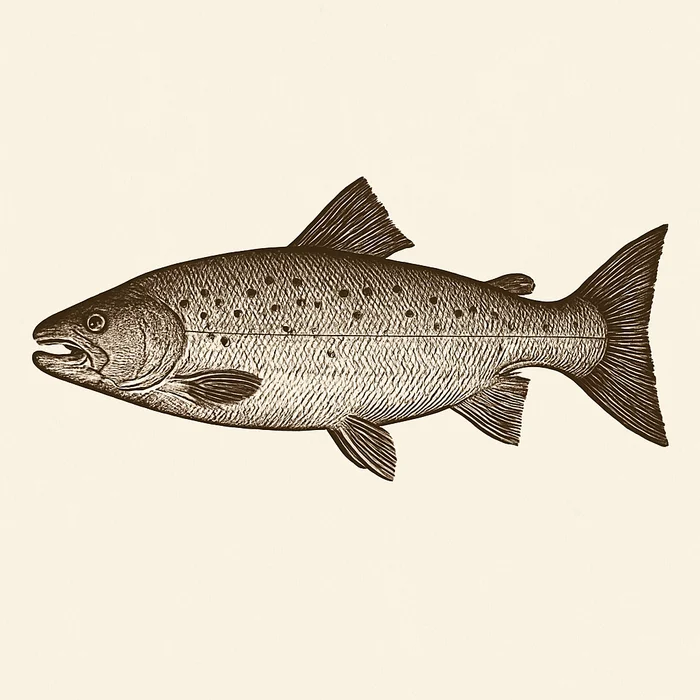
Salmon
Salmon is one of the richest dietary sources of marine omega-3 fatty acids (EPA and DHA), vitamin D, and vitamin B12. It occupies a central place in the Longevity Diet as a fatty fish that supports cardiovascular health, brain function, and systemic inflammation control simultaneously.
Why It Matters for Longevity
Wild-caught salmon delivers 2.2 g EPA+DHA per 100 g cooked, 447–526 IU vitamin D, 3.2 mcg vitamin B12, and 25 g of complete protein. Canned salmon with bones also contributes calcium. The EPA/DHA content is the primary driver of its longevity-relevant effects: these long-chain omega-3 fatty acids incorporate into cell membranes, modulate eicosanoid synthesis, reduce platelet aggregation, lower serum triglycerides, and suppress pro-inflammatory cytokine production (IL-6, TNF-α, CRP).
Cardiovascular Mortality
An umbrella review of fish-consumption meta-analyses (Zhao et al., 2023, Ann Transl Med) found consistent inverse associations between regular fish intake and coronary heart disease mortality, stroke, and all-cause mortality. EPA/DHA from fatty fish like salmon is a primary driver of these associations.
The mechanistic case is reinforced by intervention data. A meta-analysis of 38 randomized controlled trials in 149,051 participants (Khan et al., 2021, EClinicalMedicine) found that omega-3 supplementation reduced cardiovascular mortality (RR 0.93; 95% CI 0.88–0.98; p=0.01), non-fatal myocardial infarction (RR 0.87; 95% CI 0.81–0.93), and coronary heart disease events (RR 0.91; 95% CI 0.87–0.96). A companion dose-response meta-analysis of 40 RCTs in 135,267 participants (Bernasconi et al., 2021, Mayo Clin Proc) confirmed that fatal MI risk falls by 35% (RR 0.65; 95% CI 0.46–0.91) and that higher doses produce larger reductions — consistent with a causal pathway.
The Omega-3 Index
Blood EPA+DHA levels in erythrocytes — the "omega-3 index" — provide an integrated measure of dietary intake over 90–120 days and predict cardiovascular risk independently of classical lipid markers. In the Framingham Heart Study, among 2,500 participants followed for a median 7.3 years, those in the highest omega-3 index quintile (>6.8%) had 34% lower all-cause mortality and 39% lower incident cardiovascular disease compared to the lowest quintile (<4.2%) (Harris et al., 2018, J Clin Lipidol). An index above 8% is considered low risk; the average American sits near 4–5%. Two to three servings of fatty fish per week, including salmon, is a practical route to the protective range without supplementation.
Astaxanthin and Oxidative Defense
Salmon's pink-orange color comes from astaxanthin, a xanthophyll carotenoid produced by the microalgae Haematococcus pluvialis that accumulates in wild salmon tissue (0.4–3.8 mg per 100 g). Astaxanthin's conjugated double-bond structure enables electron donation across a wider redox span than most carotenoids, neutralizing reactive oxygen species (ROS) and singlet oxygen. A meta-analysis of 12 RCTs in 380 participants (Ma et al., 2022, Nutr Res) found that astaxanthin supplementation reduced the oxidative stress marker malondialdehyde (SMD –0.95; 95% CI –1.67 to –0.23; p=0.01) and lowered IL-6 in type 2 diabetes patients (WMD –0.70 pg/mL; 95% CI –1.29 to –0.11; p=0.02). Being fat-soluble, astaxanthin is best absorbed alongside the fish's own lipids — which wild salmon provides naturally.
Vitamin D
Wild salmon is among the few foods with meaningful vitamin D content — 447–526 IU per 100 g cooked, compared to 40–100 IU in most farmed varieties (the difference reflects diet: wild salmon eat astaxanthin-rich krill and small fish; farmed salmon eat formulated feed). Vitamin D activates its nuclear receptor (VDR) in more than 200 tissue types, regulating calcium homeostasis, immune modulation, and muscle function. The fat present in salmon itself enhances intestinal vitamin D absorption, making the fish an efficient delivery vehicle.
Protein Quality and Metabolic Signal
Salmon's 25 g of complete protein per 100 g cooked supports muscle protein synthesis with a PDCAAS near 1.0. Lean marine protein produces a lower IGF-1 stimulus than equivalent red meat portions, which matters in longevity frameworks where chronic IGF-1 elevation is associated with accelerated aging in mid-life adults. The combination of high protein density and marine lipids in a single food makes salmon unusually efficient calorie-for-calorie.
How to Use It
Pairs well with lemon, dill, capers, and extra virgin olive oil. Use as a fatty fish in daily meals according to the Longevity Diet guidelines. Simpler preparations — baked, steamed, or pan-seared — preserve EPA/DHA better than deep frying. Wild-caught is preferred for higher astaxanthin and vitamin D; if buying farmed, look for Atlantic salmon with certified feed standards.
What to Pair It With
| Ingredient | Why | Tradition |
|---|---|---|
| lemon | Vitamin C aids non-heme iron absorption; acidity balances richness | culinary tradition |
| dill | Classic aromatic pairing; no known antagonism with omega-3s | culinary tradition |
| capers | Briny polyphenols complement fatty fish flavor profile | culinary tradition |
| extra virgin olive oil | Polyphenols and MUFA add complementary anti-inflammatory pathway; aids fat-soluble vitamin absorption | Mediterranean |
| asparagus | Folate and prebiotic fiber complement protein-rich fish meal | culinary tradition |
Synergies
- Olive Oil (synergy): Olive oil polyphenols and salmon omega-3s reduce cardiovascular inflammation through complementary pathways — oleocanthal inhibits COX-1/COX-2; EPA/DHA modulate leukotriene and prostaglandin synthesis
- Vitamin D (complement): Salmon is among the richest natural food sources of vitamin D; the fat in salmon itself aids absorption of the vitamin D it contains
- Sardines (complement): Both low-mercury oily fish; rotating between them diversifies omega-3 sources and mineral intake while maintaining the protective omega-3 index
Flavor Profile
Taste: rich, buttery, mildly savory, slightly sweet. Aroma: oceanic, mild fish, umami. Texture: flaky, moist, tender. Category: fatty fish.
The Science
- Zhao et al., 2023, Ann Transl Med: Umbrella review of fish-consumption meta-analyses — inverse associations with CHD mortality, stroke, and all-cause mortality.
- Khan et al., 2021, EClinicalMedicine: 38 RCTs, 149,051 participants — omega-3 reduces cardiovascular mortality (RR 0.93), non-fatal MI (RR 0.87), and CHD events (RR 0.91).
- Bernasconi et al., 2021, Mayo Clin Proc: 40 RCTs, 135,267 participants — dose-dependent omega-3 effects; fatal MI reduced 35% (RR 0.65).
- Harris et al., 2018, J Clin Lipidol: Framingham Heart Study — highest omega-3 index quintile had 34% lower all-cause mortality and 39% lower CVD incidence vs. lowest quintile.
- Ma et al., 2022, Nutr Res: 12 RCTs, 380 participants — astaxanthin reduces MDA (oxidative stress) and IL-6 (inflammation), particularly in metabolically at-risk individuals.
References
- Zhao H, Yuan X, Yang J, Han Z, Feng L. Fish consumption in multiple health outcomes: an umbrella review of meta-analyses of observational and clinical studies. Ann Transl Med. 2023;11(3):152. PMID: 36845999. doi:10.21037/atm-22-6515
- Khan SU, Lone AN, Khan MS, et al. Effect of omega-3 fatty acids on cardiovascular outcomes: A systematic review and meta-analysis. EClinicalMedicine. 2021;38:100997. PMID: 34505026. doi:10.1016/j.eclinm.2021.100997
- Bernasconi AA, Wiest MM, Lavie CJ, Milani RV, Laukkanen JA. Effect of Omega-3 Dosage on Cardiovascular Outcomes: An Updated Meta-Analysis and Meta-Regression of Interventional Trials. Mayo Clin Proc. 2021;96(2):304-313. PMID: 32951855. doi:10.1016/j.mayocp.2020.08.034
- Harris WS, Tintle NL, Etherton MR, Vasan RS. Erythrocyte long-chain omega-3 fatty acid levels are inversely associated with mortality and with incident cardiovascular disease: The Framingham Heart Study. J Clin Lipidol. 2018;12(3):718-727. PMID: 29559306. doi:10.1016/j.jacl.2018.02.010
- Ma B, Lu J, Kang T, Zhu M, Xiong K, Wang J. Astaxanthin supplementation mildly reduced oxidative stress and inflammation biomarkers: a systematic review and meta-analysis of randomized controlled trials. Nutr Res. 2022;99:40-50. PMID: 35091276. doi:10.1016/j.nutres.2021.09.005
Key Nutrients
| Nutrient | Per 100g | Notes |
|---|---|---|
| EPA + DHA (omega-3) | 2.2 g (wild Atlantic cooked) | Highly bioavailable marine omega-3s; superior to plant ALA sources |
| Vitamin D | 447–526 IU (wild cooked) | One of the richest food sources; fat in fish enhances absorption |
| Vitamin B12 | 3.2 mcg (cooked) | Animal-sourced B12 is highly bioavailable without conversion |
| Protein | 25 g (cooked) | Complete protein; PDCAAS close to 1.0 |
| Astaxanthin | 0.4–3.8 mg | Carotenoid antioxidant; fat-soluble, enhanced by dietary fat co-ingestion |