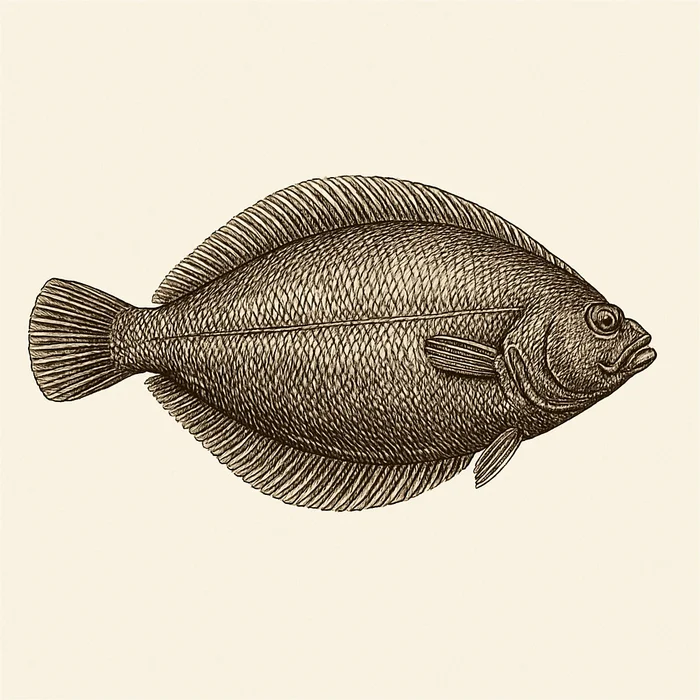
Sole
Sole is a lean flatfish providing complete protein, modest EPA/DHA (approximately 0.3–0.5 g/100g cooked), selenium (33 µg/100g, ~60% of the daily value), and very low mercury — a safe, regular-rotation fish in the Longevity Diet whose case rests on protein quality, micronutrient density, and low caloric cost rather than omega-3 quantity.
Why It Matters for Longevity
Lean High-Quality Protein and Muscle Preservation
Sole delivers approximately 24 g of complete protein per 100g at roughly 90 kcal — one of the most favorable protein-to-calorie ratios of any whole food. That protein is complete: it provides all nine indispensable amino acids in proportions sufficient to support muscle protein synthesis, and fish protein as a class scores consistently above 1.0 on the Digestible Indispensable Amino Acid Score (DIAAS), meaning every gram is highly bioavailable. This matters acutely in aging because sarcopenia — the age-related loss of skeletal muscle mass and strength — begins to accelerate after 50 and is strongly modulated by dietary protein quality and quantity.
A 2020 review by Rondanelli et al. in Nutrients (PMID 31991560) synthesized the evidence linking regular fish consumption specifically to sarcopenia prevention. The authors characterized fish as a "functional food" for muscle health because of its multi-compound profile: high-biological-value protein supplies the leucine threshold required to trigger mTORC1-mediated muscle protein synthesis, while co-occurring vitamin D, magnesium, and omega-3 fatty acids reduce the systemic inflammation that drives muscle catabolism. Their recommendation: at least three weekly servings of fish for elderly individuals at risk of sarcopenia.
For those monitoring caloric intake — a consistent finding in longevity research — sole's low energy density allows adequate protein intake without caloric surplus. At roughly 0.38 kcal per kilocalorie per gram of protein, it outperforms chicken breast and most red meats on this metric.
Selenium and the Glutathione Peroxidase Antioxidant System
Sole (USDA flatfish data: flounder and sole species, cooked) provides 33 µg of selenium per 100g — approximately 60% of the 55 µg adult daily value. That selenium is primarily organic selenomethionine, which has higher bioavailability than inorganic forms found in some supplements.
In human physiology, selenium is the catalytic core of the glutathione peroxidase (GPx) family. Of the eight GPx isoforms, five (GPx1 through GPx4 and GPx6) are selenoproteins: they require a selenocysteine residue in their active site to reduce hydrogen peroxide, lipid hydroperoxides, and other reactive oxygen species that would otherwise damage membranes, proteins, and DNA. GPx1 defends cells against UV-induced DNA damage and viral cardiomyopathy; GPx4 suppresses lipid peroxidation and is essential for normal brain development. As reviewed by Weeks et al. (2012, Med Sci Monit, PMID 22847213), clinical selenium supplementation at 200 µg/day reduced basal and squamous cell carcinoma incidence and improved immune function in observational trials — a magnitude of effect consistent with adequate selenoprotein expression being a meaningful longevity lever.
Two or three 150g servings of sole per week would contribute roughly 75–100 µg of selenium from this source alone, comfortably covering the adult RDA without approaching the tolerable upper limit of 400 µg/day.
Fish versus Red Meat: Substitution and Mortality
The longevity case for lean white fish is strengthened by the substitution evidence: replacing red and processed meat with fish reduces mortality risk in dose-dependent fashion, even when the fish is lean rather than fatty.
The Norwegian Women and Cancer Study (NOWAC), a prospective cohort of 83,304 women followed for a median of 21 years (9,420 deaths), examined what happened when women in the highest processed-meat consumption tertile replaced 20g/day of processed meat with fish. Substituting with lean fish yielded an all-cause mortality hazard ratio of 0.92 (95% CI 0.89–0.96) and a cardiovascular disease mortality HR of 0.82 (95% CI 0.74–0.90) — an 18% reduction in CVD mortality from this single dietary swap (Enget Jensen et al., 2024, British Journal of Nutrition, PMID 37694448). Replacing processed meat with fatty fish reduced CVD mortality HR to 0.87 but showed no significant all-cause benefit, illustrating that lean fish's high-quality protein and lower saturated fat profile can drive meaningful mortality improvements independent of omega-3 load.
For context, a 2022 systematic review and meta-analysis by Giosuè et al. (Advances in Nutrition, PMID 35108375) pooled data across prospective cohorts and found that fatty fish were significantly associated with reduced CHD incidence (RR 0.92) and CHD mortality (RR 0.83), while lean fish showed no statistically significant independent association in pooled analysis. This is the honest nuance: sole's mortality benefit is primarily a substitution effect and protein-quality effect — not an omega-3 effect. Use it to displace processed and red meat in the weekly rotation; pair it with oily fish (sardines, mackerel, trout) to hit EPA/DHA targets.
Omega-3 Content: Modest but Present
Sole contains approximately 0.3–0.5 g of EPA+DHA per 100g cooked — real, but 5–8 times lower than fatty fish like salmon (~2.5 g/100g). EPA and DHA remain biologically meaningful at any dose because they operate through pathway-level mechanisms rather than purely threshold effects: EPA-derived eicosanoids compete with arachidonic acid for COX and LOX enzymes, blunting pro-inflammatory prostaglandin and leukotriene production, while DHA and EPA generate resolvins, protectins, and maresins — specialized pro-resolving mediators that actively terminate inflammatory cascades rather than merely suppressing them (Calder, 2017, Biochemical Society Transactions, PMID 28900017). At sole's omega-3 dose, these effects are modest. The fish contributes to weekly EPA/DHA accumulation without carrying the full anti-inflammatory load.
The recommended strategy in longevity-focused eating patterns is to distribute fish types across the week: sole or other lean white fish provide high-quality protein and selenium; sardines, mackerel, or wild salmon supply the EPA/DHA dose needed to meaningfully modulate inflammatory markers (typically 1–2 g/day EPA+DHA).
Methylmercury: Safe for Regular Consumption
Sole is a small, short-lived flatfish that feeds near the seafloor on invertebrates rather than accumulating mercury through a long predatory food chain. FDA monitoring data place sole at approximately 0.05 ppm methylmercury — among the lowest of any commercially sold fish, well below the 0.3 ppm threshold that begins to require intake limitations in vulnerable populations. By comparison, swordfish average 0.99 ppm and shark 0.98 ppm. For adults, pregnant women, and children, sole sits in the "best choice" category (2–3 servings per week, per FDA/EPA guidance). There is no practical mercury constraint on weekly sole consumption at normal dietary amounts.
Mozaffarian and Rimm's 2006 analysis in JAMA (PMID 17047219) quantified the risk-benefit tradeoff for low-mercury fish: the cardiovascular mortality benefits of regular fish consumption substantially and consistently exceed mercury-related risks for species like sole. That calculus has only strengthened as subsequent cohort data have confirmed the mortality signal.
How to Use It
Cooking method matters. Sole fillets are thin (typically 6–8mm) and cook in 2–3 minutes per side at medium-high heat. Overcooking destroys texture and accelerates oxidation of the modest omega-3 content present. The two recommended preparation styles for nutrient preservation:
- Baked or en papillote: Wrap in parchment with olive oil, lemon slices, and fresh herbs; bake at 200°C for 10–12 minutes. Retains moisture, requires no additional fat beyond the olive oil used, and eliminates oxidation risk from high dry heat.
- Sautéed in olive oil (not butter): Heat a stainless or cast-iron pan until very hot; add 1 tbsp extra-virgin olive oil; cook 90 seconds per side. Browning (Maillard reaction) develops flavor without breading, keeping caloric density low. The classic meunière technique uses clarified butter, which is palatable but adds saturated fat; olive oil achieves similar texture with a better fatty acid profile.
Avoid deep-frying: a 2023 meta-analysis (Ricci et al., Nutrients, PMID 37960192) found that fried fish consumption was associated with increased CVD event risk, reversing the benefit of non-fried fish. The preparation method is mechanistically relevant, not merely culinary preference.
Weekday role: Use sole or another lean white fish on 1–2 days when the goal is high-quality protein at low caloric cost. Reserve oily fish (sardines, mackerel) for 1–2 other days to cover the week's EPA/DHA target of approximately 1–2 g/day from combined sources.
What to Pair It With
| Ingredient | Why | Tradition |
|---|---|---|
| lemon | See synergies | traditional |
| capers | See synergies | traditional |
| olive oil | See synergies | traditional |
Synergies
- Sardines (complement): Sole is low in omega-3; pair with sardines or anchovies elsewhere in the week to hit EPA/DHA targets.
- Capers (complement): Classic piccata preparation; capers add antioxidant quercetin and flavonoid content to a lean fish meal.
- Lemon (complement): Classic European pairing; vitamin C adds to mineral absorption and brightness to delicate flavor.
Flavor Profile
Taste: very mild, delicate, sweet. Aroma: neutral, fresh oceanic. Texture: very delicate, tender, flaky. Category: white flatfish.
The Science
- Enget Jensen et al., 2024, British Journal of Nutrition: NOWAC prospective cohort (83,304 women, 21-year follow-up): replacing 20g/day processed meat with lean fish reduced cardiovascular mortality HR to 0.82 (95% CI 0.74–0.90) and all-cause mortality HR to 0.92; lean fish substitution produced comparable or superior all-cause mortality benefit to fatty fish substitution.
- Rondanelli et al., 2020, Nutrients: Review establishing fish as a functional food for sarcopenia prevention; high-biological-value fish protein, vitamin D, magnesium, and omega-3s act synergistically on skeletal muscle metabolism; recommendation of ≥3 weekly servings for elderly at sarcopenia risk.
- Weeks et al., 2012, Med Sci Monit: Review of dietary selenium and selenoprotein function; GPx1–GPx4 are selenoenzymes catalyzing reduction of H₂O₂ and lipid hydroperoxides; 200 µg/day selenium reduced skin cancer incidence in clinical trials; fish is a primary dietary selenium source.
- Calder, 2017, Biochem Soc Trans: EPA and DHA mechanistically inhibit NF-κB activation, reduce pro-inflammatory eicosanoid production, and generate resolvins and protectins that actively resolve inflammation; relevant at the modest EPA/DHA doses contributed by lean white fish.
- Giosuè et al., 2022, Advances in Nutrition: Meta-analysis distinguishing fatty fish (significant CHD incidence and mortality benefit) from lean fish (no independent CVD signal in pooled analysis); contextualizes sole's longevity value as protein/substitution-driven rather than omega-3-driven.
- Jayedi et al., 2018, Crit Rev Food Sci Nutr: Dose-response meta-analysis: increasing fish consumption inversely associated with cardiovascular and all-cause mortality across 14 prospective cohort studies; benefits consistent across fish types.
- Mozaffarian & Rimm, 2006, JAMA: Fish consumption cardiovascular benefits substantially exceed mercury risks for low-mercury species; sole's mercury content (~0.05 ppm) is among the lowest of any fish.
References
- Enget Jensen TM, et al. Replacing red and processed meat with lean or fatty fish and all-cause and cause-specific mortality in Norwegian women. The Norwegian Women and Cancer Study (NOWAC): a prospective cohort study. Br J Nutr. 2024;131(3):536–546. PMID: 37694448. doi:10.1017/S0007114523002040
- Rondanelli M, et al. Novel Insights on Intake of Fish and Prevention of Sarcopenia: All Reasons for an Adequate Consumption. Nutrients. 2020;12(2):307. PMID: 31991560. doi:10.3390/nu12020307
- Weeks BS, Hanna MS, Cooperstein D. Dietary selenium and selenoprotein function. Med Sci Monit. 2012;18(8):RA127–132. PMID: 22847213. doi:10.12659/MSM.883258
- Calder PC. Omega-3 fatty acids and inflammatory processes: from molecules to man. Biochem Soc Trans. 2017;45(5):1105–1115. PMID: 28900017. doi:10.1042/BST20160474
- Giosuè A, et al. Relations between the Consumption of Fatty or Lean Fish and Risk of Cardiovascular Disease and All-Cause Mortality: A Systematic Review and Meta-Analysis. Adv Nutr. 2022;13(5):1554–1565. PMID: 35108375. doi:10.1093/advances/nmac006
- Jayedi A, Shab-Bidar S, Eimeri S, Djafarian K. Fish consumption and risk of all-cause and cardiovascular mortality: a dose-response meta-analysis of prospective observational studies. Crit Rev Food Sci Nutr. 2019;59(7):1063–1073. PMID: 29317009. doi:10.1080/10408398.2017.1393521
- Mozaffarian D, Rimm EB. Fish intake, contaminants, and human health: evaluating the risks and the benefits. JAMA. 2006;296(15):1885–99. PMID: 17047219. doi:10.1001/jama.296.15.1885
Key Nutrients
| Nutrient | Per 100g | Notes |
|---|---|---|
| Complete protein | 24 g | DIAAS >1.0; provides all indispensable amino acids at high bioavailability |
| EPA + DHA | 0.3–0.5 g | Modest; generates resolvins/protectins but pair with oily fish to reach weekly EPA/DHA targets |
| Selenium | 33 µg (~60% DV) | Organic selenomethionine; supports GPx1–GPx4 antioxidant enzyme family |
| Phosphorus | 248 mg | Important for bone health; high bioavailability from fish |
| Mercury | ~0.05 ppm | FDA "best choice" category; no weekly intake restriction for any population group |