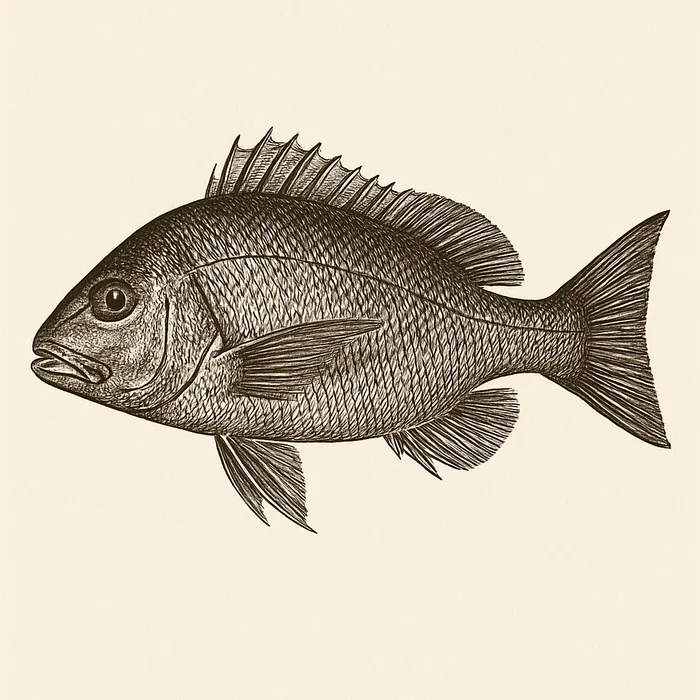
Snapper
Red snapper is a lean white fish providing 26 g of complete protein per 100 g cooked, 38 mcg of selenium (69% of the RDA), and modest EPA/DHA (0.33 g/100 g), with average mercury around 0.17 ppm — well within safe limits for 2–3 servings per week. Its longevity case rests on lean complete protein for sarcopenia prevention, highly bioavailable organic selenium for antioxidant defense, and its value as a direct substitute for red and processed meat.
Why It Matters for Longevity
Fish Consumption and Cardiovascular Mortality
Population-level evidence consistently links regular fish consumption to lower cardiovascular and all-cause mortality, and the benefit extends beyond fatty fish. A 2023 systematic review and meta-analysis by Ricci et al. pooled 18 prospective cohort studies covering 1,442,407 participants and 78,805 cardiovascular events. Two to three fish portions per week (roughly 150 g each) corresponded to an 8% reduction in combined fatal and non-fatal CVD risk (RR 0.93; 95% CI 0.91–0.96); a full daily portion was associated with up to 30% lower CVD risk. Critically, the benefit is not confined to oily fish — the dose-response relationship at 50 g/day applies to total fish intake, lean white fish included.
The multinational PURE analysis (Mohan et al., 2021, JAMA Internal Medicine) added important nuance from 191,558 participants across 58 countries. Among individuals with established vascular disease, consuming approximately 175 g of fish per week — roughly two standard servings — was associated with an 18% lower risk of total mortality (HR 0.82; 95% CI 0.74–0.91) and a 16% reduction in major cardiovascular events (HR 0.84; 95% CI 0.73–0.96). In the general population without prior CVD the effect was neutral, suggesting fish is especially protective in those already at elevated cardiometabolic risk.
Jayedi et al.'s earlier dose-response meta-analysis of 14 cohort studies (911,348 participants) reinforced the direction: each 20 g/day increment in fish consumption was significantly associated with lower cardiovascular and all-cause mortality, with benefits evident even from lean white fish.
Lean Protein Quality and Sarcopenia Prevention
Sarcopenia — the age-related loss of skeletal muscle mass and strength — is one of the strongest independent predictors of disability and premature death in older adults. After age 50, muscle protein synthesis rates decline and dietary protein requirements rise; most guidelines now recommend 1.0–1.2 g of high-quality protein per kilogram of body weight per day in older adults, compared to the 0.8 g/kg adult RDA.
Red snapper delivers 26 g of complete protein per 100 g cooked — all nine essential amino acids in proportions that match human muscle protein needs. High-biological-value fish proteins contain abundant leucine, the primary mTORC1 activator that triggers muscle protein synthesis; per gram of protein, fish compares favorably to plant sources that require complementing to reach the same leucine threshold.
Rondanelli et al.'s 2020 review in Nutrients synthesized evidence from observational and intervention studies on fish and sarcopenia, concluding that fish consumption has a protective and anti-inflammatory effect on skeletal muscle, and recommending at least three servings of fish per week for elderly individuals at risk of sarcopenia. Mechanistically, fish protein contributes lean mass directly, while its omega-3 content — even at snapper's modest 0.33 g/100 g — has been shown to reduce inflammatory cytokines (TNF-α, IL-6) that drive muscle catabolism. Robinson et al.'s epidemiological data, also cited in that review, associated each additional weekly portion of fish with a gain of roughly 0.45 kg in grip strength in men and women aged 59–73.
For an older adult eating snapper twice a week, a 150-g fillet contributes ~39 g of complete protein per serving — a meaningful portion of the daily 75–90 g target for a 75 kg person at the 1.0–1.2 g/kg threshold.
Selenium: GPx, Selenoproteins, and Antioxidant Defense
Selenium is an essential trace element that humans cannot synthesize; it must come from diet. Its primary biological roles are structural and catalytic: selenium is incorporated into at least 25 selenoproteins, the most studied being glutathione peroxidases (GPx1–4), which neutralize hydrogen peroxide and lipid hydroperoxides, and thioredoxin reductases, which regenerate the thioredoxin system. These are not peripheral pathways — they form the core enzymatic antioxidant defense that protects mitochondria, DNA, and cell membranes from oxidative damage that accumulates with age.
A cross-sectional study by Hagmar et al. (1998) in Latvian men directly quantified how fish consumption translates into selenium biomarker status: frequency of fish meals correlated with plasma selenium (r = 0.63), selenoprotein P (r = 0.62), and glutathione peroxidase activity (r = 0.50), all at p < 0.001. High fish consumers — those eating 21–50 fish meals per month — had plasma selenium levels 81% higher than low consumers, demonstrating a clear dose-response relationship between fish intake and functional selenium status. TSH was inversely correlated with plasma selenium, consistent with the known role of selenoprotein deiodinases in thyroid hormone conversion (T4 → T3).
Red snapper's 38 mcg selenium per 100 g is almost entirely in the form of selenomethionine, the organic species from fish and other animal sources that is absorbed at ~90% efficiency — substantially higher than inorganic selenite (~50%). A 150-g fillet delivers approximately 57 mcg of selenium, approaching the adult RDA of 55 mcg in a single meal and making snapper one of the most efficient dietary selenium sources outside of Brazil nuts and organ meats.
Cai et al.'s 2019 review in Aging Clinical and Experimental Research summarized the mechanisms: selenium deficiency accelerates oxidative stress, increases DNA damage, and shortens telomere length — all markers of accelerated biological aging. The review notes that selenium operates through anti-inflammatory as well as direct antioxidant pathways, reducing NF-κB-mediated inflammatory signaling that underlies multiple chronic diseases of aging. One important caveat: selenium has a narrow therapeutic window, and evidence for benefit applies to maintaining adequacy in populations where deficiency is common, not to supplementing above-normal levels.
Red Meat Substitution: The Mortality Signal
The most direct population-level evidence for snapper's longevity value may not come from fish studies at all, but from substitution analyses — what happens when people replace red and processed meat with fish in their habitual diets.
Jensen et al.'s 2024 prospective cohort study (NOWAC, 83,304 Norwegian women, median 21 years follow-up, 9,420 deaths) found that replacing 20 g/day of processed meat with lean fish was associated with lower all-cause mortality (HR 0.92; 95% CI 0.89–0.96), lower cancer mortality (HR 0.92; 95% CI 0.88–0.97), and substantially lower CVD mortality (HR 0.82; 95% CI 0.74–0.90) in women consuming more than 30 g/day of processed meat. These effect sizes — 8% lower all-cause and 18% lower CVD mortality from a 20 g/day swap of processed meat for lean fish — are clinically meaningful at a population level and represent the "substitution dividend" that snapper and other lean white fish deliver when they displace processed and red meat from the plate.
Red snapper specifically fits this substitution role well: it is lower in saturated fat than beef or pork, contains no heme iron (which drives oxidative stress and carcinogenic N-nitroso compound formation in the gut), and carries none of the sodium and nitrite load of processed meats.
Mercury: Accurate Risk Context
Red snapper's average mercury content is approximately 0.17 ppm (parts per million), placing it in the FDA/EPA "good choice" tier — substantially below the 0.46 ppm mean of the "limit to 1 serving/week" species like albacore tuna, and far below the >1 ppm levels of swordfish and king mackerel. Mozaffarian & Rimm's landmark 2006 JAMA review confirmed that for low-mercury species, the cardiovascular and neurological benefits of fish consumption substantially outweigh methylmercury risks across essentially all adult populations. At 2–3 servings of snapper per week, methylmercury exposure remains well below the EPA reference dose of 0.1 μg/kg body weight per day.
How to Use It
Pan-sear: Pat fillets dry, season with salt and black pepper, sear in olive oil over medium-high heat 3–4 minutes per side until the flesh releases from the pan. The skin crisps well. Rest 2 minutes before serving.
Bake en papillote: Place a fillet on parchment with cherry tomatoes, thinly sliced garlic, olives, capers, and a splash of white wine. Seal the parchment and bake at 200°C (400°F) for 12–15 minutes. The enclosed steam keeps the flesh moist and the mild flavor picks up all the aromatics.
Whole-roasted: Score a whole snapper 2–3 times on each side, stuff the cavity with lemon slices, fresh herbs (thyme, rosemary, parsley), and garlic cloves. Drizzle generously with olive oil, roast at 220°C (425°F) for 20–25 minutes per kg. Cooking on the bone preserves moisture and adds gelatin to the pan juices.
Ceviche or crudo: The firm, clean flesh holds up well to citrus curing. Thin-sliced raw snapper with lime juice, chili, red onion, and cilantro is traditional in coastal preparations and requires no heat.
Pair with: Legumes (lentils, white beans) to extend the protein and add fiber; cruciferous vegetables for additional sulfur-based antioxidants; olive oil to improve absorption of fat-soluble vitamins A, D, E, and K naturally present in fish.
What to Pair It With
| Ingredient | Why | Tradition |
|---|---|---|
| lemon | See synergies | traditional |
| olive oil | See synergies | traditional |
| tomatoes | See synergies | traditional |
Synergies
- Sardines (complement): Book recommends 2–3 fish servings/week; snapper as lean white fish complements high-omega-3 oily fish like sardines.
- Olive Oil (synergy): Adds MUFA and improves absorption of fat-soluble vitamins; traditional Mediterranean preparation.
- Lemon (complement): Acid brightens the mild flavor and adds vitamin C to the meal.
Flavor Profile
Taste: mild, slightly sweet, nutty. Aroma: fresh, oceanic. Texture: firm, flaky, moist. Category: white fish.
The Science
- Ricci et al., 2023, Nutrients: Systematic review and meta-analysis of 18 cohort studies (1,442,407 participants): 2–3 fish portions/week associated with 8% lower CVD risk (RR 0.93; 95% CI 0.91–0.96); up to 30% lower risk at daily intake.
- Mohan et al., 2021, JAMA Intern Med: Pooled analysis of 191,558 participants across 58 countries; ~175 g/week fish associated with HR 0.82 for total mortality in individuals with established vascular disease.
- Jensen et al., 2024, Br J Nutr: NOWAC cohort (83,304 women, 21 years); replacing 20 g/day processed meat with lean fish associated with HR 0.92 all-cause and HR 0.82 CVD mortality.
- Rondanelli et al., 2020, Nutrients: Review of fish bioactives and sarcopenia; recommends ≥3 fish servings/week for elderly; grip strength gain ~0.45 kg per additional weekly fish portion in adults aged 59–73.
- Hagmar et al., 1998, Eur J Clin Nutr: Fish meal frequency correlates with plasma selenium (r = 0.63), selenoprotein P (r = 0.62), and GPx activity (r = 0.50); high fish consumers had 81% higher plasma selenium.
- Jayedi et al., 2018, Crit Rev Food Sci Nutr: Dose-response meta-analysis (14 studies, 911,348 participants): each 20 g/day fish increment inversely associated with cardiovascular and all-cause mortality — benefits extend to lean white fish.
- Mozaffarian & Rimm, 2006, JAMA: Benefits of fish consumption for cardiovascular mortality substantially outweigh methylmercury risks for low-mercury species like snapper (~0.17 ppm average).
References
- Ricci H, Gaeta M, Franchi C, et al. Fish Intake in Relation to Fatal and Non-Fatal Cardiovascular Risk: A Systematic Review and Meta-Analysis of Cohort Studies. Nutrients. 2023;15(21):4539. PMID: 37960192.
- Mohan D, Mente A, Dehghan M, et al. Associations of Fish Consumption With Risk of Cardiovascular Disease and Mortality Among Individuals With or Without Vascular Disease From 58 Countries. JAMA Intern Med. 2021;181(5):631-649. PMID: 33683310.
- Jensen TM, Braaten T, Jacobsen BK, Ibsen DB, Skeie G. Replacing red and processed meat with lean or fatty fish and all-cause and cause-specific mortality in Norwegian women. The Norwegian Women and Cancer Study (NOWAC): a prospective cohort study. Br J Nutr. 2024;131(3):531-543. PMID: 37694448.
- Rondanelli M, Rigon C, Perna S, et al. Novel Insights on Intake of Fish and Prevention of Sarcopenia: All Reasons for an Adequate Consumption. Nutrients. 2020;12(2):307. PMID: 31991560.
- Hagmar L, Persson-Moschos M, Akesson B, Schütz A. Plasma levels of selenium, selenoprotein P and glutathione peroxidase and their correlations to fish intake and serum levels of thyrotropin and thyroid hormones: a study on Latvian fish consumers. Eur J Clin Nutr. 1998;52(11):796-800. PMID: 9846591.
- Jayedi A, Shab-Bidar S, Eimeri S, Djafarian K. Fish consumption and risk of all-cause and cardiovascular mortality: a dose-response meta-analysis of prospective observational studies. Crit Rev Food Sci Nutr. 2019;59(7):1063-1073. PMID: 29317009.
- Mozaffarian D, Rimm EB. Fish intake, contaminants, and human health: evaluating the risks and the benefits. JAMA. 2006;296(15):1885-99. PMID: 17047219.
Key Nutrients
| Nutrient | Per 100g | Notes |
|---|---|---|
| Complete protein | 26 g | High-quality lean protein; all essential amino acids; high leucine for mTORC1-mediated muscle protein synthesis |
| Selenium | 38 mcg | ~69% RDA; organic selenomethionine (~90% bioavailable); supports GPx and selenoprotein P antioxidant systems; thyroid deiodinase function |
| EPA + DHA | 0.33 g | Modest; contribute to weekly omega-3 target when combined with sardines or anchovies; anti-inflammatory even at low doses |
| Saturated fat | 0.3 g | Very low; direct benefit of substituting for red/processed meat |
| Mercury | ~0.17 ppm | FDA "good choice" tier; safe at 2–3 servings/week for all adults including pregnant women |