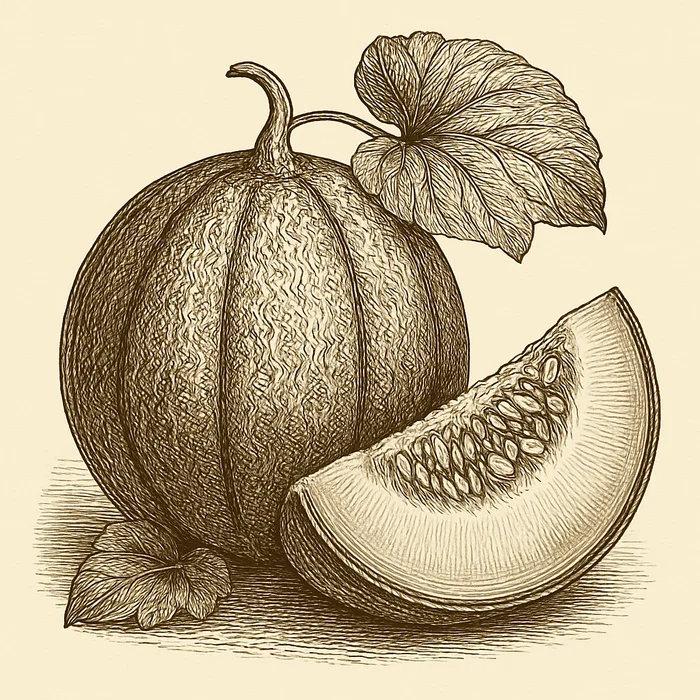
Cantaloupe
Cantaloupe is listed in the Longevity Diet as a particularly rich source of beta-carotene (135 mcg RAE per half-cup raw, ~54% DV) and a contributor of folate (14 mcg per wedge, ~4% DV).
Why It Matters for Longevity
Beta-Carotene: Provitamin A and Carotenoid Activity
Beta-carotene — the provitamin A carotenoid that gives cantaloupe its orange flesh — converts to retinol in the intestinal wall via central cleavage by BCO1 (beta-carotene 15,15'-oxygenase), supporting immune function, vision, and epithelial cell integrity. Cantaloupe provides approximately 2020 mcg beta-carotene per 100 g fresh weight — among the highest of any commonly eaten fresh fruit. The conversion rate from beta-carotene to retinol is variable (3:1 to 28:1 molar ratio depending on vitamin A status, gut health, and genetic BCO1 polymorphisms), but meaningfully better from orange-fleshed fruits like cantaloupe than from dark leafy greens, where the beta-carotene is more tightly bound to the chloroplast matrix.
A laboratory study measuring beta-carotene content and bioaccessibility in orange-fleshed Cucumis melo cultivars found cantaloupe contained 176.3 μg/g dry weight, with field-grown orange-fleshed honeydew reaching 242.8 μg/g. Bioaccessibility in the digestive model was measured at approximately 3.2%, with Caco-2 cell uptake (a proxy for intestinal absorption) reaching around 11% — comparable to carrot-derived beta-carotene. Fat co-ingestion substantially increases micellarization and absorption, explaining the traditional pairing of melon with olive oil or prosciutto (Fleshman et al., 2011, J Agric Food Chem).
Higher dietary intake of carotenoids, including beta-carotene from orange-fleshed fruits, was significantly associated with reduced lung cancer risk in two large US prospective cohorts, with the protective effect strongest for whole-food sources rather than supplements (Michaud et al., 2000, Am J Clin Nutr). The supplement caveat is important: the ATBC and CARET trials demonstrated that isolated high-dose beta-carotene supplementation increased lung cancer risk in smokers, an effect not observed with food-matrix carotenoids, likely because whole foods deliver the full carotenoid mixture (alpha-carotene, beta-cryptoxanthin, lutein, zeaxanthin) rather than an isolated high dose of a single compound.
Higher serum carotenoid concentrations — reflecting habitual intake from orange and yellow fruits and vegetables — were inversely associated with all-cause and cardiovascular mortality in a Japanese prospective cohort of over 33,000 adults followed for 15 years (Fujii et al., 2021, JAMA Netw Open).
Potassium: Blood Pressure Regulation
Cantaloupe provides 267 mg potassium per 100 g. Potassium lowers blood pressure through three complementary mechanisms: activating the Na⁺/K⁺-ATPase pump to promote renal sodium excretion; directly relaxing vascular smooth muscle cells; and stimulating endothelial synthesis of vasodilatory prostaglandins. These effects are amplified when baseline sodium intake is high — a common feature of modern diets.
A systematic review and meta-analysis of 22 RCTs (1,606 participants) and 11 cohort studies (127,038 participants) found that higher potassium intake reduced systolic blood pressure by 3.49 mm Hg and diastolic by 1.96 mm Hg overall in adults with hypertension, with larger reductions of 7.16 mm Hg systolic at intake levels of 90–120 mmol/day. Crucially, higher potassium intake was also associated with a 24% lower risk of stroke (RR 0.76), with no significant adverse effects on renal function, blood lipids, or catecholamine concentrations in non-renal-impaired adults (Aburto et al., 2013, BMJ). A 100 g serving of cantaloupe contributes approximately 7 mmol potassium toward that protective intake range.
A dose-response meta-analysis of 32 RCTs confirmed the blood pressure benefit follows a nonlinear (U-shaped) curve, with optimal effect at a potassium excretion increment of approximately 30 mmol/day between treatment and control groups (Filippini et al., 2020, J Am Heart Assoc).
Vitamin C and Folate
Cantaloupe provides 36.7 mg vitamin C per 100 g — approximately 41% of the daily requirement. As with most fresh fruit, vitamin C content degrades after cutting; consuming cantaloupe promptly after cutting minimizes oxidative loss. The folate content (21 mcg/100 g) contributes to one-carbon metabolism, supporting DNA methylation and the conversion of homocysteine to methionine.
Hydration and Cellular Function
Cantaloupe is approximately 90% water by weight. Adequate hydration supports plasma volume, renal clearance of metabolic waste products, and thermoregulatory function. For older adults — in whom thirst sensation is blunted — water-rich foods like cantaloupe provide a passive route to maintaining hydration status without relying on thirst as a trigger.
Fruit Intake and Mortality
Higher fruit and vegetable intake is associated with significantly lower risk of all-cause mortality, cardiovascular disease, and cancer, with every additional 200 g/day associated with approximately 8% reduction in all-cause mortality risk (Aune et al., 2017, Int J Epidemiol).
How to Use It
Eat fresh as a fruit course or mix into a fruit salad. Fat from a concurrent food (olive oil drizzle, nuts, yogurt) enhances beta-carotene absorption. Ripe cantaloupe with a dry, slightly rough skin and strong sweet fragrance at the blossom end has the highest beta-carotene content. The flesh near the seed cavity is typically the sweetest and most concentrated in carotenoids.
What to Pair It With
| Ingredient | Why | Tradition |
|---|---|---|
| Extra-virgin olive oil | Fat required for beta-carotene absorption; increases micellarization ~4-fold | Mediterranean |
| Lime | Acid brightens flavour; vitamin C enhances antioxidant capacity | Mediterranean |
| Mixed fresh fruit | Longevity Diet fruit serving | The Longevity Diet |
| Prosciutto | Classic Italian pairing; fat aids carotenoid absorption | Italian |
| Walnuts | Provides fat for carotenoid absorption; adds omega-3s | Modern |
Flavor Profile
Sweet, floral, and mildly musky. Aroma is intensely fruity and perfumed when ripe. Texture is juicy and soft with a slightly granular feel. The sweetness concentrates near the seed cavity where beta-carotene is richest.
The Science
- Fleshman et al., 2011, J Agric Food Chem: Beta-carotene content of cantaloupe measured at 176.3 μg/g dry weight; bioaccessibility ~3.2%; Caco-2 cell uptake ~11% — comparable to carrot-derived beta-carotene; fat co-ingestion enhances micellarization.
- Michaud et al., 2000, Am J Clin Nutr: Higher carotenoid intake, including beta-carotene, significantly associated with reduced lung cancer risk in two large US prospective cohorts — protective effect strongest for whole-food sources.
- Fujii et al., 2021, JAMA Netw Open: Higher serum carotenoid concentrations inversely associated with all-cause and cardiovascular mortality in a Japanese cohort of 33,000+ adults over 15 years.
- Aburto et al., 2013, BMJ: Meta-analysis of 22 RCTs and 11 cohorts — higher potassium intake reduced systolic BP by 3.49 mm Hg, diastolic by 1.96 mm Hg; 24% lower stroke risk; no adverse effects on renal function.
- Filippini et al., 2020, J Am Heart Assoc: Dose-response meta-analysis of 32 RCTs — potassium lowers blood pressure via a nonlinear U-shaped curve; optimal effect at ~30 mmol/day increment.
- Aune et al., 2017, Int J Epidemiol: Systematic review and meta-analysis — each 200 g/day increase in fruit and vegetable intake associated with 8% lower all-cause mortality risk.
References
- Fleshman MK, Lester GE, Riedl KM, et al. Carotene and novel apocarotenoid concentrations in orange-fleshed Cucumis melo melons: determinations of β-carotene bioaccessibility and bioavailability. J Agric Food Chem. 2011;59(9):4699-4706. PMID: 21417375. doi:10.1021/jf200416a
- Michaud DS, Feskanich D, Rimm EB, et al. Intake of specific carotenoids and risk of lung cancer in 2 prospective US cohorts. Am J Clin Nutr. 2000;72(4):990-997. PMID: 11010942. doi:10.1093/ajcn/72.4.990
- Fujii R, Nakano T, Shirai K, et al. Analysis of repeated measurements of serum carotenoid levels and all-cause and cause-specific mortality. JAMA Netw Open. 2021;4(7):e2114705. PMID: 34115126. doi:10.1001/jamanetworkopen.2021.14705
- Aburto NJ, Hanson S, Gutierrez H, et al. Effect of increased potassium intake on cardiovascular risk factors and disease: systematic review and meta-analyses. BMJ. 2013;346:f1378. PMID: 23558164. doi:10.1136/bmj.f1378
- Filippini T, Naska A, Kasdagli MI, et al. Potassium intake and blood pressure: a dose-response meta-analysis of randomized controlled trials. J Am Heart Assoc. 2020;9(12):e015719. PMID: 32500831. doi:10.1161/JAHA.119.015719
- Aune D, Giovannucci E, Boffetta P, et al. Fruit and vegetable intake and the risk of cardiovascular disease, total cancer and all-cause mortality — a systematic review and dose-response meta-analysis of prospective studies. Int J Epidemiol. 2017;46(3):1029-1056. PMID: 28338764. doi:10.1093/ije/dyw319
Key Nutrients
| Nutrient | Per 100g | Notes |
|---|---|---|
| Beta-carotene (provitamin A) | 2020 mcg | Conversion to retinol varies; fat required for absorption; orange flesh indicates high content |
| Folate | 21 mcg | Natural food folate; ~50% bioavailability; supports DNA methylation and one-carbon metabolism |
| Vitamin C | 36.7 mg | High bioavailability; water-soluble; best eaten fresh to maximise content |
| Potassium | 267 mg (~7 mmol) | Well absorbed; activates Na⁺/K⁺-ATPase; reduces blood pressure and stroke risk |
| Water | ~90% | Passive hydration; relevant in older adults with blunted thirst response |